 English
 Deutsch
 Français
 Nederlands
 Español




Reset. Heal. Grow.
What DMT Actually Does: Inside the Science, the Trips, and the Healing Potential
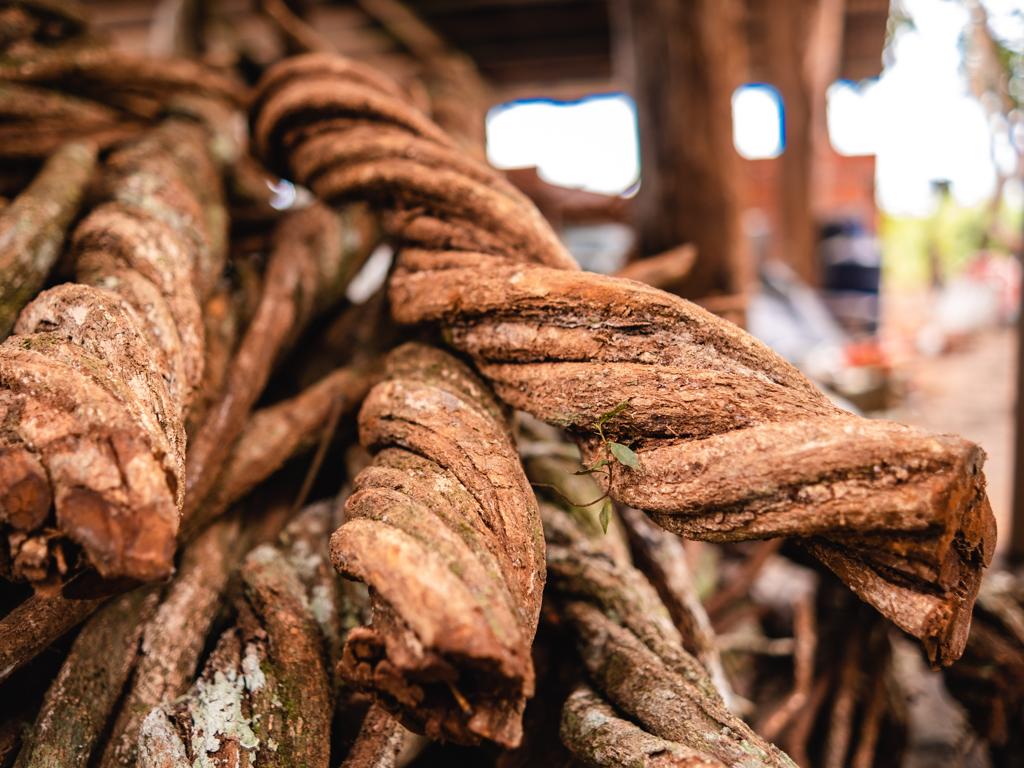
Ask ten people who've smoked DMT to describe what happened and you'll get ten answers that all begin the same way: words don't really work for this. Then they'll try anyway. Spirals inside spirals. Beings that seemed to be waiting. A feeling of being yanked clean out of the body and dropped somewhere that felt — and this is the phrase that keeps coming up — more real than real. That phrase is doing a lot of heavy lifting, and it's worth taking seriously. DMT is the psychedelic compound at the heart of ayahuasca, the Amazonian brew that has pulled tens of thousands of seekers to jungle retreats over the past two decades. Understanding the molecule itself — what it does, where the research stands, and why people keep saying it changed their lives — is a useful piece of homework if you're weighing whether plant medicine is for you. N,N-Dimethyltryptamine is a short-acting psychedelic found across an absurd range of life. It's in hundreds of plants. It's in the venom of certain toads. It's been detected in every mammal researchers have bothered to test, including humans. We appear to make it ourselves, in small quantities, possibly in the lungs and the pineal gland. Nobody is entirely sure why. Smoked or vaporized, it produces a hallucinogenic experience that arrives within seconds and is largely over inside half an hour. Injected, similar story. Swallowed on its own, it does basically nothing — your gut breaks it down before it can reach the brain. That last fact is the whole reason ayahuasca exists. The traditional Amazonian brew combines a DMT-containing plant with a second plant that blocks the enzyme that would otherwise neutralize it, allowing the molecule to stay active for hours rather than minutes. So when people talk about ayahuasca, they're really talking about a way of taking DMT slowly, in a body that's been prepared by diet and ceremony, surrounded by people who know what to do when things get strange. DMT was first identified as psychoactive by Hungarian chemist Stephen Szára in the 1950s. A short, productive decade of research followed — including some investigations into whether endogenous DMT might explain schizophrenia (it doesn't). Then the 1970s arrived, drug laws tightened, and serious human research in the United States essentially stopped for twenty years. The thaw came in the early 1990s when psychiatrist Rick Strassman ran the first new DMT trials on humans in a generation at the University of New Mexico. His setup was deliberately bare: no incense, no statues, no guided meditation. He'd dose experienced volunteers in a hospital room and ask them to report back. The point was to see what the molecule did, stripped of expectation. What they reported was strange enough that Strassman went on to write a book about it. Volunteers described being pulled out of their bodies. Encountering entities that seemed intelligent and aware of being observed. Visiting places that didn't behave like physical space. One woman came back from her session convinced — calmly, matter-of-factly — that consciousness continues after death. If everyone knew what was waiting, everyone would commit suicide, she told him. He suggested she keep that to herself. Here's the thing that makes DMT genuinely different from other psychedelics. Mushrooms and LSD tend to modify your relationship with the world you're already in — colors smear, walls breathe, your sense of self softens. A DMT experience, by contrast, tends to feel like leaving entirely. Users describe a sensation of being launched. The geometry of ordinary space falls away and is replaced by something that operates on different rules — recursive fractals, impossible architectures, what one person I spoke with called "the back end of the simulation." Time becomes meaningless. Language follows. People often report telepathic exchanges with whatever they encounter in there, and a peculiar sense that the encounter is the point. A few recurring figures appear often enough across reports that there are entire online forums devoted to them — the jester, the mantis, the machine elves popularized by Terence McKenna. Whether these are projections of the human mind under extreme neurochemical pressure or something stranger is a question the science cannot currently answer. Probably won't anytime soon. The connection between DMT and death — or near-death — has been around long before the chemistry was understood. In Quechua, ayahuasca roughly translates to vine of the dead or vine of the souls. The traditional belief is that drinking the brew opens a doorway to the realm of disembodied spirits. The Shipibo, Shuar, and other Amazonian peoples have organized substantial portions of their cosmology and medicine around this idea for centuries. Modern interest in this overlap took off when researchers noticed that the standard near-death experience — the tunnel of light, the loving presence, the life review, the reluctance to come back — sounds an awful lot like a strong DMT trip. There's a hypothesis, still unproven, that the dying brain releases a flood of endogenous DMT as a kind of farewell. Some unpublished animal data suggests DMT levels do rise in the brain at death. It's not nothing, but it's not yet a settled case either. What we can say honestly: Whether any of that means DMT is a cosmic doorway or just an unusually interesting neurochemical, I'll let you decide. This is where things get practical for anyone reading because they're thinking about a retreat. The therapeutic conversation around DMT — and, by extension, around ayahuasca — has shifted dramatically in the last decade. Researchers have looked at ayahuasca for treatment-resistant depression, PTSD, grief, and addiction recovery. The early results are genuinely promising, particularly for people who've tried conventional treatments and come up empty. One reason DMT is hard to study clinically is that the experience is so short. Strassman and his colleague Andrew Gallimore published a paper proposing a way to deliver DMT via continuous infusion — essentially a steady IV drip that could hold someone in the state for hours rather than minutes. The reasoning is medical, not recreational: a sustained experience allows for actual therapeutic work, which is impossible to do during a fifteen-minute blast. This is also, in a sense, what ayahuasca already does. The brew stretches a DMT experience across four to six hours, long enough for emotional material to surface, be witnessed, and begin to integrate. Talk to people who've done plant medicine for trauma or addiction and you'll hear versions of the same arc: the substance shows them something they'd been avoiding, and the actual healing happens in the weeks and months afterward, in therapy, in journaling, in the slow business of changing how they live. One of Strassman's volunteers described looking back on her childhood with a clarity she'd never had sober. Another came back with strong feelings about needing to spend more time with family. A man I corresponded with — call him Sam — told me he'd been planning suicide before he tried DMT. He described the experience as the universe holding him in something that felt like oceanic love. Afterward, the cynicism that had been suffocating him simply lifted. He started living again. I include that not as a sales pitch. Plenty of people have difficult, frightening, or genuinely traumatic experiences with DMT and ayahuasca, especially when set and setting are wrong. But the testimony of people who feel they were pulled back from something terminal is consistent enough across decades and continents that it deserves to be taken seriously. Something is happening in there. A few practical points for the reader who's been Googling at midnight, weighing whether to actually do this: DMT — and ayahuasca specifically — is not for everyone, and the people running ethical retreats will tell you so. It's a powerful tool that happens to suit certain people at certain points in their lives, and it sits alongside therapy, breathwork, meditation, and a hundred other options that may serve you better depending on where you are. If after reading this you find yourself genuinely curious rather than just intellectually interested, that's worth listening to. For readers who want to take this further, a range of ayahuasca and plant medicine retreats can be browsed on our marketplace here. Take your time with the decision — the medicine, whatever you believe about it, has been around for centuries and isn't going anywhere.
Ibogaine Retreats Explained: What a Psychospiritual Journey Actually Involves
The first time someone tells you about ibogaine, they usually say something like, “It showed me my entire life in one night.” That's the line. It gets repeated in recovery rooms, on forums, in late-night phone calls between people who've been chewing on the idea of a retreat for months. And it's not exactly wrong — but it's also not the whole story. Ibogaine is one of the heaviest plant medicines on the planet. Heavier than ayahuasca in some ways. Longer than psilocybin. More physically demanding than almost anything else in the psychedelic landscape. It's also the substance with the most credible track record for interrupting opioid addiction, which is why people in genuine crisis end up googling it at three in the morning. If that's where you are, or if you're somewhere further back in the research process, here's an honest look at what ibogaine retreats actually involve. Ibogaine is an alkaloid extracted from the root bark of the iboga shrub, which grows in the rainforests of central west Africa — Gabon, Cameroon, parts of Congo. In its traditional context, iboga is used by the Bwiti, an initiatory spiritual tradition where the plant is taken in large quantities during multi-day rites of passage. It's a master plant in the truest sense: revered, feared, treated with enormous care. In the modern psychedelic and addiction-recovery world, ibogaine usually shows up in one of two forms. There's purified ibogaine HCl, which is what most medical-model clinics use because the dose is precise. And there's total alkaloid extract or whole root bark, which keeps the full spectrum of compounds intact and is more common in psychospiritual or Bwiti-influenced retreats. Different teachers prefer different forms for different reasons, and neither is automatically better. The experience itself lasts a long time. Plan on twelve to twenty-four hours of active effects, followed by another day or two of what people call the “gray day” — exhausted, raw, processing. Most retreats keep you on-site for at least a week. The biggest single reason is addiction. Specifically opioids — heroin, fentanyl, oxycodone, methadone — because ibogaine has a documented ability to dramatically reduce or eliminate physical withdrawal in a single session. That's not marketing. It's been observed clinically since the 1960s, and there's enough peer-reviewed research now that several countries treat ibogaine as a legitimate (if still experimental) addiction intervention. People walk into a clinic strung out and walk out, days later, without the gnawing physical craving. That alone is reason enough that ibogaine retreats exist. But opioid recovery isn't the only doorway. Plenty of people arrive looking for something else entirely: Ibogaine has a reputation, deserved, for being unusually direct about showing you your own life. Where ayahuasca tends to move in waves of imagery and emotion, ibogaine often feels more like watching a documentary about yourself. The memories that surface are specific. The lessons feel almost lectured. People describe meeting parts of themselves they'd written off, or seeing a relationship in completely new terms, or understanding — finally — why they keep doing the thing they keep doing. You'll usually start in the evening, after a medical screening earlier in the day. The room is dark or low-lit. You're lying down — and you'll stay lying down, because ibogaine produces ataxia, which means your coordination is gone. Standing up is a bad idea for many hours. The first phase, often called the visionary phase, comes on within an hour or two. Eyes closed, you start seeing — and the word “seeing” is doing a lot of work here. Some people describe it as a flood of autobiographical memory played at high speed. Others get more symbolic, archetypal material. Many hear a buzzing or whirring sound, almost mechanical. There's frequently a sense of being shown something by an intelligence that isn't you. Whether you call that the plant, the unconscious, or something else is up to you. The second phase is more reflective. The flood slows. You're still inside the experience but able to think about it, examine specific scenes, ask questions and get answers. This can go on for hours. Time becomes essentially meaningless. The third phase is the long tail. Physical exhaustion, sensitivity to light and sound, sometimes nausea, and a strange kind of mental clarity that sits underneath the tiredness. Sleep often doesn't come for another day. When it finally does, it's usually deep. Ibogaine is the psychedelic with the most serious safety profile concerns, and any retreat worth its fee will tell you this upfront. The risk isn't really psychological — it's cardiac. Ibogaine prolongs the QT interval, which in plain language means it can disrupt the electrical rhythm of the heart. In a healthy screened person, in a properly run setting, this risk is manageable. In an unscreened person with an undiagnosed condition, it can be fatal. Non-negotiables when evaluating a retreat: If a retreat is cagey about any of these, walk away. There's no version of ibogaine where the spiritual depth justifies skipping the medical infrastructure. The retreats with the best long-term outcomes are also, without exception, the ones with the strictest screening. The ibogaine world is smaller than the ayahuasca world, but it's grown fast in the last few years, and not every operation is equal. A handful of things to look at: Lineage and training. Is the lead facilitator trained in a recognized tradition or by a recognized medical body? Bwiti-trained practitioners, ibogaine providers who came up through GITA-aligned programs, clinicians with addiction-medicine backgrounds — these are signals. Vague spiritual credentials are not. Integration support. The ceremony is maybe a third of the work. What happens in the weeks and months afterward decides whether the insight lands or evaporates. Reputable retreats offer post-retreat integration calls, group sessions, or referrals to integration coaches. If the relationship ends when you leave the property, that's a red flag. Honesty about what ibogaine can't do. If a retreat promises a cure, run. Ibogaine interrupts patterns. It opens a window. What you do with that window is on you — and on whatever support structure you build around it. A facilitator who says this plainly is more trustworthy than one who promises transformation. Reasonable group size. Ibogaine isn't a group ceremony in the ayahuasca sense. Each person needs close attention. Be skeptical of large cohorts. The preparation window matters more than people realize. A few practical things: Get your medications sorted with your prescribing doctor well in advance. SSRIs and SNRIs typically need to be tapered weeks before, not days. Methadone has its own long timeline. Buprenorphine has its own. Stimulants, including ADHD medications, need to be cleared. Do not improvise this part. Eat clean for at least a couple of weeks before — less sugar, less alcohol, more whole foods. Your body is about to do something difficult; show up rested. Sleep matters more than any superfood. Spend some honest time with the question of what you actually want from the experience. Not the spiritual version of the answer — the real version. “I want to stop using” is real. “I want to know why I've sabotaged every relationship I've had” is real. “I want to feel something other than numb” is real. Write it down. Bring it with you. And tell someone you trust what you're doing. Not for permission — you're an adult — but because integration is easier when you have at least one person who knows where you went and is curious to hear what came back with you. The week after is strange. You'll feel physically tender for a few days. Emotionally, many people report a kind of quiet — the constant background noise of craving or self-criticism turned way down. This is sometimes called the “afterglow,” and it can last weeks. It's a window. Use it. Build something during this period. Therapy appointments scheduled. New routines actually started. Honest conversations actually had. The ibogaine showed you the map; the walking is yours to do. People who treat the retreat as the end of the work tend to drift back toward where they started within months. People who treat it as the beginning tend to be having different conversations a year later. For readers who want to take this further, a range of vetted ibogaine and plant-medicine retreats can be browsed on our marketplace here. Take your time with the decision — the right retreat is worth waiting a few months for, and the wrong one isn't worth any price.
When Clergy Take Psilocybin: Inside the Mystical Experience Study
A rabbi, a Greek Orthodox priest, and a Zen roshi walk into a research lab. No punchline. They drink a measured dose of psilocybin, lie back on a couch with eyeshades on, and spend the next six hours somewhere most of us will never go without a guide. This actually happened. It's still happening, in fact, as researchers at Johns Hopkins and NYU continue to study what happens when people who have spent their entire adult lives cultivating spiritual experience meet the compound in magic mushrooms head-on. The study is one of the strangest, most fascinating threads in the current wave of psychedelic research — and for anyone weighing whether plant medicine or psychedelics might be worth exploring personally, it's worth understanding why scientists felt the need to recruit clergy in the first place. Here's the puzzle that's been bugging psychedelic researchers for a decade. Psilocybin reliably does something to depression, end-of-life anxiety, and addiction that conventional medicine struggles to replicate. People who undergo a single, well-supported session often describe lasting shifts — less fear, more connection, a softened grip on whatever was strangling them before. The clinical results are real. The mechanism is murky. What participants keep saying, over and over, is that the session contained a “mystical” or “deeply meaningful” experience. Not a hallucination. Not a fun trip. Something closer to what contemplatives across traditions have described for thousands of years — ego dissolution, a felt sense of unity, encounters with what people variously call God, source, presence, or simply love. Roland Griffiths, the Johns Hopkins psychiatrist who pioneered much of this research, has noted that healthy volunteers with no prior psychedelic experience routinely rank their psilocybin session among the most spiritually significant events of their lives. Up there with the birth of a child. That's a wild claim coming out of a pharmacology lab. And it raised an obvious question: if these experiences resemble what mystics have been reporting since before recorded history, why not ask actual mystics to weigh in? The trial enrolled religious leaders from across traditions — an Orthodox rabbi, an Episcopalian, a Greek Orthodox priest, a Zen Buddhist roshi, a Reform Christian minister, among others. Researchers were also seeking Catholic priests, imams, and Hindu priests. Each participant receives psilocybin in a carefully controlled setting: comfortable room, trained monitors, music, eyeshades, the works. The protocol is the same one that's been used with cancer patients and people struggling with treatment-resistant depression. The difference is what comes after. These participants don't just fill out a questionnaire. They use the vocabulary and frameworks of their own traditions to describe what they encountered. A Zen practitioner can speak the language of emptiness and form. A Christian minister can speak about grace, presence, the felt nearness of the divine. Researchers compare notes across traditions and against the clinical data, looking for patterns. The hope is that people who have spent decades parsing subtle spiritual states can help science build a better map of what psilocybin actually does to consciousness — and why that mapping seems to translate into durable mental-health benefits. The full study results are still being analyzed, but early signals are striking. Anthony Bossis, who runs the NYU arm of the trial, has said that several of the clergy entered the study in a state of professional burnout — that particular hollowed-out feeling that comes from years of holding space for other people's suffering. After their sessions, many described something like renewal. Increased passion for their work. A re-quickened relationship with scripture. More energy for the people in their care. If those changes hold up over time, they echo what's been seen in other psilocybin trials: a small number of sessions seem to produce shifts that persist for months or years. Not a quick fix. More like a re-orientation. One thing worth noting honestly: not every participant has a peak experience, and not every peak experience is pleasant. Some sessions involve fear, confrontation with difficult material, what researchers diplomatically call “challenging experiences.” The trained monitors are there for exactly this reason. Anyone telling you psychedelics are uniformly blissful is selling something. You might be reading this because you're researching a psilocybin or ayahuasca retreat for reasons that have nothing to do with academic curiosity. Depression that won't budge. A drinking problem you've tried to white-knuckle. Grief. A sense that your life has gotten stuck in a groove you can't climb out of. Many people who end up in ceremony arrive carrying exactly that kind of weight. The clergy study is relevant to your decision in a few practical ways: There's something almost funny about watching elite American universities rediscover what shamanic traditions have known forever — that psilocybin mushrooms, ayahuasca, peyote, and other plant medicines occupy a category that's irreducibly spiritual. Strip out the spiritual frame and you get a pharmacological curiosity. Keep it in, and you have a tool that's been used for healing, vision, and community repair across cultures for as long as humans have been paying attention. The Mazatec curanderos of Oaxaca knew this about mushrooms. Shipibo healers in the Peruvian Amazon know it about ayahuasca. Bwiti practitioners in Gabon know it about iboga. The compounds are chemistry, but the work is something else — call it mystical, call it psychospiritual, call it what your tradition calls it. The clergy study is one of the first serious attempts in modern Western science to take that work on its own terms. For someone considering a retreat, that's worth absorbing. You're not signing up for a recreational experience or a wellness perk. You're stepping, however briefly, into a lineage that the world's contemplatives have been walking for a very long time. Treat it accordingly. Choose facilitators who do the same. Plant medicine and psychedelics are not for everyone. People with personal or family histories of schizophrenia, bipolar I, or certain other psychiatric conditions face real risks. Some SSRIs and other medications interact dangerously with ayahuasca in particular. The legal landscape varies wildly — psilocybin is decriminalized or therapeutically available in a handful of jurisdictions, illegal in most. Ayahuasca occupies a gray zone almost everywhere outside its traditional South American home. And honestly, even when everything goes well, plant medicine tends to ask more of you than it gives upfront. The reorganization people describe afterward is real, but it asks for follow-through. New habits. Hard conversations. Sometimes leaving jobs or relationships that no longer fit. The clergy in the study had spiritual scaffolding to lean on. If you don't, build some before you go. If any of this has stirred something — curiosity, recognition, the quiet sense that it might be time — a curated selection of psilocybin and plant-medicine retreats can be explored on our marketplace here. Take your time choosing. The good ones are worth the search.
Why Silicon Valley Money Is Pouring Into Psychedelics Startups
Something strange is happening at the intersection of psychedelics and Silicon Valley. The same investors who funded scooter apps and food-delivery platforms are now writing checks to companies developing the next generation of psychedelic-assisted therapies. If you'd told me a decade ago that the world's most famous startup accelerator would be backing magic-mushroom research, I'd have laughed into my mug of mapacho tea. And yet here we are. Analysts have floated numbers north of $100 billion for the future psychedelics market, and the money is moving accordingly. For anyone researching ayahuasca, ibogaine, psilocybin, or other master plants — whether for addiction recovery, depression, or just the kind of stuck life pattern you can't seem to shake — this matters. The infrastructure behind plant medicine is changing fast, and what gets built (or doesn't) over the next five years will shape the retreats, clinics, and protocols you'll eventually choose between. The short answer: clinical results, decriminalization momentum, and an addiction-and-depression crisis that mainstream pharma hasn't dented. SSRIs have plateaued. Opioid overdoses keep climbing. Veterans are dying by suicide at rates that should embarrass everyone. Into that vacuum walks a body of research — much of it from Johns Hopkins, NYU, Imperial College London, and MAPS — suggesting that compounds like psilocybin, MDMA, and ibogaine produce meaningful, sometimes durable improvement after just one or two sessions. Investors smell a fundamental shift. Not incremental. Generational. When something works better than the current standard of care and the regulatory door is creaking open, capital floods in. That's the boring, predictable part. The interesting part is what those investors choose to fund. The famed Y Combinator accelerator — the one that backed Airbnb, DoorDash, and Dropbox before anyone knew their names — has quietly admitted several psychedelics companies to its program. A spokesperson was careful to say YC doesn't pick industries, it picks teams. Fair enough. But the fact that four psychedelics startups cleared a roughly 1.5% acceptance bar tells you something about where smart money thinks the puck is heading. A handful of YC-backed companies give a useful snapshot of the space. None of them run retreats. All of them are building the scaffolding around the medicines themselves. What's striking is the range. One company is building clinical software. Another is doing computational drug design. A third is running traditional pharma R&D with a psychedelic twist. None of them are running ceremonies in the jungle. That distinction matters more than it might seem. Here's where things get philosophically interesting, and where I'll be honest about my own bias. I've sat in ayahuasca ceremonies. I've watched people work through grief, trauma, and addictions that years of talk therapy hadn't budged. The thing that made those experiences powerful wasn't the molecule alone — it was the container. The shaman who knew when to sing and when to be silent. The dieta beforehand. The integration circle the next morning. The jungle itself. Venture-backed psychedelics is a different beast. It's optimized for FDA approval, insurance reimbursement, and scalable clinical delivery. That has real upside: standardized dosing, medical oversight, fewer cowboys offering "ceremonies" in suburban living rooms. It also has real costs. The ceremonial context — the lineage, the songs, the relationship with the plant as a being and not a compound — doesn't fit neatly on a Series A pitch deck. For readers weighing whether to fly to Peru, Costa Rica, or Mexico for a traditional retreat versus waiting a few years for a clinical option closer to home, the trade-offs are worth thinking about honestly: None of these paths is automatically right. What matters is matching the path to what you're actually working with. Someone with treatment-resistant depression and no trauma history might do beautifully in a clinical setting. Someone unwinding decades of complex PTSD or wrestling with addiction often needs the longer arc and ceremonial holding that retreats provide. A hundred billion dollars sounds like it could solve a lot of problems. It won't solve the ones that matter most. It won't teach a facilitator how to sit with someone in their darkest hour without flinching. It won't replicate the apprenticeship of a curandero who learned from their grandmother who learned from hers. It won't undo the extractive history of foreign companies patenting compounds that indigenous people have used for generations. And — this is the quiet part nobody at a pitch meeting wants to say — it won't change the fact that psychedelic healing is hard, often uncomfortable, and absolutely not a shortcut. I've seen people come back from a retreat changed in ways that lasted years. I've also seen people come back convinced they were healed, then quietly relapse six months later because they skipped the integration work. The medicine is not the cure. The medicine cracks something open, and then the actual work begins. No amount of venture funding changes that math. Both. Probably more good than bad, if I'm being fair. Legalization and clinical access mean people who would never travel to the Amazon — veterans, people with chronic illness, people without passports or PTO — will eventually get access to compounds that could genuinely help them. That's worth a lot. The risk is monoculture. If clinical models dominate the conversation, the ceremonial traditions get framed as quaint, unscientific, or unsafe — even when they've been refined over centuries and produce outcomes the studies are only beginning to measure. The best future is one where both exist, where someone can choose a six-day ayahuasca retreat with a vetted lineage or a structured psilocybin protocol at a clinic forty minutes from home, depending on what they need. For readers who want to take this further, a range of curated plant-medicine and psychedelic retreats can be browsed on our marketplace here — useful if you're weighing the traditional side of the equation against the clinical wave that's still a few years out. Whichever path you find yourself drawn to, do the homework. Talk to people who've sat with the specific medicine you're considering. Ask facilitators uncomfortable questions about training, safety protocols, and what happens if something goes wrong. The money rushing in will eventually make this whole landscape safer and more accessible. Until it does, your discernment is the most valuable thing in the room.
The Psychedelic Renaissance: Why Science Is Revisiting Plant Medicines for Addiction and Depression
Something strange has happened over the past decade. Substances that were treated as cultural radioactive waste for half a century — LSD, psilocybin, mescaline, MDMA, ayahuasca — are now being studied at Johns Hopkins, Imperial College London, NYU, and a growing list of universities that wouldn't have touched this work in 1995. Psychedelics and the broader family of master plants are no longer fringe. They're showing up in peer-reviewed journals, in regulatory filings, and in conversations between therapists and clients who have run out of other options. If you're researching a retreat — quietly, maybe a little nervously — you've probably noticed the shift too. The tone has changed. The people writing about plant medicine for addiction recovery aren't all wearing tie-dye. Some of them are clinicians. Some are veterans. Some are recovering executives who tried everything else first. So what actually happened? Why did the science come back, and what does the current evidence really say? Most people forget — or were never taught — that there was a first wave. Between roughly 1950 and the late 1960s, more than a thousand scientific papers were published on psychedelics. Humphry Osmond, the British-Canadian psychiatrist who actually coined the word psychedelic in 1957, was treating alcoholics with LSD and getting results that would make a modern addiction researcher sit up straight. Mescaline, freshly synthesized from the peyote cactus, was being studied alongside Albert Hofmann's LSD, which Sandoz had been distributing to researchers since 1938. Then the door slammed shut. A combination of factors — the CIA's grotesque MK-Ultra mind-control program, Timothy Leary turning Harvard into a self-promotion machine, alarmist government films, and a recreational scene that genuinely did produce casualties — collapsed the entire research field. By 1970, the Controlled Substances Act in the U.S. had placed these molecules in Schedule I, the most restrictive category. Studying them legally became almost impossible. Careers built on that work evaporated. Here's the part that gets glossed over: the science didn't die because the science was bad. It died because the political climate made the science unfundable and the researchers unemployable. Promising data on alcoholism, end-of-life anxiety, and depression simply sat on shelves for decades, waiting. The thaw started slowly. In 2009, Britain's chief drug adviser David Nutt publicly argued that alcohol and tobacco were measurably more harmful than LSD, MDMA, and psilocybin. He was fired. But his data — and the controversy — cracked something open. Other established researchers began publishing again. MAPS (the Multidisciplinary Association for Psychedelic Studies) and the Beckley Foundation kept funding work that universities were too nervous to underwrite directly. The findings that emerged over the next decade and a half are the reason you're reading this article today: None of this means psychedelics are a miracle. It means the evidence base has grown thick enough that ignoring it is no longer intellectually defensible. If there's one thread that keeps surfacing in this work, it's addiction. The early Saskatchewan LSD trials in the 1950s were aimed at alcoholism. Modern psilocybin work has revisited that exact question and found echoes of the same results. Ayahuasca retreats in Peru and Costa Rica are quietly full of people working on alcohol, cocaine, and opioid dependence. Ibogaine, derived from the iboga root in West Africa, has built its underground reputation almost entirely on opioid interruption. Why? The honest answer is that nobody fully knows. The leading theories involve a combination of neuroplasticity — these substances appear to make the brain temporarily more flexible — and the psychological experience itself, which often delivers something that feels like a confrontation with whatever the person has been avoiding. Patients describe seeing the shape of their own behavior from outside it, sometimes for the first time. That's not a mechanism a pharmaceutical company can patent, which may be part of why the research took so long to come back. The takeaway for someone considering plant medicine for addiction: this is a serious avenue worth taking seriously, but it isn't a one-shot cure. The people who get lasting benefit tend to do real preparation, real integration, and real life-restructuring afterward. The ceremony is the doorway, not the destination. Here's where the current renaissance differs from the 1960s in a way that actually matters. The first generation of researchers tried hard to isolate the molecule from its context. That was the dominant scientific instinct of the era — strip away the ritual, the music, the setting, the shaman, and measure the chemical. The randomized controlled trial, which became the gold standard of pharmacology, is built on exactly that logic. It turns out that with psychedelics, you can't really do that. Set and setting — the mindset you bring and the environment you're in — shape the experience more than the dose does, past a certain point. The Indigenous traditions that had been working with ayahuasca, peyote, and psilocybin mushrooms for centuries already knew this. They built elaborate frameworks around the medicine: dietary preparation, songs, intentions, community, aftercare. Modern researchers are, somewhat sheepishly, beginning to admit that those frameworks aren't decoration. They're part of what makes the medicine work. This is why the better retreats today combine clinical seriousness with traditional practice. The facilitators have read the papers and spent years apprenticing with elders. Neither half alone is enough. If you're sitting at your laptop wondering whether to actually do this — book a flight, take time off work, drink something that will reorganize your inner life for a few hours — the science gives you reasons to take the option seriously. It doesn't give you reasons to be reckless. A few things worth thinking through honestly: The psychedelic renaissance is real, the evidence is meaningful, and the door that closed in 1970 is genuinely open again — but as a participant, not just an observer, you're walking into something that asks for respect. For readers who want to explore this further, a thoughtfully curated range of ayahuasca and plant-medicine retreats can be browsed on our marketplace here. Take your time. The medicine isn't going anywhere, and neither is the question you're trying to answer.
Craving More Stories?
Join our ShopAyahuascaRetreats newsletter for the latest updates on thrilling
destinations and inspirational tales, delivered straight to your inbox!
We value your privacy. Your email address will never be shared or published.
Inside the Rise of Luxury Psilocybin Retreats: What You Actually Get for $7,000
Somewhere between the wellness spa weekend and the underground ceremony in a friend-of-a-friend's basement, a new category has quietly taken shape: the luxury psilocybin retreat. Five-figure flights aside, you're now looking at programs in Jamaica, Costa Rica, and the Netherlands that charge anywhere from $3,900 to nearly $7,000 for a week, mushrooms included. The clientele isn't who you'd expect either. It's lawyers, founders, surgeons, mid-career people who've quietly read every Michael Pollan paragraph twice and want to know what the fuss is about — in a setting where nobody is going to call the cops. I've spent enough time around plant medicine and psychedelic spaces to feel both excited and twitchy about this trend. On one hand: more people getting access to real psychedelic healing, in safer settings, with proper integration. That's progress. On the other hand: a lot of money is flooding in, and not all of it is arriving with clean intentions. So let's actually look at what these retreats offer, what they cost, and whether you — sitting there reading this, weighing whether to spend the equivalent of a used car on a week with mushrooms — should consider one. The shorthand is easy: a multi-day program at a private property, usually in a jurisdiction where psilocybin sits in a legal grey or green zone, with screened participants, trained facilitators, and a ratio of staff to guest that would make most yoga retreats jealous. The longer answer is more interesting. These programs are designed less like a vacation and more like a structured therapeutic arc — preparation, ceremony, integration — wrapped inside the trappings of a five-star stay. What you're really paying for is the container. A villa with thirteen rooms tucked away on a river, two pools, organic meals, a maloca or ceremony space that doesn't smell like the last guy's cologne. One facilitator for every three or four guests. Pre-retreat coaching calls. Six weeks of group integration after you've gone home and your boss is wondering why you keep crying during meetings. That's the product. The mushrooms, ironically, are maybe a third of it. Here's where I have to be honest with you, because the entire psychedelic retreat space is starting to develop the same uncomfortable rhetoric the wellness industry mastered years ago — the implication that if you really want to heal, you'll find the money. I don't buy it. Plenty of people have had transformative psychedelic experiences for the cost of a tank of gas. The mushroom doesn't know what you paid for it. What the money actually buys you is risk reduction and follow-through. Specifically: If you have $7,000 and you'd otherwise be eating mushrooms alone in your apartment on a Tuesday, the retreat is probably the better bet. If $7,000 means second-mortgaging something or canceling a year of therapy to afford it, that math gets ugly fast. There are quieter, smaller, more affordable options out there — including community-based circles in legal jurisdictions and lower-cost retreats in Mexico and Jamaica. The luxury version is one tier of a wider menu, not the only entry point. Most reputable luxury retreats are explicit that they're not designed for people in acute mental health crisis. The phrase used inside the industry is "healthy normals" — people whose lives function, who aren't actively suicidal or in psychotic territory, but who feel stuck. Numb. Career on autopilot, marriage on autopilot, evenings disappearing into a glass of wine and a screen. That kind of stuck. These programs also screen for harder stuff: family history of schizophrenia, current medication conflicts, recent major loss. If you're carrying severe trauma or you're in recovery from substance dependence, a generic luxury retreat may not be the right room for you. Ibogaine programs, dedicated trauma-informed psilocybin therapy, or ayahuasca centers with strong medical staff are different animals built for different work. Don't let glossy marketing convince you a five-star villa is equivalent to a clinical setting — it isn't. The honest reader profile, in my experience, looks like this: late thirties to mid-fifties, professionally accomplished, has read at least one psychedelic book, hasn't tripped since college (if ever), wants the experience inside a setting that feels grown-up and safe. If that's you, the luxury retreat category is genuinely built around your nervous system. The structure across reputable programs is remarkably similar, which is reassuring — it suggests the practitioners are talking to each other and converging on what works. A typical arc: Notice how little of that is the trip itself. Maybe twelve hours out of a hundred-and-twenty-hour program. The rest is scaffolding — the thing that determines whether your six hours of altered consciousness becomes a permanent shift or a fading memory you'll bring up at dinner parties for the next year. Not every retreat charging luxury prices is delivering luxury care. As money has poured into the psychedelic space, I've watched programs spring up that are essentially weekend parties dressed in shamanic costume. A few things to look for, and look out for: The good operators welcome scrutiny. They'll send you their facilitator bios, walk you through the medical screening, and tell you who they've turned away and why. If a program won't engage with those questions, your wallet has its answer. The psychedelic retreat industry is growing fast — projections for the broader psychedelic medicine market run into the tens of billions over the next decade. Regulation is shifting too, with Oregon and Colorado already operating legal psilocybin therapy frameworks and several other states inching that direction. The FDA hasn't approved psilocybin for general therapeutic use yet, but clinical trials for depression and end-of-life anxiety have produced results compelling enough that approval feels like a question of when, not if. What this means practically: in five years, the $7,000 luxury retreat in Jamaica may have local equivalents at a fraction of the price. Community-based psilocybin centers, insurance-covered clinical sessions, lower-cost retreats with the same quality of care. The current premium reflects scarcity and legal complexity more than the underlying value of the mushroom or the work. If cost is the only thing keeping you from exploring this, the menu is widening every year. That said, the work itself isn't going to get any easier just because the price drops. Psychedelics aren't a shortcut — they're an accelerant. They show you what's there. The discipline of integrating what they show you, of actually changing the patterns they illuminate, is still on you, retreat or no retreat. The honest answer depends on what you're after. If you're a curious, reasonably healthy person who wants to explore psilocybin in a setting designed not to traumatize you, and you can afford it without financial strain, a well-run luxury retreat is one of the safest, most supported ways to do that work right now. If you're carrying heavier stuff — addiction, severe trauma, treatment-resistant depression — you want a program built specifically for that, not a wellness retreat dressed up as therapy. And if you've read this far and something in you is leaning toward yes, take that seriously. Curiosity that persists past the second article is usually pointing somewhere. For readers ready to look at specific options, a range of vetted psilocybin retreats can be browsed on our marketplace here. Take your time with the choice. The right container matters more than the right price tag.
Psychedelic Research: Landmark Studies on Plant Medicine and the Brain
If you're reading this, you've probably already gone past the point of casual curiosity. Maybe a friend came back from Peru looking lighter than you'd seen them in years. Maybe you've read about ibogaine clinics in Mexico treating opioid dependence when nothing else worked. Maybe you're tired — quietly, persistently tired — and you want to know whether the buzz around psychedelics is real science or wishful thinking. Good news: there's actual research. A lot of it. Psychedelic research has been quietly accumulating since the early 2000s, and the findings around ayahuasca, psilocybin, MDMA, and the broader family of master plants are genuinely interesting. Not miracle-cure interesting. Not influencer-promising-enlightenment interesting. But solid, peer-reviewed, this-deserves-attention interesting — especially for people thinking about addiction recovery, trauma, or the kind of depression that hasn't budged for years. Here's a tour through the studies that matter, what they actually found, and what it means for someone weighing a retreat. Psychedelic science had a strange century. In the 1950s and 60s, researchers ran thousands of studies on LSD — looking at it as a tool for psychotherapy and, notably, as a treatment for alcoholism. Some of the results were striking. Then 1970 happened. The Controlled Substances Act made the compounds illegal in the United States, funding dried up, and for roughly three decades the field went dark. What we now call the psychedelic renaissance kicked off in the 1990s, when a US-approved study by Rick Strassman cracked the door back open. Everything that follows happened in the last 30 years, much of it in the last ten. That's worth remembering when someone tells you psychedelic healing is "ancient wisdom now proven by science." The wisdom is ancient. The science is young, and still finding its footing. Strassman administered roughly 400 doses of DMT to about 60 participants between 1990 and 1995 at the University of New Mexico. What people reported was strange enough that he ended up calling DMT "the spirit molecule" in his 2001 book of the same name. Participants described visions, intense emotion, out-of-body states, and — this is the part that still raises eyebrows — apparent contact with entities that felt independent of their own minds. Fast forward to 2019. Researchers at Imperial College London ran the first proper brain imaging study on DMT, measuring electrical activity with EEG. They found that DMT suppresses the brain waves associated with normal waking consciousness while ramping up the waves typically seen during dreaming. The participants weren't asleep. They were in what the researchers described as a waking dream — eyes closed, fully conscious, brain doing something it doesn't usually do. This matters for anyone considering an ayahuasca ceremony, because DMT is the visionary component of the brew. Whatever you've heard about journeys, the underlying neurology is real and increasingly mappable. Two studies stand out here. The first, from Dennis McKenna and Charles Grob in 1996, looked at long-term members of the União do Vegetal — a Brazilian religious group that drinks ayahuasca ceremonially. Compared to a control group with no plant-medicine history, the UDV members showed lasting shifts in personality: more emotional steadiness, more optimism, fewer inhibitions, more outgoingness. Several members had struggled with alcohol or depression before joining. After regular ceremonial use, those issues had largely resolved. The second is a 2018 Brazilian study on treatment-resistant depression. Participants who hadn't responded to conventional antidepressants experienced rapid improvement after a single ayahuasca session — and the researchers found that the brew reduces activity in the default mode network, a brain region known to be hyperactive in depressed people. That's a real mechanistic clue, not just a vibe. None of this means you should book a flight to Iquitos tomorrow. But if you've been wondering whether the addiction-recovery and depression stories around ayahuasca have any scientific weight, the honest answer is: yes, some, and it's growing. Roland Griffiths at Johns Hopkins ran a 2006 study that's now considered foundational. Participants who took psilocybin under controlled conditions frequently rated the session as one of the five most meaningful experiences of their lives — comparable, many said, to the birth of a child or the death of a parent. Years later, the meaning was still there. A 2011 study by Grob then showed psilocybin could meaningfully reduce anxiety in patients with advanced-stage cancer. End-of-life dread is one of the cruelest things a person can face, and standard medications often do little. A guided psilocybin session, repeatedly, seems to help people make peace with their mortality — months after the substance is long out of their system. Then in 2017, Robin Carhart-Harris and colleagues at Imperial College published work showing that two doses of psilocybin could rapidly lift treatment-resistant depression. They described it as something like a reset. Improvements held for up to six months. The researchers were also careful to note something that anyone considering a retreat should hear clearly: the quality of the experience predicted the antidepressant effect. Set, setting, and integration aren't decorative add-ons. They're part of the medicine. This is where it gets technical, but stick with me — it's worth knowing. In 1998, Franz Vollenweider's lab in Zurich showed that LSD and psilocybin produce their effects by binding to a specific serotonin receptor called 5-HT2A. When researchers blocked that receptor with another drug, the psychedelic effects didn't happen. That single finding established the neurochemical anchor for most of the classic psychedelics. Carhart-Harris's group then built on this in two ways. First, in 2014, they showed that psilocybin dramatically increases communication between brain regions that don't usually talk to each other — possibly explaining experiences like synesthesia (tasting color, hearing shapes, that sort of thing). Second, in 2016, they captured the first images of a brain on LSD and found that the drug quiets the default mode network, the system associated with our sense of self. When the DMN goes quiet, the ego loosens. That's the neural correlate of what people in ceremony describe as oneness, dissolution, or the experience of being something larger than themselves. If you've ever wondered why people come back from a psychedelic retreat saying things like "I'm not who I thought I was," this is part of the answer. For a few hours, the brain network most responsible for maintaining "who you are" goes offline. MDMA isn't a classic psychedelic — it works on different receptors and produces a different kind of experience. But Michael Mithoefer's 2011 study showed that MDMA-assisted therapy was both safe and effective for people with treatment-resistant PTSD. Combat veterans, survivors of abuse, people who'd tried every other approach — many of them experienced significant, lasting reductions in symptoms after just a few therapy sessions paired with MDMA. The mechanism seems to involve a temporary reduction in fear response, which allows participants to revisit traumatic memories without being overwhelmed by them. The therapy does the work. The medicine creates the conditions. A few honest takeaways from sitting with this body of research: None of this is meant to push you toward a booking. The decision to drink ayahuasca, sit with psilocybin, or work with any master plant is a serious one — and the research, encouraging as it is, doesn't override the need for careful self-assessment. Talk to your doctor about medication interactions (SSRIs and ayahuasca are a known concern). Be honest about your mental health history. Pick a place that screens you back. For readers who want to take this further, a curated selection of ayahuasca and psychedelic retreats can be browsed on our marketplace here — useful if you want to see what reputable facilitators actually offer rather than guess from a Google search. The research is encouraging. The medicine is powerful. The decision is yours to make slowly, with as much information as you can gather.
Microdosing Psychedelics at Work: What the Science Actually Says
A few years back, the CEO of a marketing startup got fired for taking a tab of LSD before a company meeting. Not a recreational dose — a sliver, what people in certain circles call a microdose. He said it would sharpen his focus. The board said it violated company policy. The internet, predictably, lost its mind for about forty-eight hours and then moved on. But the question underneath that story hasn't gone anywhere. Does microdosing psychedelics actually do what people claim it does? Is it a legitimate cognitive tool, a placebo with great PR, or just an expensive way to get on the wrong side of the law? If you're reading this, you've probably wondered. Maybe a friend swears by it. Maybe you've read a profile of a founder who credits LSD with their breakthrough. Maybe you're curious whether the same compounds being studied for depression and addiction might quietly help you, too. Here's what the research actually shows, what experienced clinicians say, and why the relationship between microdosing and the deeper work of plant medicine is more interesting — and more honest — than the workplace-hack version of the story. A microdose is a sub-perceptual dose. That's the technical definition. You take roughly a tenth of what a recreational user would take — somewhere around 10 to 20 micrograms of LSD, or 0.1 to 0.3 grams of dried psilocybin mushrooms — at intervals over weeks or months. The idea is that you feel almost nothing. No visuals, no ego dissolution, no cosmic download. Just a faint shimmer underneath your normal day. People who microdose report better mood, more creative thinking, sharper focus, an easier time meditating, and reduced anxiety. Those are the claims. The protocol most often cited — one day on, two days off — comes from psychologist James Fadiman, who's been writing about this since the 1960s. He's the godfather of the whole movement, and he's also remarkably measured about what he thinks it does. What microdosing is not is a psychedelic experience. You don't journey on a microdose. You don't confront your shadow or meet ancestors or weep through twenty years of unprocessed grief. That's macrodose territory — heroic doses, as researchers call them — and it's a fundamentally different thing. Conflating the two is one of the more common mistakes people make when they start reading about this stuff. Short answer: not really. Not yet, anyway, and possibly not at all in the way enthusiasts hope. The most rigorous study to date, published a few years ago in eLife, ran a self-blinded trial where participants took either real microdoses or placebos. Both groups reported improvements in mood, energy, and cognition. The catch? The improvements were essentially identical. The active-dose group didn't outperform the placebo group in any meaningful way. The researchers' polite conclusion was that the reported benefits of microdosing appear to be largely placebo-driven. That's not nothing. Placebos are powerful. If taking a tiny dose of something exotic makes you believe you'll be sharper and calmer, you probably will be sharper and calmer for a while, because expectation shapes experience. But you can get the same effect from a daily ritual, a multivitamin, or — if we're being honest — a decent cup of coffee. Researchers at Johns Hopkins, who run the most established psychedelics program in the country, have been blunt: the strong evidence for psychedelics as a therapeutic tool lives almost entirely at the high-dose end. The benefits don't seem to scale down. If anything works at microdose levels, it's most likely a mild antidepressant effect from nudging the serotonin system — which is also exactly what SSRIs do, with fewer legal complications and decades more safety data. The tech industry's romance with microdosing isn't really about the pharmacology. It's about the story. Steve Jobs famously called taking LSD one of the most important experiences of his life. Founders trade Fadiman's protocol like a productivity hack. The narrative goes: smart, ambitious people gain an edge by treating their brains like an OS that can be patched and optimized. And look — the underlying impulse isn't crazy. Psychedelics genuinely do something to cognition. People who take real, meaningful doses in well-held settings often describe lasting shifts in perspective, creativity, and emotional flexibility. The mistake is assuming you can get those benefits in tenth-strength increments while still running a 10 a.m. stand-up. You can't, mostly. The actual transformative effects of psychedelics seem to require the full experience — the discomfort, the surrender, the eight hours where you cannot, under any circumstances, lead a meeting. That's not a bug. That's the point. The deep work happens precisely because the usual self is offline. This is the part of the conversation that gets glossed over in glowing founder profiles. LSD, psilocybin, and MDMA are Schedule I substances in the United States. Possessing them is a federal crime. Microdosing at work, the way the Iterable CEO learned, can also end your career fast — even in companies that consider themselves enlightened about substance use. Then there are the practical issues. When you're sourcing tabs or mushrooms from someone you met through a friend of a friend, dose accuracy is a fantasy. People aim for 15 micrograms of LSD and accidentally take 80. Suddenly the wall is breathing during a budget review. Researchers have heard versions of this story more times than they care to count. Some honest concerns to sit with if you're considering this: If you've gotten this far, you might be sensing the more interesting question underneath all this. People aren't microdosing because they want to optimize quarterly OKRs. Most of them are quietly hoping for something deeper — relief from depression, a way out of an addiction, a softening of trauma, a sense that there's more to life than the loop they've been running for fifteen years. That's the territory where psychedelics genuinely shine, and it's not microdose territory. Clinical trials with psilocybin for treatment-resistant depression have produced results that legitimately surprised the researchers. Ibogaine has helped people walk away from opioid dependency in ways nothing else has. Ayahuasca ceremonies, conducted in traditional contexts with experienced facilitators, have given people decades of stuck patterns to chew on in a single night. These are the master plants — substances that traditional cultures have worked with for generations, in settings designed to hold the weight of what they bring up. The honest framing is this: a microdose is a hack. A retreat is a reckoning. They're different tools for different jobs. If what you actually want is a slightly better Tuesday, drink a coffee and go for a walk. If what you want is to look honestly at why your Tuesdays feel the way they do — that's a different conversation, and it probably involves a real dose, a real container, and people who know what they're doing. The thing about psychedelic healing — the real thing, not the productivity version — is that it works in the opposite direction from optimization. It asks you to slow down, not speed up. It rewards surrender, not control. The Silicon Valley pitch of move-fast-and-break-things is almost exactly the wrong posture for the work. People who come out of a well-run retreat tend to describe months of integration afterward. Slow re-entry. Conversations with a therapist or guide. Changes that show up not as a sudden flash of insight but as a different relationship to their own habits over time. None of that fits in a microdose protocol. None of it shows up in a single ceremony, either — the integration is the medicine, in many ways. If you're weighing whether this path makes sense for you, take your time. Read accounts from people who've done it. Ask hard questions about lineage, safety screening, and what happens if something difficult comes up in ceremony. The good operators welcome those questions. The sketchy ones don't. For readers who want to explore this more seriously, a range of vetted ayahuasca, psilocybin, and other plant-medicine retreats can be browsed on our marketplace here. It's a quieter and more considered route than the workplace microdose — and, by most accounts of the people who've actually done both, a far more useful one.
Why Venture Capital Is Skeptical About Oregon's Legal Psilocybin Market
Oregon did something genuinely historic when it voted to create the first state-regulated psilocybin program in the country. For anyone interested in psychedelics, plant medicine, or the slow drift of mushrooms out of the underground and into licensed spaces, it was a moment worth marking. So you'd assume the venture capital crowd — the same people pouring tens of millions into psychedelic startups — would be lining up at the border with checkbooks open. They're not. Several of the most active investors in the psychedelics space have quietly made it clear they're skipping Oregon, at least for now. Their reasoning is worth understanding, because it tells you something useful about where this whole industry is heading — and what it might mean for the kind of retreat experience you can actually book in the years ahead. Measure 109 created a framework where adults can take psilocybin under the supervision of a licensed facilitator at a licensed service center. It's not medical. It's not recreational. It's a third thing — call it supported use — and it sits inside a single state while psilocybin remains a Schedule I substance at the federal level. That last detail is doing a lot of heavy lifting in this story. The companies preparing to operate in Oregon are mostly retreat centers, training programs for facilitators, and small clinic-style operations. Some are familiar names in the psychedelic retreat world — outfits that have spent years running ceremonies in places like the Netherlands or Jamaica and now want a foothold inside the United States. On paper, it looks like the beginning of a real market. Talk to people running psychedelic-focused venture funds and a few specific objections come up again and again. None of them are about whether psilocybin works. They're about whether a business built around it can make money under the rules as written. The first issue is taxes. Because psilocybin is federally illegal, businesses handling it get hit by the same IRS provision — Section 280E — that has been making life miserable for cannabis operators for years. In plain English: you can't deduct normal business expenses like rent, payroll, or marketing the way an ordinary company can. Your effective tax rate balloons. Margins that already look thin get sliced even thinner. The second issue is the math of a single session. A ketamine clinic — currently the closest legal comparison in the US — can move a patient through treatment in roughly an hour or two. A psilocybin session runs significantly longer; six hours is a reasonable baseline once you add preparation and the come-down. That's one room, one facilitator (sometimes two), one client, for most of a working day. Even at premium pricing, the unit economics get tight fast. The third issue is scale. Venture capital looks for businesses that can grow ten or a hundred times larger with an injection of cash. A retreat center on a 124-acre property in southern Oregon is a beautiful thing. It is not, in the VC sense, scalable. You can't ship it. You can't 100x it. You can open a second one, eventually, and that's about it. The money is mostly flowing somewhere else: toward biotech companies running clinical trials on psilocybin, MDMA, and related compounds, hoping to get them approved as prescription medicines through the FDA. If that approval comes — and several late-stage trials suggest it might, for conditions like treatment-resistant depression and PTSD — those companies suddenly have a federally legal product, insurance reimbursement, and a defensible patent position. That's a very different business than running ceremonies in a wooden lodge with a facilitator who sings to you for six hours. It's pharmaceutical psychedelics. It's also where most of the venture capital has gone for the past several years, and it explains a lot about the public conversation around psychedelic healing — what gets covered, what gets funded, what gets framed as legitimate. Here's where it gets interesting for the person actually researching whether to sit in a ceremony. The VC cold shoulder toward Oregon isn't necessarily bad news. In some ways it might be the best thing that could happen to the experience itself. When venture money flows in, it brings expectations. Growth targets. Standardized protocols. Pressure to move clients through faster. The retreat world has spent decades being shaped by tradition, by individual facilitators, by lineage, by the slow accumulation of practice. The places that resist quick scaling are often the ones doing the most careful work. That said, there are some practical things worth knowing if you're weighing Oregon as a destination versus going to an established ayahuasca or psilocybin retreat abroad: Most of this VC drama is centered on psilocybin specifically, because that's what Oregon legalized. But it sits inside a bigger conversation about plant medicine as a whole. Ayahuasca, San Pedro, iboga, peyote — what indigenous traditions often call master plants — operate in a legal and cultural space that's even more complicated than mushrooms in Oregon. They're not on the table for state-level legalization in the US anytime soon, and the established retreats for these medicines are almost entirely outside the country. For people seeking help with addiction, depression, or the kind of stuck patterns that talk therapy hasn't budged, the choice often comes down to: wait for a clinical pipeline that may or may not deliver a relevant treatment in five years, try the new Oregon model when it opens up, or travel to an established retreat tradition that has been doing this work for decades or centuries. None of these is automatically the right answer. They're different doors into different rooms. What's clear is that the underground-to-legal transition is messier than the headlines suggest. The investors backing away from Oregon aren't doing it because they think psychedelics don't work. They're doing it because they think the business model is hard. Those are different things, and confusing them leads to bad decisions on both ends — investors missing real opportunities, and seekers assuming that what gets the most funding must be the best path to healing. If you're somewhere in that 22-to-60 bracket of adults quietly looking into this for real reasons — addiction in the family, depression that won't lift, grief that's gone on too long — the most useful thing you can do is ignore the industry noise and ask basic questions of any program you're considering: You won't find these answers in a glossy brochure. You'll find them in long phone calls, honest references, and the willingness of a retreat to talk about hard cases instead of dream testimonials. The legal landscape will keep shifting. Oregon will figure out its market, or it won't. Colorado, which passed its own measure shortly after, will run its own experiment. Federal approval for psilocybin therapy could land within a few years. None of that changes the basic question for the person reading this: is plant medicine the right next step for you, and if so, with whom, where, and when? For readers who want to explore this further with a clearer view of the options, a curated range of ayahuasca and psilocybin retreats can be browsed on our marketplace here. Take your time with the decision. The medicine isn't going anywhere, and the right container is worth waiting for.
Magic Mushroom Tolerance: Why Psilocybin Stops Working Fast
Here's something most first-timers don't find out until they've already made the mistake: psilocybin builds tolerance faster than almost any other psychedelic. Take mushrooms on Saturday, try the same dose on Sunday, and you'll barely feel anything beyond a mild body buzz and some mental static. The magic, as it were, has left the building. This catches a lot of people off guard — especially folks coming from a cannabis background, where you can use daily and still get effects (diminished, sure, but present). Psilocybin doesn't work that way. The mushroom asks for space between visits, and it asks loudly. Understanding why is useful whether you're micro-dosing, planning a retreat, or just trying to avoid wasting good fungi on a dud session. Tolerance is your body's way of saying, “I've seen this before, calm down.” After repeated exposure to a substance, the system that processes it adapts — fewer receptors available, faster metabolism, dulled response. With psilocybin, this adaptation happens fast and runs deep. The active compound, psilocin (your body converts psilocybin into psilocin once you've ingested it), binds primarily to a serotonin receptor called 5-HT2A. This receptor is heavily involved in perception, mood, and the loose, exploratory thinking that defines a psychedelic experience. When psilocin floods these receptors during a trip, they don't just bounce back the next morning — many of them temporarily withdraw from the cell surface in a process called downregulation. Translation: even if you eat a bigger dose tomorrow, there are physically fewer receptors available for the compound to grab onto. The signal can't land. You can throw five grams at a downregulated brain and get less effect than one gram on a fresh one. It's not in your head — well, it is in your head, but not in the way you'd think. Roughly: instantly, peaks around 24 hours, and takes about two weeks to fully reset. Here's a rough timeline based on what users consistently report and what the limited research backs up: This is why the unofficial rule among careful users is two weeks minimum between meaningful doses. Many ceremonial traditions and modern retreats stretch this further — a month, a season, a year. The reasoning isn't only pharmacological; it's also that the psychological work between trips is where the actual change happens. But more on that in a minute. Here's the part that surprises people. Tolerance to psilocybin doesn't just block more mushrooms — it blocks LSD, mescaline, and DMT too. They all work on the same family of serotonin receptors, so if you've burned out your 5-HT2A response with a heroic dose of mushrooms on Friday, dropping acid on Saturday is going to disappoint you. This is called cross-tolerance, and it's well documented across the classical psychedelics. You can't really cheat the system by rotating substances. The receptor doesn't care which key turned it; it just knows it's been turned. Worth noting: cross-tolerance does NOT extend to MDMA, ketamine, or cannabis in any meaningful way — those operate on different neurochemistry. (Though combining these with psychedelics carries its own risks and isn't something to do casually.) Ayahuasca, however, sits in the same bucket as mushrooms because its primary active compound, DMT, also hits 5-HT2A. So if you're planning an ayahuasca retreat, don't do a mushroom journey the week before — you'll arrive at the maloca with a half-blunted system. No, and this is important. Tolerance with psilocybin is acute, not chronic. Unlike opioids or benzodiazepines, where long-term use can permanently shift how your nervous system functions, psychedelic tolerance resets cleanly. Someone who took mushrooms heavily in their twenties and then took a decade off will respond to a dose at forty just as strongly as anyone else. The receptors come back. The capacity returns. What CAN change long-term is your psychological relationship with the experience — for better or worse. People who chase psilocybin recreationally without integrating what comes up often find the trips feel emptier over time, not because the chemistry has weakened but because they're refusing the work the medicine keeps placing in front of them. The dose isn't the problem at that point. The pattern is. Short answer: no. The longer answer is more interesting. Some people, on realising their usual dose isn't landing, will simply take more. Double it, triple it, eat half an ounce. This is a bad idea for several reasons. The trip you'll have under tolerance is rarely the trip you wanted — it tends to skew anxious, physically uncomfortable, mentally cloudy. You get the body load (the nausea, the cold sweats, the heavy limbs) without the corresponding clarity. Higher doses on a tolerant brain often produce confusion and dysphoria rather than insight. There's also a harm-reduction angle. Mega-dosing repeatedly stresses the cardiovascular system — psilocin has modest effects on heart rate and blood pressure, and stacking large amounts is not how you want to find out you have an undiagnosed heart condition. If a dose didn't deliver what you hoped, wait. The mushroom is not a vending machine you can keep feeding coins into. It's a slow conversation. Most reputable plant medicine retreats — whether they're working with psilocybin, ayahuasca, or San Pedro — schedule ceremonies with at least 24 to 48 hours between them, and they're aware that the second and third nights tend to require larger doses or different facilitator strategies. Some retreats stretch ceremonies further apart precisely to let receptors and psyches reset. If you're considering a retreat, a few practical things worth doing: If there's one piece of wisdom that runs through every tradition that has worked with these compounds — Mazatec, Amazonian, contemporary therapeutic — it's that frequency is not the path. Depth is. The people I've interviewed who feel they've genuinely changed through plant medicine almost universally describe long gaps between experiences and intense work in those gaps. Journaling. Therapy. Honest conversations. Behavioural change in plain daylight, not under the influence. Tolerance, weirdly, is the body enforcing this wisdom whether you've subscribed to it or not. You can't take mushrooms every weekend and expect anything to deepen. The chemistry won't allow it. Which is maybe the medicine's way of insisting that the real work happens off the cushion, between sessions, in the ordinary life you're trying to change. For readers who want to take this further with the right pacing and the right support, a range of curated psilocybin and plant medicine retreats can be browsed on our marketplace here. Whatever you decide, give the mushrooms — and yourself — the time between visits that the work actually requires.
Dreaming of a Psychedelic Retreat?
We have the best deals and offers from thousands of organizers all over the world! Get them into your mailbox every week!
We value your privacy. Your email address will never be shared or published.
