 English
 Deutsch
 Français
 Nederlands
 Español



Reset. Heal. Grow.
Datura: Why This Plant Isn't the Psychedelic You Think It Is
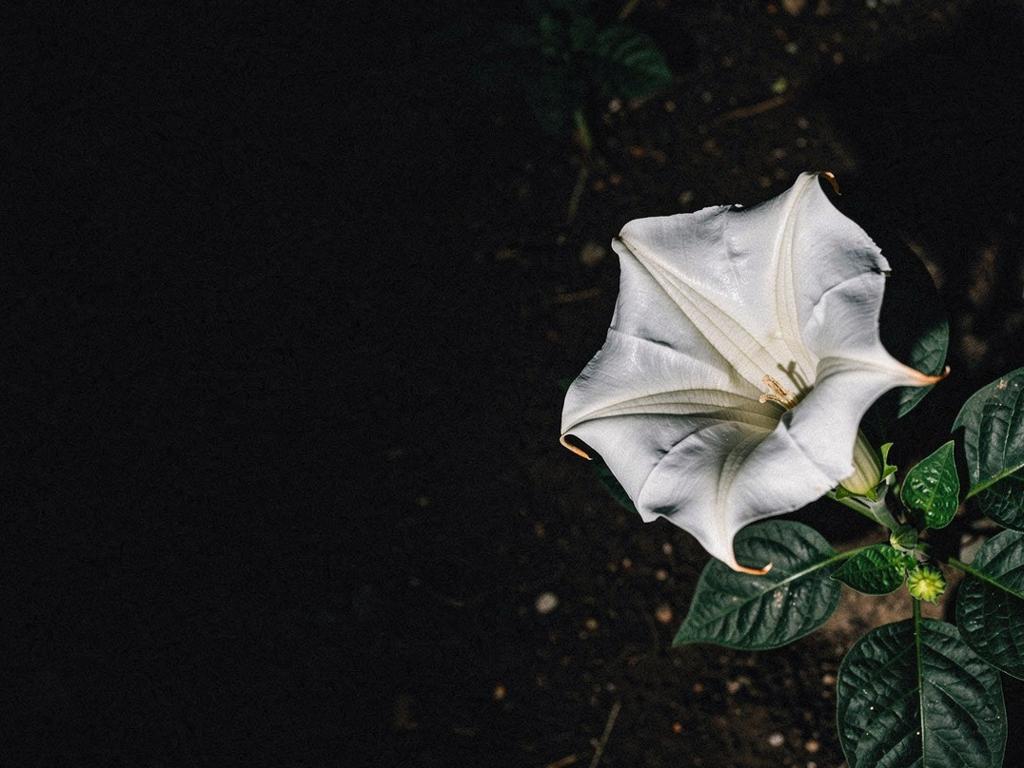
Every few months, someone shows up in a psychedelic forum asking a version of the same question: I have access to a lot of datura growing wild near my house. Should I try it? The answers, from anyone who actually knows the plant, tend to arrive fast and unanimous. Don't. And if you're still curious after reading this, probably still don't. Datura sits in a strange corner of the plant medicine world. It's technically a psychoactive plant with a long history of shamanic use, which makes people file it mentally next to ayahuasca or San Pedro. That's a mistake. Datura is not really a psychedelic in the way most seekers use the word. It's a deliriant, and the difference matters more than almost anything else you'll read about it. Datura is a genus of flowering plants in the nightshade family — cousins to belladonna, mandrake, and henbane. The trumpet-shaped flowers are genuinely beautiful, which is part of the problem. They look inviting. They grow in ditches, backyards, and vacant lots across most of the world. In some regions the plant is so common that people treat it as a weed. The active compounds are tropane alkaloids — mainly scopolamine, atropine, and hyoscyamine. These are the same chemicals that, in tiny medical doses, are used for motion sickness patches and pre-surgical dry-mouth medications. In the doses required to produce a visionary experience, they cross into a completely different territory. This isn't serotonergic psychedelia like psilocybin or DMT. It's anticholinergic delirium, and the phenomenology is closer to a high fever with hallucinations than to a mushroom trip. People who've taken datura and lived to describe it coherently — which, notably, is not everyone who tries it — rarely describe insight or beauty. They describe convincingly real hallucinations of people who aren't there, entire conversations with phantoms, complete loss of the ability to distinguish thought from reality, and days of physical wreckage afterward. Talk to almost any curandero, ayahuascero, or seasoned Western facilitator about datura and you'll get some version of a wince. In parts of the Amazon and the American Southwest, datura and its relatives (toé, brugmansia, jimsonweed) are known and occasionally used — but almost always in tiny, calibrated doses, often blended into other preparations by people with decades of training. It's treated as one of the most dangerous plant teachers in the pharmacopoeia. Not the deepest. Not the wisest. The most dangerous. The reasons are practical and specific: This distinction gets lost constantly, so it's worth spelling out. Classical psychedelics — psilocybin, LSD, DMT, mescaline — work primarily on serotonin receptors. You know you've taken something. You can usually navigate. The visions feel meaningful, sometimes overwhelming, but there's a persistent thread of self that observes. Deliriants work by blocking acetylcholine, a neurotransmitter involved in memory, attention, and the basic distinction between what's happening in the room and what's happening in your head. Under a deliriant, that distinction dissolves. You don't hallucinate a shimmering pattern on the wall. You hallucinate your dead grandmother sitting on the couch, and she's completely real, and you have a full conversation with her, and later you'll insist it happened. That's a categorically different kind of experience — and it's why people who work with plant medicines for healing don't reach for datura. The plant does have a place in traditional practice, but usually as a plant to be studied, respected, and largely avoided rather than ingested. Some Indigenous teachers describe it as a jealous or trickster spirit — a plant that can teach, but which extracts a heavy price and doesn't much care about the wellbeing of the person who approaches it carelessly. Here's the specific pattern that shows up in those online questions. Someone finds datura growing near their house. It's free. It's legal in most places (because nobody wants to eat it). They've read that it's psychoactive. They start thinking, why not? Availability isn't a signal. Poison hemlock is also free and grows wild. The fact that a plant is easy to obtain tells you nothing about whether it belongs in your body. The plants that humans have gathered around ceremonially — the ones with real healing potential — are usually the ones with a long apprenticeship attached. You don't work with ayahuasca alone in your kitchen because you found some vine. You don't work with iboga because you ordered root bark online. The same principle applies here, with more urgency, because datura will hurt you faster and less predictably than either. If you're drawn to plant medicine because you're stuck — depressed, addicted, traumatized, feeling like your life has flattened out — datura is the wrong door. It won't give you what you're looking for, and there's a real chance it takes something from you instead. The impulse behind the search is legitimate. The plant isn't the answer. If you've been reading about plant medicine and something in you keeps returning to the idea that a psychedelic experience might help, there are more established paths worth researching first. Ayahuasca ceremonies in Peru, Costa Rica, or increasingly Europe. Psilocybin retreats in Jamaica, the Netherlands, and legal-therapeutic settings in Oregon and Colorado. Ibogaine programs in Mexico for people specifically working on addiction. San Pedro (huachuma) circles in the Andes for something gentler and more heart-centered. Each of those has real risks and real screening requirements — cardiac issues, medication interactions, mental-health histories all matter. But they're worked with in structured settings by people who've done it thousands of times, who know how to hold a difficult experience, and who don't leave you alone in the middle of the night wondering what's real. That kind of container is the actual medicine, arguably more than the plant itself. A few practical questions worth asking before you commit to any retreat: If any of those questions get vague answers, keep looking. The good operators expect the questions. They're the ones you want. Datura will still be growing in the ditch when you get back. It'll keep growing there. That's fine. Some plants are worth admiring from a distance, and this is one of them. For those interested in exploring plant medicine through paths with better safety records and genuine therapeutic depth, a curated selection of ayahuasca, psilocybin, and other plant-medicine retreats can be browsed on our marketplace here.
Bad Trips: What They Really Mean and How to Move Through Them
There's a specific kind of silence that happens around 3 a.m. in a ceremony space when someone across the room has clearly hit the wall. You can feel it. The breathing changes. A facilitator moves quietly toward them. And whoever is having that experience — whether they're on ayahuasca, psilocybin, or something else — is somewhere the rest of us can't follow. I've sat with plenty of people in those moments. I've also been that person. And what I want to talk about here is the thing nobody puts in the retreat brochure: sometimes a psychedelic experience turns into the worst night of your life. Sometimes it hands you visions of your own neurons firing, or a loop of memory you thought you'd buried, or a sense of dissolving that has nothing peaceful about it. What do you do with that? What does it mean? And should it stop you from ever sitting with plant medicine again? The phrase “bad trip” is almost too small for what it describes. A rough psychedelic experience isn't just unpleasant — it's frequently the most disorienting thing a person has ever gone through. Time bends. Identity gets slippery. Some people report watching their own thoughts fragment, or witnessing what looks like the internal architecture of their brain — neurons, circuitry, cascading electrical patterns that feel too intimate to be watching. Others describe more emotional territory. A childhood memory they haven't touched in thirty years. A conversation with a dead parent that feels shockingly real. The unmistakable sense that they're dying, or already have. In ayahuasca ceremony this often gets folded into the concept of a purge — physical, emotional, spiritual — but that framing can feel a little tidy when you're actually in it. What most experienced facilitators will tell you, if you ask honestly, is that “bad” trips and “breakthrough” trips are often the same trip, just described at different distances. The night is terrifying. The morning after, something has shifted. Six months later, you're calling it the most important experience of your life. But that's the arc that sometimes happens — not always, and not automatically. People love to blame set and setting when things go sideways, and set and setting genuinely matter. But even people who did everything right — clean diet, honest intentions, a legitimate retreat, an experienced curandero — can end up in the pit. Plant medicines and psychedelics don't hand you the experience you ordered. They hand you the one that's waiting. A few honest reasons a session turns hard: None of this means you did anything wrong. The reader who's researching a retreat right now, quietly wondering whether they can handle this — you're not weak for asking. Asking is the first sign you're taking it seriously. Here's where I want to be careful, because there's a real answer and a squishy answer, and both matter. The real answer: for most physically healthy people without a personal or family history of psychosis or bipolar disorder, a psychologically difficult psychedelic experience is not medically dangerous in the way people fear. You are extremely unlikely to “break your brain.” The distress is real, sometimes extreme, but the brain is doing what brains do under a temporarily altered chemistry. When the substance metabolizes, ordinary consciousness returns. The squishy answer: “not medically dangerous” is not the same as “safe to do without support.” A rough night without an experienced facilitator, without integration afterward, and without a stable life to return to can leave real emotional damage. People develop lasting anxiety after bad trips they never processed. Some develop something called HPPD — perceptual disturbances that linger. Others carry a low-grade dread for months. This is the honest downside people don't talk about enough. The difference between a hard experience that heals you and one that harms you is almost never the experience itself. It's what surrounds it. Preparation. Container. Aftercare. If you're already committed to sitting with plant medicine, or you're in a ceremony right now and reading this on a break (unlikely but possible), a few things worth internalizing: People who work with ayahuasca long enough often describe a moment when they stopped negotiating with the medicine. That's the shift. You can't out-think it. You can only allow it. This is the part the ceremony economy consistently underplays. The trip itself is dramatic, cinematic, memorable. The integration — the slow, unglamorous weeks of sitting with what came up — is where change either takes root or evaporates. After a hard experience specifically, integration isn't optional. It's the difference between “I had a terrifying night in the jungle” and “that terrifying night reorganized how I relate to my own fear.” Both are legitimate outcomes. Only one of them justifies the cost of the retreat. Practical integration for someone who just had a rough journey: People who come out of hard ceremonies best aren't the ones who had the easiest trips. They're the ones who took integration seriously. Honest answer: sometimes yes, sometimes no. If your experience left you with lingering anxiety, intrusive imagery weeks later, or a sense that something got knocked loose that hasn't settled, the next step isn't another ceremony — it's therapeutic support. Doubling down on medicine to fix medicine is a well-known way to make things worse. But plenty of people return to plant medicine after a hard night, with more preparation and different intentions, and find something completely different waiting for them. The medicine isn't holding a grudge. It's just responsive to who you are that day. For readers weighing whether a retreat is right for them at all — especially those quietly considering ayahuasca or psilocybin for depression, addiction, or trauma — the useful question isn't “will I have a good trip.” It's “do I have the container to metabolize a hard one.” That means the retreat itself (reputable facilitators, medical screening, real integration support), and it means your life at home (people who know what you're doing, time to recover, therapeutic backup if needed). If that container is in place, a difficult ceremony can genuinely be the doorway people describe. If it isn't, even a beautiful ceremony can leave you stranded. For readers who want to look at what a properly held container actually looks like, a range of vetted ayahuasca and psychedelic retreats can be browsed on our marketplace here. Take your time with the decision — the medicine will still be there when you're actually ready.
Psychedelic Drug Development in 2026: What the Latest Trials Mean for Retreat-Seekers
If you've been quietly researching an ayahuasca or psychedelic retreat, you've probably noticed something odd happening in parallel: the pharmaceutical world is now racing to bottle up the same molecules — psilocybin, ibogaine, DMT — that retreat centres have worked with for years, sometimes centuries. Two worlds, same compounds, wildly different framings. I want to walk through the most recent wave of clinical news, because it actually matters for anyone considering a plant-medicine journey. Not because a retreat is the same as a Phase 3 trial — it definitely isn't — but because the research shapes public understanding, legal access, and the kind of conversations you'll end up having with your doctor, your family, and yourself. Here's what's happening, translated out of biotech-speak. Compass Pathways, one of the more visible companies developing a synthetic psilocybin product (they call it COMP360), just released one-year follow-up data from a Phase 3 trial in treatment-resistant depression. The trial enrolled 258 people who hadn't responded to standard antidepressants. Half received a 25 mg dose of psilocybin, half got placebo, and the study followed them through several phases: a blinded six-week window, a longer twenty-week window with a possible second dose, then an open-label stretch where anyone still struggling could receive an active dose. Around 70% of participants moved into that final open-label phase — which itself tells you something. It means the initial single dose helped some people meaningfully, but plenty of others either relapsed or didn't respond enough to feel done. The headline finding: people who received the active dose early on, plus another dose later, showed roughly a 13-point drop on the MADRS depression scale at the one-year mark. That's clinically meaningful. It's not a cure. It's a real, measurable shift held over twelve months in people whose depression hadn't budged for anything else. What does this mean for you as someone considering a retreat? A few things. First, psilocybin's antidepressant effect appears durable for a substantial subset of people — but repeat exposure seems to matter. The old story that "one journey and you're fixed" was always oversold. Many retreat centres already know this; it's why serious ones offer multi-day ceremonies and integration coaching. Second, dropouts and non-responders exist in every study, and they exist at retreats too. If someone promises you a guaranteed outcome, they're either naive or lying. Ibogaine — the West African root-derived psychedelic used for opioid and stimulant addiction — has spent decades in a strange twilight: illegal in the U.S., celebrated by a small network of clinics in Mexico and Central America, and quietly credited by many people in recovery for saving their lives. Recently that changed. U.S. Health Secretary Robert F. Kennedy Jr. hosted Dimitri Mugianis (well-known in the harm-reduction and ibogaine advocacy world) and other voices calling for federal research funding. Congressman Doug Collins spoke about ibogaine on cable news. A supplier filed a citizen petition with the FDA. The word ibogaine is now being said out loud in rooms where it used to be whispered. Why does this matter for the addiction-recovery reader? Because access is shifting. Texas allocated $50 million to ibogaine research. The Department of Veterans Affairs is quietly interested. If you or someone you love is looking at ibogaine specifically for opioid dependence or alcoholism, you're no longer operating in complete regulatory darkness. That's good news. It also means the sketchy end of the ibogaine world — unlicensed operators, thin medical screening, no cardiac monitoring — is about to get more competition from clinical settings. Ibogaine can stop the heart of the wrong candidate. Cardiac screening is non-negotiable. Any provider who waves that requirement off is a provider you walk away from. Ayahuasca sits in an interesting spot: it's the plant medicine getting the most cultural attention from retreat-seekers, and simultaneously the least pharmaceutical action. There's no ayahuasca Phase 3 trial. There's no synthetic "ayahuasca product" being filed with the FDA. Companies like Definium and others are working with DMT (one of ayahuasca's key components) in isolated, injected form for anxiety — but that's a different animal. Injected DMT is a fifteen-minute experience in a clinic. Ayahuasca in ceremony is a four-to-six-hour journey guided by a curandero who spent decades apprenticing with the vine. What this means, practically: if ayahuasca calls to you, the retreat path isn't going to be replaced by a pill any time soon. The ceremonial container — the icaros, the diet, the group setting, the master plants beyond the brew itself — is not something a pharmaceutical company can bottle. That's a feature, not a bug. It also means the responsibility of finding a legitimate, safe, well-run ayahuasca retreat still falls squarely on you. Here's the thing about biotech announcements — they're written for investors, not for you. When you see headlines about approvals, trials, and acquisitions (Eli Lilly just closed its purchase of AtaiBeckley, folding another psychedelic developer into big pharma), the story is really about market timelines, share prices, and regulatory strategy. It's not necessarily about whether psychedelics work. That question has been answered in dozens of smaller trials for years. A few things to keep in mind when the psychedelic news cycle gets loud: The clinical progress is genuinely encouraging, but it doesn't replace the questions you need to sit with before booking. Are you working with a therapist? Have you told your doctor about any SSRIs or other medications you're on? Do you have someone at home who knows where you're going and can help you land afterwards? Integration — the weeks and months after — is where the actual life change happens, or doesn't. Retreats that don't offer integration support are selling you half the product. Choose based on lineage, not marketing. A good ayahuasca centre will tell you who its curanderos apprenticed with. A good ibogaine clinic will hand you a cardiac screening checklist before you've even asked. A good psilocybin retreat will explain, in plain language, what happens if you have a hard journey. Vague websites full of stock photos and buzzwords about "transformation" are a red flag. Specificity is a green flag. We're living through a strange convergence. Ancient plant-medicine practices, dismissed by Western medicine for a century, are now being validated in the highest levels of the pharmaceutical world — even as the actual retreat and ceremony space keeps doing its quiet work, largely unchanged. Both paths have value. Both have risks. Neither is the whole answer. If you're reading this because you're stuck — in addiction, in depression, in a life pattern you can't shake — the news that psilocybin held its antidepressant effect for a year in a rigorous trial is meaningful. So is the fact that ibogaine is finally getting mainstream political attention. So is the reality that thousands of people have found meaningful shifts through ceremonial ayahuasca work with skilled facilitators, long before any of this made the news. For readers who want to take the next step, a curated range of ayahuasca and psychedelic plant-medicine retreats can be browsed on our marketplace here. Take your time. Ask hard questions. The right retreat is the one that respects both the medicine and you.
Inside the FDA's Psychedelics Hearing: What It Means for Future Access
Something unusual happened at the FDA's White Oak campus recently. Roughly three hundred people showed up in person — with another thousand watching online — for a rare public hearing on whether, and how, psychedelics might one day be approved as therapeutic drugs. If you've been following the slow, sometimes maddening march of psychedelics toward mainstream medicine, this was a moment worth paying attention to. These aren't your standard regulatory meetings. The FDA has only convened two of these so-called Part 15 hearings since 2020. They're informal, discretionary, and usually reserved for topics the agency considers to be in the public interest. Getting one for psychedelics is, in itself, a signal. Around eighty people delivered two-minute comments across the afternoon. Half in person. Half beamed in by video. The audience? Overwhelmingly people from inside the psychedelics field — researchers, clinicians, drug developers, veterans' advocates, and a fair number of true believers. If you were expecting a balanced roomful of skeptics and supporters, this wasn't it. The comments ranged widely, but a few themes kept surfacing. Provider training. Patient safety. Access. Data collection. None of it was groundbreaking for anyone who's been tracking this space — but the accumulation of voices, all pointing in similar directions, is telling in itself. One repeated plea: don't treat psychedelics as drugs that work in isolation. Speakers like Lawrence Leeman from the University of New Mexico pushed for the framing of psychedelic-assisted therapy, with real weight given to preparation and integration. Psychologist Geoff Bathje said he'd been disappointed to watch the agency downplay the therapeutic relationship in clinical trials, treating the drug effect as if it could be cleanly isolated from context. Here's the wrinkle, though. The FDA doesn't regulate psychotherapy. It regulates drugs. So even sympathetic staffers are working within a legal frame that wasn't built for what psychedelic treatment actually looks like in practice. Not everyone wanted mandatory psychotherapy baked into approvals. Peter Hendricks, a professor at the University of Alabama at Birmingham, argued that a blanket therapy requirement would hit hardest on people who already can't afford quality mental health care. Many patients in his trials, he pointed out, are low-income and uninsured. Requiring them to also access a licensed psychotherapist — often out of pocket — could effectively lock them out. His suggestion was cleaner: let the label specify which of three models the evidence actually supports. Safety monitoring. Psychological support. Or full-blown psychotherapy. Different molecules, different indications, different frameworks. Labels aren't just paperwork, by the way. Amna Aslam from Radial made the point that insurers build their coverage rules directly from what's on the label. Write it too narrowly, and reimbursement becomes a nightmare. Write it thoughtfully, and coverage might actually reach the people who need it. Another recurring theme was how restrictive the safety scaffolding around any approval should be. In FDA-speak, that's REMS — Risk Evaluation and Mitigation Strategies. Multiple speakers asked the agency to design REMS on a drug-by-drug basis, rather than slapping a single template across the whole psychedelic class. Lawrence Goldkind, a former FDA staffer himself, pushed for exactly this kind of tailoring. Advocates on this front will likely be pleased. From what we understand, a shared class-wide REMS is very unlikely, at least in the near term. The concern underneath all of this is access. Laurel Kilgour, speaking for the Psychedelic Bar Association, put it bluntly: an overly aggressive risk mitigation framework can actually undermine safety, because it pushes people toward underground alternatives with zero oversight. If the clinic route is impossibly gated, patients will find another route. They always do. Christian Reed, a retired Green Beret speaking on behalf of at-home ketamine company Mindbloom, took this argument even further. Don't lock this inside clinics in a handful of major cities, he told the panel. Don't weigh it down with so much overhead that insurers walk away. Not everyone was in a hurry. Eddie Jacobs, a researcher at Johns Hopkins, argued for a conservative initial rollout — what he called a safety floor anchored close to the trial context. Yes, he admitted, this will limit access at first. Yes, it puts extra weight on providers. But starting stronger and loosening as evidence accumulates, he said, is better than the reverse. Amber Barnato from Dartmouth — a certified psychedelic-assisted therapy facilitator herself — called FDA approval of psychedelics “ethically defensible” but flagged that the underlying evidence is of low certainty. Small trials. Functionally unblinded designs. Her fix was to build ongoing comparative effectiveness studies via registries that actually track things consistently: patients' intentions, expectations, the quality of preparation and integration. Right now, she said, those are captured haphazardly across trials, when they're captured at all. Then there was Susan Taymor Sagy, whose 21-year-old daughter died following psychedelic use. Her comment cut through the room. Public education, she told the panel, cannot be an afterthought. An FDA approval carries enormous cultural weight, and the messaging around it needs to reflect that. Only one speaker showed up as an outright critic: Kevin Sabet, a familiar figure in drug policy debates. He joined virtually, despite being listed to attend in person. He opened by pointing out he had no financial disclosures to make — a barbed reference, presumably, to the many speakers who did. Psychedelics, Sabet argued, should earn approval through science and trials, not through politics or podcasters. He hit the studies for small sample sizes and methodological weaknesses. He also seemed to gesture at Americans for Ibogaine co-founder Bryan Hubbard, who had recently invoked JFK's line about how those who make peaceful revolution impossible make violent revolution inevitable — while advocating for ibogaine access at a veterans' convention. Whatever you think of Sabet's politics, his was one of very few voices at the hearing not cheering the process forward. The rest of the room, as one attendee described it, felt at times a bit self-congratulatory. The moderator asked people twice not to applaud. A few clapped anyway. Most comments focused on mental health indications — depression, PTSD, addiction, the usual suspects. But a small chorus tried to widen the frame. Speakers from Clusterbusters, the Psychedelics and Pain Association, and Cy Biopharma discussed psychedelics for pain, particularly for something like cluster headache, where the standard trial design might not even fit. Cluster headache patients often benefit from sub-perceptual or low doses rather than the full ceremonial experience. One cochlear implant recipient even suggested psychedelics might help patients accelerate the neural learning curve required to make sense of the device. Whether that gets any regulatory traction is another question — but it's a good reminder that the therapeutic possibilities here don't stop at psychiatry. The most striking part of the whole afternoon may have been what didn't happen. In previous Part 15 hearings, back-and-forth between the federal panel and commenters is a normal feature of proceedings. Microphones had been placed in front of each of the nine panellists. The agenda allowed for it. Speakers even rattled through their two-minute slots ahead of schedule, leaving time to spare. And yet, aside from opening remarks, not a single panellist asked a question. Not one word. That silence is what leaves people in the field guessing. What does the FDA actually want to know? What are its private concerns? Which comments landed and which slid past unnoticed? The format didn't reveal any of it — a conveyor belt of two-minute pitches, absorbed in stone-faced quiet by the people who'll eventually write the rules. If you're reading this because you're weighing whether plant medicine or a psychedelic retreat might help with something you're carrying — depression, addiction, trauma, a life pattern you can't seem to break — the takeaway is a mixed one. The regulatory path in the U.S. is inching forward. Slowly. With real disagreement inside the field about what safe access should look like. What it isn't yet is a system you can walk into and get reimbursed for. And even after approvals arrive, the clinical model — dosing in a sterile room, minimal preparation, limited integration — may look very different from what people describe finding in a well-run ceremonial retreat. The debate at White Oak was, in a way, an argument about how much of the ceremonial and relational context to preserve when the medicine gets professionalised. If you want to explore what's already available in the current landscape — legitimate, well-facilitated ayahuasca ceremonies, psilocybin retreats, ibogaine programs for addiction, and other plant-medicine offerings — a curated selection of retreats can be browsed on our marketplace here. Whatever the FDA eventually decides, the older traditions aren't waiting on Washington, and for many people that's exactly the point.
LSD for Anxiety: What Definium's Phase 3 Results Mean for Psychedelic Medicine
Something quietly significant happened in psychedelic drug development this autumn. A company called Definium Therapeutics posted its second positive Phase 3 result for a low-dose LSD product aimed at generalised anxiety disorder — the everyday, grinding kind of anxiety that keeps people awake at 3 a.m. wondering if they left the stove on, or worse. If you're someone weighing an ayahuasca retreat, a psilocybin ceremony, or any other plant-medicine path for your own mental health, this news matters — not because it changes what a retreat feels like, but because it changes the landscape you're making that decision inside. The headline sounds dry. A pharmaceutical company hit its endpoints. Big deal, right? But behind that press release is a slow, real story about how psychedelics are moving from underground use into clinical practice — and how the categories we use to think about them (recreational, sacred, medical, spiritual) are starting to bleed into each other. That's worth understanding before you book anything. Definium's lead candidate, DT120, is an orally dissolving tablet form of LSD dosed at levels far below what anyone would call a recreational trip. The Phase 3 study, called Panorama, enrolled 245 participants across roughly 32 sites in the U.S. and internationally. Volunteers were randomised into three groups: a 100 microgram dose, a 50 microgram dose, or placebo. The blinded period ran twelve weeks, followed by a longer extension phase. The topline result — the thing companies are legally allowed to shout about before the peer-reviewed data lands — was positive. That means the drug beat placebo on the trial's primary anxiety-reduction measure. It's the third positive Phase 3 readout Definium has posted since June, and the second specifically in GAD. In pharma terms, that's a hot streak. The tolerability profile, as reported, looked clean enough for a drug that will almost certainly face intense FDA scrutiny. No single result guarantees approval — regulators want to see full datasets, safety monitoring, and a real-world plan for how the drug gets prescribed and used. But two positive Phase 3s in a row is the kind of foundation that gets a medicine to market. If your mental image of LSD is a 1960s poster, a Grateful Dead bootleg, or a friend-of-a-friend's twelve-hour couch odyssey, the idea of it being prescribed for anxiety probably feels like a category error. Here's the thing: at the microdoses and low-doses being studied clinically, the experience is nothing like a full-blown trip. Some formulations aim to produce measurable neurological effects without hallucinations at all. Researchers have been circling this idea for decades. LSD, psilocybin, and related compounds appear to loosen entrenched patterns of thought — the same rumination loops that fuel chronic anxiety, depression, and addiction. Even at sub-perceptual doses, there's growing evidence they nudge the brain toward flexibility. That's the therapeutic bet: not that you'll have a mystical breakthrough on your lunch break, but that your nervous system will slowly become less rigid. None of this replaces what happens in a traditional ceremony. A ceremonial ayahuasca night, a full psilocybin session, or a San Pedro walk in the Andes operates on entirely different terrain — subjective, symbolic, communal. But the clinical work legitimises the underlying claim these traditions have been making for centuries: these molecules have real effects on human suffering. If you're actively researching a retreat — for depression, trauma, addiction, or just to break out of a life pattern that feels stuck — a corporate Phase 3 result probably feels a long way from what you're planning. You're picturing a maloca, a shaman, a bucket, a difficult night. Not a pill on a clinician's tongue depressor. Still, the news matters for three practical reasons: What it doesn't change: the actual work. Whether you're taking a microdose in a clinical trial or drinking ayahuasca in the Sacred Valley, the medicine only opens the door. You still have to walk through it, and you still have to metabolise whatever's on the other side. Traditional Amazonian and Andean cultures speak of certain plants as teachers — master plants that offer specific lessons if you approach them with respect and preparation. Ayahuasca, tobacco, San Pedro, chacruna. The framing isn't metaphorical for the people who work with these plants. It's operational. The plant is understood to have intelligence, agency, and a curriculum. Pharmaceutical psychedelics like DT120 come from a completely different lineage. They're purified single molecules, synthesised in labs, dosed to the microgram. There's no dieta, no icaro, no maloca, no shipibo textiles glowing in candlelight. There's a clinical setting, a trained monitor, and a validated symptom scale at week twelve. Neither path is inherently superior — but they're not interchangeable either. Someone with severe treatment-resistant anxiety and a limited window for travel may be perfectly served by a clinical protocol. Someone processing generational trauma or looking for a genuine spiritual reorientation is unlikely to find what they need in a hospital room. Ask yourself honestly which one you're actually looking for. Most people don't know until they say it out loud. Anxiety is one target. Addiction is another — and it's where the case for psychedelic medicine gets particularly compelling. There's a long and growing literature on ibogaine for opioid dependence, psilocybin for alcohol use disorder, and ayahuasca for a range of substance patterns. The mechanisms aren't fully understood, but participants consistently describe something like a sudden shift in their relationship to the substance — the compulsion loosens, sometimes overnight. Retreats that specialise in addiction recovery tend to look and feel different from generic ceremony centres. They typically include medical screening, longer stays, and structured aftercare. If you're considering plant medicine primarily to interrupt an addiction, look for centres that treat it that way — not add-ons to a wellness week. A note of caution: no serious practitioner in this space will tell you a single ceremony fixes addiction. What the medicines seem to offer is a window — a period of unusual clarity and openness during which the hard work of recovery becomes possible. Waste that window and you're back where you started. Use it, with support, and things can change permanently. If you're the kind of person who reads Phase 3 press releases (or someone else's rewrite of them), a few things are worth tracking as this field matures: None of this is a reason to wait. The best time to work with plant medicine, if you're called to it, is usually now — not after the market has been reshaped by whichever pharma company gets there first. Just go in informed. The Definium result is one data point in a much larger story about how humans are learning — or relearning — to use these compounds for healing. The jungle and the lab are converging on the same conclusion from opposite ends: certain molecules, taken with intention and support, can shift things that nothing else touches. Whether you approach that through a ceremony in Peru, a clinical trial in Boston, or something in between, the underlying invitation is the same. For readers who want to take this further and see what's actually available right now, a range of curated ayahuasca and psychedelic retreats can be browsed on our marketplace here. Take your time with the decision. The medicine, whichever form you choose, isn't going anywhere.
Craving More Stories?
Join our ShopAyahuascaRetreats newsletter for the latest updates on thrilling
destinations and inspirational tales, delivered straight to your inbox!
We value your privacy. Your email address will never be shared or published.
New Zealand Approves MDMA for PTSD: What It Means for Psychedelic Therapy Access
New Zealand just made a quiet but significant move. Its medicines regulator, Medsafe, has cleared two psychiatrists to prescribe and administer MDMA to patients with PTSD. Not in a research trial. Not on compassionate grounds. As an actual treatment, delivered alongside psychotherapy, to people walking into a clinic. If you've been following the slow drip of legal psychedelic-assisted therapy rolling out across the world — and if you're one of the many readers weighing whether plant medicine or psychedelic healing might help with your own trauma, addiction, or depression — this news matters. Not because it changes access for most people overnight. It doesn't. But because it's another crack in a wall that's been holding for fifty years. Two Kiwi psychiatrists now have authorisation to prescribe MDMA specifically for post-traumatic stress disorder. The treatment isn't handed out as a pill and a wave goodbye. It sits inside a broader therapeutic protocol — psychotherapy sessions leading up to the dosing days, the medicine itself administered under supervision, and integration work afterward. This is the model that late-stage clinical trials have been refining for over a decade, and it's the model regulators keep landing on when they finally say yes. The move comes about a year after the same regulator approved a single psychiatrist to prescribe psilocybin for treatment-resistant depression. Two clinicians can now offer psilocybin in New Zealand. Two others can now offer MDMA. Nobody, yet, holds approval to prescribe both. That's the whole national roster. It's tiny. It's also more than most countries have. Across the Tasman, Australia moved first. In July 2023, Australian regulators rescheduled MDMA and psilocybin for limited medical use — MDMA for PTSD, psilocybin for treatment-resistant depression. That decision made global headlines and, honestly, raised expectations that a wave of patients would soon be walking through clinic doors. The reality has been more sober. Data from the Australian drug regulator suggests fewer than one hundred patients per year have been treated under the scheme. New Zealand's approach is similar in spirit, though it doesn't involve rescheduling the drugs themselves — individual clinicians must instead be authorised as prescribers. In practical terms, patient numbers will almost certainly be smaller in New Zealand than in Australia, at least at first. The interesting shift in Australia is on the payment side. The Department of Veterans' Affairs, a public payer, and Medibank, a private insurer, have both started reimbursing psychedelic therapy in certain cases. That's the first real signal that this treatment might be moving from experiment toward standard-of-care, at least for specific populations. New Zealand isn't there yet. Here's the part nobody puts on a press release. Patients in New Zealand will pay out of pocket. All of it. Estimates at launch sit around NZ$15,000 — roughly US$9,000 — for a full course of MDMA-assisted therapy. There's no government funding, no private insurance covering it, and while the country's medical-expenses claim-back system exists in theory, it's a long way from covering psychedelic treatment through the Accident Compensation Corporation. Fifteen thousand dollars is not a small ask. For someone who's spent years cycling through SSRIs, talk therapy, and possibly ketamine infusions with limited results, it might feel worth it. For most people carrying untreated PTSD — a population that skews toward economic hardship — it's simply out of reach. This is the same story unfolding wherever psychedelic therapy has gone legal: the wealthy get access first, and the rest of the population waits for insurers, governments, or scale to bring costs down. Dr Gary Wynn, one of the two newly approved psychiatrists, is candid about this. He hopes reimbursement will come. He also thinks the way to get there is to start treating patients, gather outcomes, and build a case that public payers can eventually justify. It's a slow game. It's the only game. Wynn's approval took thirteen months to secure. Part of that lag was because he was first through the door — the regulator had never approved an MDMA prescriber before and was essentially building the process in real time. Future applicants might see decisions in closer to six months, which is still slow but no longer glacial. To get approved, clinicians must demonstrate what Medsafe calls “substantial expertise” and lay out in detail how they'll deliver treatment safely. That's harder than it sounds in a country with almost no domestic clinical trials of psychedelics. So where does the expertise come from? Wynn's path is instructive: That stack of qualifications is essentially the current template for anyone hoping to be a legitimate psychedelic prescriber in a country that hasn't built its own training pipeline yet. It's expensive, time-consuming, and requires patching together programs across three continents. Which is why organisations like The Psychedelic Training Centre NZ, run by James Bunn, are trying to build local capacity from the ground up. Wynn expects to dose his first patients within a month or two of approval. His upper limit? Around fifteen patients per year, based on the three-dose protocol MDMA-assisted therapy typically follows. If he also gets approval to prescribe psilocybin — a protocol he's already submitted — those patients would eat into his MDMA capacity, not add to it. One psychiatrist, one clinic, roughly fifteen people a year. Multiply that by the handful of clinicians likely to come online over the next few years, and you start to see why nobody's calling this a psychedelic revolution. It's a foothold. A proof of concept. The more scalable version — where nurses, therapists, and other trained professionals can support dosing under an authorised prescriber's supervision — is what Bunn and others are pushing for. It's the only way the numbers move from dozens to thousands. For most readers researching whether ayahuasca, psilocybin, MDMA, or another plant medicine might help with trauma or addiction, the practical takeaway from New Zealand's move is limited. Unless you're a New Zealand resident with $15,000, a clear PTSD diagnosis, and patience for a waiting list, you're not going to walk into one of these clinics next month. What it does confirm is a broader trend worth paying attention to. Regulators in credible jurisdictions — Australia, New Zealand, Switzerland, parts of the United States — are increasingly willing to allow supervised, therapist-supported psychedelic treatment for specific mental-health indications. The evidence base for MDMA in PTSD and psilocybin in depression keeps getting stronger. The stigma keeps getting weaker. If you've been sitting on the fence about whether plant medicines and psychedelics are a serious healing modality or a fringe experiment, the answer from the medical establishment is shifting, slowly, toward the former. That doesn't mean a ceremonial ayahuasca retreat in Peru and an MDMA session in a New Zealand clinic are the same thing. They aren't. Different substances, different traditions, different contexts, different risks. But they share a working premise: that non-ordinary states of consciousness, held inside a supportive container, can loosen patterns that ordinary therapy struggles to shift. If you're weighing your options and the price tag of clinical MDMA therapy feels out of reach, retreat-based work with other psychedelics or master plants remains a legitimate — and often more accessible — path for many people. Do your homework. Ask about facilitator training, medical screening, and integration support. Cheap doesn't necessarily mean bad, and expensive doesn't necessarily mean safe. For readers who want to explore this further, a range of vetted ayahuasca and psychedelic retreats can be browsed on our marketplace here.
Ayahuasca vs. Psilocybin Mushrooms: Which Plant Medicine Fits Your Healing?
Ask anyone who’s spent time in the plant-medicine world which is “better” — ayahuasca or psilocybin mushrooms — and you’ll get a shrug, followed by a story. That’s because the honest answer is: it depends on you, what you’re carrying, and what you’re hoping to shift. Both are powerful. Both have thousands of years of ceremonial use behind them. And both have helped people crack open patterns around addiction, depression, grief, and trauma that talk therapy alone couldn’t budge. If you’re actively researching a psychedelic retreat and trying to figure out which door to walk through, this is for you. No mysticism-as-marketing. Just what these two master plants actually do, how the experiences differ in practice, and how to think about which might be the better fit for where you are right now. Ayahuasca is a brew — usually a slow simmer of the Banisteriopsis caapi vine with the DMT-containing chacruna leaf. It comes out of the Amazon, carried through centuries of practice by Shipibo, Shuar, and other indigenous lineages, plus the more recent Brazilian churches like Santo Daime and União do Vegetal. You drink it in ceremony, typically at night, guided by someone who has trained for years — sometimes decades — to hold that space. Psilocybin mushrooms grow on almost every continent. Their ceremonial use runs deep in Mazatec traditions in Oaxaca, and traces of ritual mushroom use appear across ancient Europe, North Africa, and beyond. In a modern retreat setting you’ll usually take them as dried mushrooms, a tea, or increasingly as measured truffles at legal centers in the Netherlands or Jamaica. The plants have distinct personalities, and long-time facilitators talk about them almost like people. Ayahuasca is often described as strict, feminine, exacting — a grandmother who will show you exactly what you came to see, whether you asked politely or not. Mushrooms tend to feel more playful, curious, sometimes mischievous. That doesn’t mean they’re gentler. It means they teach differently. Ayahuasca ceremonies run long. Plan for four to six hours in the dark, sometimes with icaros (medicine songs) being sung by the facilitator throughout. The visuals can be extraordinarily detailed — geometric, architectural, alive. Purging is part of the deal. Vomiting, crying, occasional diarrhea, shaking — it isn’t a side effect the tradition apologizes for. It’s considered part of the cleaning. Most people who go through it describe the experience as physically and emotionally demanding in a way that photos and YouTube videos can’t really convey. A psilocybin journey at a moderate-to-high dose typically runs four to six hours as well, but the arc feels different. There’s an onset of visual softening and emotional openness, a peak that can range from euphoric to confrontational, then a long tail where insights settle. Purging is much less common. Some people cry, some laugh, some just lie there staring at the ceiling as their inner world reorganizes itself. Nature-based settings tend to amplify the sense of connection mushrooms are famous for. Here’s a rough side-by-side of what participants commonly report: The research on both is genuinely encouraging, though early. Psilocybin has the bigger stack of clinical trials right now — treatment-resistant depression, end-of-life anxiety, tobacco and alcohol use disorder. The Johns Hopkins and Imperial College work has moved the needle on how mainstream medicine views it. Ayahuasca has fewer controlled studies but a growing body of observational research suggesting real benefit for depression, PTSD, and substance dependence, especially when used in a well-held ceremonial context. For addiction specifically, both have credible track records. Ayahuasca’s reputation in recovery circles is tied partly to the intensity of the experience — many people describe seeing, in visceral detail, exactly what their substance use is costing them and everyone they love. It doesn’t leave much room for denial. Ibogaine gets more headlines for opioid dependence, but ayahuasca has quietly helped countless people step out of alcohol and cocaine cycles. Mushrooms, in the Hopkins smoking-cessation work, showed jaw-dropping quit rates. They seem to loosen the grip of habit by dissolving the story you tell yourself about who you are and what you need. For depression, mushrooms may be the slightly easier entry point. The experience is more contained, the retreat infrastructure in legal jurisdictions is more mature, and the physical toll is lighter. For deep-seated trauma — especially the kind that lives in the body and won’t respond to insight alone — ayahuasca’s longer, more physical process often reaches places mushrooms don’t. That said, plenty of trauma survivors have done extraordinary work with psilocybin. There’s no universal rule. Ayahuasca is not legal to consume recreationally in most countries, including the United States. There are narrow religious exemptions (the UDV won a 2006 Supreme Court case), but the mainstream path for most seekers is traveling to Peru, Costa Rica, Ecuador, Colombia, or Brazil where retreats operate openly. Psilocybin sits in a shifting patchwork: legal in a therapeutic framework in Oregon, decriminalized in several U.S. cities, legal in truffle form in the Netherlands, unregulated in Jamaica, part of a licensed access model in Australia. In 2026 the map keeps redrawing itself. Both medicines carry real risks and both are safer when you do the homework. Key things to sort out before booking anything: Ayahuasca retreats in the Amazon typically run 7 to 12 days and cost anywhere from around $1,200 for a modest local center to $4,000+ for a high-end program with private accommodations, dieta plants, and integration counseling. Psilocybin retreats — most reputable ones being in Jamaica, the Netherlands, or increasingly Portugal — tend to run 4 to 7 days and sit in a similar mid-range price bracket, though the shorter length can make them cheaper overall. Time-off-work matters too. A proper ayahuasca dieta asks you to give up salt, sugar, alcohol, pork, spicy food, and sexual activity for a couple of weeks before and after. Not because the plant is punishing you, but because a quieter body and mind hear the medicine more clearly. Mushroom retreats generally ask for a lighter preparatory protocol, though a few days of clean eating and no alcohol before is standard. Setting matters more than most first-timers realize. The jungle changes you before the brew does — the sounds, the heat, the sheer aliveness of the place is part of the medicine. Mushroom retreats in a coastal villa or a European countryside center offer a different container: gentler, more familiar to Western nervous systems, easier to return to “normal” from. Neither is better. They’re answering different questions. If you’re drawn to the ceremonial depth, willing to travel, and ready for something that will meet you at full volume, ayahuasca is probably calling. If you want something more contained, easier to access legally, and slightly less physically demanding as a first psychedelic experience, mushrooms are a strong starting point. Many people end up doing both over time — they’re not competitors, they’re different teachers. Whichever direction you lean, take your time choosing where you go. Read the facilitator’s background carefully. Talk to past participants. Trust discomfort with a place more than you trust its marketing. For readers who want to compare specific options across both traditions, a curated selection of ayahuasca and psilocybin retreats can be browsed on our marketplace here. Sit with the choice for a few weeks — the right retreat usually feels obvious once you stop trying to force it.
The FDA's New Psychedelic Drug Framework: What It Means for Patients
Something quietly significant happened in the psychedelic world this month. Four senior staffers at the U.S. Food and Drug Administration published a commentary in the New England Journal of Medicine laying out — for the first time in a mainstream medical venue — the agency's evolving framework for regulating psychedelic drugs. If that sounds dry, stay with me. Because for anyone considering ayahuasca, psilocybin, or MDMA as a route toward addiction recovery or trauma healing, this piece of regulatory writing is one of the clearest signals yet about where the legal, above-ground path is heading. The commentary isn't a new rulebook. It's more of a philosophical statement dressed up in regulator-speak — an acknowledgment that psychedelics don't fit neatly into the boxes the FDA built for statins and antidepressants, and that the agency is trying, in real time, to design boxes that actually fit. Here's what the piece says, what it leaves out, and what it means for the person quietly weighing whether to book a retreat or wait for a clinic. The commentary opens where most honest conversations about psychedelic medicine start: with the mental health crisis in America. Depression rates are stubborn. PTSD in veterans and trauma survivors keeps outrunning the tools clinicians have. SSRIs help some people and fail plenty of others. The agency describes itself as “committed to meeting this moment with the urgency it deserves” — bureaucratic phrasing, sure, but the underlying admission matters. Regulators are conceding that the existing toolkit isn't enough. Psychedelic compounds are named as one plausible avenue forward. Not the only one, not a miracle, but a serious candidate worth investing regulatory attention in. That framing alone is a shift from the tone of even a decade ago, when the word psychedelic in an FDA document was almost always paired with the word abuse. The authors walk briefly through the arc — the mid-century research boom, the Schedule I freeze that followed, the modern revival kicked off by trials at Johns Hopkins, NYU, MAPS, and others. They also list the concrete steps the agency has taken to move things along, including Breakthrough Therapy designations for a growing roster of candidates. The most recent went to an LSD-based candidate for major depressive disorder, joining earlier designations for psilocybin and MDMA programs. You'll see the phrase Breakthrough Therapy thrown around in nearly every psychedelic press release. It's worth understanding what it actually gets you. In practical terms, the designation gives a drug developer more frequent meetings with the FDA, the option of rolling review (submitting parts of the application as they're ready instead of waiting to send one big package), and access to priority review at the end. It speeds things up. It does not guarantee approval. Compass Pathways' psilocybin program is currently in rolling review, expected to wrap next quarter. The Usona Institute is reportedly under a similar procedure. Several MDMA programs continue to work through the resubmission process after the well-publicized setbacks of the past couple of years. What this means for you, as someone reading about retreats: the first legally prescribed psilocybin session in an American clinic is probably closer than most people realize. Probably. Regulatory timelines have a habit of slipping. Back in 2023, the FDA released a draft guidance for industry on psychedelic clinical trials. It was the first document of its kind from a major regulator anywhere in the world. Then the agency did something unusual: it opened the floor for public comment and got around two hundred responses. Sponsors, academics, patient advocates, therapists, ethicists, and community organizations all weighed in. Three years later, the framework has been refined. Some of the tensions the guidance tries to address are ones anyone who has sat in a ceremony would recognize: The FDA's answer, roughly, is that psychedelic drug development requires a hybrid framework — treating the pharmacology by the standard rulebook while acknowledging that the therapy wrapped around the dose is itself part of the intervention. That's a big conceptual concession. It's also going to make the eventual REMS (Risk Evaluation and Mitigation Strategies) programs for approved psychedelics unusually detailed. Here's the honest part. If you're 34 years old, stuck in a depression that hasn't budged in five years, and you're wondering whether to fly to Peru — the FDA's commentary doesn't help you tonight. Approval is still ahead, not behind. Even when approvals come, the first wave of legal psychedelic therapy in the U.S. will likely be expensive, geographically limited, and gated by strict diagnostic criteria. Many people who could benefit won't qualify, or won't be able to afford the clinic model, or won't want the sterile setting. That's why the retreat world exists in the shape it does. Traditional ayahuasca ceremonies in the Amazon, psilocybin retreats in Jamaica and the Netherlands, ibogaine programs in Mexico for opioid addiction — these are the routes people have used for years while the regulatory machine grinds forward. The FDA framework doesn't shut those doors. If anything, it validates the underlying premise: that these compounds have real therapeutic potential, and that the therapeutic context matters as much as the molecule. What the framework does do is raise the standard of what a good psychedelic experience should look like. Reading between the lines of the guidance, the FDA is essentially describing what a well-run ceremony has always tried to provide: If you're evaluating a retreat, use that list. Ask whether the facilitators screen people out (a retreat that says yes to everyone is a red flag). Ask what their integration process actually looks like beyond a group circle the next morning. Ask about medical protocols, medication interactions, and what happens if someone has a difficult psychological reaction at 3 a.m. The psychedelic space produces headlines at a pace that can make anyone dizzy. One week a Breakthrough Therapy is granted, the next a trial hits a snag, the next a state legislature votes on decriminalization. A few filters that help: Distinguish approval from access. A drug being approved by the FDA doesn't mean it's immediately available at your local clinic. It has to be scheduled by the DEA, priced by the sponsor, covered by insurers, and adopted by trained clinicians. That process takes years even after the approval headline hits. Watch for what's being measured. Trials measure specific outcomes — usually depression scores or PTSD symptom checklists over a defined window. That's important, but it's not the whole picture of what people report from psychedelic experiences. The regulatory framework will always be narrower than the lived reality. Take timelines with salt. Every psychedelic company has projected approval dates that shifted. This isn't dishonesty; it's the nature of drug development. If someone tells you psilocybin will be legally prescribed in the U.S. by a specific quarter, treat that as a guess, not a promise. Zoom out and something interesting comes into view. Twenty years ago, the FDA would not have written this commentary. Ten years ago, it might have written a much more skeptical version. Today, the agency's tone is that of a serious regulator working through hard problems with a class of compounds it clearly thinks matter. That's not a small thing. Whether the eventual approved psychedelic medicines look anything like the ceremonies people describe from the Amazon or the mushroom retreats in Oaxaca is another question entirely. Probably not exactly. A licensed clinic with a two-therapist model and a monitored dosing room is a different animal than a maloca with icaros drifting through the night. Both can be valuable. Both can also fail people. Neither replaces the personal work — the therapy, the lifestyle changes, the community — that turns a peak experience into a lasting change. For readers who want to explore this path in its current form rather than wait for the clinics to open, a curated selection of ayahuasca and plant-medicine retreats can be browsed on our marketplace here. Whatever route you eventually take, the FDA's new framework is a reminder that this field is being taken seriously at the highest levels — and that the questions you're asking about safety, preparation, and integration are the same questions the regulators are wrestling with.
The Art of Letting Go: What Plant Medicine Teaches About Release
Letting go sounds like the easiest thing in the world until you actually try to do it. Ask anyone who's sat through their first ayahuasca ceremony, white-knuckling the edge of a mat while the brew does its work. The vine doesn't care about your plans. It doesn't care about the script you rehearsed on the flight down. And that, strangely, is the point. Across the world of ayahuasca, psychedelics, and master plants, the phrase you'll hear most often from facilitators isn't heal or transform. It's surrender. For readers considering a plant medicine retreat — maybe for addiction, depression, or a life pattern that just won't budge — understanding what letting go actually means in this context is worth more than any glossy brochure. So let's talk about it honestly. There's a reason experienced curanderos say the same thing across cultures and decades: you can't muscle your way through a ceremony. The harder you push against what's coming up, the harder the medicine seems to push back. People who've fought their way through five hours of ayahuasca will tell you it's the most exhausting non-physical thing they've ever done. The ones who softened, who breathed, who let the wave carry them — they often come out on the other side describing something closer to relief. This isn't mystical hand-waving. There's a mechanical logic to it. Psychedelics like DMT, psilocybin, and ibogaine loosen the grip of what neuroscientists call the default mode network — the part of your brain that maintains the running story of who you are. When that story quiets down, the material underneath gets a chance to surface. Trauma. Grief. Buried resentments. The subconscious loops that have been running your life. Trying to control that process is like trying to hold a beach ball underwater. Exhausting, and eventually, it pops up anyway. So facilitators teach surrender not as a spiritual nicety but as a working tool. It's the skill the medicine actually requires you to develop. People imagine letting go as some serene, cinematic exhale. In practice, it's often messier. It might look like sobbing for twenty minutes about something you thought you'd processed a decade ago. It might be the moment you realize the reason you drink isn't the reason you told your therapist. It might be a wave of nausea that turns into a wave of memory that turns into a strange, quiet clarity. A few things retreat-goers commonly describe as part of the surrender process: None of this is guaranteed. And that's part of what surrender means too — giving up your expectation of how the healing is supposed to look. Here's where a lot of first-timers get tangled. They think surrender means passivity — going limp and hoping the medicine does the work for them. It doesn't work that way. Real letting go in a psychedelic context is active. You're still engaged. You're still curious. You're just no longer negotiating with what's happening. Think of it like floating in the ocean versus fighting a current. Both require energy. But one drowns you and the other keeps you alive. Master plants tend to reward the second posture. Ayahuasca, in particular, has a reputation for showing people exactly what they've been avoiding — and then asking whether they're willing to look at it without flinching. The people who get the most out of a retreat, in my experience, aren't the ones with the most dramatic visions. They're the ones who managed, at least once during the week, to let something go that they'd been holding onto for a long time. Sometimes it's a single sentence they finally say out loud. Sometimes it's the moment they stop identifying as the person the trauma made them. You can't fake this on the night of. If the first time you attempt genuine surrender is halfway through a ceremony, you're going to have a rough time. Preparation matters, and it's the part most retreat participants underestimate. A few things worth practicing in the weeks before you travel: None of this makes the ceremony easy. It just means you'll recognize the terrain when you arrive. If you're reading this while quietly wondering whether plant medicine could help with an addiction — to alcohol, opioids, cocaine, or the harder-to-name addictions like workaholism or codependency — the surrender piece isn't optional. It's the entire mechanism. Addiction, at its core, is a refusal to feel something. That's not a moral statement; it's a mechanical one. The substance or behavior is doing a job — numbing, soothing, distracting, punishing. Ibogaine and ayahuasca both have a striking ability to interrupt this loop, but not because they magically remove the craving. They work because they force you, often over many hours, to feel the thing the addiction has been protecting you from. Letting go, in that context, means letting the protection fall away. This is why integration matters so much afterward. The letting-go doesn't end when the ceremony does. It continues in the awkward month after you fly home, when you have to figure out how to live without the old coping mechanism and without the ceremonial container that helped you drop it. Retreats that don't build in serious integration support tend to have participants who slide back within weeks. That's not a failing of the medicine. It's a failing of the framework around it. Not every psychedelic retreat is set up to hold this kind of work. Some are essentially expensive spiritual tourism. If you're evaluating options, a few signals worth paying attention to: Cost varies wildly — a legitimate ayahuasca or psilocybin retreat generally runs somewhere between $1,500 and $5,000 for a week, and ibogaine programs (which require medical supervision) often cost considerably more. Cheaper isn't always worse, but suspiciously cheap usually is. Here's the thing about letting go: it doesn't feel like victory. It rarely feels like anything at all in the moment. Most people describe the actual release as anticlimactic — a small sigh, a strange stillness, the sense that something they were carrying just… isn't there anymore. The fireworks, if they come, come later. The weeks after a retreat are often when the real letting go happens. You'll notice you didn't reach for the thing. You'll notice you didn't have the fight with your partner you would have had six months ago. You'll notice a strange spaciousness where the compulsion used to live. It's subtle. It's also, if you protect it, the most valuable thing you'll bring home. If any of this resonates and you're seriously considering the next step, a curated selection of ayahuasca and plant medicine retreats can be browsed on our marketplace here. Whatever you decide, take the decision seriously — and take the preparation more seriously than the marketing usually suggests.
Silicon Valley Money Is Flooding Psychedelics: What It Means for Retreat-Goers
Something strange is happening at the intersection of tech money and psychedelics. Over the past few years, a growing slice of Silicon Valley's wealthiest — the kind of people who once poured cash into rockets and self-driving cars — have quietly redirected serious capital toward ayahuasca research, psilocybin startups, ibogaine clinics, and a whole spectrum of plant medicine ventures. If you're the kind of person who spends late nights researching whether an ayahuasca retreat might help you climb out of a depressive rut or break an addiction pattern, this shift matters more than it might seem. Because here's the thing: when billionaires start writing checks, the entire landscape changes. Prices shift. New retreat models appear. Old traditions get pressure-tested against clinical protocols. And you, the person actually considering booking a ceremony, end up navigating a market that looks different from the one that existed even two years ago. The short answer is that the returns look enormous, and the science has finally caught up to what indigenous communities have said for centuries. Clinical trials on psilocybin for treatment-resistant depression have produced results that made pharmaceutical researchers sit up straight. MDMA-assisted therapy for PTSD keeps generating headlines. Ibogaine's efficacy for opioid dependence — long documented in underground clinics — has moved into serious academic conversation. Investors smell a category that could rival SSRIs in scale. The longer answer is more interesting. Many of the people funding this wave aren't just chasing returns. A surprising number have sat in ceremony themselves, or watched a family member get pulled out of addiction by ibogaine after every conventional treatment failed. That personal experience — the kind that flips someone from skeptic to advocate in a single night — has translated into a willingness to back the space with real money, not just curiosity. The result is a strange hybrid ecosystem. On one side, you have traditional Amazonian ayahuasca lineages that have operated the same way for generations. On the other, you have Delaware-incorporated startups running clinical trials on synthesized DMT analogues. Both are calling what they do psychedelic healing, and both are competing for your attention. Let's get specific. If you're weighing an ayahuasca retreat right now, the influx of investor money is affecting things you might not immediately notice. None of this is inherently bad. Some of the most rigorous, safety-conscious retreats operating today exist precisely because investor money let them hire the right doctors and build proper infrastructure. But it means the shopping process is more complex than it used to be. It's worth stepping back. Ayahuasca, San Pedro, peyote, iboga, and tobacco — the traditional master plants — have been used for healing and initiation for centuries, and in some cases millennia. The current investor wave is a blink in that timeline. The plants don't know or care about term sheets. The traditions that grew up around them evolved through countless hard-won lessons about dosing, ceremony, integration, and what to do when someone has a difficult night. When you're evaluating a retreat, this history matters. A center that trains its facilitators inside a specific lineage — Shipibo, Cofán, Huachipaeri, or one of the mestizo vegetalismo traditions — is drawing on that accumulated knowledge. A slickly branded operation that flew in a curandero for the week and pairs him with a Stanford-trained therapist may still be worthwhile, but the roots are shallower. Ask where the wisdom is actually coming from. The best retreats I've encountered blend both worlds thoughtfully. They honor the traditional dieta, the icaros, the ceremonial structure — while quietly maintaining medical safety standards that would satisfy a Western clinician. That combination is rare and worth searching for. This is the question that drives a lot of the current investment, and probably a lot of the readers who make it this far into an article like this. The honest answer: the evidence is genuinely promising, especially for certain substances and certain kinds of addiction. Ibogaine has the strongest track record for opioid dependence. Clinics in Mexico and Costa Rica have documented cases of long-term heroin and fentanyl users interrupting withdrawal in a single session — an outcome no conventional medication produces. It's also cardiac-risky, requires proper medical screening, and is not a magic bullet. People relapse. People also stay clean for years. Both are true. Ayahuasca has a longer, more diffuse track record with alcohol dependence, cocaine, and various process addictions. The Brazilian Santo Daime and União do Vegetal churches have members who credit the medicine with sustained recovery, and Amazonian communities have used ayahuasca in addiction contexts for decades. Recent formal studies back up what participants have long described: the plant seems to disrupt the compulsive patterns that keep addictions locked in place. Psilocybin has produced striking results in smoking cessation trials — quit rates around 60–80% at six months in small studies, dramatically higher than nicotine replacement therapy. Similar work is underway for alcohol use disorder. Here's what all of this shares: the psychedelic itself is only part of the equation. The setting, the preparation, the integration afterward, and the honest work of examining what the addiction was protecting you from — all of that determines whether the opening the medicine provides actually leads somewhere durable. Retreats that skip the integration piece are selling you half a treatment. Given how quickly the space is changing, here's a practical filter for anyone actively researching: The investor money washing through the space isn't going away, and honestly, some of it is doing genuine good — funding legitimate research, building safer clinics, making ibogaine available to people who would have died without it. But the responsibility to choose wisely still sits with you. If any of this has sharpened your thinking rather than muddied it, a curated selection of ayahuasca and plant medicine retreats worth considering can be browsed on our marketplace here. Take your time. The plants have been waiting for centuries — a few more weeks of careful research won't hurt anyone.
Dreaming of a Psychedelic Retreat?
We have the best deals and offers from thousands of organizers all over the world! Get them into your mailbox every week!
We value your privacy. Your email address will never be shared or published.
