 English
 Deutsch
 Français
 Nederlands
 Español


Reset. Heal. Grow.
Ibogaine Aftercare: How Your Nervous System Reacts to Stress Post-Treatment
Something odd happens in the weeks after an ibogaine flood dose. People describe it in almost identical terms: a coworker snaps at them and instead of the usual chest-tightening cascade, there's just… a pause. A cigarette craving arrives and passes through like weather. An old triggering song comes on the radio and the body doesn't lurch. It's disorienting, honestly. When you've spent twenty years reacting to stress in one specific way, the sudden absence of that reaction can feel almost like something's broken. It isn't. That's the point of ibogaine, and it's the part of the conversation that gets skipped over when people talk about plant medicine and addiction recovery. The ceremony gets the headlines. The aftermath is where the actual work — and the actual risk — lives. If you're researching ibogaine for opioid dependency, alcohol use, or chronic PTSD, understanding how your nervous system will behave in the month after treatment matters more than any story about visions or life reviews. Ibogaine is unusual among psychedelics. It isn't really a classical psychedelic at all, technically — it hits a strange cocktail of receptors (NMDA, sigma-2, kappa and mu opioid, serotonergic sites) and produces a long, dreamlike waking-review state that lasts twelve to thirty-six hours. But the neurological aftermath is where the plant medicine's reputation actually comes from. Users report a distinct window — roughly two to eight weeks — where habitual reactions feel dampened, softened, sometimes gone. Researchers looking at ibogaine's active metabolite, noribogaine, have proposed that it upregulates GDNF and BDNF — proteins involved in neuroplasticity. In plainer language: your brain enters a period where old wiring is more malleable than usual. The reflex arc between stimulus (a stressful email, a familiar bar, an argument with your partner) and reaction (panic, craving, rage) has more slack in it. There's a millisecond of choice where there wasn't one before. This is why practitioners in the ibogaine world talk about the “window” so much. It isn't mysticism. It's a real neurobiological state, and it doesn't last forever. Ask ten people who've completed a flood dose what changed and you'll get variations on the same handful of experiences: None of this means the underlying material is gone. It means the reactivity is temporarily unhooked from the trigger. Whether that becomes permanent depends almost entirely on what you do during and after the window closes. Here's the thing nobody wants to hear: the ceremony is the easy part. You show up, you drink the extract or swallow the capsules, you lie down, and the medicine does what it does. What comes next is when the real decisions get made. Old habits are held in place by two things — the neurochemistry that makes them feel necessary, and the environmental cues that trigger them. Ibogaine addresses the first for a limited time. It does absolutely nothing about the second. Return to the same apartment, the same friend group, the same commute past the same liquor store, and the software gets reinstalled onto the freshly wiped hardware faster than most people expect. This is the part where reputable ibogaine providers push aftercare hard, and where the sketchy ones just hand you a Gatorade and drive you to the airport. It's also where a lot of relapse stories come from — not because the medicine failed, but because nobody prepared the person for the shape of the aftermath. Ibogaine has the strongest anecdotal track record of any psychedelic for opioid dependency specifically. The interruption of withdrawal is dramatic and well-documented in observational studies out of Mexico, New Zealand, and Brazil. For alcohol use disorder, stimulant dependence, and treatment-resistant depression, the evidence is thinner but promising. For trauma processing without an addiction component — ayahuasca or psilocybin retreats are usually a gentler entry point. The honest caveats: ibogaine has real cardiac risks and has caused deaths, almost always in unscreened settings without proper cardiac monitoring. It's not legal in the United States — treatment happens in Mexico, Costa Rica, Portugal, the Netherlands, and a handful of other countries. Costs run from around $5,000 for a bare-bones setup to $15,000+ for a medically supervised clinic with real aftercare. Pre-screening should include an EKG, liver panel, and honest disclosure of every medication you're on, especially anything serotonergic. If a provider isn't asking for medical records before they take your deposit, that's your answer about the provider. In the Amazonian traditions that inform much of the modern plant medicine scene, ibogaine sits a little outside the family. It comes from the iboga root of West Africa — a Bwiti tradition, not an Amazonian one — and it operates on a different timeline than ayahuasca or San Pedro. Where ayahuasca tends to open you emotionally over multiple nights, iboga sits you down and shows you a life review whether you were ready for it or not. Practitioners who've worked with both often describe iboga as the stricter teacher. That difference in temperament is part of why iboga has developed such a specific niche in addiction recovery. It doesn't do gentle. It does thorough. For someone who's tried twelve-step, tried rehab, tried medication-assisted treatment, and still finds themselves reaching for the bottle or the syringe, that thoroughness is often what makes it feel worth the risk and the travel. None of this is a promise. Plenty of people go through ibogaine and relapse within six months. Plenty of others credit it as the pivot point of their lives. What separates the two groups is usually not the medicine — it's what the person built in the weeks after. If you do go through with treatment, be prepared for the strangest part: the calm. There's a specific quality of stillness in the weeks after ibogaine that a lot of people mistake for numbness or emotional flatness. It isn't. It's the absence of the reflex you've been living with for so long that you thought it was you. You'll get used to it. Or, more accurately, you'll get to decide what to fill that space with. Which is the whole point. For readers weighing this decision carefully, a range of curated ibogaine and plant-medicine retreats — with the aftercare and screening standards that actually matter — can be browsed on our marketplace here. Take your time with the choice. The window is real, but it opens exactly once.
Endometriosis and Work: The Hidden Career Cost No One Talks About
Picture this: you wake up at 6 a.m. with a cramping pain that radiates from your lower back through your pelvis, sharp enough that standing feels like a negotiation. You have a full day ahead. A team meeting at 9. A deadline at 4. You already used your last sick day two weeks ago. So you swallow the painkillers, put on real clothes, and try to look like a person who isn't quietly falling apart at her desk. For roughly one in ten women of reproductive age, this isn't a bad-luck morning. It's Tuesday. Endometriosis — a condition where tissue similar to the uterine lining grows in places it shouldn't — is one of the most under-discussed drivers of chronic pain in working-age women. And a study out of Hungary just put a number on what many of us have suspected for a long time: it's costing women a month's salary a year. At least. The team compared 566 women with endometriosis to 447 women without it, all of them working. Instead of just counting sick days, which is the usual lazy metric, they went broader. They looked at absenteeism (hours missed entirely), presenteeism (hours you're technically at work but functioning at maybe 60 percent), and something called work ability — a self-assessment of whether you actually feel capable of doing your job given your current health. That last piece matters. Anyone who has tried to write a coherent email while their uterus feels like it's being wrung out knows that “showing up” and “working” aren't the same thing. The Hungarian researchers took that reality seriously, which is more than most workplace studies bother to do. The numbers came out ugly. Women with endometriosis missed an average of 12.7 hours of work every four weeks because of health issues. Women without it missed 5.7. Translated into lost income, that's roughly €1,757 a year in Hungary — about $2,040, or a full month's average paycheck. And that's just the hours they were physically absent. It doesn't count the days they dragged themselves in and produced half the output, or the money spent on scans, specialists, hormonal treatments, and the years of misdiagnosis so common with this disease. Forty-two percent of women with endometriosis in the study fell into the “poor” work ability bracket, compared to just under 18 percent of women without it. That gap isn't a rounding error. It's a signal that something is being systematically ignored — by employers, by healthcare systems, and honestly by the culture at large. Endometriosis takes an average of seven to ten years to diagnose. Which means most women are navigating career-defining decades — their twenties and thirties, when promotions, raises, and reputations are being built — with a condition nobody has named yet. They're being labeled unreliable, dramatic, or “not a team player” when they're actually managing a serious inflammatory disease that no one has bothered to identify. And here's the part that doesn't make it into corporate wellness slides: chronic pain grinds people down. It affects sleep, mood, cognition, libido, relationships, everything. Over time, it can drift into depression and anxiety, and it often does. Which brings us to a conversation that's been quietly gaining traction — how women with long-standing pain conditions are looking beyond conventional treatment for relief. This isn't going to be a “ayahuasca cures endometriosis” pitch, because it doesn't, and anyone selling that is either misinformed or lying. But there's a real and growing conversation among women with chronic pelvic pain, autoimmune conditions, and treatment-resistant depression about what psychedelic and plant-medicine work can offer alongside — not instead of — proper medical care. What ceremony seems to help with, based on what facilitators and participants consistently report, is the layered exhaustion that comes from years of not being believed. The trauma of being dismissed by doctors. The grief around fertility questions. The rage at a body that feels like it's working against you. The pattern of overriding your own pain signals to keep functioning in a workplace that never asked how you were actually doing. Ayahuasca, psilocybin, and San Pedro have all been used by women navigating chronic illness as a way to process the emotional weight the illness carries — the isolation, the internalized guilt, the sense of being a burden. None of that is the same as curing the disease. But if you've lived with endometriosis long enough, you know the disease and the psychological residue it leaves aren't easy to separate. Zooming back out: 54 percent of women in the Hungarian study said their employer knew little or nothing about endometriosis. Only 17 percent felt their workplace was clued in. When asked what would actually help, the women didn't ask for anything wild. Flexible hours. Remote or hybrid options. Menstrual leave. Managers who don't roll their eyes when someone needs to work from home during a flare. None of this is expensive. None of it is complicated. And yet a decade into the mainstreaming of remote work, most companies still treat chronic-pain accommodations like a personal favor rather than a basic operational reality for roughly ten percent of their female workforce. There's a broader point in here too. The wellness industry loves to talk about “burnout” as if it's a spa-weekend problem. But for a lot of women, what looks like burnout is actually untreated or undertreated chronic illness dressed up in more socially acceptable language. Fixing that requires better diagnosis, better workplace policy, and — for some — deeper healing work that goes beyond the strictly medical. If you're reading this while sitting on a heating pad, a few practical things: For women exploring the psychological and spiritual side of living with chronic illness, curated plant-medicine and healing retreats can be browsed on our marketplace here. Not as a cure. As one more tool in a life that's had to hold too many things at once. Endometriosis isn't a niche condition, and it isn't just a “women's issue” tucked politely into the corner of the health beat. It's a mainstream, career-shaping, income-draining, life-altering disease that ten percent of women are quietly managing while the rest of the world acts like their tiredness is a personality flaw. The Hungarian numbers are a wake-up call. Whether workplaces — and the rest of us — actually wake up is another question.
Post-Viral Brain Fog: What Inflammation Does to Memory and Focus
Ever finished a nasty flu, a bout of COVID, or a lingering viral cold and noticed your brain just… wasn't the same? Words don't come as fast. You reread the same email three times. You walk into the kitchen and forget why. It's not laziness and it's not in your head — well, technically it is in your head, but not the way you think. A fresh systematic review pulling together 32 studies and more than 25,000 participants has confirmed something a lot of us have been suspecting for years: specific immune-system messengers, the ones your body pumps out to fight infections, are directly linked to how sharply your brain performs. Memory, processing speed, mental flexibility — all of it takes a hit when inflammation runs hot for too long. And that has real implications for anyone considering deeper healing work, including psychedelic and plant-medicine retreats, where a clear nervous system genuinely matters. Your immune system talks to itself using chemical messengers called cytokines. Think of them as an internal group chat — mostly quiet, but the volume spikes hard when there's a threat. During an infection, cytokine levels climb, coordinate the counterattack, and (in a healthy body) settle back down once the fight is over. The problem is when they don't settle. Certain pro-inflammatory cytokines that stay elevated after the acute illness has passed start affecting tissues they were never really meant to bother — including the brain. The review flagged three troublemakers in particular: Researchers also spotted higher counts of a specific immune cell — CD14+CD16+ intermediate monocytes — correlating with sluggish thinking and reduced mental flexibility. Translation: when these markers stay high, your brain has a harder time keeping up. That mental syrup feeling you can't quite shake? There's a biochemical reason for it. Here's the part that surprised me. The review didn't just look at long COVID. It covered SARS-CoV-2, HIV, herpes viruses, hepatitis, and Epstein-Barr — a broad sweep of viral illnesses that most of us have encountered at some point. And the pattern held across all of them. Post-viral cognitive fog isn't a novel invention of the pandemic. It's a shared feature of how the human body responds to viral threats, full stop. Chronic Epstein-Barr flare-ups, lingering herpes reactivations, old bouts of hepatitis — all of these can leave a subtle inflammatory footprint that shows up as sluggish thinking months or even years later. If you've been quietly wondering whether your slower brain is real or imagined, the science is now firmly in your corner. It's real. This matters for the retreat-considering reader in a specific way. A lot of people arrive at ayahuasca, psilocybin, or ibogaine work carrying an inflammatory load they don't even know they have. That doesn't disqualify them from ceremony — not at all — but it does help explain why some people feel physically wrecked for weeks after a strong journey, and why others describe integration as fighting through a wet blanket. Baseline matters. The good news buried in this research: your immune system also has a repair crew. IL-10, an anti-inflammatory cytokine, was linked to better executive function and memory. It essentially tells the immune response to calm down, creating a friendlier chemical environment for your neurons to do their job. Higher levels of CD4+ T cells — a type of white blood cell central to immune regulation — also tracked with faster processing speed. The takeaway isn't that inflammation is bad and anti-inflammation is good. It's about balance. Your body needs both sides of that seesaw functioning. When the pro-inflammatory side gets stuck up in the air with no counterweight, that's when cognition starts to slip. Fair question, and one I hear at almost every retreat I've attended. The honest answer is that we don't have giant randomized trials linking pre-ceremony inflammation to journey outcomes yet. What we do have is a lot of anecdotal clinical experience and a growing body of research on how psychedelics themselves interact with inflammation. Psilocybin, ayahuasca, and MDMA have all shown anti-inflammatory effects in preliminary research — one of the mechanisms researchers suspect might partly explain why they help with depression, PTSD, and addiction. But — and this is the part that gets glossed over in a lot of psychedelic-cheerleading content — going into a strong ceremony with your immune system already fried is a rough ride. People with high baseline inflammation often report more nausea, more physical purging, more exhaustion in the days after, and slower integration. If you're weighing a plant-medicine retreat and you've been dealing with post-viral fog, here's what experienced facilitators actually tend to recommend: The review is observational — it shows associations, not proof of cause and effect — but the lifestyle interventions that consistently lower inflammatory markers are the same boring, effective ones we've known about for years. No supplement stack replaces them. None of this is glamorous. That's kind of the point. The people I've watched navigate post-viral fog most successfully were the ones who stopped chasing miracle protocols and just did the plain, unsexy work of resting more, eating better, and lowering their overall load. Plant medicines are powerful, and part of what makes them powerful is that they meet you where you are. Show up with a nervous system that's been running on cortisol and residual inflammation for two years, and the medicine will find that. Sometimes it clears it. Sometimes it lights it up and hands it back to you with instructions. The reader I'm imagining while writing this is someone who's been quietly wondering whether ayahuasca or a psilocybin retreat might help them get their mind back after a stubborn viral illness. It might. But treating your body kindly for a few months first — sleep, food, movement, less stress — makes whatever you choose next work better. That's not a hedge. That's what facilitators, doctors, and honestly your own body will all tell you if you listen. If you're at the point of exploring what a proper retreat could look like for post-viral recovery, integration, or broader nervous-system reset, a curated selection of ayahuasca and psychedelic retreats can be browsed on our marketplace here. Take your time with the decision. The medicine will still be there when your body is ready.
When Compulsive Doing Is Really Fear in Disguise: A Note for Anyone Considering Plant Medicine
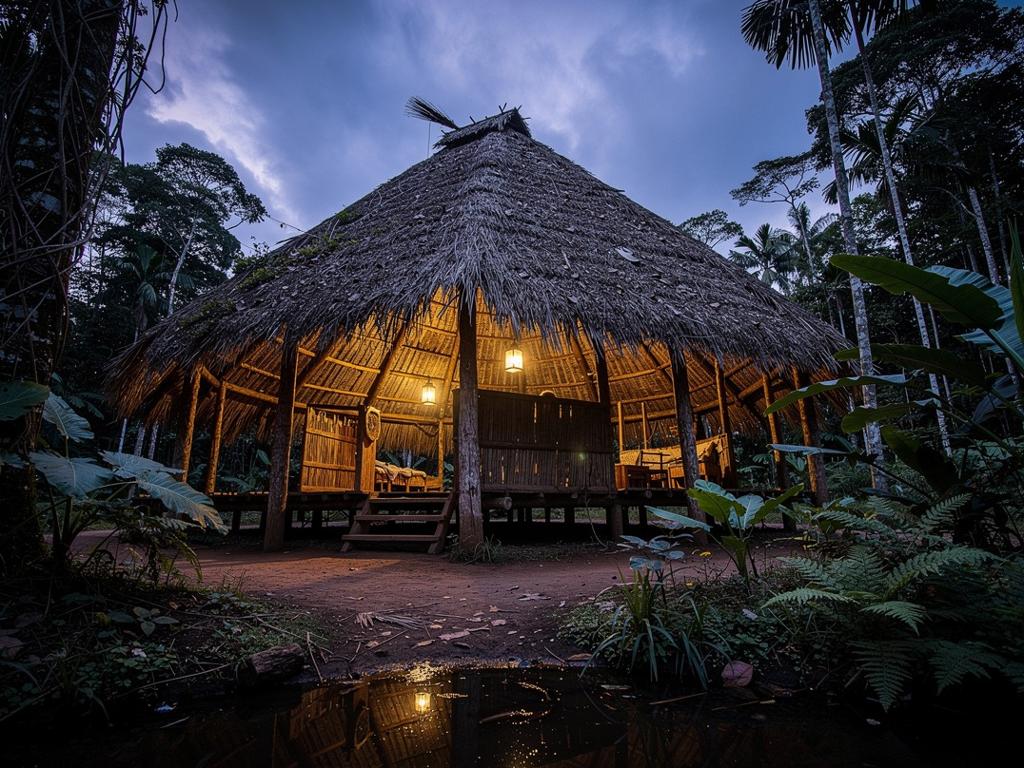
There's a particular kind of tiredness that has nothing to do with real work. You know the one. It's 11pm, the project is finished, nothing important is broken, and yet you're still clicking between the same three tabs like one of them owes you money. Refresh. Reread. Adjust a comma. Refresh again. The numbers haven't moved. You knew they wouldn't. You checked anyway. I want to talk about that loop, because it's one of the quiet reasons people end up sitting in a maloca in the Peruvian jungle at 2am asking a cup of bitter brown liquid what's wrong with them. Compulsive doing looks like ambition from the outside. From the inside, it often feels closer to panic wearing a productivity costume. And it's one of the patterns that plant medicine — ayahuasca in particular — has a strange way of dragging into daylight. A friend of mine, a designer, described her version of this recently. She'd shipped a small update to a client site, closed her laptop, and then reopened it four times in the next hour. Nothing needed doing. She just needed to do something because the outcome was now out of her hands and that felt unbearable. She's not lazy. She's not disorganised. She's actually very good at her job. What she was doing that night wasn't work — it was self-soothing that had learned to disguise itself as diligence. The tell? She couldn't say what specific piece of information she was hoping to find. She was just moving. Motion as anaesthetic. Most of us have a version of this. Refreshing analytics. Re-reading the sent email. Checking the group chat. Googling the same symptom for the fourth time. Scanning ten retreat websites when you already booked one. It feels like research. It's usually not. If you've landed on this article, there's a decent chance you're somewhere in the long, quiet process of deciding whether to sit with ayahuasca, psilocybin, San Pedro, or one of the other master plants. And if that's you, please hear this: the compulsive-doing pattern is not incidental to your search. It's likely part of what's driving it. People arrive at plant medicine for a lot of reasons — depression that won't lift, addiction that keeps winning, grief that won't move, a life that looks fine on paper and feels hollow in the chest. But underneath those specifics there's often the same low hum: I cannot tolerate not knowing, so I keep doing things. More self-help books. More therapists. More biohacks. More retreats. More podcasts about retreats. Ayahuasca will not fix that hum by giving you certainty. What it tends to do — and I've watched this happen to a lot of people, including me — is show you the hum itself. You get to feel, with uncomfortable clarity, how much of your life has been organised around not sitting still with the unknown. Here's the thing nobody quite prepares you for. In a well-run ayahuasca ceremony, you cannot check your phone. You cannot open a new tab. You cannot get up and fold laundry. You cannot email the facilitator asking if what's happening is normal. You drink the brew, you lie down on your mat, and you are stuck with your own interior for the next four to six hours. For a compulsive doer, this is confronting in a very specific way. The medicine removes every escape hatch you've been using. There's nowhere to run except deeper in. And what tends to come up, over and over, is the exact material you've been running from — the grief, the shame, the fear, the pattern, the memory. The plant doesn't invent it. It just refuses to let you refresh the page. People often describe the aftermath in physical terms. Their shoulders drop. Their jaw unclenches. Sleep improves. Not because ayahuasca is a spa treatment, but because the nervous system has finally been allowed to stop scanning for a threat that isn't there. One of the more useful things you can learn — with or without plant medicine — is how to tell the two apart. They look identical from the outside. Both involve you at a desk, or on a laptop, or writing in a notebook. But they feel different in the body, if you're willing to notice. I've started asking myself a small question, borrowed from a friend who trained as a psychotherapist: what do I expect the next action to change? If I can answer specifically, I keep going. If the answer is vague — “I just want to make sure”, “maybe I'll feel better” — I close the laptop. This one question has saved me hundreds of hours. Compulsive doing is a first cousin of addiction. Not the same thing, but same family. Both are strategies for not feeling something. Alcohol, scrolling, work, food, sex, shopping, gambling, exercise, over-researching plant medicine — the substance changes, the underlying move doesn't. Something uncomfortable rises up, and instead of meeting it, you reach for a lever that reliably lowers the volume. This is part of why psychedelics — ibogaine for opioid dependency, psilocybin for alcohol use disorder, ayahuasca for a broader range of dependencies — have generated so much clinical interest in recent years. They don't just interrupt the substance. They interrupt the underlying flinch. A well-supported psychedelic experience can give someone their first sustained encounter with a difficult emotion that doesn't end in a compulsive action. That is, on its own, a small revolution in a nervous system. But — and this matters — the medicine is not the recovery. The medicine cracks something open. The recovery is the year of ordinary evenings afterwards, where you sit with the urge to check, or drink, or scroll, or work, and you don't. Integration is unglamorous. It's mostly this. If you're researching retreats and you notice you've opened your fifteenth browser tab, take that as data. Not as failure — just as information about your nervous system. Slow down. A few honest checks that actually matter: Notice: none of these questions can be answered by refreshing an analytics page or reading one more Reddit thread. They require a phone call, an email, a conversation with a real person. The uncertainty won't fully resolve. It never fully does. But you can move from anxious research into real research, and that shift alone will tell you something. The evening my designer friend finally closed the laptop, she didn't feel enlightened. She felt annoyed and a bit itchy. Her mind kept pulling her back toward the desk. She made tea. She read three pages of a novel. She went to bed still slightly agitated. The next morning, the project was fine. Nothing had needed her supervision. The world had continued without her frantic attention, as it almost always does. This is roughly the shape of the work, whether you're doing it in your kitchen or lying on a mat under a mosquito net in Iquitos. You reach the limit of what effort can do. You notice the urge to keep doing anyway. You feel the discomfort of not-doing. You don't die. You do it again tomorrow. Plant medicine can be an accelerant here. A single ayahuasca ceremony can compress years of that practice into one very long night. But it doesn't replace the practice. It joins it. If you're ready for that, and you've done the honest homework about your own health, motivations, and support system, a curated selection of ayahuasca and plant-medicine retreats can be browsed on our marketplace here. Whatever you decide, try this before you decide it: close the laptop for an hour. See what your mind offers up when it can't be distracted. That first hour is, in a small way, the whole medicine already beginning to work.
Visionary Art and Ayahuasca: Why the Vine Keeps Showing Up on Canvas
Sit in enough ayahuasca ceremonies and you start to notice something odd. The visions have a style. Geometric lattices that breathe. Serpents braided with jaguars. Faces built out of birds built out of eyes. Whole cosmologies rendered in colors that don't quite exist in daylight. And then you walk into a gallery in Cusco or Oaxaca and there it is — on canvas, on carved wood, on a tapestry someone stitched by hand over eleven months. The visionary art tradition isn't decoration. It's documentation. For anyone researching an ayahuasca retreat, this visual world matters more than it seems. The art is a window into what the medicine actually does to perception — and into the lineages that have been working with these plants for far longer than the current psychedelic renaissance has been paying attention. Visionary art is a loose category, and honestly, that's part of its charm. At its core, it's artwork produced either during, immediately after, or in deep dialogue with altered states of consciousness — usually catalyzed by plant medicines like ayahuasca, San Pedro, psilocybin, or peyote. The artist isn't inventing so much as transcribing. That's the claim, anyway, and if you've had a strong ceremony you probably won't argue with it. The genre spans continents. In the Peruvian Amazon, Shipibo-Conibo women have been embroidering the geometric patterns they see in ayahuasca visions into cloth for generations — patterns that also correspond to the icaros, the medicine songs sung by curanderos during ceremony. The visual and the sonic are the same thing in Shipibo cosmology, just rendered in different senses. That idea alone is worth sitting with for a while. Further north, in Mexico, the alebrije tradition takes a different shape. These wildly colored, hybrid-creature sculptures — a rabbit with dragon wings, a bull with fish scales — trace back to Pedro Linares, a Mexico City artisan who fell ill in 1936 and reported feverish visions of impossible animals shouting a single nonsense word: alebrijes. He carved what he'd seen. His descendants and the Oaxacan wood-carving communities turned it into a movement. Whether Linares was in a proper visionary state or just fever-dreaming, the aesthetic overlap with plant-medicine imagery is unmistakable. Here's the part that gets genuinely interesting. If you talk to fifty people who have drunk ayahuasca — from a first-time journalist in Iquitos to a fourth-generation Shipibo maestro — a surprising number will describe similar visual motifs. Snakes. Interlocking geometry. Fractal foliage. Female figures often described as the spirit of the vine herself. Eyes within eyes. There are a few explanations circulating, none of them complete. Neuroscience points to how DMT-containing brews may activate visual cortex regions in patterned ways, producing what researchers call form constants — those honeycomb, spiral, and web-like structures that show up across cultures and substances. Anthropologists lean toward a cultural-transmission argument: you see snakes partly because the culture around ceremony expects snakes. Curanderos themselves would tell you the plants have their own consciousness and they show what they want to show. Probably it's all three, layered. What matters for someone considering a retreat is that these visions aren't random noise. They arrive with structure, and traditions have grown up around interpreting that structure. The art is one of those interpretive tools. If you're planning an ayahuasca retreat, spending an hour with the work of a few visionary artists is genuinely useful preparation. Not because it will predict your experience — it won't — but because it gives you a visual vocabulary for what might otherwise feel unspeakable afterward. Integration is the unglamorous half of psychedelic work — the weeks and months after ceremony when you're trying to figure out what any of it meant and how to live differently because of it. Most retreat centers now offer some form of integration support, though the quality varies wildly. Art-making is one of the more underrated tools in that toolkit. You don't need to be a trained artist. The point isn't producing something gallery-worthy — it's giving nonverbal experience a nonverbal exit route. Drawing what you saw, painting what you felt, even just doodling the geometric patterns that lingered behind your eyelids for days after ceremony: all of it helps translate an experience that language keeps failing to capture. Many facilitators I've spoken with say the people who integrate best are the ones who find some creative practice — writing, painting, movement, music — to keep processing after the retreat ends. Plenty of retreats now bake this into the schedule. You'll find centers in Peru, Costa Rica, and Mexico offering afternoon painting workshops between ceremony nights, sometimes led by working visionary artists. Whether that adds real value or just makes for a nicer Instagram post depends on the center and the facilitator. Ask before you book. The visionary-art aesthetic has become a marketing shorthand for psychedelic tourism, and not all of it is honest. A jungle retreat with a website full of glowing serpent graphics and mandala overlays might be run by third-generation Shipibo healers — or by a couple of expats who arrived in Peru eighteen months ago. The graphics don't tell you which. Some rough tells when you're evaluating a retreat: The visions fade faster than you'd expect. Two weeks after a strong ceremony you can already feel the details slipping — the exact color of the serpent, the specific geometry of that lattice that felt so obviously meaningful at 3 a.m. This is one reason the art tradition exists. Somebody, somewhere along the line, realized that if the vine keeps showing people similar things, those things are worth recording. You don't have to become an artist to honor that. But keeping a sketchbook by the bed during and after a retreat, learning the names of a few visionary painters before you travel, sitting with a Shipibo textile long enough to notice the pattern moves — these are small acts that thicken the experience. They connect you to a lineage of people who have been doing this work for a very long time, quietly, without much fanfare, and mostly without needing anyone from outside to validate it. If any of this resonates and you're weighing whether to sit with the medicine yourself, a curated selection of ayahuasca retreats — including centers with strong ties to Shipibo and other traditional lineages — can be browsed on our marketplace here. Take your time with the decision. The vine, as everyone who has met her will tell you, isn't going anywhere.
Craving More Stories?
Join our ShopAyahuascaRetreats newsletter for the latest updates on thrilling
destinations and inspirational tales, delivered straight to your inbox!
We value your privacy. Your email address will never be shared or published.
Why Daylight Might Be the Sleep Fix You're Missing After 60
Here's a strange thing about modern life: we spend most of it convinced we're getting enough light. The kitchen feels bright. The office feels bright. The living room, with its warm bulbs and the TV glowing away, feels perfectly lit. But step outside on an overcast winter afternoon and your eyes will tell you the truth — indoor lighting is a candle compared to the sun. Even a grey sky outdoors is dozens of times brighter than the room you're sitting in right now. That gap between how much light we think we're getting and how much we're actually absorbing turns out to matter quite a lot, especially as we get older. A recent European study followed a couple hundred adults in their sixties, seventies, and eighties, strapped sensors to their necks, and measured what was really reaching their eyes across two weeks of ordinary living. The results are the kind that make you rethink your morning routine. The study, called ENLIGHTENme, recruited 202 people between the ages of 63 and 92, living independently in Amsterdam, Bologna, and Tartu. Each participant wore a wrist device that logged sleep and movement, plus a small neck-worn sensor that measured the actual light hitting them from moment to moment. That last part is the clever bit — most sleep research relies on people estimating how much time they spent outside, which is about as reliable as estimating how much wine you drank at a dinner party. After two weeks of data, researchers sorted participants into low-, moderate-, and high-light groups based on their real-world exposure. Then, in a separate arm of the trial, roughly half were given a light therapy lamp to use at home for twelve weeks, while the rest carried on as usual. The question sitting underneath all of it: does daytime light, in the ordinary rhythms of ordinary life, actually change how well an older adult sleeps? The clearest finding came from the observational side. People in the high-light group were three times more likely to score in the healthy range on a standard sleep-quality questionnaire compared with those in the low-light group. Three times. That's not a nudge — that's a signal loud enough to warrant paying attention. The low-light group, meanwhile, were less active during the day and their waking hours were more fragmented. Their bodies seemed to be running on a fuzzier signal, drifting between rest and activity without much shape. The moderate-light group sat in the middle without pulling ahead in a statistically meaningful way, which suggests the benefits kick in when exposure crosses a real threshold — not when you casually sit near a window for lunch. Worth flagging: this pattern held for people's ordinary light exposure, not the lamp. So the takeaway isn't that a fancy device saves your sleep. It's that the way you structure your day — where you take your coffee, whether you walk before or after your emails, how much of the afternoon you spend indoors — is quietly setting the tone for the night. The lamp arm of the study offered a second, subtler clue. Participants were instructed to use their light box within an hour of waking (but not before sunrise) and to switch it off at least four hours before bed. Compliance was, predictably, mixed. But among the people who did follow the protocol, those who started earlier in the day showed less disruption in their rest-activity patterns. That association held even after researchers controlled for whether someone was naturally a lark or a night owl. Why would timing matter so much? Because light isn't just illumination — it's the master signal your internal clock uses to figure out what time it is. Bright light in the morning tells your circadian system, in no uncertain terms, that the day has begun. Bright light late at night tells it the opposite, and then everything gets confused. Your sleep-wake cycle depends on a clean, well-timed cue, and the sun (or a decent proxy) is the cleanest one there is. There's also an age-related twist. As the eyes change over the decades, less light — particularly the shorter, blue-range wavelengths that most strongly influence the body clock — actually reaches the parts of the nervous system that regulate circadian timing. Which means older adults may need more daytime light to get the same internal signal that came effortlessly at thirty. The world doesn't compensate for this. You have to. One finding tucked into the data deserves its own mention. Participants with metabolic conditions — high blood pressure, diabetes, obesity, cardiovascular disease — tended to have lower overall light exposure and spent less time in genuinely bright, daylight-level illumination. The study can't prove causation in either direction. It could be that these conditions limit mobility and, therefore, outdoor time. It could be that low daylight exposure is itself contributing to metabolic dysregulation through disrupted circadian rhythms. It's very likely both, feeding each other in a slow loop. Either way, if you're managing a chronic condition, the case for building daylight into your day gets a little stronger. It's one of the rare interventions that costs nothing, requires no prescription, and has no meaningful downside. You don't need to buy anything or turn your morning into a wellness performance. The sun is already there. The task is just to meet it more often. Sleep is the ground floor of almost everything else. Mood, cognition, immune function, blood sugar regulation, appetite, the ability to actually enjoy your own life — all of it runs on the quality of the hours you spend unconscious. For older adults especially, sleep that keeps fragmenting into shorter and shorter stretches can start looking like early cognitive decline, or like depression, or like generalized fatigue, when the underlying issue is that the body clock has lost its grip on the day. Daylight isn't a cure-all. It won't undo years of poor sleep hygiene, it won't fix sleep apnea, and it certainly won't overcome the effects of a demanding medical situation. But it's a foundational input that most people — young and old — are unknowingly starving themselves of. And unlike most things you could do for your health, this one takes no money, no equipment, and no learning curve. You just walk outside. For readers exploring broader ways to reset sleep, circadian rhythm, and nervous system health through immersive practice, a curated selection of wellness and meditation retreats can be browsed on our marketplace here. Whatever you decide, start tomorrow morning by opening the door instead of just the curtains. The rest tends to follow.
MDMA-Assisted Therapy: What New Zealand's Approval Means for Psychedelic Healing
Something quiet but significant happened in the world of psychedelic medicine recently. New Zealand's drug regulator gave the nod to MDMA-assisted therapy under specific clinical conditions — making it one of the small but growing list of jurisdictions where a formerly demonized compound can now be prescribed by trained doctors for trauma. If you're the kind of person who scans headlines about ayahuasca, psilocybin, and psychedelic-assisted recovery, this one deserves your attention. Here's why. Regulatory approvals like this don't happen in a vacuum. They shape which retreats open where, which clinics can legally operate, and — crucially for anyone weighing plant medicine or psychedelics for their own healing — which options actually exist within a legal framework versus which ones still require boarding a plane. Let's walk through what happened, what it means, and how it fits into the broader story of psychedelics, addiction recovery, and master plants finding their way back into modern medicine. The country's medicines regulator authorized MDMA to be used in a controlled therapeutic setting for post-traumatic stress disorder. That's a specific and narrow thing. It's not decriminalization. It's not recreational legalization. It doesn't mean a Kiwi with a rough breakup can walk into a pharmacy and score a dose. What it does mean: qualified clinicians, working within an approved protocol, can now legally administer MDMA to patients diagnosed with PTSD as part of a structured therapeutic process. Sessions typically involve preparation meetings, the medicine day itself (often eight hours or so with two therapists present), and follow-up integration work. The medicine isn't the treatment — the therapy around the medicine is the treatment. The MDMA opens a window; the humans in the room help you look through it. New Zealand joins a small handful of countries treading this path. Australia was the first to formally approve MDMA for PTSD and psilocybin for treatment-resistant depression back in 2023. Switzerland has run compassionate-use programs for years. The U.S. FDA has been publicly wobbling — approving, then rejecting, then reconsidering — depending on which study lands on the desk that week. People new to this space often ask why MDMA of all things. Isn't that a party drug? Well, yes — and it's also one of the most-studied compounds in modern psychiatric research. The short answer is that MDMA does something unusual: it dampens the fear response in the amygdala while boosting feelings of trust and safety. For someone with PTSD, that combination is chemistry-level rocket fuel for therapy. They can finally revisit the memory that's been controlling their nervous system for years without immediately dissociating or shutting down. Clinical trials have shown response rates that most conventional PTSD treatments simply don't match. In some studies, roughly two-thirds of participants no longer met the diagnostic criteria for PTSD after a course of MDMA-assisted therapy. That's not a magic pill outcome — those are people who did hard work, with skilled therapists, over months. But the numbers are strong enough that regulators who spent decades in the war-on-drugs mindset are being forced to reconsider. The parallel with ayahuasca and psilocybin work isn't accidental. All three medicines seem to do a similar thing at a mechanistic level: they create a temporary state where the usual defensive architecture of the mind softens, and the material underneath becomes accessible. Different medicines, different flavors, but a related principle. The MDMA approval isn't happening on its own. It sits inside a wider shift — one that includes ketamine clinics popping up in strip malls, ibogaine being studied for opioid addiction, ayahuasca churches winning legal protection in the U.S., and Oregon and Colorado building the first regulated psilocybin service centers on American soil. What we're watching is the slow, uneven return of altered-states medicine to the professional healthcare system. Some of it looks very medical — sterile clinic, therapist with a clipboard, precise dose. Some of it looks like traditional plant medicine — a shaman, a jungle lodge, songs sung in Shipibo. Both are legitimate paths, and they often address overlapping conditions: trauma, depression, addiction, and the more elusive complaint of feeling stuck in one's own life. None of these is a universal solvent. The question isn't which medicine is best — it's which medicine, in which container, with which support, is best for a particular person at a particular moment. If you're researching psychedelic retreats right now — and if you're reading this, there's a decent chance you are — regulatory movements like New Zealand's affect your decision in a few practical ways. First, the medical legitimacy conversation matters less than it used to. Ten years ago, choosing to sit with ayahuasca meant defending the decision to skeptical family members with essentially zero mainstream backup. Today, you can point to peer-reviewed trials, government approvals, and mainstream news coverage. The stigma hasn't disappeared, but it's a lot thinner. Second, more legal frameworks mean more options — but also more variation in quality. A clinic operating under strict national regulation will look and feel very different from a traditional ceremony in Peru, which will feel different again from a legal psilocybin center in Oregon. None of these is automatically better. What matters is match — between the medicine, the setting, the facilitators, and your own history and needs. Third, if you're considering a retreat for a specific condition like PTSD, treatment-resistant depression, or addiction, do your homework on which medicine actually has evidence for what you're dealing with. A jungle ayahuasca retreat might be exactly right for you, or it might be a dramatic and expensive detour when a clinical MDMA program would serve you better. Ask retreat providers hard questions: A reputable retreat will answer these calmly and specifically. If you get vague spiritual platitudes instead of concrete answers, keep looking. One thing that often gets lost in the medicalization conversation: traditional Amazonian practice sees plants like ayahuasca, tobacco, and San Pedro as teachers with their own intelligence, not as pharmaceutical delivery systems for active compounds. The concept of master plants — plantas maestras — is central to the healing lineage these medicines come from. Whether or not you personally resonate with that framing, it points to something the clinical trials tend to miss. The context and relationship around the medicine matter enormously. A vial of pharmaceutical-grade MDMA administered in a hospital room is not the same experience as an all-night ayahuasca ceremony with icaros filling the air, even if some of the underlying neuroscience overlaps. Different medicines call for different containers, and part of choosing well is being honest about which one you're actually looking for. Some people want the clinical route. They want the safety net, the insurance code, the reassurance of a doctor's office. Others need the older container — the fire, the songs, the sense of stepping outside modern life entirely. Both are valid. The regulatory shifts we're seeing simply mean that, over the next few years, more people will actually have both options available. New Zealand's decision is one more data point in a trend line that's now hard to ignore. Expect more countries to follow — cautiously, with strict conditions, and with plenty of bureaucratic friction — but follow they will. The evidence is too strong and the demand too obvious. For readers weighing plant medicine or psychedelic-assisted work for addiction, depression, or trauma, the practical takeaway is this: you have more legitimate options than you did five years ago, and you'll have more still in five years' time. That's a good thing. It's also a reason to slow down and choose carefully rather than grabbing at the first retreat that shows up in your feed. Reputation, screening, and integration support matter more than exotic location or Instagram-worthy scenery. If any of this has your attention and you want to see what actual programs look like, a curated selection of ayahuasca and psychedelic retreats can be explored on our marketplace here. Take your time with the decision — the medicines have been around for centuries and they'll still be there next month.
How to Accept What You Can't Control: A Plant-Medicine Perspective
There's a specific kind of exhaustion that comes from fighting reality. You know the one. It's the 3 a.m. loop where you replay a conversation you can't unsay, or the tight knot in your chest when you think about a parent's diagnosis, a job that vanished, a relationship that ended without your permission. Most people arrive at a plant-medicine retreat carrying some version of this — a situation they've been shoving against for months or years, hoping force alone will change it. Acceptance is one of those words that gets flattened by overuse. Yoga teachers say it. Therapists say it. The self-help aisle says it in seventy different fonts. But when you actually sit in ceremony with ayahuasca or another master plant, you learn quickly that acceptance isn't a mindset you install. It's something closer to a surrender — and it usually happens after you've tried every other option and run out of moves. The human nervous system is built for problem-solving. That's a feature, not a bug — it kept our ancestors alive. But the same wiring that helps you fix a leaking pipe also tries to fix things that can't be fixed: your mother's dementia, a friend's addiction, the fact that you're 43 and childless when you didn't plan to be. The mind keeps generating strategies. The body keeps bracing. Nothing changes, and you get more tired. In my experience talking with retreat-goers, a huge percentage of the people booking a psychedelic retreat are, at the core, people who have been white-knuckling something for a long time. Addiction. Grief. A trauma they can't outrun by working harder. What they're really looking for isn't insight — they've had plenty of insight. They're looking for the felt experience of letting go, which is completely different from understanding intellectually that they should. This is where plant medicine gets interesting. Ayahuasca doesn't argue with you about whether you should accept your situation. It just, sometimes, dissolves the part of you that was clinging to a different version of reality. People come out of ceremony describing it as though a hand unclenched inside their chest — a hand they didn't know had been clenched for twenty years. Let's clear something up. Acceptance is not approval. Accepting that your father was cruel doesn't mean he was right to be. Accepting that your marriage is over doesn't mean you're glad. Accepting that you have a chronic illness isn't the same as pretending it's a gift. This is where a lot of well-meaning wellness talk goes off the rails — it conflates acceptance with positivity, and then people beat themselves up for not being grateful enough about terrible things. Real acceptance is closer to this: this is what's happening, and I'm going to stop pretending it isn't so I can decide what to actually do next. That's it. It's a clearing of the fog. It doesn't tell you what to do — it just gives you back the energy you were burning trying to argue with reality. The traditional Amazonian view frames it a little differently. The plants — ayahuasca, chacruna, tobacco, San Pedro — are considered teachers, and one of the earliest lessons they tend to offer is that you are not running the show. Not in the way you thought. The ego's insistence that it can bend outcomes through worry is exposed as a kind of exhausting theatre. You're invited to sit down. Watch. Trust that something larger than your planning mind is at work. Here's the mechanism, as best anyone can describe it. The classic psychedelics — DMT (the active molecule in ayahuasca), psilocybin, mescaline in San Pedro — quiet down the default mode network in the brain. That's the network responsible for your sense of self, your rumination, your endless internal monologue about who you are and what should be happening. When that network goes quiet, the walls of the story you've been telling get thin. You can see around them. What people report, over and over, is some version of: I saw the situation from outside myself and it stopped feeling like a threat. The pain doesn't necessarily disappear. But the resistance to the pain does, at least temporarily, and in that gap something shifts. A parent who has been dead for a decade is suddenly forgiven. A version of yourself you've been ashamed of is met with tenderness instead of contempt. The addiction that felt like an identity is revealed as a survival strategy that ran past its usefulness. None of this is guaranteed. Anyone who tells you a single ceremony will fix your relationship with your own life is selling something. But the door does open for a lot of people, and what they walk through changes the way they carry the unresolvable parts of their lives. Honest answer: sometimes yes, sometimes no. If you're dealing with something you can't accept — a loss, an addiction, a stuck depression, a trauma pattern that talk therapy has softened but not shifted — plant medicine can be a serious accelerator. There's a growing body of clinical research on psilocybin for treatment-resistant depression, ibogaine for opioid addiction, MDMA for PTSD. The results aren't miracles, but they're substantial enough that respected institutions are paying attention. That said, here's what you should think about before booking anything: The people I've spoken to who've had the most durable shifts describe something surprisingly ordinary. They didn't come home enlightened. They came home slightly less at war with themselves. The situation they couldn't accept is often still there — the dead parent is still dead, the estranged sibling still won't call — but the quality of their relationship to it changed. They stopped needing it to be different in order to be okay. That's the actual gift, if it comes. Not a fix. Not a reversal. Just enough space around the pain to live a life alongside it. Some describe it as feeling met by something larger. Others describe it more plainly: the constant low-grade fight in the background of consciousness just stopped, and they had energy for other things again. Integration practices matter here more than anyone tells you upfront. Journaling, meditation, therapy, time in nature, community with other people who've done this work — these are the scaffolding that holds insight in place. Without them, the ceremony fades into a good story you tell at dinner parties. Whether or not a retreat is on your horizon, there are practices that soften the reflex to fight everything. None of them are magic. All of them work if you actually do them. Acceptance isn't passivity. It's the ground you have to stand on before any real decision becomes possible. Whether you get there through years of meditation, through therapy, through a night in ceremony with a plant that shows you your own life from an unfamiliar angle, or through the slow attrition of just being alive long enough — the destination is the same. You stop demanding that reality be other than it is, and something in you finally exhales. If you've been carrying something for too long and you're starting to sense that traditional routes aren't going to be enough, a range of curated ayahuasca and plant-medicine retreats can be browsed on our marketplace here. Take your time with the decision. The plants aren't going anywhere, and the readiness to meet them honestly matters more than the timing.
Smoked DMT vs Ayahuasca: What Indigenous Traditions Actually Teach
Somewhere on the internet right now, a 24-year-old is watching a YouTube video of a stranger smoking DMT out of a glass pipe and crying about God. Meanwhile, in the Peruvian Amazon, a curandero is tending a fire, humming an icaro, and preparing for a ceremony that will last until dawn. Both experiences involve the same molecule. Neither is really the same thing. If you're researching ayahuasca, psychedelics, master plants, or plant medicine for addiction — and you've stumbled into the rabbit hole of smoked DMT — you've probably wondered how these two forms relate. Are they interchangeable? Is one safer? Do indigenous traditions have anything to say about vaporizing the molecule? The short answer is yes, they do — and it's not what most Western psychonauts assume. N,N-dimethyltryptamine is a small, strange compound found in dozens of plants, in the venom of a certain Sonoran Desert toad, and — famously and controversially — in trace amounts in mammalian brains. When smoked or vaporized, it produces one of the shortest and most intense psychedelic experiences known. Fifteen minutes, sometimes less. Users describe geometric visions, entity encounters, ego dissolution so complete they forget their own name. Ayahuasca contains DMT too. But the brew is a partnership — the DMT-containing leaf (usually chacruna, Psychotria viridis) combined with the vine Banisteriopsis caapi, which contains MAO inhibitors that allow the DMT to be orally active. The result is a four-to-six-hour ceremony that unfolds in waves, with room for singing, purging, and being tended to by a shaman who has spent decades learning how to hold that space. Same molecule. Radically different medicine. This distinction matters more than most people realize. Here's the thing a lot of Western psychedelic content gets wrong: most Amazonian traditions that work with ayahuasca do not have a corresponding tradition of smoking pure DMT. That practice is largely a modern, Western invention — traceable to underground chemists and psychonauts in the 20th century, not to any indigenous lineage stretching back generations. What indigenous cultures do work with is a related but distinct practice: snuffs. Various tribes across the Amazon — including groups within the Yanomami, Matsés, and others — prepare rapé and psychoactive snuffs from plants like Anadenanthera peregrina and Virola species, which contain DMT and related tryptamines. These snuffs are administered through a long ceremonial pipe, blown forcefully into the nostrils. The experience is short, potent, and always framed within a specific ritual and healing context. The distinction between snuffing a plant preparation in a ceremony and vaporizing extracted crystal DMT alone in your apartment is not a small one. In the traditional frame, the plant is a teacher — a being with whom you build a relationship over time, guided by someone who knows how to translate what it says. Isolating the molecule strips out that relationship. You get the fireworks. You lose the map. Ayahuasqueros will often tell you, if you push them, that they consider the vine — the caapi — to be the actual teacher plant. The chacruna leaf provides the visions, but the vine provides the guidance, the structure, the sense of being held. Take the vine away and you still have a psychedelic experience. You just don't have the same medicine. This is not mysticism dressed up as pharmacology. There's some emerging research showing that harmala alkaloids in the caapi vine have their own effects on the brain — neurogenic, antidepressant, possibly relevant to addiction recovery. The MAO inhibition isn't just a delivery mechanism for the DMT. It's part of the story. Smoked DMT, by contrast, is a solo flight. Fast, sharp, and often overwhelming. Some people find it clarifying. Others find it terrifying in a way they can't integrate afterward. Without a shaman singing you through it, without hours of gentle unfolding, without the somatic release of purging — you're on your own with whatever comes up. For some seekers this works. For most, it doesn't do what ayahuasca does. If you're weighing an ayahuasca retreat because you've heard about DMT's potential for treating depression, trauma, or addiction, it's worth being clear about what you're actually signing up for. A legitimate ayahuasca ceremony is not a shortcut to a DMT breakthrough. It's a longer, slower, often harder process that includes physical discomfort, emotional release, and the presence of people whose job is to keep you safe while you do the work. A few practical things to consider before you book: None of this is to say vaporized DMT has no value. Some people find it useful as a brief opening, a glimpse, a way to touch something they later go looking for more slowly. Underground therapists sometimes use it in short adjunctive sessions. There's genuine research being done into 5-MeO-DMT (a related but distinct molecule, often extracted from toad venom or synthesized) for treatment-resistant depression and end-of-life anxiety. But if your goal is deep psychological work — the kind of thing people describe when they say ayahuasca helped them get sober, or process a childhood trauma, or find their way out of a decade of depression — you're going to want the container. The songs. The night. The purging. The people beside you who have done this thousands of times. Master plants, in the indigenous framing, don't just give you an experience. They enter into a relationship with you. That relationship takes time. It takes multiple ceremonies, often across years. It takes listening to what the medicine actually says, which is often something less flashy and more uncomfortable than what you hoped to hear. Both smoked DMT and ayahuasca carry real risks, and anyone selling you a purely rosy picture is either inexperienced or lying. Ayahuasca can interact dangerously with SSRIs and other serotonergic medications — potentially fatal interactions, not just uncomfortable ones. Underlying psychiatric conditions like schizophrenia or bipolar disorder can be destabilized. Cardiovascular issues need to be screened for. Beyond pharmacology, there are the human risks: unscrupulous facilitators, sexual misconduct in ceremony (which does happen and is well-documented in the retreat world), fly-by-night operators who set up shop in Costa Rica or Peru because plant medicine is trendy right now. Do your research. Read participant reports. Ask uncomfortable questions before you send money. The plant is a teacher. But the humans running the ceremony are humans, and some of them are excellent and some of them are not. Choose carefully. So — smoked DMT versus ayahuasca, indigenous shamanism's take? The tradition is largely silent on vaporized crystal because that isn't its tradition. What the tradition does say, loudly, is that the medicine is inseparable from the ceremony, the songs, the dieta, the relationship. Extract the molecule and you've got a fascinating chemical. Bring it into a maloca at midnight with a curandero who has been walking with the vine for forty years, and you've got something else entirely. For readers who want to take this further, a range of curated ayahuasca and plant-medicine retreats can be browsed on our marketplace here. Whatever you decide, decide slowly. This isn't the kind of thing you want to rush.
Tripping Alone vs. In Ceremony: What Solo Psychedelic Journeys Really Teach You
There's a certain kind of question that comes up over and over in psychedelic circles, usually late at night, usually from someone who has already had a handful of experiences and is starting to trust their own footing. It goes something like: is it better to trip alone? Not in a group. Not with a shaman. Just you, the medicine, and whatever shows up. I've sat in ceremony rooms in the Sacred Valley and I've also spent a very long Sunday afternoon on my apartment floor with a cup of mushroom tea and a playlist. Both taught me things. Neither is universally right. If you're weighing psychedelics as a serious tool for addiction, depression, grief, or just untangling the person you've become, the solo-versus-guided question actually matters — and it deserves a more honest answer than the internet usually gives it. The argument for going alone usually sounds like this: no performance, no politics, no facilitator's agenda, no side-glances from strangers, no icaros you didn't ask for. Just the raw material of your own mind meeting the compound. For people who are naturally introverted, or who feel self-conscious in groups, this can genuinely open something a ceremony wouldn't. There's truth in it. When you're alone, you stop managing your face. You stop worrying whether the woman two mats over can hear you cry. The medicine tends to move faster into whatever it's going to move into — because there's nothing else to attend to. Some of my most useful psychedelic hours have been quiet ones, no music, no company, just me and a notebook I mostly failed to write in. People also report a specific kind of ownership over what happens. Nothing was mediated. No one told you what your vision meant. Whatever insight surfaced, you found it — and that can make it stick in a way a group interpretation sometimes doesn't. Here's the part that doesn't get said enough. The solo experience feels cleaner because there's no one around to complicate it — and that's also exactly what makes it riskier when things go sideways. Psychedelics don't respect your schedule. A dose you've taken twice before with no drama can, on the third go, drop you into a memory you had genuinely forgotten. Or a body sensation that convinces you something is medically wrong. Or a loop of thought you can't argue your way out of. When there's a trained person in the room, this is uncomfortable. When you're alone at 2 a.m. with no one who even knows you took anything, it's a different situation entirely. A few things worth being honest about: None of this means solo journeys are wrong. It means the story that they're the pure, unmediated, most authentic form of psychedelic work is a story, not a fact. The word ceremony gets loaded with either reverence or eye-rolls depending on who's talking. Strip the aesthetics away and what you're actually paying for at a serious plant medicine retreat is three things: screening, containment, and integration. Screening means someone with clinical training reviewed your medications and your mental health history before you drank anything. Containment means when you're crying, sweating, throwing up, or convinced you're dying, there's a person in the room whose entire job is to be calm and present. Integration means the week after the ceremony isn't just you back on the couch trying to figure out what any of it meant. Traditional Amazonian ayahuasca work adds another layer — the master plants, the dieta, the songs. Whether or not you subscribe to the metaphysics, the structure works. Thousands of years of iteration will do that. The vine and chacruna are prepared a specific way for a specific reason. The icaros aren't decoration; they shape the direction of the experience. For people using plant medicine to address addiction specifically, the ceremony structure is usually not optional. Recovery-oriented ibogaine programs and ayahuasca-for-addiction retreats build in medical monitoring, aftercare planning, and often a follow-up call schedule. That's not upsell. That's what the research keeps showing actually holds — the substance opens a window, and the container decides whether anything walks through it. Being fair: there is a version of solo psychedelic use that's reasonable. It usually looks like this. Microdosing sits in its own category and is genuinely a solo practice for most people who do it. That's not what this piece is really about. The question of whether to take a full journey dose by yourself is the one that deserves the caution. The framing of solo versus ceremony is a little false, actually. The most useful arc I've seen — for people using plant medicine for real healing rather than curiosity — usually goes: guided work first, then eventually some private practice built on top of what the guided work taught them. You go to the retreat. You learn what your particular nervous system does under the influence. You learn what your recurring themes are — the same ones will show up over and over, so pay attention. You learn how to breathe when it gets intense. You learn what your integration weaknesses are. Then, months or years later, if you choose to sit alone, you're doing it as a person who knows the terrain, not a person hoping it'll be fine. People who reverse this order — solo first, ceremony maybe later — often end up either underwhelmed by ceremony ("I could do this at home") or blindsided by how much they didn't know about their own reactions. The container teaches you things the medicine alone won't. If you're specifically weighing a retreat versus a private experience, some questions worth sitting with: None of these disqualify solo work. They just tell you what kind of scaffolding you might need to build first. Solo trips can be quiet and clarifying. Ceremony can be structured and safe. Neither one is spiritually superior, no matter what a stranger on a forum insists. The medicine works with what you bring to it — and what you bring to it includes the room you're in, the people around you (or not), and whether anyone is going to catch you if the floor drops out. If you're at the point where you're seriously considering plant medicine for something real — an addiction that hasn't moved, a depression that's outlasted the treatments, a version of yourself you're tired of being — my honest suggestion is start with support. Learn the medicine in a container that was built for it. What you do after that is yours. For readers who want to take this further, a range of vetted ayahuasca and psychedelic retreats can be browsed on our marketplace here. Whatever you decide, decide it slowly. The medicine will still be there next month.
Dreaming of a Psychedelic Retreat?
We have the best deals and offers from thousands of organizers all over the world! Get them into your mailbox every week!
We value your privacy. Your email address will never be shared or published.
