 English
 Deutsch
 Français
 Nederlands
 Español




Reset. Heal. Grow.

Ibogaine Preparation Guide: What to Know Before Your Journey
Ibogaine is not a weekend experience. It's a long, disorienting, physically demanding encounter with a plant medicine that can rearrange how you relate to your own history — and, for some people, break the grip of opioid or alcohol addiction in a way nothing else has. If you're reading this, you're probably somewhere in the research phase. Good. That's exactly where you should be. What follows isn't a sales brochure. It's the kind of thing I'd tell a friend who called me and said, “I think I'm going to do this.” Some of it is practical. Some of it is uncomfortable. All of it matters. Most people don't come to ibogaine casually. They come after years of trying other things — therapy, medication, twelve-step rooms, other psychedelics — and finding that the pattern still has them. Opioid dependency is the most well-known reason people book a retreat, because ibogaine's ability to interrupt withdrawal is genuinely striking. But it's also used for alcoholism, methamphetamine addiction, deep depression, and the kind of trauma that never quite leaves the body. The medicine comes from the root bark of Tabernanthe iboga, a shrub used ceremonially for generations by the Bwiti people of Gabon. In clinical and retreat settings today, it's typically given as a purified extract or as total alkaloid — dosed carefully, with medical screening, and under supervision. This is not something to source from the internet and try in a hotel room. I want to be plain about that. Ibogaine is a cardiac drug. It affects the QT interval of the heart, which means anyone with underlying heart conditions, electrolyte imbalances, or certain medications is at real risk. Deaths have happened, almost always in unsupervised settings or where medical screening was skipped. A reputable retreat will require an EKG, bloodwork, a liver panel, and a full medication list before they'll even confirm your booking. If a place doesn't ask for these things, that's your answer about that place. Beyond the physical, ask yourself honestly: If you answered no to most of those, the retreat isn't wasted — but it probably won't do what you're hoping it will. The medicine doesn't fix you. It shows you. What you do with what it shows you is the actual work. Here's where language gets thin. People who've done ayahuasca or psilocybin sometimes assume ibogaine will be similar. It isn't. Ayahuasca tends to be emotional, visionary, sometimes explosive. Ibogaine is slower, heavier, and more like watching your own life play back on a screen you can't look away from. The first phase, usually beginning within an hour or two of the dose, is often described as a waking dream state. You may see scenes from childhood, from relationships, from moments you'd forgotten. There's often a kind of teacher-presence — some people call it the iboga itself — that seems to be walking you through the material without judgment. Nausea is common. You'll likely be still, eyes closed, for many hours. The second phase is more reflective. The visions soften and become thoughts, insights, sometimes uncomfortable clarity about people or choices in your life. This can go on for another day. Sleep is often impossible for 24 to 36 hours — a stretch that sounds miserable and, in practice, sometimes is. The exhaustion afterward is real. Plan for a full week where your only job is to eat, sleep, walk, and process. The ibogaine retreat world is uneven. There are excellent providers — medically staffed, ethically run, deeply experienced. There are also operations that shouldn't exist. Here's what to look for, and what to walk away from. Legality varies. Ibogaine is unscheduled in Mexico, New Zealand, Costa Rica, and several other countries where legitimate retreats operate. It's Schedule I in the United States, which is why the industry has largely grown up abroad. The weeks before the retreat matter more than most people realize. If you're coming off opioids, the retreat team will give you a specific taper protocol — follow it exactly. Switching from long-acting to short-acting opioids in the weeks before is standard, because long-acting ones can complicate the ibogaine experience and even make it dangerous. For everyone, regardless of what you're working on: Mentally, try to arrive without a wish list. The medicine tends to show you what you need, not what you asked for. People who come with rigid expectations often feel disappointed or bulldozed. People who come open tend to leave with something they didn't know they were looking for. Here's the honest truth from talking to dozens of people over the years: the ceremony isn't the hard part. Integration is. The first two weeks after ibogaine, many people describe an unusual clarity — cravings gone, mind quiet, patterns visible. It feels like a miracle. And then, somewhere around week three or four, ordinary life reasserts itself. The old triggers show up. The old people call. The old habits knock. What determines whether the shift holds isn't the medicine. It's what you build in the aftermath. Regular therapy — ideally with someone who understands psychedelic integration. A support community. New routines around the times of day that used to belong to the addiction. Physical practice. Sleep hygiene. Boring, unglamorous, essential. People who treat ibogaine as a reset button and go back to their old life almost always relapse. People who treat it as the opening move of a two-year rebuild almost always don't. That's not a scientific claim — it's a pattern I've watched play out again and again. Ibogaine is often grouped with other master plants — ayahuasca, San Pedro, psilocybin mushrooms — teachers that different cultures have worked with for centuries. Each one has its own character. Ayahuasca tends to be emotional and relational. San Pedro is heart-opening and slow. Psilocybin can go anywhere. Ibogaine is stern, exacting, and unusually direct about the material it wants you to look at. If addiction recovery is your reason for exploring plant medicine, ibogaine has the most specific evidence behind it — particularly for opioid dependency. If you're working with depression or trauma without a strong addiction component, other medicines may be gentler entry points. There's no hierarchy. There are just different tools for different situations, and honest facilitators will tell you if they don't think their medicine is the right fit for you. If any of this resonates and you'd like to see what's actually available, a range of vetted ibogaine and plant-medicine retreats can be browsed on our marketplace here. Take your time with the decision. The right retreat, entered at the right moment in your life, with the right support around it, can be one of the most important weeks you'll ever spend. The wrong one, rushed into, can set you back. Choose slowly.
MDMA Therapy vs. Ibogaine: Which Path Fits Your Healing?
People ask me this question more than almost any other: should I do MDMA-assisted therapy or an ibogaine retreat? And honestly, the fact that someone is even weighing the two tells me they're thinking about their healing seriously. These are not interchangeable experiences. They come from different worlds, work on different parts of the psyche, and ask different things of you before, during, and after. So let's actually break it down. Not as a sales pitch for either, but the way I'd talk it through with a friend who's stuck — someone battling addiction, trauma, or a depression that hasn't budged despite years of talk therapy and SSRIs. Both MDMA and ibogaine sit squarely inside the psychedelic and plant medicine conversation, but calling them by the same name is a bit like calling a violin and a chainsaw both “tools with strings.” MDMA is a synthetic compound, first patented over a century ago and best known in the clinical world for its remarkable effect on trauma. In a therapeutic setting — not a nightclub — it produces a state researchers call “fearless introspection.” The amygdala calms down. Oxytocin floods the system. People find they can talk about the worst things that ever happened to them without flinching or dissociating. Ibogaine is a different animal entirely. It's an alkaloid extracted from the root bark of the iboga shrub, used ceremonially for generations by the Bwiti people of Gabon. It doesn't feel loving or soft. It's often described as a “waking dream” or a life review — hours of vivid, sometimes uncomfortable inner cinema where your memories, choices, and patterns get shown back to you. It's also physically demanding: ibogaine slows the heart, requires medical screening, and typically lasts 24 to 36 hours from onset to the “gray day” afterward. Different mechanisms, different vibes, different applications. One opens the heart. The other reboots the operating system. Here's where the honest answer diverges from the internet's answer. Ibogaine has an almost mythic reputation in addiction recovery — particularly for opioid dependence. And that reputation is earned. There's a well-documented effect where ibogaine appears to interrupt withdrawal from opioids in a way no other substance does. People walk into a clinic in active withdrawal and, after the session, describe feeling like the physical craving simply lifted. Not gone forever, necessarily — but the window of clarity it opens is real, and for many it's the doorway out. MDMA's addiction story is more nuanced. It's not primarily an anti-addiction medicine. But because so much addiction is trauma wearing a costume, MDMA-assisted therapy can be transformative for people whose substance use is rooted in unprocessed pain — childhood abuse, combat experience, sexual violence, chronic self-hatred. If you drink to bury something, MDMA helps you look at the something. I'll try to describe them plainly, because a lot of the retreat marketing out there is honestly useless. An MDMA session runs about six to eight hours. You lie down, usually with eyeshades and music, and two trained therapists sit with you. It doesn't feel psychedelic in the visual sense — no fractals, no hallucinations. What you get instead is an unusual clarity and warmth. You can revisit a memory that normally makes you shut down, and this time you stay in the room with it. People cry. People laugh at things that used to only make them cry. The insight is often quiet and matter-of-fact: oh, that's why I do that. Ibogaine is not that. Ibogaine is intense. The onset is heavy — many people feel nauseous, cold, or physically pinned to the mat. The visions can be relentless. You may see people from your past, hear conversations you'd forgotten, watch scenes from your own life play out as if projected on a wall. There's often no therapist doing active work with you during the peak — it's you and the medicine, alone in your head, for a long time. The next day is the “gray day,” a hollowed-out but oddly peaceful window where a lot of the real insight consolidates. One person told me MDMA felt like being held by a wise older sister. Ibogaine, they said, felt like being interviewed by their own soul. Both descriptions ring true. This part matters, and any retreat worth its salt will lead with it. Ibogaine has real cardiac risks. It prolongs the QT interval — the electrical rhythm of the heart — which is why reputable clinics run an EKG, blood work, and a full medication review before dosing. If you have a heart condition, an electrolyte imbalance, or you're on certain psychiatric medications (SSRIs need a lengthy taper), ibogaine is not for you. People have died from ibogaine, almost always in unregulated settings without medical oversight. Never do ibogaine anywhere that doesn't have a physician on site and continuous cardiac monitoring. Full stop. MDMA is generally physically safer in a therapeutic dose, but it's not risk-free. It elevates blood pressure and body temperature. People with cardiovascular disease, uncontrolled hypertension, or a history of serotonin syndrome from other medications need to be careful. And MDMA can be emotionally destabilizing in the weeks after — the “Tuesday blues” are real, and without good integration support, that dip can hit hard. Here's the framework I actually use when people ask: You'll notice I haven't called MDMA a “master plant.” That's because it isn't — it's a lab-made compound. Ibogaine, on the other hand, comes from iboga, which the Bwiti consider a master teacher plant in the same category ayahuasqueros place ayahuasca. That distinction matters if the traditional, ceremonial dimension is important to you. Some seekers want the science; others want the lineage. There's no wrong answer, but knowing which you're drawn to will shape the kind of retreat you end up in. Plenty of people, over the years, end up working with multiple medicines. Ibogaine for the acute break. MDMA for the trauma underneath. Ayahuasca or psilocybin later, for the ongoing spiritual work. This isn't a menu you pick once — it's a longer relationship with your own healing. Neither medicine is magic. I've seen people do ibogaine, feel spectacular for two months, then relapse because they went home to the same apartment and the same friends and the same wound. I've seen people do MDMA therapy, have a beautiful session, and then avoid the harder integration work because the session itself felt so good. The medicine is a lever. It gives you leverage on something that felt immovable. But you still have to move it. Also: legal status matters. Ibogaine is not federally legal in the U.S., which is why most retreats operate in Mexico, Costa Rica, Portugal, or the Netherlands. MDMA-assisted therapy is still moving through the FDA approval process and is available primarily through clinical trials or expanded-access programs, though a handful of legal international clinics offer it too. Do your homework on the specific country and setting. If you've read this far, you're probably not looking for a hype video. You're looking for a real decision. Talk to people who've done both. Read trip reports with a skeptical eye — the good ones and the bad ones. Book a consultation call with any retreat you're considering, and if they won't get on the phone with you before taking your deposit, walk away. For readers who want to take this further, a range of vetted ibogaine and psychedelic-assisted retreats can be browsed on our marketplace here. Whichever medicine you end up choosing — or if you decide the timing isn't right yet — the fact that you're being this careful about the decision is already a good sign. The people who do best with these medicines are almost always the ones who took the question seriously in the first place.

Why Doing the Thing You Dread Might Rewire a Depressed Brain
You know the moment. Someone texts about dinner Friday night, and for half a second you feel a flicker of something — curiosity, maybe even excitement. Then the mental accounting starts. You'll be tired. The drive is annoying. You won't have anything interesting to say. By the time you've typed a reply, you've talked yourself into staying home again. For most people, that's just Tuesday. But when someone is genuinely depressed, or moving through a heavy patch of grief, addiction recovery, or post-trauma numbness, that pull toward withdrawal isn't just laziness or introversion. It's the brain's reward circuitry running a specific, measurable pattern — and it turns out the way out of that pattern may involve doing the very thing you least want to do. A brain imaging study published a few years back looked at 24 people diagnosed with major depression and 24 people without it. Everyone completed a simple task involving small cash rewards while their brains were scanned. Sometimes participants anticipated winning money, sometimes they found out whether they did. Nothing dramatic — just the everyday machinery of expecting something good and then either getting it or not. Researchers zeroed in on the ventral striatum, a region deep in the brain that lights up when we recognise something as worth wanting. Think of it as the department in charge of tagging experiences as “worth pursuing again.” Dopamine is one of the messengers involved, though the popular image of dopamine as a pure pleasure chemical oversimplifies what's actually going on. In people with depression, the ventral striatum showed less activity both when they anticipated a reward and when they received one. Just as telling: the reward region talked less with parts of the brain that handle decision-making and motivation. So the story isn't only that pleasurable things feel less pleasurable when you're depressed. The brain has a harder time converting the mere possibility of something good into the drive to actually go after it. This is the part that makes intuitive sense once you name it. Anyone who's been through a depressive stretch knows the strange, almost surreal experience of understanding, on paper, that a walk outside or a coffee with an old friend would probably lift the fog — while feeling exactly zero desire to move toward any of it. It's not denial. It's not stubbornness. The wiring that turns “this might help” into “I'm getting up now” is running quieter than usual. That gap between knowing and doing is why a lot of well-meaning advice bounces off. “Just get out of the house.” “Have you tried yoga?” “Force yourself.” The advice isn't wrong, exactly. It's just missing the piece about how motivation actually gets manufactured in a brain that's currently short on the raw material. It's also why plant medicine and psychedelic-assisted work has drawn so much serious clinical attention for depression and addiction. Ayahuasca, psilocybin, and ibogaine appear — in early research and in a growing pile of participant accounts — to do something to the reward and prediction machinery that talking about your feelings alone often can't touch. That's a longer conversation, but it's the same conversation. Here's where it gets interesting. Your brain is a prediction machine. It's constantly running forecasts — how will this feel, how much energy will it cost, is this worth the effort — and then comparing those forecasts against what actually happens. Researchers call the gap between forecast and reality a prediction error. When the reality beats the forecast, the brain files that away. When it comes in worse, it files that away too. Depression tends to load the forecast with pessimism before you even begin. The walk will be dreary. The dinner will be exhausting. The ceremony you've been thinking about attending will just churn up more pain. So when you actually go — and the walk turns out to be quietly fine, or the dinner is genuinely nice for an hour, or the ceremony leaves you tender but lighter — your brain notices the mismatch. That's the information your reward system has been starved of. In a separate small pilot study running over nine weeks, changes in how people learned from rewards tracked with improvements in their depression symptoms. Not a cure, not a magic bullet — but a signal that this feedback loop is repairable, and that repair happens through experience, not just through insight. Clinical psychologists have a name for the approach that leans on all this: behavioural activation. Instead of waiting for motivation to arrive before you act, you act first, on purpose, in small doses, and let the brain gather new data. It's one of the better-studied treatments for depression and it costs nothing but effort. The same logic sits underneath why properly held psychedelic retreats can be so useful for people stuck in long depressive or addictive patterns. A well-run ayahuasca or psilocybin container is, among other things, a very intense prediction-error generator. You show up expecting one thing about yourself, about your pain, about what's possible — and something else entirely happens. The brain gets new information it couldn't have manufactured on the couch at home. That's not a promise. Plenty of people go to retreats and come home with more questions than answers. But the mechanism — introduce novel, meaningful experience, let the brain update its priors — is the same mechanism operating whether you're going for a 10-minute walk or sitting through a three-night dieta in the jungle. The scale differs. The direction doesn't. If you're in a low patch right now and reading this from bed, don't try to overhaul your life. Try to give your brain one piece of new information this week. That's it. Sometimes the small experiments aren't cutting through, and that's worth being honest about. If you've been in a heavy patch for months or years, if addiction is in the picture, if trauma keeps flooding in when you try to sit still — the walk-around-the-block strategy has real limits. This is where people start looking at bigger interventions: therapy with someone who actually specialises in your particular kind of stuck, medication when it's warranted, and increasingly, structured psychedelic work. Plant medicine isn't for everyone. It carries real risks, especially for people on certain psychiatric medications or with certain family histories, and the retreat market has plenty of operators who don't screen properly or hold space well. If you're considering it, take your time. Ask hard questions. Talk to people who've been. For readers who want to look at what a properly run ayahuasca or psilocybin retreat actually involves, a curated selection can be browsed on our marketplace here. Whatever route you take, the underlying logic is the same one the brain scans keep pointing at. Your reward system learns from what happens, not from what you tell yourself should happen. Give it something to work with. Start smaller than you think you need to. See what the data says.
Intentional Tanning and Skin Aging: What the Latest Research Reveals
There's a specific kind of afternoon most of us know by heart. Towel on the grass, phone flipped face-down, the UV index quietly climbing into the red. Nobody's forcing anyone to lie there. We choose it — because a tan still reads, at least visually, as health. That reflex hasn't gone away, even after two decades of dermatologists patiently explaining that it should. What's strange is that the same generation now obsessed with longevity, morning sunlight, cold plunges, and $90 serums is also the one still baking on purpose. A new analysis in JAMA Dermatology put a number on the contradiction, and it's higher than most people would guess. If you're weighing your own habits — or side-eyeing a friend's — the data is worth sitting with for a minute. Researchers pulled data from 31,615 adults in the 2024 National Health Interview Survey, a nationally representative sample. Participants were asked a simple, direct question: do you ever go outside specifically to get a tan? They were also asked about sunburns in the past year, plus the usual laundry list of demographic and lifestyle factors — age, alcohol use, physical activity, how easily their skin burns. Roughly 30% of American adults said yes, they intentionally tan outdoors. Women outpaced men — 35.6% versus 26.6% — but the real headline was the age breakdown. Among women aged 18 to 29, the figure climbed to 48.1%. That's nearly one in two young women deliberately seeking UV exposure to change the color of their skin. And the burn rates tracked exactly where you'd expect. Half of intentional tanners reported at least one sunburn in the previous year, compared with 28.3% of people who weren't chasing a tan. This isn't a gentle habit with an occasional consequence. It's a habit that comes with routine, measurable damage. A tan is not a glow. Biologically, it's a bruise with better PR. When UV radiation hits skin, it damages cells at the DNA level. Melanocytes respond by pumping out more melanin, which darkens the skin in an attempt to shield the layers underneath from further hits. The color you see is the body's alarm system, not a sign that anything good is happening. Sustained exposure drives what dermatologists call photoaging — the slow, cumulative breakdown of collagen and elastin, the two proteins that give skin its bounce and structure. Once those fibers are damaged, they don't neatly regrow. Instead you get the classic constellation: fine lines etched into places they didn't used to be, patchy pigmentation, rougher texture, a slackness around the jaw and neck. Most of what people spend their thirties and forties trying to reverse was set in motion by their twenties. There's also the cellular story underneath the cosmetic one. Chronic UV exposure contributes to oxidative stress and accumulating DNA damage, and it accelerates the buildup of senescent cells — sometimes nicknamed “zombie cells” because they've stopped dividing but refuse to clear out. They just sit there leaking inflammatory signals that mess with the tissue around them. It's a quiet form of internal weather, and the sun is one of its main drivers. Here's the part that should sting a little if you're spending real money on your skin. Retinoids, vitamin C, peptide serums, in-office lasers, microneedling — the entire toolkit of modern skincare exists to do one main job: repair and prevent the damage that UV causes. You are, in essence, paying to undo something you can simply not do in the first place. None of this means outdoor life is the enemy. Walks, ocean swims, patio dinners, gardening, reading in the park — go do all of it. The distinction the research draws is narrow and useful: enjoying the outdoors is a different behavior than deliberately seeking UV exposure to change the color of your skin. The first has a hundred documented benefits. The second is essentially free damage. People who take longevity seriously tend to obsess over the elegant, complicated stuff — cold exposure, fasting protocols, VO2 max, sleep architecture, plant medicines, contemplative practice. Those all have their place. But the boring interventions still outperform most of the exotic ones on a per-dollar, per-minute basis. Sunscreen is one of them. It's cheap. It's fast. It works. There's also something worth noticing in the psychology of the tanning habit itself. Wanting a tan is rarely just about the tan. It's usually a proxy for wanting to look rested, wanting to look like you've been somewhere, wanting to feel a little more at home in your body. Those are legitimate desires. They're just not desires that a burn is going to solve — and the version of your face that shows up in ten years will thank you for finding other routes. The gentler frame here isn't shame. If you've spent a decade lying out, you haven't ruined anything; skin is remarkably responsive to a change in course, especially in your twenties and thirties. Start protecting it today and the trajectory bends. Habits stack. So does the damage you don't accumulate. If you're in the demographic the study flagged — a young woman who still catches herself checking the UV index for peak strength rather than peak avoidance — this is worth an honest audit. Not a crisis, not a purge of your summer plans. Just a quiet swap. Base tan sessions come out. Daily SPF goes in. Hats and shade become part of how you dress for warm weather instead of an afterthought. For readers thinking about skin resilience as part of a larger picture — the slow work of aging well, healing what's already there, feeling more at ease in the body you'll be living in for another fifty years — a range of wellness and healing-focused retreats that touch on skin health, longevity practices, and integrative recovery can be browsed on our marketplace here. The tan will fade by October either way. What you do to your collagen this summer is what stays.
Does Walking Speed Really Matter for Longevity? What the Research Actually Says
Here's a question that's been quietly bugging me for years: does it actually matter if you walk fast, or is the whole point just to move? I've watched retreat guests obsess over their step counters between ceremonies, and I've watched other guests amble through the jungle at what can only be described as sloth-pace and finish the week looking radiant. Turns out the sloths might have been onto something. A study published in JAMA followed nearly 5,000 adults over roughly a decade to figure out whether total daily steps or walking intensity did more to predict how long people lived. The findings are worth chewing on, especially if you're the kind of person who feels guilty every time your walk turns into a wander. The team pulled data from 4,840 American adults aged 40 and older who took part in the National Health and Nutrition Examination Survey. Between 2003 and 2006, participants wore a step-tracking device clipped to their hip during waking hours, for up to seven days. The device logged both total daily steps and how quickly people moved during their most active stretches of the day. Nobody was told to walk more or walk faster. Researchers just watched what people did naturally and sorted them into groups based on their typical daily step counts — from under 4,000 steps a day up past 12,000. Then they followed the group for an average of 10.1 years and tracked mortality across that window. That's the setup. Observational, decade-long, real-world behavior. It's the kind of study that can't prove causation, but it can spot patterns that are hard to ignore. Participants averaged around 9,124 steps a day. Over the follow-up period, 1,165 people in the group died. When the researchers used 4,000 daily steps as their baseline for comparison, the numbers got interesting fast. People hitting 8,000 steps a day had roughly half the risk of dying from any cause compared to those at 4,000. Push it to 12,000 steps and the risk dropped further still. The pattern held for deaths from heart disease and cancer specifically, and it held across men and women, younger and older adults, and several racial and ethnic groups. That kind of consistency is rare in nutrition and lifestyle research — usually a finding will show up in one subgroup and vanish in another. So more steps, less dying. Fine. But what about speed? At first glance, pace looked like it mattered. People who moved faster during their most active periods had a lower death risk. It was the kind of finding that would normally end up as a headline: Brisk Walkers Live Longer. Then the researchers controlled for total daily steps — meaning they asked, essentially, whether pace still mattered once you accounted for how much someone walked overall. And the association vanished. Poof. Gone. What actually predicted longevity wasn't how fast you moved. It was how much you moved. This is a genuinely useful finding for anyone who's ever felt like their leisurely walk didn't count as "real" exercise. It did. It does. The accumulation is what your body is responding to, not the intensity of any single session. Not exactly. Brisk walking still raises your heart rate, still challenges your cardiovascular system, still delivers benefits that a slow stroll doesn't quite match. If you're training for something specific, or you're focused on heart health, pace has its place. But here's the thing — you don't need to turn every walk into a workout. You don't need to strap on trainers and pump your arms every time you leave the house. A step to the mailbox counts. A slow walk with a friend counts. Pacing around the kitchen while you're on hold with your bank counts. And the study doesn't argue that 12,000 steps should be everyone's target either. The relationship was continuous — more movement generally meant lower risk — but that doesn't mean 12,000 is the magic number. Adding movement to whatever your current baseline is seems to be more useful than chasing a specific figure your smartwatch decided was correct. You don't need a new fitness routine. You need to notice the pockets of your day where sitting has quietly won. This was an observational study. It found associations, not proof. People who walk more tend to have other habits that quietly support longevity — better sleep, more social contact, less chronic stress, fewer hours parked in a chair. Researchers can adjust for some of these things, but they can't adjust for all of them. It's possible that walking is partly a marker of a life that already has other things going for it. Still, the biological story lines up. Regular movement supports circulation, insulin sensitivity, mood, sleep, and about a dozen other things that quietly shape how the next decade of your life is going to go. The mechanism isn't mysterious. If you're reading this while researching plant-medicine work or a psychedelic retreat, there's a reason movement keeps coming up in preparation guidance. Ceremonies ask a lot of the body. Facilitators routinely tell participants to build daily walks into the weeks leading up to a retreat — not to get "in shape" in some athletic sense, but because a body that moves regularly tends to metabolize experience, both chemical and emotional, more smoothly. The same is true afterward, during integration. Long walks after a ceremony are one of the oldest and most useful integration tools going. You don't need to jog. You don't need to hit some app-approved step goal. You just need to accumulate honest, unglamorous movement across your days — the kind that doesn't feel like exercise but adds up anyway. If any of this has you thinking about the broader arc of getting your body and mind ready for deeper work, a range of plant-medicine and psychedelic retreats can be browsed on our marketplace here. And in the meantime — go for a walk. Take your time.
Craving More Stories?
Join our ShopAyahuascaRetreats newsletter for the latest updates on thrilling
destinations and inspirational tales, delivered straight to your inbox!
We value your privacy. Your email address will never be shared or published.

Walking Meditation and Plant Medicine: Why Movement Matters After Ceremony
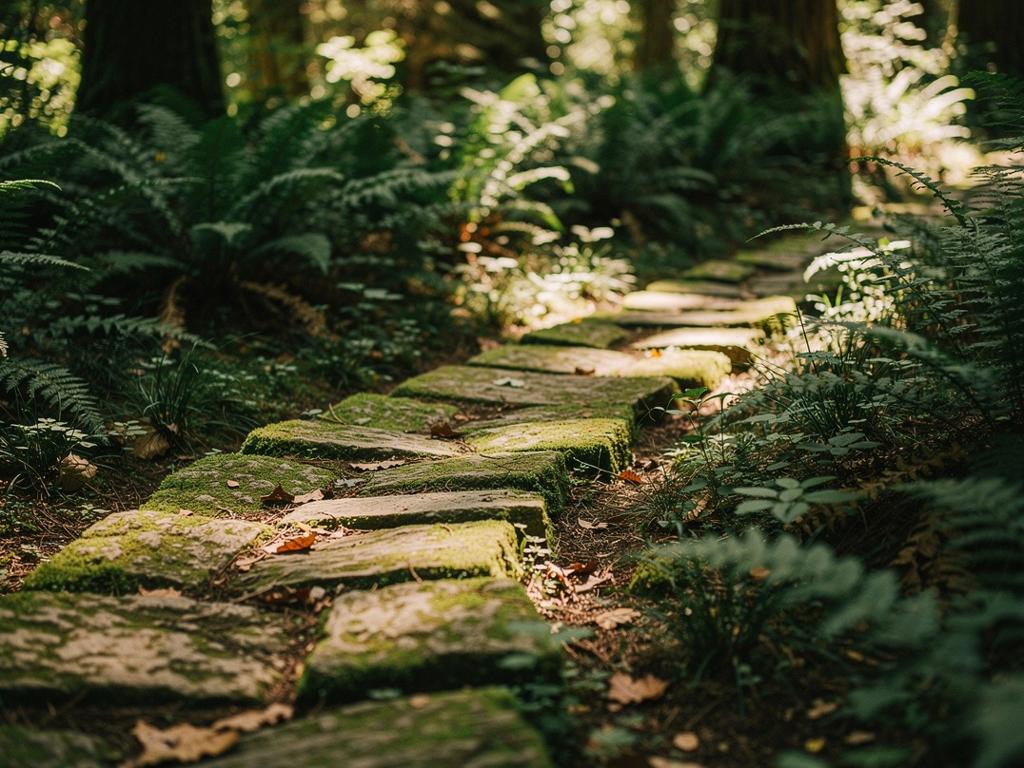
Most people who come home from an ayahuasca retreat expect the hard part to be the ceremony itself. It usually isn't. The hard part is the Tuesday afternoon three weeks later when the insights start to fade, the old patterns creep back, and you're staring at your phone wondering whether any of it was real. This is where a boring, unglamorous practice earns its keep: walking meditation. Not the sit-in-lotus, incense-burning kind. The kind where you put one foot down, notice it, put the other foot down, notice that too, and keep going for twenty minutes. I've watched a lot of people return from plant medicine work — ayahuasca, psilocybin, San Pedro, the occasional ibogaine journey — and the ones who integrate well almost always have some kind of embodied daily practice. Walking meditation is the one I recommend most, because it works for people who can't sit still, people whose knees hate the cushion, and people whose nervous systems are still buzzing from what they experienced in the maloca. Ayahuasca and other master plants tend to shake loose a lot of material. Emotional, somatic, spiritual — call it what you like. When the ceremony ends, that material doesn't just evaporate. It sits in the body, waiting for a channel. Sitting meditation is one channel, but it can also intensify the noise for people who are already flooded. Walking gives the nervous system somewhere to go. There's something about the rhythm of steps — left, right, left, right — that seems to organize a scattered mind without demanding anything from it. You don't have to be still. You don't have to concentrate hard. You just have to walk and notice. For someone in the messy weeks after a ceremony, that low bar is exactly the point. Neuroscientists talk about bilateral stimulation — the same principle behind EMDR therapy — as a way of helping the brain process difficult material. Whether or not you buy the mechanism, the felt experience is clear: walking helps thoughts move through instead of sticking. Here's the practice, stripped of any mystical dressing. You pick a stretch of ground — a hallway, a garden path, a quiet street, a patch of forest. Twenty steps is enough. You walk slowly. Slower than you think. You notice the lift of one foot, the swing forward, the placement, the shift of weight. At the end of your stretch, you turn around and go back. That's it. The first ten minutes are usually terrible. Your mind will offer you a shopping list, a work grievance, a memory from 2009 that has no business surfacing. Fine. You notice, you return to the feet. Somewhere around minute twelve, if you're lucky, something quiets. Not always. Sometimes the whole session is just noticing that your mind is a raccoon on espresso. That counts too. People fresh out of a retreat often report that walking meditation is where the download from ceremony finally lands. An insight that felt abstract during the icaros suddenly makes sense while you're pacing a jungle path. A grief that wouldn't move on the mat starts to move on the trail. The body was waiting to be asked. The window for integration after a plant medicine experience is longer than most people think. The first month is critical, but the shifts keep unfolding for six months, sometimes a year. A daily walking practice — even a short one — gives that unfolding somewhere to happen. A few things that help: You don't need a special outfit, a meditation cushion, or an app. This is one of the few contemplative practices that costs nothing and requires no equipment, which is probably why it's survived for a couple of thousand years in Buddhist traditions across Asia. No. And it's not meant to be. A daily walking practice is what supports the work — it doesn't replace it. The people I know who've genuinely shifted long-standing patterns, whether that's addiction, depression, or the low-grade dread of a life that stopped fitting, almost all did it through some combination of intensive experience (ceremony, retreat, therapy) and daily embodied practice. What walking meditation does is keep the door open. Between ceremonies, between therapy sessions, between whatever brought you here and whatever comes next. It's the connective tissue. I've had participants tell me that the walking practice they picked up during a retreat was the single most important thing they brought home. More than the journal, more than the dieta rules, more than the WhatsApp group with the other participants. Just the daily habit of walking slowly and paying attention. The biggest one is treating it like exercise. It isn't. If you're getting a workout, you're going too fast. The point is attention, not cardio. The second mistake is expecting fireworks. Walking meditation is deliberately undramatic. You will not have visions. You will not weep. What you will get, if you stick with it, is a slow rewiring of your relationship to your own body and your own thoughts. That's a lot less exciting than a ceremony and probably more important in the long run. The third mistake is quitting after three days because nothing happened. Give it a month. The changes are cumulative and often invisible until they aren't. Plant medicines get most of the attention in the psychedelic healing conversation, and for good reason — they crack things open that decades of talking hadn't touched. But the crack itself isn't the healing. The healing is what you do with what came through. That work is quiet, unphotogenic, and mostly happens on ordinary days when nobody's watching. Walking meditation is one of the plainest tools for that quiet work. It travels with you. It doesn't care what tradition you come from. It asks almost nothing and offers a lot, if you're patient. If you're still in the research phase — reading about ayahuasca, weighing whether a psychedelic retreat is the right move, wondering how people actually put the pieces back together afterward — start walking now. You'll be ahead of the curve. And when the ceremony does come, whether it's next month or next year, your body will already know how to listen. For readers who want to take the next step, a range of curated ayahuasca and plant-medicine retreats with strong integration support can be browsed on our marketplace here. Whatever you decide, the practice is free, and it starts the moment you put one foot in front of the other.

5 Ways Ayahuasca Quietly Rewired My Life (and What to Expect)
The first time I drank ayahuasca, I was thirty-four, mildly depressed, functionally anxious, and convinced I had already done the real work in therapy. I hadn't. What the medicine showed me over the following ceremonies — and what a lot of people who end up on this path eventually describe — was that most of us are walking around with a version of ourselves that's been quietly under construction since childhood, and we've stopped noticing the scaffolding. This isn't a sales pitch for plant medicine. Ayahuasca is not for everyone, it doesn't fix everyone, and it can genuinely hurt people who approach it carelessly. But if you're weighing whether an ayahuasca retreat might belong in your life, here's a specific, honest account of what it actually did for me across five areas — and what I'd want a friend to know before booking. Before I sat with the medicine, my anxiety felt like weather. It arrived, it stayed, occasionally it lifted. I had language for it — generalized anxiety, low-grade dread, the usual — but no real understanding of where it lived in my body or what it was trying to tell me. The first two ceremonies were rough. Not visionary. Not cosmic. Just a long, uncomfortable inventory of every knot in my chest and stomach, held up in front of me like a doctor holding an X-ray. What surprised me was that the medicine didn't remove the anxiety. It let me see it. And once you can actually look at something — its shape, its origin, the specific memory it's attached to — it stops running the show quite so completely. Months later, I still get anxious. But it's more like a visitor now than a landlord. That shift — from being fused with a feeling to being able to observe it — is one of the most consistent things I've heard from people after a serious ayahuasca ceremony. I won't dress this up. I drank more than I wanted to, for longer than I wanted to, and I couldn't seem to stop wanting the drink even when I stopped drinking. Ayahuasca didn't magically end that pattern. What it did was more useful: it showed me, in vivid and unignorable detail, what I was medicating. There's growing clinical interest in ayahuasca and psychedelic-assisted approaches to addiction recovery — ibogaine gets most of the headlines here, and for good reason, but ayahuasca has its own quieter track record with people trying to break long compulsive loops. In ceremony, I saw the version of me who'd learned very young that a warm drink in the hand meant safety. Once I saw that, drinking felt less like a personal failing and more like a very old survival strategy that had outlived its usefulness. The craving didn't vanish overnight. But the story I told myself about the craving changed, and that changed what I did next. My father died when I was in my twenties. I did what a lot of people do — I got busy, stayed useful, and quietly filed the grief in a drawer I promised I'd open later. Ayahuasca opened the drawer. This is not always a gentle process. During one ceremony I cried for what felt like three hours straight, which the facilitator later told me was closer to forty minutes. Time gets strange in there. But something moved that had been stuck for over a decade, and afterwards I could think about my dad without the tight, avoidant feeling that had followed me around since his funeral. People sometimes call ayahuasca and other master plants “heart medicines,” and I think this is what they mean. They don’t give you new information about your losses. They give you access to the feelings you filed away because you couldn’t afford them at the time. The purge is real. If you’ve read anything about ayahuasca ceremonies, you know about the bucket. What nobody quite prepared me for was how strangely respectful of my body I became afterwards. Something about spending a night alternately shaking, sweating, purging, and lying still on a mat rewires your relationship with the physical self you’ve been dragging around. You stop treating your body like a machine that's failing you and start treating it more like a companion that’s been trying to get your attention. Practically, this showed up as small changes: I started sleeping more. I cut way back on caffeine. I noticed hunger and fullness signals I’d been ignoring for years. None of this was dramatic. All of it added up. Before plant medicine, I thought healing was a destination. You worked on your stuff, you resolved it, you moved on. Ayahuasca made it pretty clear that healing is closer to a practice — something you keep showing up to, not something you finish. This is the reframe I’m most grateful for. It took the pressure off. I stopped grading myself on whether I was “better yet” and started paying attention to whether I was moving in a direction I actually wanted to go. If you’re actively researching an ayahuasca retreat, here are the things I wish someone had told me plainly: Honest answer: I don’t know, and neither does anyone else without knowing you. Ayahuasca isn’t a cure. It’s a mirror with teeth. If you’re in acute crisis, on certain medications, or hoping the medicine will do the work you’ve been unwilling to do in the daylight, this probably isn’t the moment. But if you’re a reasonably stable adult who’s hit a wall that talk therapy hasn’t moved, and you’re willing to prepare seriously and integrate afterwards, a well-run ceremony can be one of the more useful things you ever do. I know a lot of people, myself included, who’d say that plainly. If any of this resonates and you want to see what a responsibly run retreat actually looks like in practice, a curated selection of ayahuasca retreats can be browsed on our marketplace here. Take your time. The right one is worth waiting for.

Your Algorithm May Be Feeding Your Depression: What New Research Shows
Ever open your phone for a two-minute break and surface forty minutes later, having watched seventeen videos about situationships, silent treatment, and why your friends might secretly resent you? Yeah. Same. It feels a little supernatural, that shift. Like the phone read your journal. And while the honest answer is that algorithms are simply very good at pattern-matching what you linger on, newer research hints at something more uncomfortable — that the feed you see when you're struggling looks measurably different from the feed you'd see if you were doing fine. And that difference might be doing something to your brain. Most studies about phones and mental health chase the wrong metric. They count minutes. But two people can each spend an hour on TikTok and inhabit entirely different informational universes — one watching sourdough tutorials and golden retrievers, the other absorbing a rolling essay on avoidant attachment. Screen time tells you nothing about that. Content does. So a group of researchers took a smarter angle. They recruited around 60 young adults — average age 20 — and asked them to complete a standard questionnaire measuring depressive symptoms. Then, instead of guessing what these participants were watching, they pulled videos directly from each person's own Instagram and TikTok feeds. As a control, they also showed generic trending clips from fresh accounts with no viewing history. While participants watched, sensors on their scalps recorded brain activity. The team then sorted the personalized videos into categories. Content about friendships and romantic relationships — roughly a fifth of what people saw — got further tagged as positive, neutral, or negative in tone. Here's where it gets interesting. Participants who scored higher on depressive symptoms weren't just watching more videos overall. They were watching a different kind of video. Their feeds contained noticeably fewer positive relationship clips and more neutral or negative ones — think breakup post-mortems, red flag inventories, friendship-fallout monologues. The pattern held even after researchers controlled for total screen time and sex. The brain data pointed in the same direction. When people with more depressive symptoms watched their own personalized content, their scalp sensors picked up a signature associated with processing negative emotional information. That response didn't show up when the same people watched the generic trending videos. In other words: it wasn't screens in general lighting up the mood-related circuitry. It was their screens, showing their curated content. Fewer positive relationship videos in the feed also correlated with that same brain response. Small study, early findings, definitely needs replication in bigger groups — the researchers are clear about all of that. But the shape of the thing is worth paying attention to. There's a well-established loop in depression research: relationship pain and low mood feed each other. Rough patch with a partner nudges the mood down; low mood makes you interpret the next interaction more darkly; things get worse. Nothing new about that dynamic. What's new is the third player at the table. Your feed. If you're already in a difficult stretch, you're probably more likely to pause on content that names what you're feeling. A video titled five signs your friend is jealous of you is going to land differently at 11 p.m. on a Tuesday when you've had a weird week than it would on a Saturday afternoon when everything is fine. You watch it. Maybe you watch it twice. The algorithm — which has no idea you're going through anything, and doesn't care — notices only that this kind of content holds your attention. So it delivers more. And more. And by Thursday your For You Page has quietly become a graduate seminar in interpersonal rupture. None of this means your phone is causing depression. A pilot study can't establish cause and effect, and the researchers are explicit about that. But it does suggest that when things are already hard, the feed can act as an amplifier — turning up the volume on exactly the themes you'd probably do better to turn down. You can't dictate what an algorithm shows you. You can influence what it learns. This isn't a productivity hack or a digital detox pitch — it's more like weeding a garden that grows whether you tend it or not. A few minutes of small adjustments will genuinely change what you see over the following weeks. Depression is layered. Sleep, movement, connection, meaning, biology, history — they all show up in the mix. A curated feed isn't going to make or break any of that on its own. But it is one of the few environmental inputs you get to shape without a doctor's appointment or a plane ticket, and given how many hours it occupies, it's worth shaping deliberately. For people working through deeper patterns — the kind that don't respond to muting a few accounts — some are exploring more substantial interventions. Talk therapy, somatic work, medication, and for a growing number of people, structured psychedelic and plant-medicine work in a supported retreat setting. These aren't replacements for the daily work of tending your attention, but they can address the root layers that a lifestyle tweak simply can't reach. If you're curious about that direction, a curated selection of plant-medicine and psychedelic retreats can be browsed on our marketplace here. In the meantime: notice how your phone leaves you feeling, and trust that data. Your algorithm doesn't know what you actually need. You do.
Why Writing by Hand Sharpens Memory — and What It Has to Do With Plant Medicine Integration
Try to remember the last thing someone told you in a meeting last week. Not the gist — the actual words. Hard, isn't it? Now think about a phrase your grandmother used to say, written on a card decades ago in her looping cursive. That one probably comes back fully formed, with the color of the ink and the smell of the paper attached. There's a reason for that gap. And there's a growing pile of brain research that helps explain it — research that turns out to matter quite a lot for anyone working with ayahuasca, psilocybin, or any of the master plants, because the single most important tool for integration is still a notebook. Researchers at the Norwegian University of Science and Technology recently ran a study with 36 university students, each wired up with a 256-channel EEG cap — essentially a very fine-grained map of electrical chatter across the brain. Half the time the students wrote words in cursive using a digital pen. The other half, they typed the same words on a keyboard. The scientists weren't just asking which regions lit up. They were asking how those regions talked to each other. The result was pretty striking. When people wrote by hand, far more brain regions were in active conversation with one another — particularly in the wave patterns associated with learning and memory formation. Typing produced a much quieter, more localized signal. Same words. Same person. Very different brain. A separate review of brain-imaging studies has landed on similar territory. Whatever's happening when you drag a pen across paper, it's engaging a wider swath of your neural architecture than tapping keys does. Think about what your body is actually doing when you write a single word. Your hand executes a different, precise motor sequence for every letter. Your eyes track the tip of the pen. Your fingers register pressure and friction. Somewhere in there, your brain is holding the meaning of the word, the shape of each letter, and the position of the pen on the page — all at once. Typing is, by comparison, almost mechanically boring. The finger movement is more or less identical whether you're pressing an 'a' or a 'z'. The brain gets to coast. And coasting, it turns out, isn't great for encoding. Older studies also suggested that students who took notes by hand did better on conceptual questions than laptop-users — the theory being that slower writing forces you to summarize rather than transcribe. A more recent replication muddied that finding, so the memory-performance angle is still up for debate. But the neurological angle — the sheer amount of brain that gets recruited — is holding up well. Here's where it gets interesting for anyone who has sat in ceremony, or is considering it. Every experienced facilitator I've spoken to says roughly the same thing about integration: the medicine does maybe thirty percent of the work. The other seventy is what you do in the weeks and months afterward. And the number one tool almost all of them recommend, before any therapist referral or breathwork practice or dietary tweak, is a paper journal. Not an app. Not a voice memo. A physical notebook and a pen. For years I assumed this was just old-school aesthetic preference — shamans don't tend to be Notion users. But the research suggests something more concrete is going on. A plant medicine experience delivers a flood of imagery, insight, emotion, and half-formed knowing that the brain is scrambling to file. Handwriting forces slower processing. It engages more regions. It gives the material somewhere to actually go. Type your ayahuasca visions into a Google Doc and you're basically transcribing. Write them longhand and you're metabolizing them. Different verb. Different result. If you're preparing for a retreat, or you've come back from one and things still feel unsettled or luminous or both, here's the practical version of what tends to help. None of this is prescriptive — just what I've seen work across a lot of people. The people I know who've had the deepest, most durable results from plant medicine are almost universally the ones who kept writing long after the visions faded. The ones who didn't tend to describe their experience in the same words a year later that they used the day after — which usually means the experience got frozen rather than integrated. Handwriting isn't magic. Nobody's claiming that a Moleskine will heal your trauma or that typing your reflections is worthless. If you have a wrist injury, or you genuinely think faster on a keyboard, digital notes are better than no notes at all. The worst option, hands down, is not recording anything and trusting your memory. Psychedelic memory is famously slippery — vivid at first, gone in a fortnight. If you must go digital, at least slow down. Pause before you type. Put the insight in your own words rather than trying to catch every image. That extra half-second of paraphrasing is where some of the neural benefit sneaks back in. And a small warning: don't turn journaling into performance. Nobody has to read your ayahuasca notes. They can be ugly, contradictory, embarrassing, or one word repeated forty times. That's fine. Integration journals aren't essays. They're compost. There's something quietly appropriate about the fact that the oldest technology — a stick with ink on it, dragged across a plant fiber — turns out to be one of the better tools for holding onto insights delivered by even older technologies, the master plants themselves. Ayahuasca, San Pedro, psilocybin, iboga: these traditions never needed screens. The teachers who carry them still don't. If you're weighing a psychedelic retreat for depression, addiction recovery, trauma healing, or just the sense that something in your life has quietly stopped working, know that the ceremony is only the front door. What you build afterward — with a pen, in a chair, over months — is the actual house. For readers who want to take this further, a range of curated ayahuasca and plant-medicine retreats can be explored on our marketplace here. Whatever you decide, buy the notebook first.
Protein Powder and Cholesterol: What a New Meta-Analysis Actually Shows
Protein powder gets pitched as a muscle-building tool. Scoop, shake, biceps. That's the story most of us have absorbed. But a recent meta-analysis suggests the humble tub sitting on your kitchen counter might be doing something else quietly in the background — helping your cholesterol numbers move in the right direction. This isn't a headline about a miracle supplement. The effects are modest. But they're real enough to be worth understanding, especially if you're someone who already thinks carefully about what goes into your body and why. Researchers pooled data from 32 randomized controlled trials, covering roughly 1,357 adults classified as overweight or obese. The question was straightforward: does supplementing with high-quality protein meaningfully shift blood lipid levels? To answer it, they zeroed in on four protein sources most people will recognize — milk protein, casein, whey, and soy. The comparison was against control groups (people not receiving the protein supplement), and the outcomes tracked were the classic lipid panel markers: LDL cholesterol (the so-called “bad” one), total cholesterol, triglycerides, and HDL cholesterol (the “good” one). The team also weighed variables like dose, how long each trial ran, and characteristics of the participants themselves. A meta-analysis is basically a study of studies — it doesn't run new experiments, it looks for patterns across existing ones. When those patterns hold up across dozens of trials, they tend to be more trustworthy than any single study standing alone. Here's what the numbers showed. On average, high-quality protein supplementation was linked to an LDL cholesterol drop of about 3.45 mg/dL, and a total cholesterol drop of around 5.70 mg/dL, compared with control groups. Both reductions were statistically significant. Triglycerides and HDL? No meaningful movement in either direction across this pooled data. Now, 3.45 mg/dL isn't going to replace a statin. Anyone telling you otherwise is selling something. But it's a directional benefit from a supplement most people are already taking for other reasons — and stacked alongside diet, exercise, sleep, and fiber intake, small effects add up. Cardiovascular health rarely turns on one lever. It's usually a dozen small ones being pulled in the same direction. The honest answer: researchers aren't entirely sure. There are a few plausible mechanisms floating around, and probably more than one is at play. Different proteins carry different amino acid profiles and bioactive compounds — the peptides and micro-molecules baked into the protein source. Some of these may directly influence how the body handles fat and cholesterol metabolism. Whey in particular contains compounds that appear to limit how much dietary cholesterol and fat the gut absorbs during digestion, and may even help escort excess fat out of the body rather than storing it. Then there's the indirect route. Protein is famously filling. If a scoop in the morning means you're less likely to graze on ultra-processed snacks by mid-afternoon, your overall diet quality shifts. Better satiety often means better body composition, which itself tends to nudge lipid numbers. Untangling “protein did this directly” from “protein changed what you ate for the rest of the day” is genuinely hard, and this study wasn't designed to separate the two. Worth noting: while this particular meta-analysis didn't find significant triglyceride shifts, other reviews focused specifically on whey protein have. So the story on triglycerides isn't closed — it's just not settled from this data set. If you're going to add protein powder to your routine — for muscle, for satiety, for the modest cholesterol benefit, or all three — the label matters more than the marketing. A few things worth checking: Whey remains the most-studied option, and dairy tolerates it. Soy is a solid plant-based alternative with decades of research behind it. Pea and other plant blends can work if you combine sources to cover the amino acid spread. Casein is slower-digesting and often used before sleep. Cholesterol management isn't sexy, but it's one of the most consequential health levers most adults have. Elevated LDL over decades is one of the surer paths to cardiovascular trouble. So the news that a supplement many people are already using may quietly help is welcome — even if the effect size is modest. What it isn't: a reason to start slamming three shakes a day. Excess protein doesn't get stored as extra muscle; it either gets used for energy or converted and stored like anything else. And piling protein on top of an otherwise mediocre diet won't outrun the mediocre diet. Fiber, whole foods, movement, and sleep still do the heavy lifting. The real read here is that protein's role in the body is broader than the gym-bro narrative has room for. It shows up in immune function, in blood sugar regulation, in bone density, in how well you age, and — as this analysis suggests — in the numbers your doctor scans on your next lipid panel. If you're already taking a high-quality protein supplement, keep going. If you've been considering one for muscle, satiety, or general nutritional insurance, the cholesterol data adds another small reason to the pile. And if your LDL is genuinely elevated, talk to your doctor — protein powder is a supporting player, not a replacement for the real conversation about diet, exercise, and, in some cases, medication. Wellness rarely comes from a single bold move. It comes from a stack of small, boring, consistent choices — and understanding which ones are actually earning their place. For readers who want to keep building that stack in more contemplative settings, a range of health and wellness retreats can be browsed on our marketplace here.
Dreaming of a Psychedelic Retreat?
We have the best deals and offers from thousands of organizers all over the world! Get them into your mailbox every week!
We value your privacy. Your email address will never be shared or published.
