 English
 Deutsch
 Français
 Nederlands
 Español


Reset. Heal. Grow.
When Meditation Turns You Into a Hermit: Finding Your Way Back
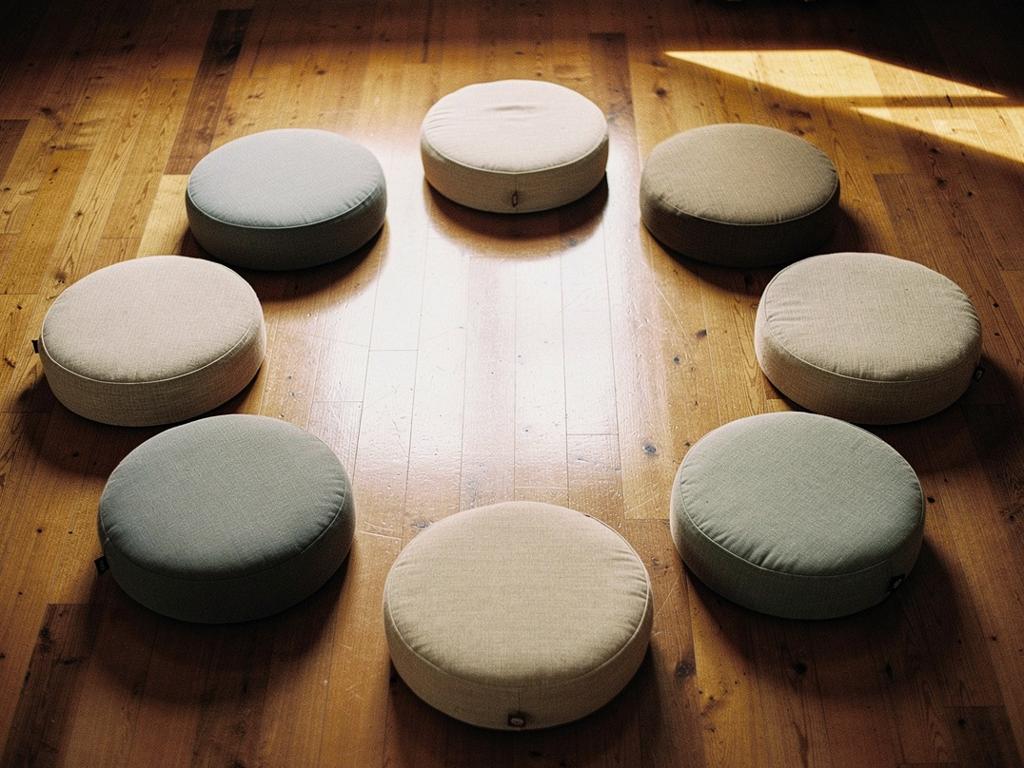
Somewhere between year two and year three of a serious meditation practice, a strange thing happens to a lot of people. The phone stops ringing because you stopped answering. Dinner invitations feel like an imposition. You catch yourself grateful when plans get cancelled. You tell yourself this is equanimity. Detachment. Progress. It might be. Or it might be that your practice has quietly turned you into a hermit, and you're only now noticing the walls. This is a conversation that comes up more than you'd think — in retreat kitchens, in integration circles, in late-night messages from readers who found their way into plant medicine after years of sitting silently on a cushion. Meditation is supposed to open us. Sometimes, done a certain way for long enough, it does the opposite. And figuring out how to come back to the world — without abandoning what you learned in solitude — is its own project. Meditation done well trains you to observe without reacting. That's the whole gig. You watch a thought arise, you watch it pass, you don't get hooked. Applied to social life, though, that same skill can turn into a shrug at everything. Someone tells you about their promotion — you notice the flicker of feeling and let it pass. Someone shares grief — same move. You've become so good at not clinging that you've stopped touching anything at all. Then there's the retreat effect. A week or ten days of noble silence rewires your nervous system toward stillness. Coming back to a noisy world feels like being scraped with sandpaper. So you protect the quiet. You skip the party. You skip the next one. Eventually people stop asking, and you tell yourself that's fine, because your practice is more important. The story feels spiritually respectable. Underneath it, you might just be avoiding. There's also a subtle superiority trap that meditators rarely admit to. When you spend years watching your mind, you start to see how much other people are running on autopilot — the reactivity, the small dramas, the endless takes on things. It becomes tiring to be around. Not because they're bad company, but because you've optimized your inner life for a signal-to-noise ratio the world can't match. That's a lonely road, and it usually doesn't announce itself as loneliness. It shows up as preference. Every serious contemplative tradition warns about this. The Buddhist path talks about the near enemies of the brahmaviharas — how compassion can collapse into pity, how equanimity can collapse into indifference. The near enemies look almost identical to the real thing from the inside. That's what makes them dangerous. You think you're generating spaciousness. You're actually generating distance. The old Zen line about the person who returns to the marketplace with gift-bestowing hands exists for a reason. The point of sitting alone is not to stay alone. It's to become the kind of person who can walk back into the mess of human life with more presence, more patience, more warmth. If your practice is stripping away your capacity to be with people — not just tolerating them, but genuinely enjoying them — something has gone sideways. Ask yourself, honestly: when did you last laugh with someone until you couldn't breathe? When did you last feel a full-body yes to being invited somewhere? When did you last let another person surprise you? If the answers are all fuzzy, that's data. Here's where I'll say something that might sound strange: some of the most stuck long-term meditators I've met have found their way back to the world through psychedelic and plant-medicine work. Not as a replacement for sitting practice — usually as a complement, or a course correction. Ayahuasca in particular has a reputation for dismantling the careful architecture people build around themselves. You can't out-observe an ayahuasca ceremony. The brew doesn't care that you're a skilled meditator. It walks straight past your equanimity and puts you face to face with whatever you've been avoiding — which, for the hermit-meditator, is often the raw, embarrassing hunger to be close to other people. That hunger you've been calling attachment. That need you've been calling ego. Psilocybin work tends to move in a similar direction, though usually with a gentler hand. Ibogaine, for people with genuine addiction or trauma running underneath the withdrawal from life, can be more surgical. San Pedro is famous for softening the heart in ways that make you want to call your mother. Each of these master plants seems to work on a different frequency of the same underlying issue — the disconnection you didn't know you were maintaining. None of these are shortcuts. They're not substitutes for the years of sitting. What they seem to do, for people whose meditation has calcified into avoidance, is crack open the container. You come back to the cushion afterward and find that your practice is different. Softer. More curious. Less defended. You don't have to book a retreat tomorrow to start unwinding this. Some concrete moves that help: There's a version of the spiritual life that ends in a cave. Fair enough — a small number of people are genuinely called to it, and the tradition honors that. But most of us aren't those people. We've just gotten quiet enough, and comfortable enough with our own company, that we mistook a preference for a calling. Coming back to the world isn't a betrayal of what you learned in silence. It's the whole point. The stillness was training. Now you get to see what it's for. If any of this landed a little too accurately, and you're wondering whether a plant-medicine container might help crack the shell you didn't realize you'd built, a curated selection of ayahuasca and psychedelic retreats can be explored on our marketplace here. Not as an escape from your practice — as a way of finally letting it do what it was always meant to do.
Why Is LSD Still Illegal? The Strange History Behind the Ban
Here's a question that comes up almost every time someone starts researching psychedelics seriously: if LSD is less physically harmful than alcohol, non-addictive, and once considered one of psychiatry's most promising tools — why is it still classified alongside heroin? It's a fair question. And the answer has almost nothing to do with pharmacology. I've watched this conversation unfold at dozens of integration circles and post-ceremony breakfasts. Someone always brings it up. They've just had a profound experience with ayahuasca or psilocybin, they're piecing their life back together, and they're suddenly furious that something this useful was made illegal in the first place. That anger is understandable. But the story behind the ban is stranger than most people realise, and it's worth telling properly. LSD was first synthesized in 1938 by Albert Hofmann, a Swiss chemist working at Sandoz Laboratories. He wasn't looking for a psychedelic. He was researching circulatory stimulants derived from ergot fungus. Five years later, in 1943, he accidentally absorbed some through his skin and took the world's first acid trip on a bicycle ride home. That bike ride is now a small holiday among psychedelic enthusiasts. Bicycle Day, April 19th. Look it up. For the next two decades, LSD was legal, freely researched, and considered one of the most exciting compounds in psychiatry. Sandoz distributed it to researchers under the trade name Delysid. Thousands of clinical papers were published on its use for alcoholism, depression, end-of-life anxiety, and what we'd now call PTSD. Bill Wilson, co-founder of Alcoholics Anonymous, took it and publicly credited it with helping him understand recovery more deeply. Cary Grant did over 100 sessions and told Good Housekeeping it made him a better man. Then came the 1960s. And this is where the story turns. The short version most people know: Timothy Leary, hippies, Nixon, war on drugs. That's not wrong, but it's incomplete. What actually shifted the political climate was a collision of three things happening at once. In 1968, LSD possession became a federal offense in the United States. Two years later, the Controlled Substances Act of 1970 placed it in Schedule I — the most restrictive category, reserved for substances deemed to have no accepted medical use and a high potential for abuse. That classification has never been meaningfully revisited. It's been over half a century. John Ehrlichman, one of Nixon's senior advisors, admitted years later in a now-famous interview that the drug war was never really about public health. It was about criminalising the antiwar left and Black communities. Whether you take that quote at face value or not, the timing of Schedule I placement lines up uncomfortably well with that political goal. Physically? Not particularly. LSD is one of the least physically toxic psychoactive substances ever studied. There's no established lethal dose in humans. It's not addictive in the pharmacological sense — the body builds tolerance so quickly that recreational bingeing is chemically pointless within days. Multiple large-scale surveys have found no association between psychedelic use and increased rates of mental health problems in the general population. Psychologically, it's a different conversation. LSD can absolutely destabilise someone who's not ready for it, not supported through it, or who has an underlying vulnerability to psychotic disorders. That's a real risk and it deserves respect. It's also the exact risk that a legal, regulated, therapeutic framework would be designed to manage — the way we manage every other powerful psychiatric intervention. Compare this to alcohol, which is legal, physically toxic at accessible doses, responsible for roughly three million deaths worldwide each year, and genuinely addictive. The scheduling makes no pharmacological sense. It never did. Since roughly 2000, a quiet renaissance has been underway. Johns Hopkins, NYU, Imperial College London, MAPS, and dozens of other serious institutions have been running clinical trials on psilocybin, MDMA, and — more recently — LSD itself. The results, particularly for treatment-resistant depression, end-of-life anxiety, and addiction, have been strong enough that the FDA has granted several of these compounds Breakthrough Therapy designation. LSD specifically is being studied again for anxiety associated with life-threatening illness and for cluster headaches, where microdoses appear remarkably effective. Some of this research is being conducted in the same countries that criminalised the substance decades ago. The absurdity is not lost on the researchers. Meanwhile, the plant-medicine world has been quietly doing its own thing for centuries. Ayahuasca ceremonies operate legally in Peru, Brazil, Costa Rica, and a handful of other jurisdictions. Psilocybin retreats have opened in the Netherlands, Jamaica, and now Oregon. Ibogaine clinics run legally in Mexico and treat opioid addiction with success rates that make the pharmaceutical industry uncomfortable. The legal landscape for psychedelics is much more porous than the Schedule I label suggests — you just have to travel for it. Here's why the history is relevant to anyone weighing plant medicine seriously. The framing of these substances as dangerous criminal drugs has shaped, and distorted, almost every conversation the average person has about them. Your family's fear, your doctor's silence, your own hesitation — a lot of it traces back to a policy decision made for political reasons in 1970, not to any honest reading of the evidence. That doesn't mean psychedelics are safe for everyone or that every retreat is legitimate. Both of those things need to be evaluated carefully. But it does mean the automatic reflex of "illegal equals dangerous equals bad" doesn't hold up under scrutiny. Master plants like ayahuasca, huachuma, and iboga have been used in structured, intentional contexts for far longer than any modern government has existed. Their traditions carry hard-won knowledge about safety, preparation, and integration that the pharmaceutical model is only now beginning to appreciate. If you're researching a retreat — for addiction, for depression, for the stuck feeling that finally pushed you to start Googling in the first place — knowing this backstory helps. It tells you why the medicine you're considering is legal in one country and criminal in another. It tells you why your primary care doctor probably can't help you evaluate options. And it tells you that the burden of doing this well falls largely on you: choosing reputable facilitators, preparing properly, integrating what comes up afterward. A few practical takeaways for anyone doing this research: The LSD question — why it's illegal, why that's absurd, why it might change — is really a doorway into a bigger conversation about how we approach consciousness, healing, and the substances that have been part of human life for thousands of years. The laws are catching up slowly. The research is catching up faster. And in the meantime, real work is happening in retreat centers around the world where people are doing this properly, legally, and with genuine care. If any of this has sharpened your curiosity about exploring plant medicine in a supported setting, a curated selection of ayahuasca and psychedelic retreats can be browsed on our marketplace here. The right container makes all the difference — probably more than the substance itself.
Fear of Dying on Ibogaine vs. What Actually Happens in the Room
Nobody books an ibogaine retreat casually. You read one forum thread about someone's heart stopping, then another about a decade of opioid addiction lifting in a single night, and you're left staring at your laptop wondering how both things can be true at the same time. That tension — the fear of dying versus what people actually report from the experience — is where most serious research into this plant medicine starts. And it deserves a real answer, not a marketing brochure. I've spent years talking with facilitators, ceremony sitters, and people on the other side of an ibogaine flood dose. What I can tell you is this: the fear is not irrational, the risk is real, and the experience itself is almost never what people imagined it would be. Let's walk through both sides honestly. Ibogaine isn't like other psychedelics or plant medicines in one specific, important way — it prolongs the QT interval in your heart. In plain English, it changes the electrical rhythm of your heartbeat for many hours after ingestion. In a healthy screened participant this is manageable. In someone with an undiagnosed heart condition, low potassium, an interacting medication, or active opioid dependence that hasn't been properly cleared, it can turn fatal. Estimates from clinical reviews suggest a mortality rate somewhere around one in three hundred to one in four hundred unsupervised ibogaine sessions. That number drops dramatically in medically screened, monitored settings — but it never drops to zero. Anyone telling you ibogaine is completely safe is either lying to you or hasn't read the literature. Anyone telling you it will definitely kill you also hasn't read the literature. The truth sits in between, and it depends almost entirely on screening. The fear is compounded by the length of the experience. Ayahuasca gives you four to six hours. Psilocybin gives you five or six. Ibogaine can hold you for eighteen to thirty-six hours, sometimes longer if you count the residual gray phase afterward. When people imagine dying on ibogaine, part of what they're imagining is being trapped in that state — unable to sit up, unable to communicate clearly, heart racing or fluttering, alone with whatever comes. Here's the strange thing. Ask people who've done a full ibogaine flood dose what the experience was actually like, and very few of them describe it in terms of the fear that brought them there. They describe something else entirely — usually some version of a life review, a mechanical humming or buzzing sensation, and a peculiar sense of being watched or examined by something that isn't quite them. The physical part is unglamorous. Most people vomit. Most people are ataxic, meaning they can't walk in a straight line, so trips to the bathroom involve a sitter and a bucket. The eyes stay closed for most of the journey because opening them makes the vertigo worse. There's often a persistent buzzing sound, sometimes described as an old refrigerator, sometimes as insects, sometimes as electrical current running through the walls. This is normal. It's not the room. It's the medicine. The psychological content is where things get interesting. Ibogaine has a reputation for being oracular — it shows you your life, not in a mystical highlight reel, but in specific scenes you'd mostly forgotten. Childhood bedrooms. A conversation with your father from twenty years ago. The moment you first used. The moment you decided to stop trying. People report watching these scenes with something like clinical detachment, as if reviewing footage. The medicine seems to strip out the emotional charge and leave only the information. Most people who show up to an ibogaine retreat are there for one reason: they've tried everything else for their addiction, and nothing has held. Opioid dependence is the classic case, but I've met people using ibogaine to interrupt patterns around stimulants, alcohol, benzodiazepines, and even compulsive behaviors that had nothing to do with a substance. The mechanism appears to involve a metabolite called noribogaine, which sits in the body for days and seems to reset something in the brain's opioid and dopamine circuitry. Withdrawal from opioids, in particular, is often described as being interrupted rather than endured — people who should be in acute physical withdrawal report that the symptoms simply aren't there during and after the flood dose. This is not a placebo effect. It's one of the most striking pharmacological observations in the psychedelic space. But — and this is the part the enthusiast literature glosses over — ibogaine is not a cure. It's an interruption. It opens a window, usually described as lasting somewhere between three weeks and three months, during which cravings are muted and the mental space around old patterns feels different. What you do with that window determines whether the interruption becomes a genuine change. People who go home to the same apartment, the same relationships, and the same triggers without any integration work often relapse. People who use the window to restructure their lives — therapy, community, sometimes a follow-up plant medicine like iboga microdosing or a different master plant altogether — tend to do considerably better. If you're seriously weighing ibogaine, the single most important variable is the medical screening protocol at the retreat you're considering. Not the setting. Not the shaman. Not the testimonials. The screening. Red flags include retreats that don't ask for medical records, don't require an EKG, downplay the cardiac risk, or push you toward booking without a screening call. If a facilitator gets defensive when you ask about their safety protocols, that's your answer. Walk away. Here's something I've noticed over the years. The fear of dying on ibogaine, in most of the people I've spoken with, is not really a fear of physical death. It's a fear of being seen. Of having the medicine show them the exact shape of the life they've been avoiding. Of being confronted, for eighteen hours straight, with the specific choices that got them here. That's a legitimate fear, and it's the one worth taking seriously. The cardiac risk can be managed with proper screening. The other fear — of the experience itself, of what it will show you — is the actual work. Nobody can screen you out of that one. You either sit with it or you don't. People who come through the other side rarely describe it as pleasant. They describe it as necessary. That distinction matters, and it's worth sitting with before you book anything. Read everything you can find, and pay particular attention to accounts written by people who don't have anything to sell you. The Global Ibogaine Therapy Alliance publishes clinical guidelines that are worth downloading. Talk to at least two people who've completed a flood dose at least a year ago — the year mark matters, because the initial afterglow can make anyone sound like an evangelist. Consider whether you have the support in place for the weeks after. The medicine is short. The integration is long. Coming home from an ibogaine retreat without a plan is where a lot of the good work gets undone. For readers who want to research this further, a range of screened ibogaine and related plant-medicine retreats can be browsed on our marketplace here. Take your time with the decision. The retreats that are worth attending will still be there next month, and the ones that aren't shouldn't be attended anyway.
Where Psychedelic Medicine Stands Now: MDMA, LSD Trials, and Big Pharma Money
Something strange is happening in the world of psychedelic medicine, and if you're a would-be retreat-goer trying to figure out whether to book a ceremony in Peru or wait for a legal clinic to open near you, it's worth paying attention. The last few months have been a blur of regulatory filings, clinical trial results, and quiet checks written by pharmaceutical giants. Master plants are having a very corporate moment. I've been tracking this space for years — from the maloca to the boardroom, so to speak — and the current pace of movement is unlike anything I've seen. Here's a plain-language rundown of what actually happened this summer in psychedelic drug development, what it means for people considering addiction recovery or trauma work with plant medicine, and where the honest gaps still are. The big headline: a company refiled its new drug application for MDMA-assisted therapy for post-traumatic stress disorder. If you remember the disappointment of the previous rejection — the one that sent shockwaves through the field and made a lot of us wonder whether the FDA would ever approve a psychedelic — this is the sequel nobody was quite sure would happen. Why does this matter for someone considering a retreat? Because MDMA-assisted therapy, if approved, would become the first legal, insurance-adjacent option in the United States for treating deep-seated trauma with a psychoactive compound. That changes the landscape. People who currently fly to Amsterdam or the Amazon because they have no legal path at home would suddenly have one — though probably an expensive, tightly gatekept one. Here's the honest caveat, though: an FDA approval doesn't mean easy access. It means credentialed therapists, licensed clinics, a whole bureaucratic apparatus, and probably a five-figure price tag. For a lot of people, retreats will still be the more accessible option — even after regulatory doors open. Different medicine, different container, different price point. Another company just released the first Phase 3 clinical trial results for LSD as a treatment for generalised anxiety disorder. Let that sit for a second. LSD. In a Phase 3 trial. Reported in the same clinical language used for antidepressants and blood-pressure medications. The results, from what we've seen, look promising — though as with any single readout, the details of statistical significance, dropout rates, and long-term durability matter enormously. A single trial doesn't mean approval. It means momentum. And momentum in this field has been building for a while now. What's striking is the range of conditions psychedelics are being tested for. A few years ago the conversation was almost entirely about depression and PTSD. Now it's anxiety, addiction, eating disorders, obsessive-compulsive disorder, cluster headaches, end-of-life distress. If a mental-health condition involves rigid thinking and stuck patterns, someone is probably running a trial. One of the more revealing stories this month: Johnson & Johnson appears to be leading an $85 million funding round for a company developing what the industry calls neuroplastogens — compounds designed to mimic the brain-rewiring benefits of psychedelics without the trip. This is a big deal, and not everyone in the plant-medicine world is thrilled about it. The pitch for non-hallucinogenic psychedelics goes like this: what if you could get the neuroplasticity — the actual mechanism that helps a depressed or addicted brain form new patterns — without the eight-hour visionary experience? Cheaper. Safer. Scalable. Insurable. A pill you take at home. The counter-argument, which you'll hear from most experienced facilitators and honestly most people who've been through a serious ayahuasca ceremony, is that the experience is the medicine. The rewiring isn't a side effect of the visions; it's tangled up with them. You confront what you've been avoiding, you feel what you've been numbing, and something shifts. Try to strip that out and you might just have a slightly better SSRI. Which model wins in the marketplace is genuinely unclear. Probably both will exist. But it tells you something important: the biggest pharmaceutical companies in the world now believe there's serious money in this space, and they're placing bets accordingly. Less flashy but arguably more important: the U.S. Health Resources and Services Administration recently received 59 formal comments from stakeholders about how psychedelic therapies should be delivered if and when they're approved. Credentialing. Clinic infrastructure. Costs. Who gets to sit with people during ceremonies — sorry, sessions. This is the boring bureaucratic layer that will actually determine whether legal psychedelic-assisted therapy is accessible to normal people or reserved for the wealthy. If credentialing is limited to psychiatrists and psychologists, costs stay high and access stays narrow. If experienced non-clinical facilitators can be credentialed under supervision, costs drop and access expands. This is the fight happening quietly behind the headlines. For anyone weighing a retreat versus waiting for legal options, the practical answer is: waiting could be a long game. Even optimistic timelines put full legal, insured, widely-available psychedelic-assisted therapy several years out. If you're struggling with addiction, depression, or trauma right now, the reality is that retreats — with all their variability and imperfection — remain the most accessible container for this kind of work. All this news is happening in the pharmaceutical lane. Retreats operate in a different lane entirely — sometimes legal, sometimes gray-zone, sometimes underground, usually deeply rooted in indigenous or neo-shamanic tradition rather than clinical protocol. The two worlds inform each other but don't overlap much. That said, the science coming out of clinical trials should give you a bit more confidence that psychedelics do something real for mental health. Not magic. Not a guaranteed cure. But something measurable, repeatable, and — for a meaningful percentage of people — genuinely transformative for conditions that have resisted every other treatment. Here's what I'd tell someone on the fence: What the last few months really show is that psychedelic medicine has crossed a threshold. It's no longer a subculture argument or a Silicon Valley biohacking curiosity. It's a serious wing of psychiatric medicine, backed by real science, funded by real capital, and inching toward real regulatory approval. That's good news for anyone who's watched loved ones cycle through failed treatments for depression or addiction and wondered whether there might be something else. But — and this is where I get a little curmudgeonly — the clinical arm and the ceremonial arm of this movement need each other. The traditional lineages hold knowledge about how to work with these substances that no double-blind trial will ever capture. The clinical trials hold the data that will make governments and insurers take this seriously. If either side wins outright, we lose something important. For readers who want to explore the ceremonial side of psychedelic healing right now — while the pharmaceutical side keeps grinding through its trials and filings — a curated selection of ayahuasca and plant-medicine retreats can be browsed on our marketplace here. Whatever you decide, decide it slowly, with good information, and with someone you trust in the loop.
Gut Health and Depression: What the Latest Microbiome Research Actually Says
Ever notice how a rough stretch of digestion can put your whole mood underwater? You're crabby, foggy, weirdly close to tears at a dog food commercial. That's not your imagination. The plumbing between your gut and your brain is real, and researchers have been picking it apart for years now, trying to figure out whether we can use it as a lever for mental health — including depression, which quietly shadows so many people considering plant medicine and psychedelic healing paths in the first place. A recent research review pulled together dozens of trials on gut-focused treatments for adults with major depression. The findings are cautiously interesting. Not miraculous. Not nothing. Somewhere in between — which, honestly, is where most useful science lives. The gut-brain axis is the constant back-and-forth chatter between your digestive system and your central nervous system. It runs through the vagus nerve, immune signaling, hormones, and the metabolic byproducts your gut microbes churn out around the clock. Roughly 90% of your body's serotonin is made in the gut. Not all of that reaches the brain, but it tells you something about how tangled these systems really are. Scientists have documented consistent differences in the gut microbiome of people living with depression compared to those who aren't. That doesn't prove one causes the other — correlation is a slippery fish — but it opens a door worth walking through. If the microbiome is different in depression, could deliberately shifting it help ease symptoms? That's the question the new review set out to explore, and it's the same question quietly humming beneath a lot of modern mental-health conversations, including the ones happening in psychedelic and plant-medicine circles about integration, nutrition, and the long tail of recovery. The review looked at adults diagnosed with major depression and compared several gut-focused approaches head to head. The categories included: Researchers combed four scientific databases for studies published through late 2025. Their headline analysis pulled together 38 trials involving over 2,300 people. A tighter follow-up analysis of 33 single-treatment trials looked at what happened when each intervention was tested on its own, without other variables muddying the water. Not a small dataset. Not a definitive one either. Somewhere in the useful middle. Microbiota-based therapies ranked highest — scoring 87.4% in the single-treatment analysis and 86.0% in the broader one. In plain English: among the gut-focused approaches studied, the ones that most directly reshape the microbial community appeared to have the largest effect on depression symptoms compared to placebo. Prebiotics, single-strain probiotics, multi-strain probiotics, and psychobiotics also outperformed placebo, though less dramatically. That's meaningful. It suggests there isn't just one narrow path; several different ways of supporting the microbiome may nudge symptoms in the right direction. Here's the honest caveat, though. The researchers rated their overall confidence in the findings as low to moderate. That's science-speak for: we see something here, but we don't yet know how strong it is, how durable it is, or exactly who benefits most. Anyone selling you a supplement and promising to cure your depression is skipping ahead of the evidence. It's tempting to walk into a health store, grab a bottle labeled “probiotic,” and assume you've done the thing. But the review makes clear that details matter a lot. Different bacterial strains do different things. A probiotic tuned for digestive regularity isn't necessarily the same product that showed a mood benefit in a clinical trial. Formulation matters too. Dose, delivery, whether the bacteria actually survive the trip through stomach acid — all of it varies wildly between products. Two bottles on the same shelf can be almost unrelated in what they actually do inside you. One more useful finding: adherence. Most gut-focused interventions had similar dropout rates, but people asked to overhaul their entire diet were more likely to bail on the trial. Which anyone who's tried to change how they eat will find deeply unsurprising. Small, sustainable changes generally beat heroic ones. If you're reading this while quietly researching whether an ayahuasca retreat, a psilocybin journey, or another plant-medicine path might help with depression or addiction, the gut-brain research is genuinely relevant. Not because a bottle of probiotics is going to replace ceremony, but because your body is the vehicle for whatever healing you attempt. And a nervous system running on inflammation, poor sleep, and a distressed microbiome is a harder vehicle to work with. Traditional ayahuasca dieta — the strict eating protocol most reputable retreats ask you to follow for days or weeks before ceremony — isn't just about safety with MAOIs. It's also, whether the shamans framed it this way or not, a serious reset of the gut environment. Cutting processed foods, alcohol, sugar, red meat, and fermented items shifts the microbiome. People often report feeling clearer even before they arrive at the retreat. That's not woo. That's biology doing its quiet work. The same logic applies to integration — the weeks and months after a psychedelic experience, when the real change either takes root or fades. Tending to your gut during that window is one of the more practical, unsexy things you can do to support the neural plasticity that plant medicines seem to open up. If you're curious about applying any of this, a few grounded suggestions: Gut-focused treatments may help some people with depression, and microbiota-based therapies showed the strongest signal in this review. But the evidence is still developing, and established treatments — therapy, medication where appropriate, community, and increasingly, well-facilitated psychedelic work — remain the foundation of care for most people. What the gut research does, in my read, is remind us that mental health isn't just a head problem. It's a whole-body conversation. Depression rarely lives in one place. Neither does healing. Whether you're eating for your microbiome, sitting in ceremony, working with a therapist, or all three at once, you're addressing a system, not a symptom. For readers who feel drawn to explore this alongside plant medicine, a range of curated ayahuasca and psychedelic retreats can be browsed on our marketplace here — many of which build gut-supportive dieta and integration protocols into the work itself.
Craving More Stories?
Join our ShopAyahuascaRetreats newsletter for the latest updates on thrilling
destinations and inspirational tales, delivered straight to your inbox!
We value your privacy. Your email address will never be shared or published.
When the Observer Dissolves: What Ego Death Actually Feels Like
There's a moment some people describe from deep ayahuasca ceremonies where the person watching the experience simply isn't there anymore. Not asleep. Not distracted. Just — gone. The thing we spend our entire lives calling me stops narrating. And what remains is harder to talk about than most retreat brochures let on. This is what psychonauts and researchers call ego dissolution, or ego death. It shows up across ayahuasca, high-dose psilocybin, 5-MeO-DMT, and occasionally on strong San Pedro nights. For people considering a psychedelic retreat — especially those hoping plant medicine might help with addiction, depression, or the stuck patterns of a life that stopped fitting — understanding what this actually is matters. Not because you should chase it. Because you shouldn't walk into it blind. The word ego gets thrown around loosely in wellness circles. In this context it doesn't mean arrogance or self-importance. It means the ordinary sense of being a separate person with a continuous story — the running commentary in your head, the assumption that you are the one having the experience. When that structure loosens or drops away entirely, what people report varies wildly: merging with the room, becoming the ceremony itself, dissolving into a field of awareness with no center, or something stranger that doesn't translate into English at all. Neuroscience has a partial explanation. Under classical psychedelics, the default mode network — the brain regions associated with self-referential thinking — quiets down. Communication between areas that normally don't talk much increases. The result, roughly, is a temporary suspension of the machinery that maintains the felt sense of I. Roughly. Nobody has fully figured this out. What matters for a retreat-seeker is this: ego dissolution isn't a bonus level you unlock. It's a specific state that some ceremonies produce and many don't. Plenty of profoundly healing ayahuasca nights involve nothing like it. Plenty of people who've sat with the medicine for years have never had a full dissolution. And that's fine. Descriptions collected across integration circles and clinical trials tend to cluster around a few themes. There's usually a moment of resistance — the observer notices it's losing its grip and panics briefly. Then, if the person lets go, a threshold gets crossed. What follows is often described as: The terror piece is important. Ego dissolution can feel exactly like dying, because in a functional sense, the thing you identify with is temporarily coming apart. Facilitators who know their work will have prepared you for this. If yours hasn't, that's a red flag worth noting before your next ceremony. Here's where the research and the traditional knowledge line up in an interesting way. In clinical psilocybin studies for depression, treatment-resistant depression, and end-of-life anxiety, the intensity of the mystical or ego-dissolution experience correlates with the durability of the therapeutic outcome. Not perfectly. But consistently enough that researchers keep publishing on it. For addiction specifically, this matters. Substance dependence is often bound up with a rigid self-narrative — I am someone who needs this, I am broken, I can't stop. When that narrative loosens even briefly, and the person experiences themselves as something other than the sum of their compulsions, a window opens. Ibogaine has been used this way for opioid dependence for decades. Ayahuasca has quietly done similar work for alcohol and cocaine dependence in communities across South America. Master plants like these seem to work partly by disrupting the story long enough for a different one to become possible. None of which means the experience does the work for you. It just cracks the shell. What you do in the following months — the integration, the changes in daily life, the therapy, the community — is what determines whether anything sticks. People come to retreats hoping for a specific experience, and this is one of the most commonly hoped-for. Which is exactly why it often doesn't happen. The medicine has its own agenda. Chasing ego death is a good way to spend a week fighting the brew. A few things that seem to help people who do encounter it: Ego dissolution is not appropriate for everyone. People with personal or family histories of psychotic disorders, bipolar I, or certain dissociative conditions face genuinely elevated risks with classical psychedelics. A serious retreat will screen for these. If yours doesn't ask about your psychiatric history and current medications — particularly SSRIs, MAOIs, and lithium — walk away. Even for healthy participants, a badly held dissolution can produce weeks or months of destabilization. The clinical term is hallucinogen persisting perception disorder for one variant, though what's more common is a diffuse sense that the self hasn't quite reassembled, and that ordinary life feels distant. Integration work usually resolves this. Sometimes it takes longer than people expect. The honest way to think about this: you're temporarily disassembling a structure your nervous system spent decades building. Treat that with the respect you'd give major surgery. Not because it's dangerous by default, but because casualness is where the trouble starts. People sometimes ask what changes after an experience like this. The honest answer is that it depends on what you do with it. Some describe a lasting shift — less fear of death, a quieter mind, more room around old grievances, an ability to sit with themselves that wasn't there before. Others describe an initial glow that faded when they went back to the same job, the same relationship, the same phone habits. The medicine shows you something. It doesn't hand you a new life. That part is on you, and it's slower and less glamorous than the ceremony itself. Journaling. Therapy. Community. Small daily choices that align with what you saw. This is where most of the actual healing lives. If any of this resonates and you're weighing whether to sit with plant medicine, take the decision seriously — read widely, talk to people who've done it, screen the retreat carefully. For readers who want to take this further, a range of vetted ayahuasca and plant-medicine retreats can be browsed on our marketplace here. Whatever you choose, choose it awake.
Ayahuasca and the Artist's Eye: Why Plant Medicine Sparks Creativity
Something odd happens after an ayahuasca ceremony. People who haven't drawn since middle school start filling notebooks. Retired accountants buy watercolor sets. Software engineers begin sculpting. The retreat centers I've visited over the years always seem to have a shelf somewhere — dog-eared journals, half-finished canvases, ink drawings of geometric snakes — left behind or gifted by past participants who couldn't quite stop making things. Why does this happen? Ayahuasca and other master plants seem to unlock something creative in a lot of people who sit with them. Not always. Not for everyone. But often enough that it's worth asking what's actually going on, and whether that creative surge is a legitimate part of the healing or just a pleasant side effect. Before ayahuasca became a wellness search term, it was already deeply entangled with visual art. The Shipibo people of the Peruvian Amazon have been weaving intricate geometric patterns — kené — for generations, and many of the designs are said to come directly from ayahuasca visions. Look at a Shipibo textile and you're looking at somebody's ceremony transcribed into thread. Then there's Pablo Amaringo, the Peruvian shaman-turned-painter whose canvases became the visual shorthand for the ayahuasca experience in the West. His work — dense, luminous, packed with jaguars and serpents and cosmic architecture — didn't come from art school. It came from decades of drinking the brew and remembering what he saw. His school in Pucallpa trained a generation of Amazonian artists who paint what the medicine shows them. The point is that the connection between plant medicine and visual art isn't a modern invention or a New Age flourish. It's baked into the tradition itself. Which makes the question less “why do psychedelics inspire art” and more “why did we ever expect them not to.” The neuroscience is still catching up, but the broad strokes are becoming clear. DMT — the active compound in ayahuasca — appears to increase communication between brain regions that don't usually chat much. The default mode network, the part of your brain that runs the constant internal monologue and maintains your sense of self, quiets down. Meanwhile, sensory and emotional processing regions light up and start cross-referencing each other in unusual ways. Researchers sometimes call this “entropic” brain activity — the ordered patterns of everyday consciousness loosen, and stranger, more novel connections form. That's the same neural signature you see in flow states, in dreaming, and in the creative process itself. It's why people report seeing music, hearing colors, or watching abstract mathematics dance. What this means practically: after a ceremony, many people find their usual creative blocks have quietly moved out of the way. The inner critic is on vacation. Ideas connect that wouldn't normally connect. Even weeks after the acute experience, that loosened quality can linger, which is often when the notebooks come out. Neuroscience is only part of it. The other part is that ayahuasca tends to hand people a lot of raw material. A ceremony can surface memories, grief, love, forgotten joys, unresolved fear — the kind of stuff that has been sitting in your chest for years without a name. Once it's out and named, it needs somewhere to go. For many people, that somewhere is a page. Writing helps. Drawing helps. Making something concrete out of what the medicine showed you is one of the most reliable ways to actually integrate the experience rather than let it fade like a dream you can't quite remember by lunchtime. I've watched people who insisted they had “no artistic talent” spend the morning after a ceremony filling ten pages with careful pen drawings of visions they said they never wanted to forget. The drawings were often crude by any technical standard. They were also, without exception, more alive than most gallery work. Fair question, and one I get from readers a lot. The honest answer: it can be, but it shouldn't be the main reason. Ayahuasca ceremonies are physically demanding, emotionally brutal at times, and unpredictable. People vomit. People cry for hours. People confront things they've been avoiding for decades. Signing up because you want to break through writer's block is a bit like signing up for open-heart surgery because you'd like to lose a few pounds. Might work, but the cost-benefit is off. That said, if you're already considering a retreat for reasons that matter — working through addiction, depression, trauma, or the low-grade sense that your life has become a stranger's — the creative renewal that often follows is a genuine and welcome bonus. It's part of the same process: whatever the medicine loosens in you tends to spill out into how you see, hear, and make things. The window matters. Most people I've spoken with report that the first two to eight weeks after a retreat are the most creatively fertile stretch they've ever had. Then, if nothing is done to protect that space, ordinary life closes back in and the ideas go quiet again. A few things that seem to help people keep the door open: Some retreat centers now build art and music sessions into their integration programming, which is a smart evolution. When the medicine hands you images, having a place to put them is not a luxury. Not everyone becomes creatively inspired after ayahuasca. Some people come home exhausted and need months just to feel normal again. Others process the experience through the body — running, dancing, gardening — rather than through art. Neither is wrong. And plant medicine is not a shortcut to talent. It won't teach you perspective or music theory or how to write a decent sentence. What it can do is remove the fear that keeps a lot of adults from ever attempting those things in the first place. The rest is on you. If any of this resonates — if you've been quietly wondering whether a ceremony might be part of what unsticks a chapter of your life — a range of curated ayahuasca and plant-medicine retreats can be browsed on our marketplace here. Take your time with the decision. The good ones aren't going anywhere.
Who Gets to Deliver Psychedelic Therapy? Inside the HRSA Debate
Something quietly important happened in Washington this summer. The Health Resources and Services Administration — a federal agency most people outside healthcare have never heard of — opened a public comment window asking a very practical question: if the FDA approves psychedelic therapies, how do we actually deliver them safely, especially to people in rural counties and underserved communities? Fifty-nine responses came back. Some were a paragraph long. Others ran twenty pages. Together they form the clearest picture yet of how the psychedelics field — drug developers, clinic operators, training schools, advocacy groups, state regulators — thinks the coming rollout should be structured. If you're someone who might one day sit in a clinical psilocybin or MDMA session (or hopes a family member could), this is the boring paperwork that will shape whether that's realistic or not. Let's unpack what the debate is really about, and why it matters even to those of us more familiar with ayahuasca ceremonies in the jungle than with insurance-coded clinical care. HRSA sits inside the Department of Health and Human Services, and its whole job is expanding healthcare access for people who tend to get left out — folks living in remote areas, low-income patients, and the uninsured. So when it starts thinking about psychedelic-assisted therapy, it's not asking the same questions a Silicon Valley clinic chain would ask. It's asking: can this reach a farming town in eastern Kentucky? Can a community mental health center in the Mississippi Delta actually run this? The July request for information focused on three areas: how to train the workforce, how to deliver treatment in federally qualified health centers and rural clinics, and how technology (yes, including AI) might make the model scalable. The comment window closed in mid-August, and now the agency has a pile of stakeholder feedback to digest. Here's why that matters. Whatever framework HRSA and its sister agencies land on will shape who can legally offer psychedelic care in the U.S., how much it costs, who gets insurance to cover it, and — bluntly — whether it becomes a genuine treatment option or another expensive wellness product for people who could already afford a retreat abroad. The single biggest fight buried in these comments is about credentials. Who is qualified to sit across from a patient having a psilocybin experience? The proposals range wildly. On one end, you have professional associations arguing that only licensed clinicians — psychiatrists, psychologists, licensed clinical social workers — should be in the room during dosing. Their reasoning is straightforward: psychedelic sessions can surface trauma, trigger dissociation, and occasionally require medical judgment. If something goes sideways, you want someone who can bill Medicare and hold malpractice insurance. On the other end are people who've been doing this work for decades — often outside formal medicine — arguing that clinical credentials alone don't make someone a good ceremony holder. What matters, they say, is whether you've been through your own deep work, whether you can sit steady when a patient starts weeping or laughing or shaking, and whether you understand set and setting as something more than a slide in a PowerPoint deck. Several submissions pointed to state-regulated frameworks in Oregon and Colorado, where facilitators go through hundreds of practicum hours without necessarily holding a clinical license. Then there's a middle camp: a tiered model where a licensed clinician oversees care but a trained facilitator — possibly a peer specialist, possibly someone from a lineage-based training program — actually holds the room during dosing. This is closer to how the MDMA-PTSD trials were structured, and it's probably where things end up, though the devil lives in the details. None of these are obviously right. What's clear from reading the submissions is that the field itself hasn't decided. The second big question HRSA asked was whether psychedelic therapy can be delivered in federally qualified health centers, certified community behavioral health clinics, and rural health clinics — the places that actually serve poor and rural Americans. This is where the reality check hits. A typical psilocybin session runs six to eight hours. Add preparation and integration and you're looking at roughly twelve to fifteen hours of one-on-one clinical time per patient, sometimes more. A rural clinic that's already stretched thin — one psychiatrist covering three counties, no dedicated therapy rooms, staff turnover in the double digits — cannot simply add this to the schedule. Several commenters proposed hub-and-spoke models: a regional center handles dosing days, while local clinics manage screening and integration. Others pushed for group protocols, where three or four patients dose together with a facilitator team, cutting per-patient costs significantly. Group work has real precedent — most traditional plant medicine has always been communal — but running it clinically requires careful screening for the kind of dynamics that could go wrong when several nervous systems are all wide open in the same room. Cost came up constantly. Even the most optimistic projections put a course of clinical psilocybin therapy in the range of what many people would pay for a used car. Without Medicare and Medicaid coverage, this becomes another treatment available only to people with money — which is exactly the outcome HRSA is trying to prevent. The third topic in the RFI — technology-enabled scalability — is where things get interesting and slightly alarming. Some respondents proposed AI-driven screening tools to determine patient eligibility, remote monitoring during dosing, and app-based integration support in the weeks after a session. There's a case for this. A well-designed screener could help catch contraindications a rushed clinician might miss. Integration coaching between sessions is often the weakest link in the whole model, and thoughtful digital tools might genuinely help. Telehealth preparation sessions could dramatically expand geographic access. And there's a case against it. Sitting with someone during a psychedelic experience is not a task that scales through a screen. The relational safety that makes these medicines work — the felt sense that someone in the room actually sees you and isn't going anywhere — cannot be delivered by a chatbot. Several submissions pushed back hard against any suggestion that AI could substitute for a human presence during dosing, even in the name of access. They're right about that. You might be reading this thinking: I was researching an ayahuasca retreat in Peru, why do I care about American clinical regulations? A few reasons. First, whatever framework emerges in the U.S. will shape global conversations about safety, ethics, and best practices. Retreat centers abroad watch these debates carefully, and the better ones already incorporate elements like structured screening, medical intake, and formal integration into their programs. Second, if clinical psychedelic therapy does become available and affordable in the U.S. over the next few years, it changes the calculus for anyone weighing whether to travel for plant medicine. Some people genuinely need the ceremonial container and the plant lineage. Others just need effective treatment for depression or PTSD and would happily receive it closer to home. Both paths deserve to exist. Third — and this is the honest one — the current retreat landscape is uneven. Some centers are extraordinary. Some are cash grabs with cheap facilitators and no aftercare. The credential debates HRSA is wrestling with are exactly the kind of questions you should be asking any retreat you're considering: Who's actually sitting with me? What's their training? What happens if something gets hard in the middle of the night? How much integration support do I get afterward? HRSA will spend the coming months synthesising the responses. Expect draft guidance, more RFIs, and probably a period of pilot programs before anything gets locked in. The FDA's decisions on MDMA and psilocybin will run on their own track, but HRSA's frameworks will heavily influence how (and whether) these therapies reach communities that need them most. A few things worth keeping an eye on: The people writing these twenty-page comments aren't doing it for fun. They know this is where the shape of the field is being decided. For anyone thinking about their own healing path — whether that's a clinical trial spot, a state-legal facilitator in Oregon, or an ayahuasca ceremony deep in the Amazon — it's worth understanding that the infrastructure question is finally getting asked seriously. Retreats abroad remain, for many people, the most direct path to working with these medicines right now, and if that's the road you're considering, a curated range of ayahuasca and psilocybin retreats can be browsed on our marketplace here. Whatever route you choose, ask hard questions about training, aftercare, and who's actually going to be in the room with you. That's the real work — and no federal RFI is going to answer it for you.
Grief, Memory, and the Quiet Inheritance of Loss
My father saved bent nails. That’s the first thing I want you to know about him, because it turns out to be the thing that mattered most. He kept them in coffee cans on shelves in the cellar, next to jars of odd screws, mismatched washers, and short pieces of lumber that looked useless to anyone but him. When I asked why, he’d shrug. You never know. That was more or less his whole philosophy, delivered in three words while he screwed the cap back on his afternoon Scotch. I thought he was a pack rat. I was wrong. He was teaching me something, and it took me thirty years and a glass jar labeled in Sharpie to notice. Born in 1933, my father worked long hours as a plumber. He was gone before I woke up and often home after I was in bed. Dinner was quiet — he liked it that way — but once the plates were cleared, he’d talk. He read constantly. He watched John Wayne movies with the volume too low. Around four in the afternoon he poured himself a glass of Clan MacGregor from a green plastic bottle, and that, for reasons I can’t fully explain, is one of the details I remember most clearly. He didn’t sit any of us down and explain his worldview. He didn’t give speeches about frugality or resourcefulness or the moral weight of not throwing things away. He just lived that way, every single day, in front of us. Kids notice everything. We just don’t know what we’re noticing until much later. Here’s the thing about the people who raise us: most of what they pass down doesn’t arrive as advice. It arrives as habit, gesture, the tone of voice they used with the mailman, the way they paused before answering a hard question. You absorb it the way a room absorbs cigarette smoke — slowly, invisibly, permanently. When my father died, my brothers and I spent days emptying that basement. Every shelf held something someone else would’ve tossed decades earlier. Old hinges. Enough bent nails to build a small shed if you had the patience to hammer them straight. Scraps of two-by-four leaning against the wall because, well, you never know. Somewhere in the middle of all that sorting, I picked up an empty glass jar. I don’t remember making a decision about it. I tore off a strip of blue painter’s tape, wrapped it around the middle, uncapped a Sharpie, and wrote two words across it. Dad’s Jar. Then I started dropping things in. A screw that was still good. A bent nail I figured could be straightened. An old hinge with paint chipped off the edges. Little bits of him that I wanted to keep because throwing them out felt like throwing him out. People will tell you grief is about learning to live without someone. That’s part of it. But it’s the smaller part, and honestly the part that gets easier over time. The larger, stranger, more interesting part is learning to recognize the person still moving around inside you. You catch yourself using their phrases. You laugh at things they would’ve laughed at. You get to a certain age and look in the mirror and, for a second, see them looking back. Grief isn’t only absence. It’s also a slow-motion recognition of everything they left behind that you didn’t know they were leaving. I’ve talked with hospice families about this. Many of them expect grief to feel like a wound that eventually closes. What surprises them is how much of it feels like discovery — coming across bits of their loved one in themselves for years afterward, sometimes in places they didn’t expect. A gesture. A recipe. A way of setting the table. An inclination to save a bent nail. Years passed. The jar sat on a shelf. I’d drop something into it now and then without much thought — a washer, a leftover screw from a project — and go about my day. Then one afternoon I was working on something in my own basement and a perfectly good screw rolled across the floor. Without thinking, I bent down, picked it up, brushed off the dust, unscrewed the lid on Dad’s Jar, and dropped it in. I stood there and laughed out loud. Because I understood, finally, what had happened. I’d become the pack rat. Not all at once. Not because I set out to. Slowly, quietly, the way most inheritances arrive — by living long enough near someone that their way of seeing seeps into yours. For years I thought the jar was a keepsake. A little shrine, if you want to be dramatic about it. That afternoon I understood the jar wasn’t preserving his things. It was preserving the way he had taught me to look at the world. And I hadn’t even known I was learning. Most families have some version of this. It doesn’t have to be hardware. It might be a recipe card tucked into a cookbook, the handwriting slightly smeared. A worn-down hammer with a handle darkened by somebody else’s grip. A recliner nobody sits in anymore. A song you can’t hear without pulling over. Objects aren’t magic. But they’re anchors. They hold the shape of a person for us when memory starts to soften around the edges. And sometimes — this is the part I find the most moving — they reveal that we’ve been carrying the person all along, and we just needed something ordinary to point it out. If you’ve ever picked up something small and boring and found yourself smiling because of who it reminds you of, you already understand why Dad’s Jar still sits on my shelf. We honor the people we’ve loved not only by remembering their names or telling their stories at holidays. We honor them by carrying forward whatever they trusted us with — the humor, the patience, the stubbornness, the quiet way they treated waiters, the way they showed up for a friend in a rough patch. Sometimes those inheritances land in obvious places, like a family recipe. Sometimes they arrive tucked inside a jar of bent nails. Grief work — real grief work, the kind that reshapes you — is less about closure than about noticing. Noticing where they show up in you. Noticing which of your habits are actually theirs. Noticing that you’ve been carrying them all along and calling it something else. Every time I add a screw to that jar, I understand I’m not clinging to the past. I’m walking a small piece of my father into the future with me. For anyone sitting with a heavier version of this — a loss that hasn’t softened, a grief that feels stuck, or the kind of pain that refuses to move on its own — there are contemplative spaces, integration circles, and grief-focused healing retreats that can offer real support, and a curated selection of them can be browsed on our marketplace here. Every so often I drop another screw into the jar. And every so often, I swear I hear him. You never know.
When Meditation Isn't Enough: Why Some Seekers Turn to Plant Medicine
There's a moment a lot of long-time meditators know but rarely admit to. You've been sitting for months, maybe years. The cushion feels familiar. The breath comes and goes. And yet the thing you actually came for — the shift, the loosening, the honest confrontation with whatever's been eating at you — hasn't arrived. Or it arrived and then quietly packed up and left. This is where a lot of people start googling ayahuasca at two in the morning. I've spent years around plant medicine circles and psychedelic retreats, and I've watched a pattern repeat: seasoned meditators, therapists, yoga teachers, and generally introspective people show up to a ceremony because their contemplative practice has taken them a certain distance and then plateaued. They're not looking for a party. They're looking for a door that meditation, for whatever reason, hasn't opened. Whether plant medicine is the right door for you is a real question — and worth thinking about carefully before you book anything. Meditation is extraordinary. It rewires attention, dampens reactivity, and — over long enough time horizons — genuinely changes how a person meets their own mind. If you've had eight good months on the cushion, don't discount it. That's real. What meditation is less consistently good at is surfacing buried material fast. Trauma held in the body, addictive patterns wired into the reward system, grief that's been sat on for a decade — these things often sit below the depth that ordinary sitting practice reaches, at least on a human timeline. Psychedelics work differently. They dissolve some of the machinery that keeps that material submerged. That's the mechanism, roughly speaking — a temporary loosening of default patterns that lets you see, feel, and reconsider things your ordinary mind has been carefully avoiding. Ayahuasca does this in one direction, psilocybin in another, ibogaine in a third. None of them replace meditation. Most facilitators I respect will tell you the opposite: that a contemplative practice is what makes the medicine actually stick. So the honest framing isn't meditation vs. psychedelics. It's more like: what's the practice, and what's the catalyst? The people who end up on a plant-medicine retreat aren't usually thrill-seekers. From the conversations I've had, they tend to fall into a few overlapping camps: None of these are wrong reasons to look into a retreat. Some are better reasons than others. If you're in acute crisis — actively suicidal, in the middle of a psychotic episode, or coming off a stimulant binge last week — a ceremony is not the place to be. Reputable retreats will screen for this. Less reputable ones won't. People ask me all the time which medicine they should start with. It's a fair question and there's no universal answer, but here's how I think about it. Ayahuasca is the deep-end plant. Ceremonies typically run four to six hours, often at night, in near-total darkness with an experienced facilitator and traditional icaros (songs). The physical component is real — purging is common and, in the tradition, considered part of the healing. Ayahuasca has a reputation for showing you what you need to see rather than what you want to see. It's not gentle. It's often profound. First-timers frequently describe it as the most difficult and most important night of their life. Psilocybin retreats tend to feel more accessible on the front end. The experience is shorter — four to six hours peak — and there's usually less physical intensity. Many people find it more relational, more emotionally sweet, and easier to integrate on their own afterwards. That doesn't make it a lightweight; a high-dose psilocybin session can go anywhere ayahuasca can. But the on-ramp is different. Ibogaine is a specialized tool, mostly used for opioid and stimulant addiction interruption. It's medical-grade in the sense that any legitimate ibogaine program will do a cardiac screening before dosing you. If you're looking at ibogaine, you're almost certainly in the addiction-recovery lane, and you should be at a clinic with actual medical staff, not a jungle lodge with vibes. San Pedro / huachuma is the daytime cousin — a mescaline-containing cactus brew used ceremonially in the Andes. Longer arc (eight to twelve hours), often outdoors, generally considered more heart-opening than confronting. Some people find it a gentler introduction to plant medicine work. And then there are the master plants — the broader Amazonian category that includes ayahuasca but also plants used in dieta, extended isolated retreats where a specific plant is consumed in small amounts over weeks to build a relationship with it. This is the deeper end of the tradition and not really where beginners should start. Yes — with real caveats. The research on psilocybin for alcohol use disorder and tobacco cessation is some of the most encouraging in the field. Ibogaine has been used, largely outside the U.S., to interrupt opioid dependence with results that have caught the attention of serious clinicians. Ayahuasca has a longer, more anecdotal track record in Amazonian settings for what we'd broadly call behavioral addiction and depression. The caveats matter. Psychedelic-assisted recovery is not a one-shot cure. Every credible protocol pairs the session with structured integration — therapy, group work, community, lifestyle changes, and yes, often a meditation practice. People who go to a single ceremony and expect the addiction to be gone the following Tuesday tend to be disappointed. People who treat the ceremony as one intense catalyst inside a longer recovery arc tend to do better. If you're weighing plant medicine for addiction, look for retreats that talk explicitly about integration, screening, and aftercare. If a place is only selling you the ceremony itself, that's a flag. Not all retreats are equal. Some are extraordinary. Some are careless. A few are actively dangerous. Before you book, get honest answers to at least these questions: Price is worth a note. Legitimate ayahuasca retreats in Peru or Costa Rica generally run somewhere between 1,500 and 4,000 USD for a week, depending on lodging and program depth. Ibogaine clinics are more, sometimes considerably. Anything dramatically cheaper is either cutting corners or under-resourced; anything dramatically pricier should be delivering something specific in return. Here's the part that most first-timers underappreciate. The ceremony is the loud event. The practice is what determines whether that event becomes lasting change or just a great story you tell at dinner parties. A steady meditation practice — even a modest one, twenty minutes a day — does several things a psychedelic experience can't. It builds the capacity to sit with discomfort without reaching for a fix. It teaches you to recognize thoughts as thoughts, which is precisely the skill you'll need when a difficult memory resurfaces three weeks after a ceremony. And it gives you a way to keep meeting yourself long after the medicine has left the system. The best outcomes I've seen aren't from people who did the most ceremonies. They're from people who did one or two well, and then went home and actually did the work — sat regularly, talked to a therapist, changed some things about how they lived. If you're already meditating, you're ahead of most people who show up to these retreats. Don't stop. If you're not, and you're considering a retreat, starting a practice a few months before you go will change what the experience is capable of giving you. Booking a psychedelic retreat is a real decision and it deserves a real deliberation. There's no rush. The plants have been around for a long time and they'll still be there in six months. What matters is going in prepared, to a place you've vetted, for reasons you've examined honestly. If, after some sitting with it, you feel the call is genuine — for readers who want to take this further, a range of ayahuasca and psychedelic retreats vetted for the kind of criteria discussed above can be browsed on our marketplace here. Take your time with the choice. The right retreat, at the right moment in your life, with the right people holding the space, can be one of the most useful weeks you ever spend. The wrong one is just an expensive and disorienting trip. Meditate on it. Then decide.
Dreaming of a Psychedelic Retreat?
We have the best deals and offers from thousands of organizers all over the world! Get them into your mailbox every week!
We value your privacy. Your email address will never be shared or published.
