 English
 Deutsch
 Français
 Nederlands
 Español





Reset. Heal. Grow.

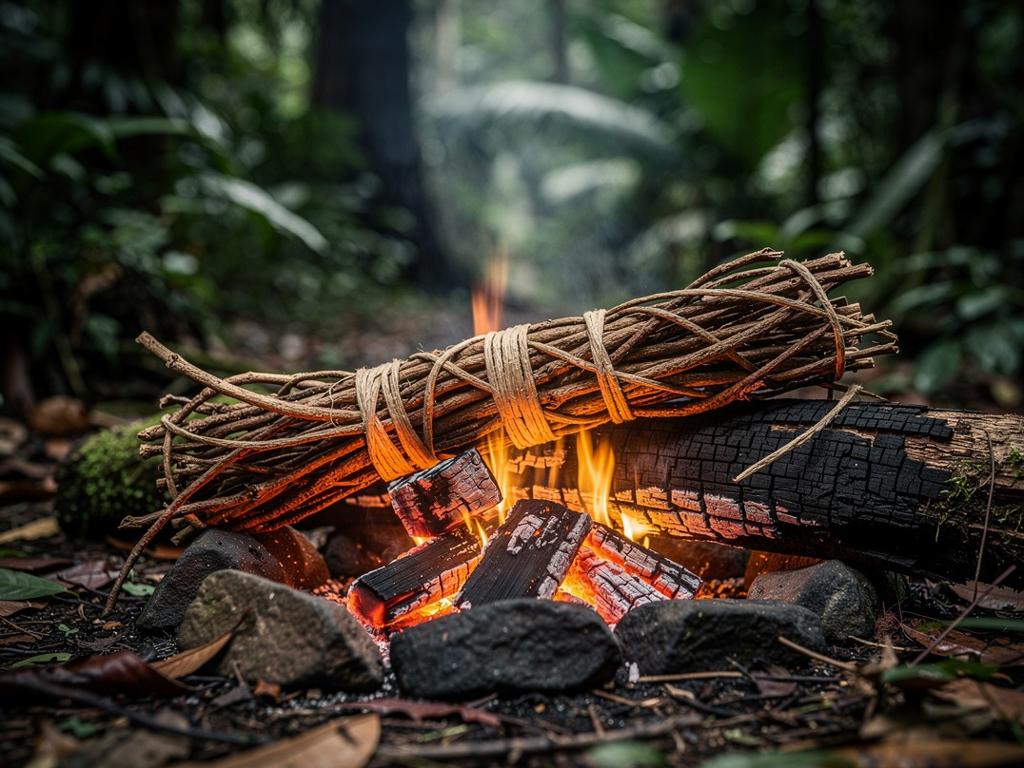
Closing a Five-Year Ayahuasca Cycle: What a Family Fire Ceremony Actually Looks Like
Five years is a long time to work with a plant. Long enough to lose count of the ceremonies. Long enough that the questions you brought to your first ayahuasca night sound almost quaint when you read them back in an old journal. And long enough, some traditions hold, that a cycle wants to be closed properly — not just drifted away from. I want to talk about what that closing can look like. Specifically: a family fire ceremony at the end of a multi-year relationship with ayahuasca and other master plants. This isn't a technique post. It's more of a field note for anyone who has been drinking for a while and is starting to wonder whether the work has a natural endpoint, or how you'd even know. In most traditional Amazonian lineages, ayahuasca isn't seen as an open-ended lifestyle. It's understood as a teacher you sit with for a period — sometimes a season, sometimes years — and then the relationship changes shape. The curanderos I've spent time with talk about cycles the way a farmer talks about crop rotation. Something is planted. Something grows. At some point, the field rests. The Western retreat scene doesn't always frame it this way. There's a subtle pressure — from Instagram, from your ayahuasca-curious friends, from the retreat centers themselves — to keep going back. Another ceremony. Another dieta. Another master plant. And for some people, that's genuinely the right path. But for others, the medicine has already said what it came to say, and continuing to drink is a way of avoiding integration rather than deepening it. A cycle-closing ritual is how you mark the difference. It's a way of telling yourself, your family, and the plants: this chapter is complete. I received what I received. I'm not walking away, but I'm not going to keep asking the same question. Fire ceremonies show up across many traditions — Andean, Amazonian, North American, Vedic. The specifics vary wildly, and I'd steer you away from anyone selling a rigid template. But the shape is usually similar: you gather people who witnessed some part of the journey, you build a fire with intention, and you offer things to it that represent what you're releasing or acknowledging. For a family closing after long ayahuasca work, the ingredients I've seen used include: What matters isn't the props. It's who's around the fire. A cycle-closing that includes the people who lived alongside your medicine work — partners, kids old enough to understand, sometimes parents or siblings — does something a solo ritual can't. It publicly retires the identity of “the one who's doing the plant medicine journey” and lets you become, again, just a member of the household. People ask how you know. Honestly, it's rarely a lightning bolt. It's more that the ceremonies start feeling like reviews of material you've already covered. The visions get quieter, or repetitive. The insights during the night are ones you could have written down beforehand. That's not a failure of the medicine — it's often the medicine telling you the classroom is empty now. Some other signals I've heard from people who've closed cycles well: Any one of those on its own isn't decisive. Several of them together usually is. And if you're in the middle of active healing — working through addiction, deep trauma, or acute depression — this is not the moment to romanticize “closing the cycle.” Closing implies you've done the work the plants asked of you. It's a completion, not an exit. Here's the thing nobody tells you at your first retreat: the real work happens in the years between and after ceremonies. Ayahuasca can show you the pattern. It can loosen the grip of an addiction, illuminate a piece of buried grief, reorganize your relationship with your own mind. But the actual living-differently part? That's on you and the people around you, and it takes far longer than any weekend retreat brochure suggests. A closing ritual is powerful precisely because it forces you to look at that ongoing work honestly. When you burn a stack of journals from ceremonies past, you're also implicitly asking: what did I actually do with what I was shown? Did I leave the relationship that the medicine kept pointing at? Did I stay sober? Did I call my father? Did I stop performing the version of me that everyone had gotten used to? If the answer is mostly yes, the fire feels like graduation. If the answer is mostly no, the fire is uncomfortable, and probably necessary. Either way, the ritual gives you a container to be honest inside of. People imagine that closing a cycle means never touching ayahuasca again. Sometimes it does. More often, it means the relationship changes register. Maybe you sit once a year instead of four times. Maybe you shift to working with different master plants — bobinsana, ajo sacha, chiric sanango — in longer, quieter dietas rather than intensive ceremonies. Maybe you become someone who supports others' journeys without needing to be inside your own. What tends not to work is treating the closing as a permanent contract you sign with yourself. The plants don't work that way, and neither do humans. The point of the ritual isn't to lock a door. It's to acknowledge, with witnesses, that a specific chapter is complete — so that anything that comes next arrives fresh, not as a continuation of momentum. If you're weighing whether you're at the beginning, middle, or end of your own cycle, that question is worth sitting with before you book your next ceremony. For readers who want to explore what a considered, well-facilitated ayahuasca or plant-medicine retreat looks like at any stage of the journey, a curated selection can be browsed on our marketplace here. Wherever you are in your relationship with the medicine — first ceremony, tenth year, or somewhere in between — the honest question is always the same: what is being asked of me now, and am I willing to answer it?

First Psychedelic Trip: What Every Beginner Should Actually Know
So you're thinking about your first psychedelic experience. Maybe it's psilocybin mushrooms at a friend's cabin. Maybe it's a proper ayahuasca ceremony in Peru you've been eyeing for months. Maybe it's LSD at a music festival — which, for the record, I wouldn't recommend as a starting point, but people do it anyway. Whatever the substance, whatever the setting, the questions tend to be the same. What does it feel like? How much should I take? What if I panic? Is this actually going to help me, or am I about to have the worst night of my life for no good reason? Let's talk about it honestly. Not the Instagram version. Not the retreat brochure version. The version I wish someone had given me before my own first ceremony, when I was equal parts terrified and curious and pretending to be neither. Almost nobody takes psychedelics because they're bored. When I interview people at ayahuasca retreats — the ones who've flown from Toronto or Berlin or Melbourne to sit in a jungle maloca — they're usually there because something in ordinary life stopped working. Antidepressants that plateaued. Grief that wouldn't resolve. An addiction quietly running the show. A marriage in trouble. A career that looks fine on paper and feels like sandpaper. Master plants — that's what curanderos in the Amazon call ayahuasca, huachuma (San Pedro), and their relatives — have been used for what we'd now call addiction recovery, trauma work, and soul exploration for centuries. The Western clinical world is finally catching up. Serious research at Johns Hopkins, Imperial College London, and NYU has been looking at psilocybin for depression, treatment-resistant anxiety, and end-of-life distress. Ibogaine has a growing (and complicated) reputation for interrupting opioid dependence. This isn't fringe anymore. Still, none of that research means your first psychedelic experience is going to be therapeutic. It might be. It might also be strange, uncomfortable, boring in patches, or unexpectedly funny. Going in with the right expectations matters more than almost anything else. You'll hear these two words a lot. They're not marketing fluff. They're the closest thing psychedelic culture has to a safety protocol. Set is your mindset. What's going on in your head the week leading up, the day of, the hour before. Are you exhausted? Recently broken up? Fighting with your mother? Anxious about a work deadline? Whatever you bring in, the medicine will amplify. Psychedelics don't create emotional material out of nowhere — they turn the volume up on what's already there. Setting is where and with whom. A quiet room with someone sober and trustworthy present is a different universe from a crowded festival. A vetted retreat with experienced facilitators is a different universe from a stranger's living room. The setting shapes the experience more than most first-timers realize. Practical checklist before you sit with anything: The honest answer: it depends on the substance, the dose, and you. Psilocybin at a moderate dose tends to come on within 30 to 60 minutes. Colors get a little brighter. Music sounds thicker, more layered. Emotions arrive without a lot of warning — you might laugh until your face hurts, then cry about your grandfather for twenty minutes, then feel a strange calm you haven't felt in years. It usually lasts four to six hours. Ayahuasca is different — heavier, longer, more medicinal in feel. There's often a purge (vomiting, sometimes diarrhea, occasionally tears — the traditions consider all of it part of the cleanse). Visions can be intricate. Time distorts. Six hours can feel like an entire life. Some people meet what they describe as the plant itself, or ancestors, or aspects of themselves they'd forgotten. Others get a night of nothing much and are quietly furious about the airfare. Both outcomes are normal. LSD is longer still — eight to twelve hours — and tends to feel more mental than physical, more idea-driven than emotional, though it varies wildly by person. The one thing almost every first-timer underestimates is the afterward. The come-down, the next morning, the next week. Your baseline can feel oddly gentle. Small things you used to snap about seem less important. This window — sometimes called the integration period — is where the real work happens, if any is going to happen. Every experienced facilitator I've spoken with says the same thing: there are no bad trips, only difficult ones. That reframing sounds like a platitude until you're inside one. If fear arrives — and for a lot of first-timers, it does at some point — the instinct is to fight it. Don't. Fighting it is what turns discomfort into panic. The old advice still holds: The thing about difficult moments in ceremony is they're often the most useful part. What you resist tends to be the thing you needed to look at. That's not mysticism — it's how the brain works when its usual defenses are turned down. Physically, classic psychedelics (psilocybin, LSD, DMT, mescaline) are among the least toxic substances humans put into their bodies. You are not going to overdose on mushrooms in any medically meaningful sense. That's the good news. The complications are elsewhere. Ayahuasca contains MAOIs, which interact dangerously with SSRIs, some blood pressure medications, and various foods (aged cheese, cured meats, certain fermented things). If you're on antidepressants, you need to work with a knowledgeable doctor on a tapering plan long before ceremony. Ibogaine can affect the heart and requires medical screening — an ECG at minimum. People with a personal or strong family history of schizophrenia or bipolar disorder should generally avoid classic psychedelics; the risk of destabilization is real. Then there's the psychological safety of the setting itself. The plant-medicine world has genuine masters and also plenty of grifters, tourists in shaman's clothing, and outright predators. Vetting matters. Talk to former participants — not the ones on the retreat's website, the ones you find yourself. Ask about safety protocols, medical screening, what happens if someone has a hard time, and how women in particular are looked after (this last question separates serious operators from sketchy ones quickly). For a genuine first experience with a serious substance, a well-run retreat is almost always the better call. You get medical screening, experienced facilitators, a container designed for the state you're about to enter, and integration support after. You also get taken out of your daily environment, which matters more than it sounds. Home experiences aren't inherently worse — plenty of people have had profound psilocybin sessions in their own living rooms with a trusted sitter. But they require you to be your own facilitator, and first-timers rarely know what they don't know. If you're leaning toward a formal setting, spend real time comparing options. Lineage of the facilitators, size of the groups, medical support on site, integration offerings, and reviews from actual attendees all matter more than the beauty of the location. For readers ready to look at specific options, curated ayahuasca and plant-medicine retreats can be browsed on our marketplace here — starting there tends to be less overwhelming than the open internet. Whatever you choose, take it seriously. This isn't a party. It's not a vacation, exactly. Done well, it's one of the more consequential things a person can do with a weekend of their life. Done badly, it's an expensive way to be scared for six hours. The difference is almost entirely preparation.
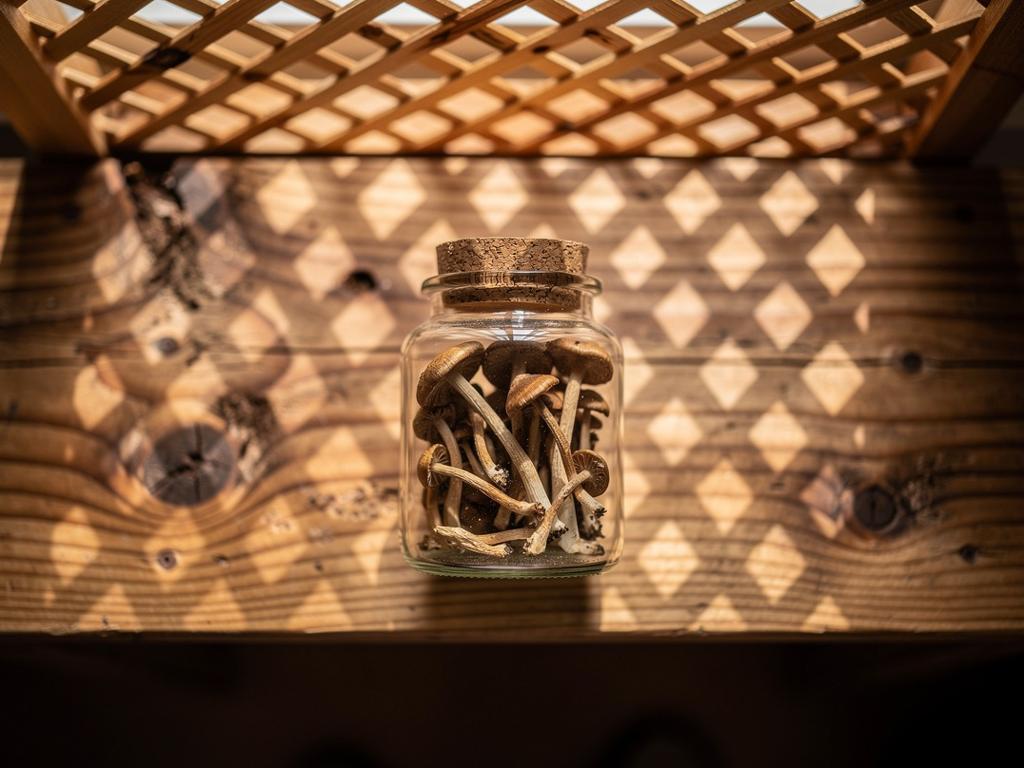
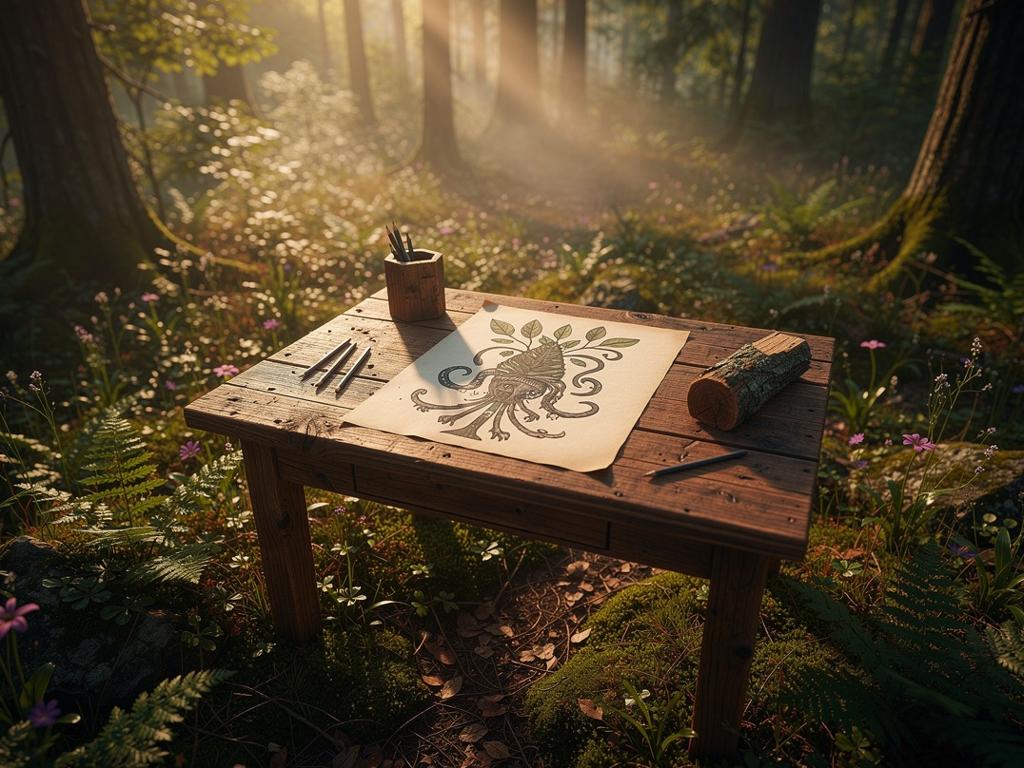
Trip Drawings and Visionary Art: Why Psychedelics Turn People Into Artists
The first time I saw someone pull out a sketchbook the morning after ceremony, I thought it was a bit precious. Then I looked over their shoulder. Spirals within spirals, a jaguar's face melting into geometric lattice, a figure standing under something that looked like a doorway made of feathers. The person drawing wasn't an artist. They were a software engineer from Denver who hadn't picked up a pencil since high school. And they were shaking a little, the way you shake when you've just remembered something important. This is one of those quiet corners of the psychedelic world that doesn't get talked about much. People come home from ayahuasca retreats, psilocybin sessions, San Pedro nights in the mountains — and they draw. Or they write compulsively. Or they buy watercolors for the first time in twenty years. It's not a marketing pitch. It's just something that happens. And if you're weighing a retreat right now, understanding this creative aftershock is actually useful information about what plant medicines do and how integration works. The short answer: they flood your visual cortex with information you don't have language for. DMT, psilocybin, mescaline — all of them produce what researchers call closed-eye visuals, but that phrase is doing a lot of heavy lifting. What you actually experience is closer to seeing an entire private cosmology unfold behind your eyelids. Fractals. Vines that breathe. Faces that shift between animal and human. Geometry that seems to be trying to tell you something. When you come back to ordinary consciousness, most of it starts leaking away within hours. This is where the pen comes out. Drawing isn't about producing art — it's about grabbing onto the imagery before it dissolves. It's a memory technique, essentially. The Shipibo weavers of the Peruvian Amazon have been doing a version of this for centuries, translating the songs and visions of ayahuasca ceremony into the intricate geometric patterns you see on their textiles. Those patterns aren't decoration. They're notation. There's also something happening neurologically. Psychedelics loosen the grip of the default mode network — the part of your brain responsible for maintaining your sense of a fixed, narrative self. When that grip loosens, regions of the brain that don't normally talk to each other start comparing notes. Visual processing mixes with emotion. Memory bleeds into imagination. For a lot of people, this cross-wiring lingers for days or weeks after a ceremony, and it often shows up as a sudden urge to make things. If you scroll through the visionary art that comes out of the retreat world, you'll notice patterns. Not because everyone is seeing the same thing, but because certain forms seem to be baked into the deep architecture of psychedelic states. A few common motifs: None of this is proof of anything metaphysical. It might be that these motifs are hardwired into the human visual system, released when normal filters go offline. It might be something else. Honestly, sitting with the ambiguity is part of the work. What matters more is what the drawings do for the person making them. I've watched people crack open old grief while sketching a scene from ceremony they hadn't been able to describe in words. I've watched a former addict fill an entire notebook in the weeks after an ibogaine treatment, drawing the same doorway over and over until something in him settled. The drawing is the integration. It's not decorative — it's how the nervous system files what happened. Here's something worth understanding if you're considering a retreat for addiction recovery, depression, or trauma. One of the reasons plant medicines like ayahuasca and ibogaine show promise for these conditions is that they bypass the verbal, narrative mind — the same mind that has been telling you the same story about yourself for years. The trouble is, once you're back in ordinary consciousness, that narrative mind takes over again. It's very good at explaining away what you experienced. Talking about a ceremony to your therapist can sometimes flatten it into something manageable, which is the opposite of what you want. The insight starts to feel like a nice idea rather than a lived truth. Drawing sidesteps that. It keeps the experience in a form the narrative mind can't quite metabolize and dismiss. This is why many facilitators actually encourage journaling, sketching, or working with clay in the days after ceremony. It's not arts-and-crafts filler. It's a way of preserving the medicine's message in a language that doesn't decay as fast as words do. The master plants — as the Amazonian tradition calls them — are said to teach directly, through image and sensation, and the drawings are a way of continuing that conversation after the plant leaves your system. If you do end up sitting in a ceremony and something wants to come through your hand afterwards, a few practical thoughts from people who've been through it: One retreat coordinator I spoke with in the Sacred Valley keeps a stack of cheap sketchbooks in the integration room and hands them out on the last morning. She told me the ones who use them are the ones who tend to hold onto their gains six months later. Anecdotal, obviously. But it tracks with what the research on psychedelic-assisted therapy keeps showing: integration practices — anything that keeps the experience alive in the body and the imagination — are what turn a single ceremony into actual change. You'll sometimes see stunning visionary art from established painters — the Pablo Amaringo lineage, for instance, has produced some of the most detailed depictions of ayahuasca visions in the world. It's easy to look at that work and feel like your own scratchings don't measure up. But that misses the point entirely. The finished painting is a byproduct. The real event is the act of translating something ineffable into a mark on paper. It's a form of prayer, honestly, though I'm cautious about that word. It's also a form of therapy, though I'm cautious about that word too. Somewhere between the two, in a space our culture doesn't have great language for, the drawing becomes a way of taking the medicine seriously. That's ultimately what plant medicine work asks of you. Not belief. Not certainty. Just the willingness to treat what happened as real enough to be worth returning to, again and again, in whatever form you can. For some people that looks like sitting silently at dawn. For others it's writing at length. For a surprising number, it turns out to be a pencil and a cheap notebook at 6am, trying to catch the tail of something before it disappears. If any of this resonates and you're circling the idea of your own first ceremony, a range of curated ayahuasca and plant-medicine retreats can be browsed on our marketplace here. Bring the sketchbook. You might not need it. You might.

Choosing an Ayahuasca Retreat: What to Actually Look For Before You Book
The first time someone told me they were thinking about booking an ayahuasca retreat, they asked me two questions in a row: “How do I know it's real?” and “How do I know it's safe?” Fair questions. Both harder to answer than most retreat websites let on. If you've been quietly researching plant medicine for a while — reading trip reports at 1am, watching interviews with facilitators, wondering whether this could actually help with the depression or the drinking or the stuck feeling you can't name — this is the guide I wish existed when I started asking around. It's not romantic. It's practical. Ayahuasca is powerful medicine, and choosing where to sit with it matters more than most people realize. Here's something the glossy retreat brochures don't emphasize: the brew is roughly the same everywhere. Banisteriopsis caapi vine cooked with a DMT-containing admixture, usually chacruna. What changes wildly from place to place is everything around the brew — the facilitators' training, the medical screening (or lack of it), the ceremonial container, the integration support, the other participants sitting next to you in the dark. A well-run retreat can make a difficult experience feel workable. A badly run one can turn a manageable experience into something you spend the next two years trying to metabolize. I've seen both. The medicine amplifies whatever context surrounds it, and that context is almost entirely a function of who's holding the space. So when people ask me what to look for, I don't start with the vine. I start with the humans. Some warning signs are subtle. These aren't. If you spot any of them, close the tab and keep looking. None of this means you need a retreat that feels sterile or corporate. Some of the best ceremonies I've sat in happened in wooden malocas with dirt floors and no wifi. Rustic isn't the problem. Reckless is. People asking about their first ceremony usually want to know two things: what does it feel like, and how bad is the purge? Honest answers. The onset takes anywhere from twenty minutes to an hour. You'll likely feel a warmth or heaviness first, then a subtle shift in how you're perceiving the room, then — if the dose is meaningful — visions. Sometimes geometric, sometimes narrative, sometimes just a felt sense of something vast paying attention to you. The icaros (the sung medicine songs) shape the experience more than most first-timers expect. When the singing changes, the visions often change with it. The purge is real. Some people vomit. Some people cry for three hours. Some people have to make repeated trips to the bathroom. Some people experience none of it and just lie there processing something quietly. There's no correct version. What the tradition calls purging is the body and psyche releasing whatever needs to move — and yes, that can be physically uncomfortable, especially the first time. A ceremony usually runs four to six hours. Somewhere in the middle, you may hit a stretch that feels genuinely difficult. This is normal. This is often where the work happens. A good facilitator will know when to sing you through it and when to leave you alone with it. Prices vary more than they should. As of 2026, a legitimate retreat in Peru, Costa Rica, or Colombia typically runs somewhere between $1,500 and $4,000 for a week, including lodging, food, and multiple ceremonies. Retreats in the U.S. or Europe (where they operate in a legal grey zone through religious exemptions or in countries with different laws) tend to cost more — often $3,000 to $6,000 for a similar length. What should the price include? Cheap retreats often skip the screening, skip the integration, and cram twenty people into a maloca with two facilitators. Expensive retreats aren't automatically better — some of them are just wellness-branded — but rock-bottom pricing usually means somebody's cutting corners on the parts that keep you safe. A lot of people arrive at plant medicine because talk therapy stopped working, or because they're in the exhausted late stages of trying to outrun something — a bottle, a phone, a pattern with the wrong partner. The research on ayahuasca for addiction is genuinely promising. Studies out of Brazil and Canada have shown meaningful reductions in problem drinking and drug use after ceremonial ayahuasca work, and clinicians who work with veterans have reported similar patterns with PTSD. But here's the part that gets glossed over: the ceremony is not the healing. The ceremony is the door. Whatever the medicine shows you still has to be lived out in ordinary time — the Tuesday morning, the awkward conversation with your brother, the choice not to text the person you shouldn't text. Retreats that treat ayahuasca as a one-shot cure tend to produce disappointed alumni six months later. Retreats that treat it as the opening of a longer process tend to produce people who actually change. If you're considering plant medicine specifically for addiction recovery, ibogaine is worth researching too — it operates very differently, has a much steeper safety profile, and requires medical supervision. Ayahuasca and ibogaine are not interchangeable, and choosing between them (or neither) is a real decision worth taking slowly. The traditional dieta is stricter than most Western retreat versions. At minimum, most reputable centers ask you to avoid the following for two to four weeks before ceremony: red meat, pork, alcohol, recreational drugs, spicy food, fermented foods, aged cheeses, and sexual activity. Some also ask you to taper off caffeine and refined sugar in the final week. Why? Partly for pharmacological reasons — the MAOI in the vine interacts with tyramine-rich foods and certain medications. Partly because the dieta itself is a preparation of intention. You show the medicine you're serious by clearing the runway. On the psychological side, spend some time getting honest about why you're going. “I want to heal” is not a specific enough intention. What are you actually asking? What have you been avoiding looking at? Write it down. Not for the facilitators — for yourself. The clearer you are walking in, the less you'll flail in the middle of ceremony trying to figure out what you're doing there. Integration is the unglamorous half of this work, and it's the half that determines whether the retreat mattered. The week after you return is often disorienting. Ordinary life feels loud and strangely two-dimensional. You may cry at things that never bothered you before. You may feel briefly convinced that everyone you know needs to do this too (they don't — resist that impulse). Practical integration tools that actually help: The insight from ceremony fades quickly if you don't build scaffolding to hold it. That's not a failure of the medicine. That's just how the human nervous system works. Maybe. Maybe not yet. Some people are ready and some people need another year of therapy first, and it's genuinely hard to tell which one you are from the inside. A good pre-retreat conversation with facilitators should include them asking whether now is actually the right time — and being willing to tell you it isn't. If you're on SSRIs, have a personal or family history of psychosis or bipolar disorder, are pregnant, or have serious cardiovascular issues, those aren't small obstacles to work around. They're reasons to have a longer conversation with a doctor who understands this space before you book anything. For readers who've read this far and feel the pull is still there, a curated range of ayahuasca retreats and other plant-medicine ceremonies can be browsed on our marketplace here. Take your time with the choice. The right retreat is worth waiting for; the wrong one is worth every extra month of research it takes to avoid.
Microplastics and Gut Health: What the Latest Research Actually Says
Plastic has quietly become an ingredient. Not on any label, of course, but in the water you drink, the salt on your eggs, the honey stirred into your tea, and the plastic wrap sealing most of what sits in your fridge. Researchers keep finding microplastic particles in places they never should be — bloodstream, liver tissue, even gallstones pulled out during surgery. It's the kind of finding that makes you put your water bottle down for a second and think. So the obvious question: what happens once these particles get inside us? Because food and drink are the primary delivery route, the gut is ground zero. It's the tissue that meets these particles first and spends the most time in contact with them. A fresh review in Current Developments in Nutrition pulled together more than seventy-five recent studies to sketch out what scientists are calling the microplastic–gut microbiota–nutrition axis. Here's what it actually says — and, just as importantly, what it doesn't. Microplastics are plastic fragments smaller than five millimeters, and nanoplastics are smaller still — small enough to slip across cellular barriers. They shed from packaging, synthetic textiles, tires, cosmetics, and the slow breakdown of larger plastic waste in the environment. By the time they reach your dinner plate, they've often been floating around the ecosystem for years. Here's the tricky part: microplastics aren't one thing. They're a category. Polyethylene from a grocery bag behaves differently in the body than polystyrene from a takeout container, which behaves differently again from polyester fibers shed by a fleece jacket. Size, shape, and the cocktail of chemical additives baked into each type of plastic all change how the body handles them. That variability is one reason the research is messy — you can't run a single clean study on “microplastics” the way you might on, say, vitamin D. The review lays out four plausible pathways. None are proven in humans yet, but each one has enough lab and animal evidence to be worth taking seriously. The bacteria in your large intestine ferment fiber and produce short-chain fatty acids — compounds like butyrate that feed the cells lining your gut, calm inflammation, and help your metabolism run smoothly. These are the good guys. Animal and lab studies suggest microplastic exposure can shift the microbial mix in ways that reduce short-chain fatty acid production and mess with bile acid processing. In theory, that could change how efficiently your body pulls energy from food. In practice, we don't yet know how much of this translates to actual humans eating actual meals. Your intestinal lining is supposed to be selectively permeable — nutrients pass through, bacterial fragments and toxins stay put. Some of the reviewed studies indicate that microplastic exposure may irritate that barrier, letting bits of bacterial cell wall (lipopolysaccharide, if you want to get technical) slip into circulation. That process is linked to low-grade systemic inflammation and metabolic issues. Again — plausible mechanism, not proven at the levels most of us encounter. Your microbiome plays a real role in how your body handles certain vitamins and minerals. If microplastics reshape that microbial community, absorption of some nutrients could theoretically suffer. The research here leans heavily on cell cultures and rodents, so nobody is claiming plastic in your water is causing an iron deficiency. But it's a reasonable line of inquiry. Your gut and brain talk constantly — through hormones, immune signals, and the vagus nerve. Microbes shape that conversation. If plastic exposure alters the microbes, it could theoretically nudge appetite and satiety signals. Theoretically. The evidence that microplastics are making anyone hungrier is, at this point, non-existent. Maybe. The review flags an interesting possibility: a typical Western diet — heavy on ultra-processed food, light on fiber — may leave the gut microbiome less resilient in the face of environmental hits like microplastic exposure. Fiber is what your beneficial gut bacteria eat. Less fiber, fewer short-chain fatty acids, thinner protective mucus layer, more vulnerability. Fiber also happens to speed the transit of unwanted stuff through your intestines. That's not a detox promise — there's no diet that scrubs your body clean of microplastics — but a well-fed microbiome and a regular digestive rhythm probably won't hurt. If you were looking for another reason to eat more beans, lentils, whole grains, berries, and leafy greens, here you go. Honest answer: minimize where you reasonably can, but don't spiral. The evidence for harm at everyday exposure levels is still soft. Most of the studies driving the alarming headlines dose animals or cell cultures with quantities of plastic that dwarf what a human eats in a year. Extrapolating from a rat that's been force-fed polystyrene beads to your Tuesday sandwich is a stretch. That said, there are practical, low-cost habits that make sense on their own merits: None of these are silver bullets. They're small compounding choices — the kind that add up over years without demanding you overhaul your life. You may have noticed that gut health keeps surfacing in conversations far removed from nutrition — in mindfulness circles, plant-medicine retreats, breathwork spaces. There's a reason. The gut is a sensory organ as much as a digestive one. Chronic inflammation there shows up as fog, low mood, and a body that never quite feels at ease. Facilitators who've worked with hundreds of retreat participants will tell you that people who arrive with a mostly clean, fiber-rich, whole-food diet tend to have an easier time with preparation protocols and integration afterward. The body is less noisy. The signal is clearer. That's not a claim that eating well protects you from environmental toxins or replaces medical care. It's a quieter observation: the terrain of the gut shapes how you experience just about everything, including intentional healing work. Take care of it, and other things get easier. The science on microplastics and gut health is early, genuinely interesting, and nowhere near settled. Researchers have sketched credible pathways by which these particles could disturb the microbiome, weaken the gut barrier, and ripple outward into metabolism and mood. Almost all of it is still at the lab-bench and animal-model stage. The gap between “this could happen” and “this is happening to you at breakfast” is real, and worth respecting. Meanwhile, the fundamentals haven't budged. Eat a wide variety of plants. Prioritize fiber. Move your body. Sleep enough. Reduce plastic exposure where it's easy to do so, and don't beat yourself up about the parts you can't control. If you're someone weighing a deeper reset — the kind of turning point that often draws people toward plant-medicine work — the same gut-friendly basics quietly support that terrain too. For readers curious about that path, a range of curated plant-medicine and healing retreats can be browsed on our marketplace here. The plastic problem isn't going away this year, or next. But the body is more forgiving than the news cycle suggests, and small daily choices genuinely stack up.
Craving More Stories?
Join our ShopAyahuascaRetreats newsletter for the latest updates on thrilling
destinations and inspirational tales, delivered straight to your inbox!
We value your privacy. Your email address will never be shared or published.
Ibogaine for Addiction: What Really Happens on the Table
Somebody asked me last week if ibogaine was “the ayahuasca for heroin addicts.” I understood what they meant. But no — it's a different animal entirely, and if you're reading this because you or someone you love is stuck in the grinding loop of opioid dependence, alcohol, or stimulants, you probably deserve a more useful answer than that. Ibogaine sits in a strange corner of the psychedelic and plant medicine world. It's serious. It's medical. It has genuinely rescued people from decades of addiction in a single 36-hour session — and it has also killed people who ignored the cardiac risks. Both things are true. Let's talk about what it actually is, what a treatment looks like, and how to think clearly about whether it belongs in your recovery plan. Ibogaine is an alkaloid extracted from the root bark of the iboga shrub, which grows in the equatorial forests of Gabon and Cameroon. In its traditional context, iboga is central to Bwiti spiritual practice — used in initiation rites that last days and mark a person's passage into adulthood or deeper community membership. That ceremonial lineage matters. It's the reason many practitioners today still call ibogaine a master plant rather than just a pharmaceutical compound. What sets it apart from ayahuasca, psilocybin, or San Pedro is the specific way it interacts with the addicted brain. Ibogaine appears to reset opioid receptors and interrupt withdrawal in a way no other substance we know of does. People who arrive at a clinic in active heroin or fentanyl withdrawal often report — hours after their dose — that the physical sickness simply lifts. That's not marketing. That's the consistent, decades-long observation of clinicians who work with it. The catch: ibogaine is not a psychedelic you take at a jungle retreat with a shaman and a shakerful of icaros. It's a long, physically demanding, medically supervised event that requires an EKG, blood work, and someone qualified to run a crash cart in the room. Treat it as anything less and you're gambling with your life. Both plants get discussed in the same breath — plant medicines that help with addiction — and both have real evidence behind them. But they work differently, and the choice between them depends a lot on what you're using and where you are in your recovery. Ayahuasca tends to work through emotional and psychological insight. It shows you the roots of the pattern — the childhood grief, the unprocessed trauma, the story you've been telling yourself about who you are. Many people walk out of a week of ceremonies with a completely reorganized sense of what's driving their drinking or their compulsive behaviors. But ayahuasca doesn't stop opioid withdrawal. If you're physically dependent on fentanyl, an ayahuasca retreat is not the right first step. Ibogaine, on the other hand, does something almost mechanical alongside the psychological work. It knocks the physical dependency down — often in one session — while simultaneously delivering a long, sober, waking-dream review of your life. Participants describe scrolling through memories like a film reel, watching decisions replay, understanding cause and effect with unusual clarity. Then, exhausted, they sleep. Then they wake up, and the craving that used to run their day is quieter. Sometimes gone. Forget the jungle-hut imagery. A legitimate ibogaine treatment center looks more like a small clinic than a retreat. You arrive after several days — sometimes weeks — of correspondence, medical intake forms, and a hard conversation about your cardiac history, medications, and drug use. If a facility skips this step, that's your first red flag. Walk away. Before dosing, you'll have an EKG. Ibogaine can prolong the QT interval in the heart, which is the specific mechanism behind the deaths that have been reported over the years. A clinic that doesn't monitor your heart continuously during the session isn't running a safe operation. Full stop. Expect blood work too — liver function, electrolytes, magnesium and potassium levels, which have to be within a tight range before you dose. The session itself unfolds over roughly 24 to 36 hours. The first phase — the visionary phase — begins about an hour after ingestion and lasts four to eight hours. Most people describe it as lying still in the dark, unable to move much, watching internal imagery that feels less like hallucination and more like an unlocked archive. There's often a buzzing or humming sound, hence the old descriptions of the “bee's nest.” The second phase is quieter, more introspective, running through the following day. You'll be exhausted. You won't want to eat. You'll probably want silence. Then there's what practitioners call the gray day — the day after, when the noribogaine metabolite is still in your system and mood tends to be flat. People sometimes panic at this point, thinking it didn't work. Give it time. The window of reduced craving typically opens over the following weeks, and what you do with that window is everything. Ibogaine is not for everyone. A few honest caveats: Because ibogaine sits partly outside standard medical infrastructure, due diligence falls heavily on you. Here's what to look for and what to avoid. Ask about their medical setup in specific terms. Who is the physician on staff? Are they present during the dosing, or just on call? Do they run continuous cardiac monitoring throughout the session? What's their protocol if your QT interval prolongs mid-treatment? A clinic that answers these questions clearly and without defensiveness is a clinic that's done the work. One that gets vague or spiritual on you when you ask about medicine is a clinic to skip. Ask about pre-treatment support. A serious program will require weeks of preparation — medical records, psychiatric screening, a phone or video consultation with the medical team, and a clear tapering plan if you're on any pharmaceutical opioids. Ask about aftercare too. What integration support do they offer in the weeks after you leave? Do they connect you with therapists, peer support, or sober living options? A clinic that hands you a diploma and waves goodbye at the airport is not a clinic that cares about your outcome. Talk to people who have been through the program. Not testimonials on their website — actual former patients, ideally six months or more out from treatment. Ask them what surprised them, what they wish they'd known, and how they've done since. If a clinic won't connect you with references, that's telling. The strangest thing about ibogaine, in my experience talking to people who've done it, is how much of the real work happens after. The medicine tends to do exactly what it's advertised to do — reset the receptors, quiet the craving, hand you a rare view of your own life. But the person who wakes up on day three still has the same relationships, the same job, the same patterns of thought. The window of reduced craving is a gift. It's not a rebuild. Most people who successfully leave opioid dependency behind after ibogaine describe a similar arc: intensive integration for at least three months, some form of ongoing therapy, a hard reshuffle of their social circle, and often further plant-medicine work — psilocybin, ayahuasca, or ongoing microdosing protocols — used carefully and with intention. The story isn't that they took a magic root and walked away clean. It's that ibogaine gave them a foothold, and they built a life on top of it. If you're weighing this seriously, treat the decision with the gravity it deserves. Talk to your doctor. Talk to former patients. Talk to a therapist who understands addiction. Read the honest accounts, not just the transformation stories. For readers who want to explore this further, a range of vetted ibogaine and plant-medicine retreats can be browsed on our marketplace here — a good place to start comparing programs, medical protocols, and integration support without the pressure of a sales pitch. Whatever you decide, decide it slowly. This one's worth getting right.

HIIT and Mitochondria: What New Research Says About Cellular Energy
Most people file high-intensity interval training under “good for the heart, brutal on the legs.” Fair enough. But a study out of the University of Southern Denmark suggests HIIT is quietly doing something more interesting deep inside your muscle cells — something that matters whether you're an athlete, someone managing a chronic condition, or just a person who wants to feel less wiped out by 3 p.m. The short version: eight weeks of HIIT didn't only increase the number of mitochondria in participants' muscles. It made each mitochondrion measurably better at its job. And that finding held up even for men living with type 2 diabetes, which quietly overturns an assumption researchers have carried for years. The team recruited 44 men between 40 and 65 and split them into three groups. Fifteen had type 2 diabetes. Fifteen were overweight but not diabetic. Eighteen were of a typical weight and metabolically healthy. Everyone did the same protocol: HIIT three times a week for eight weeks, alternating hard bursts of rowing or cycling with short recovery periods. Nothing exotic. No boutique equipment. No secret supplement stack. Before and after the training block, researchers took small biopsies from the participants' thigh muscles and looked at them under electron microscopy — the kind of imaging that can resolve structures inside a single cell. Then, in a slightly heroic act of scientific patience, the team spent about a year manually analyzing roughly 11,000 individual mitochondria. That's the part earlier studies couldn't quite pull off, and it's the reason this one found something new. Two things, really. First, the expected one: the total count of mitochondria in muscle tissue went up. More power plants. That aligns with decades of exercise research. Second, and more interesting, the cristae — the folded inner membranes where mitochondria actually crank out energy — expanded by roughly 7%. Why does that matter? Picture a paper bag crumpled tightly inside a larger bag. The more folds, the more surface area you have inside the same footprint. Cristae work the same way. They're where the chemical machinery of ATP production lives. More folded surface means more room to run the reactions that turn the food you eat into the energy your muscles use to move, recover, and stay online during a long day. So HIIT didn't just build extra factories. It renovated the existing ones and made them denser with working equipment. That's a subtler adaptation than “more mitochondria = fitter person,” and it explains something athletes have long felt anecdotally — that after a training block, effort feels cheaper even when the raw numbers don't look dramatically different. Here's the part that caught my attention. The muscle adaptations showed up in all three groups — including the men with type 2 diabetes. For a long time, one working assumption in exercise physiology was that diabetes might blunt the muscle's ability to respond to training at the cellular level. This study pushes back on that. Practically speaking, it means the cellular machinery for adaptation isn't broken in people managing metabolic disease. Give it the right stimulus and it responds. That's a genuinely hopeful finding, and one worth sitting with if you or someone you love has been told their body is somehow “past it.” The cristae don't care how old you are or what your last A1C reading was. They just want to be asked to work. And it's not only about diabetes. Mitochondrial function underpins a huge amount of what we call feeling well: energy, mental clarity, exercise recovery, sleep quality, even mood regulation. When mitochondria are sluggish, everything else tends to feel sluggish too. When they're humming, life gets a little easier. You don't need a coach or a $3,000 bike for this. The protocol used in the study was refreshingly plain: That's it. If you want a rough starting template that mirrors the general shape of protocols like this, something like 4–6 rounds of 30 seconds hard / 90 seconds easy is a reasonable place to begin, with a proper warm-up and cool-down bracketing the work. The key word is hard during the work intervals — hard enough that talking becomes clipped and you're genuinely relieved when the rest starts. If you can hold a conversation, you're doing steady-state cardio, which is also useful but isn't the stimulus that produced these results. A note for anyone with a heart condition, uncontrolled blood pressure, or a fresh injury: talk to a doctor before you throw yourself into intervals. HIIT works because it's intense. Intensity is a feature, but it also demands respect. People searching for ways to feel better in their bodies often circle through the same territory — sleep, nutrition, stress, sometimes plant medicine, sometimes meditation, sometimes just trying to move more. Mitochondrial health sits underneath all of it. A healing retreat, a dieta, a strong meditation practice — none of them override the basic fact that your cells need functional power plants to do any of the deeper work you're asking of them. I've watched people come back from ceremony work with real insight, and then wonder why the energy to act on that insight isn't there. Sometimes the missing piece is embarrassingly ordinary. Sleep. Protein. Sunlight. And, yes, moving hard a few times a week. The cellular story this Danish study tells is a reminder that the body you use to explore anything — art, work, family, deeper states of consciousness — runs on ATP, and ATP runs through the cristae of your mitochondria. This study is small — 44 men, all in a specific age range, all male. The findings need to be replicated in larger, more diverse groups before anyone should turn them into gospel. The researchers also didn't track what happens after the eight weeks end. Do the gains hold if you stop training? Probably not indefinitely. Do they compound if you keep going? Likely yes, based on adjacent research, but the study itself doesn't prove it. There's also the honest question of measurement. Analyzing 11,000 mitochondria by hand is remarkable work, but electron microscopy on thigh biopsies is a snapshot, not a movie. We're seeing before and after, not the day-by-day arc of how those changes actually took shape. The message underneath all the microscopy is simple, and I think worth repeating: your cells are more adaptable than the culture sometimes lets you believe. Whether you're 42 and healthy, 58 and managing your weight, or living with a diagnosis that's convinced you your body is somehow closed for renovations — the machinery for change is still in there. It responds to being asked. Three hard sessions a week, eight weeks, and the interior architecture of your cells starts to shift. That's a pretty good deal. For readers exploring these questions as part of a broader interest in healing and well-being — including how physical vitality dovetails with deeper inner work — a curated selection of plant-medicine and wellness retreats can be browsed on our marketplace here.

When Feelings Weren't Safe at Home: Healing Childhood Emotional Neglect
There's a specific kind of childhood wound that doesn't leave a mark anyone else can see. No bruises. No dramatic story you can point to. Just the slow, quiet lesson that your feelings are inconvenient — and that being loved might mean making yourself smaller so nobody has to deal with you. If that sentence made your chest tighten, keep reading. This one's for you. A lot of the people who eventually find their way to an ayahuasca ceremony, a psilocybin retreat, or an ibogaine program aren't chasing a spiritual high. They're trying to understand why they've spent thirty years feeling vaguely broken in a way therapy hasn't quite touched. Emotional neglect is often the missing puzzle piece. And plant medicine, done carefully, has a way of surfacing it. Emotional neglect isn't the same thing as abuse. That's part of why it's so hard to spot. Nobody hit you. Nobody screamed slurs at you. You had food, clothes, maybe even a decent school. On paper, your childhood looked fine. What was missing was harder to name. A parent who could sit with you when you were falling apart. Someone who treated a big feeling as information rather than a nuisance. The simple, foundational experience of reaching out for comfort and having somebody meet you there. When that keeps not happening — day after day, year after year — a kid learns to do something remarkable and terrible: they learn to leave. Not physically. They learn to check out of their own body the moment an emotion gets too loud for the room. It's a survival trick, and it works beautifully in childhood. It also becomes the invisible architecture of the rest of your life. Fast-forward twenty or thirty years. The kid who taught herself to disappear grows into an adult who can't quite figure out why life feels muted. Why relationships never seem to land. Why the achievements that were supposed to fix everything, didn't. Some common signatures of childhood emotional neglect that show up in adulthood: None of that means you're weak. It means a nervous system that never got safely regulated as a kid is still running the old software. And the old software says: don't need too much, don't feel too loud, don't take up space. Here's the honest version. Talk therapy can absolutely help with emotional neglect. So can somatic work, EMDR, and steady, slow-burn integration with a good therapist. For a lot of people, that's enough. For others — and this is the group I hear from most often — talk therapy hits a wall. They understand their childhood intellectually. They can narrate the wound in three languages. They still can't feel it. That dissociative habit, the one that started at age nine on a bathroom floor, is very good at its job. Ayahuasca, psilocybin, ibogaine, and San Pedro all have something in common that makes them interesting in this territory: they temporarily loosen the grip of the defenses that keep buried feelings buried. In ceremony, people who have spent decades numb sometimes weep for the first time in years. They meet the child they had to abandon in order to survive. They feel the anger they were never allowed to have. And crucially, they feel it in the body, not just in the story. That's not magic. It's neurobiology and set-and-setting and the accumulated wisdom of traditions that have been working with these plants for centuries. But if you've been circling emotional neglect in therapy for years and can't quite land the plane, this is why plant medicine keeps showing up in your search results. Let me be direct, because this is the part sales copy tends to skip. A well-run retreat won't cure you. It won't hand you a new personality. It won't erase what happened. What it can do — under the right conditions, with the right people, and with real integration afterward — is show you the wound clearly enough that you can start relating to it differently. It can also reintroduce you to sensations and emotions you shut down decades ago, which is disorienting, sometimes terrifying, and often the beginning of something real. What to expect, honestly: If you grew up in a house where feelings weren't safe, you're going to be extra sensitive to the emotional environment of the retreat itself. Choose accordingly. Look for facilitators who treat consent as ongoing rather than a form you sign on arrival. Look for small group sizes — under twelve, ideally. Ask what their integration offering looks like after you go home; if the answer is a single group Zoom call, that's not enough for this kind of work. Ask what happens if you have a hard night. Ask what happens if you don't want to drink a second time. A place that answers those questions calmly and specifically is a place that has thought about people like you. Red flags: charismatic single-facilitator setups with no accountability structure, retreats that promise specific outcomes, anyone who tells you the medicine will do all the work, and any environment that discourages you from staying in touch with your therapist back home. Cost-wise, expect anywhere from around $1,500 for a modest jungle retreat to $8,000-plus for a well-appointed program in Peru or Costa Rica. Ibogaine programs, because of the medical monitoring involved, generally run higher. Cheaper isn't automatically worse, and pricier isn't automatically better — but suspiciously cheap usually means corners cut somewhere you don't want them cut. Here's what I've come to believe, after years of sitting with people who grew up the way you might have grown up: the goal isn't to become someone who never dissociates, never people-pleases, never feels that old low hum of unworthiness. The goal is to notice, sooner each time, when you're about to leave your body — and to choose to stay a little longer than you did before. Plant medicine can help you meet the kid on the bathroom floor. Integration is where you learn to actually sit down next to her. Neither one is a shortcut. Both, together, are one of the more powerful paths I've watched people walk. If you're the person who's been quietly researching this for months, opening tabs at midnight, wondering if it's for you — that impulse is worth taking seriously. Talk to a therapist who understands psychedelics. Read the trip reports. Sit with the discomfort of not knowing yet. And when you're ready to look at what's actually available, a range of curated ayahuasca and plant-medicine retreats can be browsed on our marketplace here. You didn't deserve to grow up in a house that couldn't meet you. And the fact that you're still looking for a way through — decades in, some of you — is not a symptom of what's wrong with you. It's evidence of what's still alive.

Unprocessed Emotions and Plant Medicine: What Buried Feelings Do to the Body
Most of us have a go-to move when a hard feeling shows up: stay busy, rationalize it, wait it out, pour another coffee. It works — for a while. The sharpness fades, the day keeps moving, and you tell yourself you handled it. Then, three years later, you find yourself snapping at your partner over a dishwasher, or waking up at 4 a.m. with a chest full of something you can't name. That something has a name. Therapists call it an unprocessed emotion, and it's one of the quiet engines behind why so many people eventually find themselves reading about ayahuasca, psilocybin, or ibogaine at 1 a.m. on a Tuesday. Plant medicine and psychedelics don't invent new material — they surface what's already in you, especially the feelings you filed away because there was no time, no safe place, or no language for them. Understanding what unprocessed emotions actually do to a nervous system is one of the more useful things you can do before booking a retreat. An unprocessed emotion isn't necessarily one you're unaware of. You might know exactly why you're furious with your father, or why grief still ambushes you in the produce aisle. Awareness on its own isn't processing. A feeling gets processed when you've made room for it, made some sense of it, and let it move through you instead of building a wall around it. The wall-building has a technical name — emotional suppression — and it comes in a lot of respectable disguises. Explaining the feeling away with logic. Staying so scheduled you never sit still. Reframing things prematurely. Positive-thinking your way past something that actually needs to be felt. Each of these leaves you in a holding pattern where the feeling never really lands, so it never really leaves. What makes this tricky is that unprocessed feelings tend to grow, quietly, over years. Everyday frustrations and small disappointments accumulate. You don't need a single catastrophic event to end up carrying a lot of unfinished emotional weight. Most people who arrive at a plant-medicine retreat are surprised by how much they'd been carrying. The effects are broader than most people expect. Bottling up emotions has been linked, across decades of research, to real consequences for both mental and physical health. Baseline stress and anxiety creep up. Decisions get harder to make. Moods become less predictable — even to you. Physically, the bill lands in the body. Chronic muscle tension. Headaches that don't respond to painkillers. Digestive issues. Sleep that never quite feels like rest. The body absorbs what the mind refuses to metabolize, which is why so many people describe their first ayahuasca ceremony not as a mental event but as a bodily one — shaking, purging, weeping, releasing things that had been stored in tissue for decades. Relationships take the hit too. Unprocessed material makes people reactive. Someone who was betrayed years ago scans a new partner for signs of trouble that aren't there. Small comments detonate. Intimacy gets harder to reach because part of you is always braced. Conflict starts feeling weirdly disconnected from what's actually being argued about — because it is. The signs aren't always obvious. Here are the ones I hear about most often from people considering a retreat: If any of these sound like a friend you know too well, you're not broken. You're carrying unfinished business, which is a very human thing to do. Time heals a lot of things. It doesn't heal this. Emotions are information — signals about what mattered to you and what didn't get resolved. They stay active until they're understood and integrated. Push them under the surface and they don't dissolve; they run the software from the basement. Here's the counterintuitive part: suppressing feelings takes more energy than processing them, not less. That constant low-hum effort of keeping things down draws from the same reservoir you use for focus, sleep, patience, and creative work. People often describe the exhaustion of unprocessed grief or anger as inexplicable — until they finally let it move, and something in them, quite literally, gets lighter. This is where plant medicine enters the conversation. The Amazonian traditions that work with ayahuasca, along with practitioners who work with psilocybin, San Pedro, ibogaine, and bufo, will tell you the same thing in different vocabularies: these are master plants, and one of the primary things they do is bring what's buried into the room where you can finally see it. Ayahuasca, in particular, has a reputation among facilitators and participants for being uncannily precise. People arrive convinced they're there to work on a career decision and spend the night sobbing about a grandmother who died when they were nine. The brew — a combination of the Banisteriopsis caapi vine and a DMT-containing companion plant — appears to lower the defenses that keep suppressed material out of conscious reach. Feelings that had been locked in the body for years surface with a clarity that can be startling. Psilocybin does similar work through a different door. Ibogaine, used in tightly medicalized settings for addiction recovery, tends to bring long, cinematic reviews of a person's life, allowing them to revisit and re-feel formative moments. None of these substances erase what happened. They give you a chance to finally feel what you didn't have the space, safety, or maturity to feel at the time. This is also, incidentally, why psychedelic-assisted approaches show real promise for addiction. Addictive patterns are frequently sitting on top of unprocessed emotional material. Numb the material, keep the pattern. Process the material, and the compulsion to numb often loses some of its grip. That's not a promise — nothing in this territory is a promise — but it's the mechanism a lot of people describe. If you're reading this and thinking, yes, I have some finishing to do, a retreat can be an extraordinary container for that work. It can also overwhelm someone who's not ready. A few honest questions to sit with: Integration — the unglamorous weeks and months after a ceremony — is where the actual healing tends to land. The ceremony surfaces the material. Integration is where you finish processing it, often with the help of a therapist, journaling, somatic work, or a community of people doing similar work. Unprocessed emotions are not a character flaw. They're what happens when a human being goes through life without infinite time, safety, and support — which is to say, they're what happens to all of us. Recognizing them is the beginning of doing something with them, rather than being run by them. For readers who feel this is pointing at something real, curated ayahuasca and plant-medicine retreats designed to hold exactly this kind of work can be browsed on our marketplace here. Take your time choosing. The right container matters more than the fastest one.
Insomnia and Longevity: What a New Sleep Study Actually Reveals
Most of us have a little morning ritual after a bad night. You blink at the ceiling, do the mental arithmetic — okay, I got maybe four hours — and start bracing for a wrecked day. Then you wonder, quietly, whether all these bad nights are shaving years off the end. Here's the strange part. The number you come up with in bed, and the number a sleep lab would record if you were wired up all night, are usually not the same. New research out of the Wisconsin Sleep Cohort suggests that only one of those two numbers actually predicts how long you'll live. And it isn't the one in your head. Insomnia paired with genuinely short sleep — the objectively measured kind — has already been linked to heart disease and metabolic trouble. What nobody had cleanly checked was whether it shortens lifespan. That was the missing piece. The team followed 373 adults with insomnia symptoms and 394 without, for a median of eight years. Every participant had spent a night in a sleep lab, wired up so that brain activity, breathing, and movement could be recorded. That gave the researchers two very different pictures of each person's sleep: what the body was actually doing, and what the person thought was happening. Insomnia symptoms counted if trouble sleeping showed up more than five nights a month. Sleep duration was measured two ways. In the lab, under six hours was considered short. When people were simply asked how long they slept, the cutoff was under seven. Here's the finding that matters. People with insomnia symptoms whose lab test showed less than six hours of actual sleep were about two and a half times more likely to die during the follow-up window, from any cause, compared with people who slept a normal amount and reported no insomnia. That gap held even after the researchers controlled for other health factors. Every other combination came back clean. Insomnia symptoms alongside a normal measured sleep duration? No link to mortality. Short measured sleep in people who didn't complain of insomnia? Also no link. And — this is the interesting one — insomnia symptoms combined with self-reported sleep under seven hours also showed no link. In other words, feeling like you slept badly and feeling like you slept only a few hours didn't, on their own, predict earlier death. Only the objectively short sleep did. The researchers describe this as the harder-edged version of insomnia — the version you can't quite sense from the inside. People with chronic insomnia are notoriously bad at estimating their own sleep. Some folks who swear they got two hours actually clocked closer to six. Others who feel like they slept a full night were, according to the electrodes, up half of it. That mismatch — sleep researchers call it sleep-state misperception — is one of the quiet weirdnesses of insomnia. What this study is pointing at is that the subjective story you tell yourself in the morning isn't the danger signal. The danger signal is what your body is actually doing between midnight and dawn. If your total sleep is drifting close to seven hours, even on rough nights, you probably aren't carrying the physiological load of real sleep loss. If you're consistently under six, night after night, something more serious is happening — and you may not fully feel it. Worth stating plainly: this was an observational study of a relatively small group. It reads as an early signal, not settled science. Nobody should be booking overnight sleep studies out of panic. But it's a useful nudge toward taking chronic insomnia seriously as a medical condition, not a personality quirk. You may be wondering why a piece on a sleep study is showing up on a site about ceremonies and retreats. Here's why. Sleep is one of the first things to fall apart when trauma, addiction, depression, or unresolved anxiety takes hold — and it's often one of the first things that shifts, sometimes dramatically, in the weeks and months after a well-supported plant-medicine experience. Facilitators talk about it constantly. Participants show up describing years of broken sleep and, somewhere in the integration window, notice their nights getting quieter. That's not a promise, and it's not a substitute for care. But if you're someone considering a retreat partly because your nervous system feels stuck in a wired-and-tired loop — the classic profile of chronic insomnia paired with rumination — it's worth knowing that the sleep piece isn't peripheral to healing. It might be central. The work of settling the nervous system, whether through ayahuasca, psilocybin, or plainer therapeutic paths, tends to show up in how you sleep. If insomnia has become a regular guest in your life, this research quietly points somewhere useful: don't chase an hours target. Treat the underlying condition. Sleep responds to the same slow-compounding approach as most longevity habits — small, boring, repeated. None of these are exciting. That's kind of the point. The people who sleep well tend to do a handful of unglamorous things consistently, and the payoff shows up over months, not overnight. Not every rough night is the same. Not every insomnia is the same. This study is a reminder that the version of poor sleep most worth taking seriously is the one you can't necessarily feel — the one that only shows up when someone actually measures what your body is doing. If your nights have been consistently short, consistently broken, for months on end, that's a signal, not a nuisance. And if part of what's keeping you up is the deeper unrest that leads people to plant medicine in the first place — the trauma, the addiction, the years of running on adrenaline — know that addressing the root of it, in whatever form is right for you, does more for your sleep than any bedtime hack ever will. For readers exploring that path, curated plant-medicine and psychedelic retreats can be browsed on our marketplace here. Sleep tends to be one of the first things that comes back when the deeper work finally gets underway.
Dreaming of a Psychedelic Retreat?
We have the best deals and offers from thousands of organizers all over the world! Get them into your mailbox every week!
We value your privacy. Your email address will never be shared or published.
