 English
 Deutsch
 Français
 Nederlands
 Español




Reset. Heal. Grow.
Depression, Metabolism, and the Pancreas: What a New Study Really Tells Us
Depression is loud in some ways and quiet in others. The loud part — the fatigue, the flat mornings, the sense that everything requires more effort than it should — most people who've been there can describe without much prompting. The quiet part is what depression is doing to the rest of the body while all of that is happening. Sleep gets ragged. Appetite swings. Movement drops off. Stress hormones stay elevated for longer than they were designed to. A new analysis out of the UK Biobank adds another odd finding to that quiet-part list. Researchers followed more than a quarter of a million adults for almost fourteen years and found that people with major depressive disorder had a 47% higher risk of developing chronic pancreatitis than people without it. That's a number worth sitting with — but also worth unpacking carefully, because the headline is more interesting than it is scary. The researchers pulled data on 273,524 adults who had no pancreas disease at baseline. They tracked them for a median of 13.7 years to see who eventually developed chronic pancreatitis — a condition where the pancreas becomes persistently inflamed, sometimes causing ongoing abdominal pain, digestive trouble, and, in more serious presentations, problems with how the body handles blood sugar. Alongside that, the team analysed blood samples for markers tied to metabolism: triglycerides, cholesterol fractions, various fatty acids. The question wasn't just whether depression and pancreatitis showed up together in the same people. It was whether metabolic differences might help explain why they showed up together. What they found: people with major depressive disorder had noticeably different lipid profiles — higher levels of certain triglycerides, lower levels of some unsaturated fatty acids — and those metabolic patterns seemed to account for part of the increased pancreatitis risk. Not all of it. But a meaningful slice. Short answer: probably less than that 47% figure suggests at first glance. Here's the thing about relative risk numbers — they always sound more dramatic than the underlying reality. Chronic pancreatitis is uncommon to begin with. In both the depressed and non-depressed groups in this study, the absolute number of new cases was small. A 47% bump on top of a small number is still a small number. So no, this isn't a reason for anyone with depression to start googling pancreas symptoms at 2 a.m. What it is, though, is another data point in a growing pile suggesting that mental health and physical health aren't really separate systems. They lean on each other constantly, and when one struggles, the other usually shows it somewhere. Depression does a lot of things to metabolic function, and most of them are downstream of behaviours the illness makes harder. People with depression, on average, move less. They sleep worse. They're more likely to smoke, drink more than they'd like to, and carry extra weight. Stress hormones stay elevated. Insulin sensitivity often drops. All of that shows up in bloodwork over time. Several of those factors — heavy alcohol use in particular, but also smoking and metabolic dysfunction — are already known to raise pancreatitis risk on their own. The researchers accounted for many of these variables statistically, and the association between depression and chronic pancreatitis still held. That's what makes the metabolic-mediator finding interesting: it hints that depression may be nudging pancreatitis risk partly through subtle shifts in how the body processes fat and sugar, not only through obvious lifestyle differences. Still, this was an observational study. It can't tell us whether depression itself is doing the damage, whether the metabolic changes are the real driver, or whether something else — chronic inflammation, gut-brain axis stuff, medication effects — is quietly involved in the background. You don't need a new thing to worry about. You need a way to think about your health as one integrated thing rather than a mental column and a physical column. A few practical takeaways worth actually acting on: Increasingly, people struggling with depression that hasn't shifted under conventional treatment are looking at psychedelic-assisted approaches — ayahuasca, psilocybin, ibogaine — as part of a broader recovery arc. Whatever your view on that, one thing keeps showing up in participant accounts and in the small but growing body of clinical research: when the depressive fog lifts, even partially, the physical-health follow-through tends to improve too. People sleep. They cook. They move. They stop treating their bodies like a rental car they don't own. That's not a claim that a plant-medicine retreat will lower anyone's pancreatitis risk. It's a broader observation. Whatever gets someone back into a functional relationship with their own body — therapy, medication, ceremony, community, exercise, or some combination — is likely doing quiet good in places nobody's measuring yet. Studies like this one are catching up slowly with what people who work in mental health have long suspected: the split between mind and body is administrative, not real. If you're weighing plant medicine as one option in a longer recovery journey — particularly for treatment-resistant depression — the honest advice is to research carefully, screen your medical history with someone who actually knows the substance in question, and think seriously about the integration work that follows the ceremony. For readers who want to explore what's out there, a range of vetted plant-medicine and psychedelic retreats can be browsed on our marketplace here. One study doesn't change medicine. But it does add to a pattern worth paying attention to: depression leaves fingerprints on organs and systems well outside the brain. That's not a reason to catastrophise. It's a reason to treat mental health as a health issue in the fullest sense — something with real, measurable effects on the body over years — and to give it the same seriousness you'd give a persistent physical symptom. The pancreas is a small, quiet organ most people never think about until it stops behaving. Turns out it may have been listening to how the rest of you was doing all along.
Living With PMDD: What 20 Years of Misdiagnosis Taught Me About Reclaiming Yourself
For roughly half of every month, I felt like a stranger inside my own head. The other half, I was steady. Clear. The kind of person who answered messages on time, kept promises to herself, and moved through the day without flinching. Then, almost overnight, something inside me would tip over. A different woman would show up in my body — sharper, more brittle, convinced that everything good in my life was quietly falling apart. It took me nearly twenty years to learn that this had a name: Premenstrual Dysphoric Disorder, or PMDD. And by the time I got there, I had lost count of the diagnoses, the medications, and the quiet moments where I wondered if maybe the darker version of me was the real one. My symptoms started at fourteen, the same year my family lost almost everything after a bad business call from my dad. House, work, community — gone. Grief was the wallpaper of our lives. So when I began crying without warning, or lying in bed watching the light shift across the ceiling for hours, the explanation felt obvious. Of course I was struggling. Look at what had happened. That explanation stuck around for a decade. It was convenient. It also wasn't quite right. Between fourteen and twenty-five, I sat in enough clinicians' offices to lose track. I was told it was depression. Then anxiety. Then, briefly, bipolar disorder. Each label came with a new prescription pad and a new theory. None of them held up for long, because none of them accounted for the thing that was actually happening — a rhythm. A pattern. A version of me that arrived and left on a schedule my doctors weren't asking about. After enough failed treatments, I stopped believing the labels and started believing something worse: that the problem was just me. Not chemistry, not biology, not a condition — me. Not disciplined enough. Not resilient enough. Not built for a normal life. Here's what I want people who haven't lived this to understand. It wasn't a bad mood. It wasn't being cranky before my period. It was a full-scale personality shift that arrived with terrifying certainty. During the good weeks, I could feel deeply secure in a relationship. Loved. Sure of the person next to me. Then, within a day or two, that same relationship would feel like a trap I needed to escape from, and I'd be halfway convinced I had to end things by dinner. It didn't present as fear. It presented as clarity. That's what made it so dangerous — I trusted the voice. I acted on it. I hurt people I loved based on it. At work, the same thing. One week I could speak up on a call without a second thought. The next, unmuting my microphone felt physically difficult. I told colleagues I was tired, or overloaded, or needed a break — anything that sounded less alarming than the truth, which was that I genuinely didn't know why my own mind kept turning against me. And my body was in on it too. Bloating that felt disproportionate. Migraines. A strange, floating exhaustion. A sense of being dropped into a body I didn't recognize. Food became its own quiet battlefield, with weeks where I felt like I was watching myself eat from across the room, unable to stop, followed by weeks of overcorrection. That cycle eventually contributed to an eating disorder I'm still unwinding. I got my first period at fourteen. By my early thirties, when I finally sat down and did the arithmetic, the number stopped me cold. Nearly two decades. If half of every month had been unlivable, that meant I had spent close to ten years — a full decade — trying to recover from my own biology. The grief of that isn't only about looking back. It reshapes how you think forward. I'd always wanted kids. I'd been a nanny, an au pair, a teacher. Loving children was not the question. Consistency was. If I couldn't count on my own steadiness two weeks out of every four, what did that mean for a small person who was counting on me? That was the question that finally pushed me to stop accepting the answers I'd been given. I started tracking everything. Not in a wellness-influencer way — in a survival way. Sleep. Food. Mood. What I said in an argument and when. Which days I couldn't get out of bed. Which days I felt like myself again. Once you see the pattern, you can't unsee it. Mine mapped almost exactly onto the second half of my cycle — the luteal phase. Around the same time, I started reading accounts from other women online describing symptoms that mirrored mine with unsettling precision. The acronym kept coming up: PMDD. I built a document. Symptoms. Timeline. Every medication I'd tried. Every past diagnosis. I brought it to two OB-GYNs and asked, plainly, if this could be what I had. Both dismissed the idea. Neither seemed particularly familiar with the condition. I was told, essentially, that hormones weren't the right place to look and that I should go back to a psychiatrist. I left those appointments with a specific kind of anger — the kind that comes from knowing something is wrong and realizing the person in the chair across from you has already decided not to look. But something had also shifted in me. I understood, finally, that no one was going to care about finding this answer as much as I did. The third OB-GYN listened. That's where I got the diagnosis. PMDD is not severe PMS. It's a hormone-based mood disorder rooted not in abnormal hormone levels but in an abnormal sensitivity to the normal hormonal shifts of the menstrual cycle. Those shifts appear to affect neurotransmitters like serotonin, which is why the symptoms can look so much like a mood disorder — because functionally, during those days, they are one. Estimates suggest PMDD affects somewhere between 3 and 8 percent of menstruating women. It's frequently mistaken for depression, anxiety, or bipolar disorder, which is why so many of us spend years bouncing between diagnoses that almost fit but never quite explain the cyclical nature of what's actually happening. It's also serious. In its severest forms, PMDD is associated with dramatically elevated rates of suicidal thoughts and attempts. This is not a lifestyle inconvenience. It is a legitimate medical condition that deserves the same rigor and research funding we give other mood disorders — and doesn't yet get. I wish I could tell you there's a single fix. There isn't. What has worked for me has been layered, and it took time to assemble. The single most useful mental tool I've built is this: no major life decisions during an episode. Not about relationships, jobs, moves, or money. If the thought arrives during the luteal phase, it waits. Sometimes it survives the wait and turns out to be real. Usually it doesn't. I'll add something the medical literature is only beginning to catch up with. A growing number of women I've spoken to living with PMDD, trauma, and disordered eating have found meaningful support through carefully guided psychedelic and plant-medicine experiences — psilocybin retreats, ayahuasca ceremonies, integration work afterward. It isn't a cure. It isn't for everyone. And it absolutely isn't a replacement for a proper diagnosis and ongoing medical care. But for those of us who have spent years feeling fractured by our own biology, sitting with a skilled facilitator in a well-run retreat container can offer something that pharmaceuticals often can't: a felt sense of wholeness, even briefly, and the beginning of a different relationship with the parts of yourself you've been at war with. If that direction pulls at you, do the research slowly. Vet the facilitators. Ask about their screening protocols, especially around mood disorders and SSRIs. And treat integration afterward as more important than the ceremony itself. If something in your life feels cyclical, intense, and deeply out of alignment with the person you know yourself to be during your clearer weeks — pay attention to that. Track it. Write it down for three months before you dismiss it. Bring your data to a doctor and, if that doctor waves you off, bring it to another one. Then another. You are not too much. You are not failing at being a person. You may simply be dealing with a condition that most of the medical world hasn't been trained to see, and the responsibility of connecting the dots has fallen, unfairly, to you. Give yourself the same rigor you would give a friend describing these symptoms. You'd believe her. You'd help her look. Do that for yourself. For readers exploring how plant-medicine work might complement the healing they're already doing around mood, trauma, or cyclical suffering, a range of curated psychedelic and plant-medicine retreats can be browsed on our marketplace here. Whatever path you choose, the first step is the same — trusting that what you've been feeling is real, and worth investigating properly.

OCD, Fear of Death, and Psychedelic Therapy: What Actually Helps
There's a particular kind of fear that doesn't get talked about much in polite company. The 3 a.m. kind. The one that wakes you up convinced you're going to die — not eventually, but soon, and in a way you can't stop. If you live with OCD, especially the flavor that fixates on mortality, you already know this territory. And if you've landed on this page, you're probably wondering whether ayahuasca, psilocybin, or another psychedelic could help quiet the noise. Short answer: maybe. Longer answer: it depends on the person, the substance, the setting, and how honest you're willing to be with a facilitator about what's actually going on in your head. Let's get into it. OCD isn't just liking things tidy. It's a neurological loop — an intrusive thought arrives, the brain tags it as threatening, and a compulsion kicks in to neutralize the anxiety. Rinse, repeat, for hours. When the intrusive theme is mortality — sudden illness, unexplained symptoms, the fear of not existing — the compulsions tend to be mental rather than visible. Constant body-scanning. Googling symptoms at 2 a.m. Silently reassuring yourself, then doubting the reassurance, then reassuring again. The exhausting part is that it feels like thinking. It masquerades as caution, as responsibility, as being on top of things. But it's a rut worn so deep the brain can't climb out on its own. Traditional treatments — SSRIs, exposure and response prevention (ERP) therapy — help a lot of people, and they should always be the starting point. But for a subset of folks, the loop just doesn't quit. That's often where the psychedelic conversation begins. Interest in psychedelics for OCD isn't new. A small but influential study at the University of Arizona back in 2006 gave psilocybin to nine people with treatment-resistant OCD, and every single participant reported reductions in obsessive symptoms during the sessions — some lasting well beyond the acute experience. More recent trials at Yale and elsewhere have been picking up that thread with better methodology. The working theory is that classic psychedelics — psilocybin, LSD, ayahuasca's DMT — temporarily loosen the brain's default mode network, which is the same circuitry hyperactive in rumination and obsessive thinking. When that network goes quiet, the mental grooves that OCD carves become, for a few hours, negotiable. People describe stepping outside the loop and looking at it from the outside for the first time in years. Ayahuasca specifically has a growing anecdotal track record with existential fear. The brew tends to hand people direct experiences of ego-dissolution — often mistaken for or overlapping with the fear of death itself. Which sounds terrifying, and sometimes is. But many people come out the other side with the fear noticeably softened, because they've already been to the edge of it and returned. Here's what a lot of retreat marketing skips: psychedelics can also make OCD worse, at least temporarily, and in some cases longer. A high-dose experience can hand someone with death-anxiety exactly the raw material their disorder feeds on. The ego-dissolution that helps one person can trigger months of derealization in another. This isn't a rare edge case — it happens often enough that any serious facilitator should be asking about your mental health history in detail before accepting you. Some specific risks worth naming: None of this is a reason to rule out plant medicine. It's a reason to plan carefully. The bar for choosing well is higher when your nervous system is already primed for spirals. A few things I'd look for, and questions I'd ask before wiring any deposit: Ibogaine and 5-MeO-DMT deserve a special note here: both are extraordinarily powerful and, in my view, not first-choice medicines for someone whose primary struggle is death-anxiety-based OCD. The intensity can be destabilizing rather than clarifying. Psilocybin or ayahuasca in a well-supported setting tend to be gentler entry points, if entry is warranted at all. The people who report the best outcomes almost always did substantial work before they showed up. That means: One thing I'd add from experience: tell your facilitator about the OCD before the first ceremony, not after something scary happens. The urge to hide it — to seem "ready," to not be the difficult participant — is strong. Resist it. A good facilitator will adjust dose, ceremony structure, and post-session support based on what they know. For people who do get relief, it rarely arrives as a dramatic before-and-after. More often it's a gradual softening. The intrusive thought still shows up, but it doesn't grip as hard. You notice it and the noticing itself creates a little space. The 3 a.m. panic happens less often. When it does, you can breathe through it instead of spending the next four hours in a symptom search. Some people describe the fear of death getting reframed rather than eliminated — moving from something that stalks them to something that feels, oddly, like a companion. Not welcome, exactly, but no longer catastrophic. That's not everyone's experience, and it's not a promise. But it's a real pattern that shows up often enough in the reports to be worth naming. Psychedelic therapy for OCD isn't a shortcut around the work. It's a possible amplifier for work you're already doing. If your ERP therapist has never heard of psilocybin, that's a sign to add support, not swap therapies. If your only exposure to plant medicine has been Instagram testimonials, slow down and read the actual research. And when you're ready to look at what's actually available, a range of screened ayahuasca and psilocybin retreats with proper integration support can be browsed on our marketplace here. Take your time with the decision — the retreat that's right for someone with OCD isn't always the one with the prettiest website.

OCD and the Inner Voice: Can Plant Medicine Quiet the Noise?
Anyone who's lived with OCD knows the inner voice isn't really a voice. It's a loop. A relentless, high-pitched negotiation with yourself about things nobody else would spend two seconds on. Did I lock the door. Am I a bad person. What if that thought means something. What if it means nothing and that's worse. Lately I've been getting more questions from readers with OCD, intrusive thoughts, and treatment-resistant anxiety who are wondering whether ayahuasca, psilocybin, or another plant medicine might help them turn the volume down. It's a fair question, and the honest answer is complicated. Psychedelics aren't a shortcut around OCD, but there's a growing conversation — and some real research — about what plant medicine can and can't do for people wired this way. OCD isn't just anxiety with extra steps. It's a specific pattern: intrusive thoughts arrive uninvited, the brain reads them as threats, and compulsive behaviors show up to neutralize the discomfort. The relief lasts about ninety seconds. Then the loop restarts. If you've been in it since childhood, as many readers have, the loop feels less like a symptom and more like the shape of your mind. Here's where things get interesting. Psychedelics — ayahuasca especially, but also psilocybin — tend to loosen the grip of rigid mental patterns. Neuroimaging studies going back over a decade suggest these substances quiet the default mode network, the part of the brain that runs the endless self-referential commentary most of us call thinking. For someone with OCD, that commentary is turned up to eleven. The theory, at least, is that plant medicine can crack the loop open long enough for the person to see it from outside. The theory is compelling. The practice is messier. A ceremony can just as easily amplify obsessive content as dissolve it. If your intrusive thoughts are about contamination, or harm, or losing control — congratulations, ayahuasca is going to hand you five hours of exactly that material and ask what you want to do with it. The clinical picture is small but real. A pilot study at the University of Arizona back in 2006 gave psilocybin to nine adults with OCD and reported significant reductions in symptom scores across all participants, sometimes lasting well beyond the session. Since then, larger trials have been slow to arrive, but a handful of ongoing studies at Yale and elsewhere are looking specifically at psilocybin for treatment-resistant OCD. Early signals are cautiously positive. Ayahuasca research is thinner and mostly focused on depression, addiction, and PTSD rather than OCD specifically. But the anecdotal reports from long-term retreat facilitators are consistent: people with obsessive patterns can experience meaningful shifts, particularly when the medicine surfaces the emotional root underneath the compulsions rather than the compulsions themselves. The vine, as Amazonian curanderos will tell you, tends to show you what you've been avoiding. For people with OCD, what's being avoided is usually not the intrusive thought itself — it's the feeling the thought is protecting them from. None of this qualifies as a treatment recommendation. It's a live area of study, and if you're on SSRIs (which many OCD patients are), the interaction risks with ayahuasca specifically are serious. More on that in a moment. In the Amazonian tradition, ayahuasca is one of many plants considered maestros — teachers. San Pedro, tobacco (used ceremonially, not smoked recreationally), bobinsana, chiric sanango, and others each have their own reputation for what they teach. Facilitators who work with people carrying anxiety and obsessive patterns often lean toward the more heart-opening, grounding plants rather than jumping straight into ayahuasca. What tends to shift after a good ceremony, based on what participants describe: What doesn't tend to shift, at least not from a single retreat: If you're taking an SSRI for OCD — sertraline, fluoxetine, escitalopram, and their cousins — ayahuasca is a hard no without a careful, medically supervised taper. The MAOI component in ayahuasca (that's what makes the DMT orally active) combined with SSRIs can trigger serotonin syndrome, which ranges from unpleasant to life-threatening. Reputable retreats will screen for this. Sketchy ones won't. That's your first filter when evaluating any center. Psilocybin has a lower interaction profile with SSRIs but the antidepressants tend to blunt the psilocybin experience, sometimes to the point of the session doing very little. Some clinicians will support a taper under supervision; others won't. There's no clean rule here, and anyone who tells you there is should not be your guide. Beyond medication, there's the deeper question of whether an intense psychedelic experience is even the right move when your baseline mental state is already characterized by hypervigilance and fear of losing control. For some people with OCD it's the exact medicine they needed. For others it's five hours of a bad time that reinforces the very patterns they came to break. The people who tend to do well have usually done substantial therapy first, have a stable life circumstance, and approach the ceremony without white-knuckling for a specific outcome. If, after all the caveats, you still feel drawn to explore plant medicine for your OCD or the addiction patterns that so often ride alongside it, the retreat you choose matters more than almost anything else. A few things worth weighing: Cost varies wildly — anywhere from around $1,500 for a modest week in Peru to $8,000 or more for boutique centers in Costa Rica or the Netherlands. Price doesn't equal quality, but suspiciously cheap is its own red flag. Plant medicine can help. It can also do nothing. It can also make things temporarily worse before it makes them better, and “better” for someone with lifelong OCD usually means a manageable relationship with the loop rather than the disappearance of it. Anyone promising more than that is selling something. The people I've watched get the most out of ayahuasca or psilocybin for obsessive thinking are the ones who treated the ceremony as one intervention among several — alongside good therapy (ERP is the gold standard for OCD), medication when needed, sleep, movement, and the boring daily work of learning to sit with discomfort instead of solving it. The medicine opens a door. Walking through it is still your job. If you've been circling this decision for a while, that's probably a good sign — OCD makes everything take longer, and taking your time here is warranted. For readers who want to keep exploring, a range of vetted ayahuasca and psilocybin retreats that screen carefully and offer integration support can be browsed on our marketplace here. Whatever you decide, decide it slowly, with people who know your history, and with your eyes open to what plant medicine actually is — a powerful tool, not a rescue.
Why We Keep Repeating Painful Relationship Patterns (And How to Stop)
There's a specific kind of pain that comes from being left twice by the same person. Not the sharp shock of the first departure — the duller ache of the second, when your body already knew the shape of it and your heart chose to hope anyway. If you've ever stood in that particular wreckage, you already know the question that eventually surfaces isn't the one you want to ask. For years I thought healing meant understanding the people who hurt me. Turns out that's only half the work. The other half — the harder half — is understanding why I kept saying yes to being hurt in familiar ways. That question isn't a comfortable one. But it's the one that finally moves something. A few years back, I came home to find the camper gone. My girlfriend and I had been living in it on my father's land. I'd been away maybe two hours visiting my stepbrother. When I got back, the camper was gone, she was gone, and a bag of my clothes was sitting on the porch like a receipt. It was the second time in twelve months she'd vanished without warning. No text, no argument, no note beyond the bag itself. My kids and I were barely speaking at the time — the aftermath of a divorce the year before was still settling — and now I didn't even have an address. I called my stepbrother, I posted online in case anyone had spotted her, and then I slept on his couch because there was nowhere else on Earth for me to go. That's when I started crying. Not a dignified, movie-scene cry. The other kind. The next morning an old friend called. He'd seen my post overnight and was already packing for a week at a place he owned near the coast. Come with me, he said. Get out of your life for a minute. A few hours later we were on the road. He gave me a room. He handed me a hundred dollars because I truly had nothing. He bought me flip-flops because I'd left with the clothes on my back and nothing on my feet. I want to sit with that detail — a grown man arrives with nothing, and the thing his friend does first is make sure his feet are covered. That's a small kindness that keeps a person from going under. A couple of days into staying with him, though, an old sentence started forming in my head. You know the one. Some version of of course this happened — you're not somebody people stay for. It's the conclusion a child reaches when the people who are supposed to show up keep not showing up, until the belief calcifies from a feeling into something that feels like a fact about the world. Here's the thing I got lucky enough to catch that afternoon: I noticed the sentence forming. And instead of nodding along the way I usually did, I asked it something. Is this actually true, or is this just the oldest story I know how to tell myself when someone leaves? Then I looked around the actual room. My friend had driven hours to collect me. He'd handed me money and shoes. The evidence in the room did not, in fact, support the sentence my brain was trying to hand me. Somebody had stayed. Somebody had shown up. The story didn't match the room. I've been asking that question on purpose most mornings since. Not as a mantra — more as a small habit, the way you'd check a rearview mirror. Whenever an old verdict about myself starts forming, I stop and compare it to the actual evidence in front of me. Most of the time, the room tells a kinder story than the one I was about to believe. Standing in those borrowed flip-flops, I didn't yet understand that the porch wasn't the whole story. It was one scene inside a much longer one. When I was around nine, there were stretches when my sister and I wouldn't hear from our mother for months, or we'd be dropped at our grandparents' without any real explanation. At nine, you can't hold whatever an adult is struggling with. You don't have the frame for it. What you have instead is a very small, very fast mind that turns absence into a belief about yourself, because being unwanted feels more survivable than being unimportant. I know now — as an adult who has done the work of looking back with some compassion — that my mother was carrying things I couldn't have understood. But the belief a nine-year-old forms can absolutely outlive the nine-year-old. It grows up too. It just doesn't grow out of it on its own. My relationship with my ex ran about seven years, on and off, until the night the camper disappeared. There was real damage in both directions. I'm not going to pretend I was only ever the one standing on porches — I wasn't. She had two sides, and I don't mean that as a tidy metaphor. One version was warm and easy and picked up exactly where we'd left off. The other packed bags and vanished. I'd half-forgiven the first disappearance before we'd even decided to build a life together. That should tell you how little it took to reset the pattern. For most of those years the question I kept asking was: why does she keep doing this? It took me much longer to sit with the harder one: why do I keep opening the door? Those aren't the same question, even though they sound related. The first keeps your attention pointed at someone else's behavior — which you cannot change. The second points you back at the one pattern you actually have any authority over: your own. When people talk about doing inner work — through therapy, plant medicine, meditation, whatever the container — I think the honest version looks something like this list. Not a formula. More like a set of questions worth living with: None of these questions has a snappy answer. That's kind of the point. The questions are the practice. Here's what I've come to believe, having spent time with people who work in trauma recovery and plant medicine: the beliefs formed at nine don't usually dissolve through willpower. They dissolve through some combination of felt safety, honest witnessing, and repeated experiences that contradict the old verdict. That's why so many people find themselves drawn toward ceremony work, somatic therapy, or extended time in a container where old patterns can actually surface and be looked at. I'm not going to romanticize any of it. Ayahuasca isn't a shortcut. Psilocybin isn't a shortcut. Talk therapy isn't a shortcut. What these things do, at their best, is create conditions where the sentence you're not somebody people stay for can be examined slowly, with support, instead of arriving at 3 a.m. on a friend's couch when you're too shattered to argue with it. Some people find that container in a therapist's office. Some find it on a meditation cushion. Some find it in a maloca in the Peruvian jungle, sitting with a plant that seems to have opinions about their childhood. Whatever the container, the mechanism is similar. You get quiet enough and safe enough that the oldest sentence in your head can be spoken out loud. Then you get to ask it, on purpose, whether it's true. I still don't have a clean one-line fix for the belief I formed at nine. What I have instead is a habit. When an old, familiar story starts forming about what I deserve — from a partner, a parent, a decision I'm scared to make — I stop and check it against the actual room I'm standing in. The way I did in those flip-flops. Most of the time, the room tells a kinder story. Not always. But often enough that I trust the habit more than I trust the old sentence. If any of this lands and you're sensing that the pattern you keep repeating might need a bigger container than a self-help book to unwind, a range of plant-medicine and healing retreats built for exactly this kind of work can be browsed on our marketplace here. Whatever you choose — retreat, therapist, meditation practice, long walks with an honest friend — the question underneath it stays the same one. Not why did this happen to me. Why did I keep accepting the same pattern? Sit with that one long enough, and something starts to shift.
Craving More Stories?
Join our ShopAyahuascaRetreats newsletter for the latest updates on thrilling
destinations and inspirational tales, delivered straight to your inbox!
We value your privacy. Your email address will never be shared or published.
How to Choose an Ibogaine Treatment Center: A Practical Guide for First-Timers
Somewhere between the third late-night rabbit hole and the fifth conflicting forum thread, most people researching ibogaine hit the same wall. There are dozens of clinics. They all sound legitimate on their websites. They all claim high success rates for addiction. And none of them make it easy to compare apples to apples. If you or someone you love is trying to figure out where to actually go, this is the guide I wish existed when I started interviewing facilitators and sitting in on integration calls a few years back. Ibogaine isn't ayahuasca. It isn't psilocybin. It sits in its own strange corner of the psychedelic and plant medicine world — a long, physically demanding experience with real cardiac risk and, for people struggling with opioid dependence in particular, some of the most striking anecdotal results in the entire addiction recovery landscape. That combination — high potential upside, non-trivial physical risk — means the clinic you pick matters more than with almost any other master plant journey. Ibogaine can stop opioid withdrawal in its tracks. That's not marketing language — it's what people who've done it consistently describe, and it's backed by a growing body of observational research. But ibogaine also affects the heart's electrical rhythm. It prolongs the QT interval. Without proper screening, monitoring, and medical staff on hand, that risk becomes the story. The deaths you occasionally read about in the media almost always trace back to underground providers, unscreened participants with pre-existing heart conditions, or facilities that skipped magnesium loading and continuous cardiac monitoring. A well-run clinic makes ibogaine reasonably safe for eligible candidates. A sloppy one makes it a gamble you shouldn't take. So when you're comparing treatment centers, you're really comparing three things: medical rigor, the quality of the psychedelic and psychological container, and what happens after you leave. Marketing gloss is not one of those three things. Any facility worth your money will require, at minimum, a recent EKG, a full blood panel including liver enzymes and electrolytes, and a medical intake that asks about your cardiac history, current medications, and drug use timeline. If a clinic tells you an EKG isn't necessary, or that they can "work around" your SSRIs without a proper taper protocol, walk away. That's not caution. That's basic medicine. Here are the specific things I ask every clinic before recommending them to anyone: A facility that answers these directly and specifically is telling you something. A facility that gets defensive, vague, or leans on testimonial language instead of protocol is also telling you something. Ibogaine is a Schedule I substance in the United States, which means legal treatment centers operate outside the U.S. — most commonly in Mexico, Costa Rica, Portugal, the Netherlands, and parts of the Caribbean. Each jurisdiction has its own regulatory quirks. Mexico has the largest concentration of ibogaine clinics, ranging from world-class medical facilities to storefront operations that shouldn't be trusted with a bottle of aspirin. Costa Rica tends toward more integrative, retreat-style settings that often combine ibogaine with other plant medicines like iboga microdoses or 5-MeO-DMT. Portugal and the Netherlands lean more clinical and European in tone, often with stricter documentation requirements. None of these locations is automatically better. What matters is the specific clinic. A gold-standard operation in Tijuana is safer than a corner-cutting one in San José, and vice versa. Don't let the country do your homework for you. After enough of these interviews, patterns emerge. Here's what I've learned to distrust: The clinics I've come to respect tend to share a few things. They spend real time on preparation — often two to four weeks of guidance before you even fly out, including medication tapers, dietary changes, and psychological prep work. They provide 24-hour medical monitoring during the flood dose, which typically lasts 24 to 36 hours from first effects to sleep. They follow the main experience with what many call the "gray day" — a strange, introspective in-between period — and often include a booster dose or 5-MeO-DMT session a few days later, though this varies by philosophy. Then, crucially, they stay in contact. Weekly integration calls for at least three months. Referrals to therapists trained in psychedelic integration. Sometimes a peer support network of alumni. This is where the actual healing happens. The medicine opens a door. Integration is what determines whether you walk through it or slam it shut in six months. Cost, since you're wondering: expect somewhere between $6,000 and $15,000 for a legitimate seven-to-ten-day program. Below that range, be skeptical. Above it, ask exactly what you're paying for. Some retreat-style operations charge more because they include additional plant medicine ceremonies, private accommodation, or extended integration — which may or may not be worth it to you. Before you compare clinics, be honest about whether ibogaine is even the right tool. It shines brightest for opioid dependence — heroin, fentanyl, oxycodone, methadone (with a careful taper to short-acting first). It has strong anecdotal support for alcohol use disorder and stimulant addiction, though the picture is less clean. For depression, trauma, and stuck life patterns without an addiction component, other plant medicines — ayahuasca, psilocybin, San Pedro — may be gentler and better matched to what you're actually working with. Ibogaine is not a spiritual weekend. It's a long, difficult, often uncomfortable experience that many participants describe as more work than transcendence. People often say things like, "I wouldn't do it again, and I wouldn't trade the results." That's a pretty common review. If you're looking for insight without intensity, look elsewhere. Talk to at least three clinics. Ask each the same questions. Notice who answers with protocols and who answers with poetry. Ask for the contact details of two past participants and actually call them — a reputable clinic will provide these without hesitation. Read forum threads with a skeptical eye; some are useful, many are populated by people with strong loyalties or grudges. And give yourself a real timeline. The decision to do ibogaine shouldn't be made in a week of frantic Googling at 2 a.m. If you've read this far, you're already doing the work most people skip. Take another few weeks. Talk to a doctor about your heart. Get bloodwork. Sit with the decision. If something here speaks to you and you'd like to see what's out there, a curated selection of ibogaine and other plant medicine retreats focused on addiction recovery can be browsed on our marketplace here. Whichever direction you go, the best thing you can do for yourself right now is refuse to be rushed.
Ibogaine Aftercare: How Your Nervous System Reacts to Stress Post-Treatment
Something odd happens in the weeks after an ibogaine flood dose. People describe it in almost identical terms: a coworker snaps at them and instead of the usual chest-tightening cascade, there's just… a pause. A cigarette craving arrives and passes through like weather. An old triggering song comes on the radio and the body doesn't lurch. It's disorienting, honestly. When you've spent twenty years reacting to stress in one specific way, the sudden absence of that reaction can feel almost like something's broken. It isn't. That's the point of ibogaine, and it's the part of the conversation that gets skipped over when people talk about plant medicine and addiction recovery. The ceremony gets the headlines. The aftermath is where the actual work — and the actual risk — lives. If you're researching ibogaine for opioid dependency, alcohol use, or chronic PTSD, understanding how your nervous system will behave in the month after treatment matters more than any story about visions or life reviews. Ibogaine is unusual among psychedelics. It isn't really a classical psychedelic at all, technically — it hits a strange cocktail of receptors (NMDA, sigma-2, kappa and mu opioid, serotonergic sites) and produces a long, dreamlike waking-review state that lasts twelve to thirty-six hours. But the neurological aftermath is where the plant medicine's reputation actually comes from. Users report a distinct window — roughly two to eight weeks — where habitual reactions feel dampened, softened, sometimes gone. Researchers looking at ibogaine's active metabolite, noribogaine, have proposed that it upregulates GDNF and BDNF — proteins involved in neuroplasticity. In plainer language: your brain enters a period where old wiring is more malleable than usual. The reflex arc between stimulus (a stressful email, a familiar bar, an argument with your partner) and reaction (panic, craving, rage) has more slack in it. There's a millisecond of choice where there wasn't one before. This is why practitioners in the ibogaine world talk about the “window” so much. It isn't mysticism. It's a real neurobiological state, and it doesn't last forever. Ask ten people who've completed a flood dose what changed and you'll get variations on the same handful of experiences: None of this means the underlying material is gone. It means the reactivity is temporarily unhooked from the trigger. Whether that becomes permanent depends almost entirely on what you do during and after the window closes. Here's the thing nobody wants to hear: the ceremony is the easy part. You show up, you drink the extract or swallow the capsules, you lie down, and the medicine does what it does. What comes next is when the real decisions get made. Old habits are held in place by two things — the neurochemistry that makes them feel necessary, and the environmental cues that trigger them. Ibogaine addresses the first for a limited time. It does absolutely nothing about the second. Return to the same apartment, the same friend group, the same commute past the same liquor store, and the software gets reinstalled onto the freshly wiped hardware faster than most people expect. This is the part where reputable ibogaine providers push aftercare hard, and where the sketchy ones just hand you a Gatorade and drive you to the airport. It's also where a lot of relapse stories come from — not because the medicine failed, but because nobody prepared the person for the shape of the aftermath. Ibogaine has the strongest anecdotal track record of any psychedelic for opioid dependency specifically. The interruption of withdrawal is dramatic and well-documented in observational studies out of Mexico, New Zealand, and Brazil. For alcohol use disorder, stimulant dependence, and treatment-resistant depression, the evidence is thinner but promising. For trauma processing without an addiction component — ayahuasca or psilocybin retreats are usually a gentler entry point. The honest caveats: ibogaine has real cardiac risks and has caused deaths, almost always in unscreened settings without proper cardiac monitoring. It's not legal in the United States — treatment happens in Mexico, Costa Rica, Portugal, the Netherlands, and a handful of other countries. Costs run from around $5,000 for a bare-bones setup to $15,000+ for a medically supervised clinic with real aftercare. Pre-screening should include an EKG, liver panel, and honest disclosure of every medication you're on, especially anything serotonergic. If a provider isn't asking for medical records before they take your deposit, that's your answer about the provider. In the Amazonian traditions that inform much of the modern plant medicine scene, ibogaine sits a little outside the family. It comes from the iboga root of West Africa — a Bwiti tradition, not an Amazonian one — and it operates on a different timeline than ayahuasca or San Pedro. Where ayahuasca tends to open you emotionally over multiple nights, iboga sits you down and shows you a life review whether you were ready for it or not. Practitioners who've worked with both often describe iboga as the stricter teacher. That difference in temperament is part of why iboga has developed such a specific niche in addiction recovery. It doesn't do gentle. It does thorough. For someone who's tried twelve-step, tried rehab, tried medication-assisted treatment, and still finds themselves reaching for the bottle or the syringe, that thoroughness is often what makes it feel worth the risk and the travel. None of this is a promise. Plenty of people go through ibogaine and relapse within six months. Plenty of others credit it as the pivot point of their lives. What separates the two groups is usually not the medicine — it's what the person built in the weeks after. If you do go through with treatment, be prepared for the strangest part: the calm. There's a specific quality of stillness in the weeks after ibogaine that a lot of people mistake for numbness or emotional flatness. It isn't. It's the absence of the reflex you've been living with for so long that you thought it was you. You'll get used to it. Or, more accurately, you'll get to decide what to fill that space with. Which is the whole point. For readers weighing this decision carefully, a range of curated ibogaine and plant-medicine retreats — with the aftercare and screening standards that actually matter — can be browsed on our marketplace here. Take your time with the choice. The window is real, but it opens exactly once.
Ibogaine for Addiction: What Actually Happens and Who It's For
Somebody messages me about ibogaine almost every week. Usually it's someone at the end of a rope — years into opioid dependence, or watching a sibling cycle through rehabs, or quietly Googling at 2 a.m. because nothing else has stuck. They've heard whispers. A friend of a friend flew to Mexico. A podcast guest cried on air talking about it. And now they want to know: is this real, is it safe, and would it work for me? Ibogaine sits in a strange corner of the psychedelic world. It doesn't have ayahuasca's growing pop-culture halo or psilocybin's clinical-trial momentum. It's harder to access, riskier physically, and the experience itself is famously brutal — nobody describes ibogaine as fun. And yet the people who've done it, especially those using it for addiction, often talk about it as the single most useful thing they've ever tried. So let's actually get into what it is, what it does, and what you need to know before deciding whether it belongs in your story. Ibogaine is a psychoactive alkaloid found in the root bark of Tabernanthe iboga, a shrub native to Central West Africa. In Gabon and neighboring countries, iboga has been used for centuries within the Bwiti tradition — a spiritual practice where initiates take large doses of the root bark as a rite of passage, meeting ancestors, confronting their own death, and coming back changed. It's one of the oldest continuously practiced plant medicine lineages on earth. The Western story is much shorter and stranger. In 1962, a young heroin user named Howard Lotsof took ibogaine recreationally and noticed something bizarre: after the trip, he didn't crave heroin. Not a little less — not at all. Several friends reported the same thing. That anecdote launched decades of underground use, a handful of clinical studies, and the current landscape of ibogaine clinics scattered across Mexico, Costa Rica, Portugal, New Zealand, and a few other jurisdictions where it exists in a legal gray zone or is outright permitted. Chemically, ibogaine and its main metabolite noribogaine interact with a startling number of receptor systems — opioid, serotonergic, NMDA, sigma, nicotinic. Nobody fully understands the mechanism, and honestly, anyone who tells you they do is oversimplifying. What we do know is that a single high-dose session appears to reset opioid tolerance and dramatically reduce withdrawal symptoms — often within hours — in a way no other known substance does. The short answer: because they've tried everything else. Most people who show up at an ibogaine clinic aren't experimenting. They've done Suboxone, methadone, 12-step programs, inpatient rehab, therapy, sometimes ayahuasca, sometimes all of the above. Ibogaine is the option people reach for when the usual toolkit hasn't held. What makes it distinct from other master plants in the addiction conversation is the physical piece. Ayahuasca can be profoundly healing psychologically, but if you're physically dependent on opioids, ayahuasca isn't going to touch your withdrawal. Ibogaine does something no other plant medicine seems to do: it interrupts the physical craving cycle. People who arrive dopesick often report their withdrawal essentially vanishing during and after the session. That's not a promise — outcomes vary, and I'll get to the caveats — but it's the repeatable observation that keeps drawing researchers back to it. Beyond opioids, ibogaine has been used for alcohol dependence, stimulant addiction (cocaine, methamphetamine), nicotine, and increasingly for treatment-resistant depression, PTSD, and traumatic brain injury. Stanford recently published striking results on ibogaine treatment for Special Operations veterans with TBI — measurable improvements in cognition, PTSD symptoms, and depression after a single dose. That kind of data is why the substance keeps refusing to disappear, even as it remains Schedule I in the U.S. Rough. That's the honest word. Ibogaine is not a recreational experience and it's not particularly enjoyable in the moment. Most people describe the peak phase as a kind of waking dream state — you lie still, eyes closed or covered, while a flood of imagery moves through you. Old memories surface with cinematic clarity. Childhood scenes. People you've hurt. People who hurt you. Choices you made at seventeen that you haven't thought about in decades. Physical sensations are heavy. Nausea is common. Ataxia — the loss of coordinated movement — is universal at therapeutic doses, which is why you stay in bed for the entire session. Sound sensitivity is intense; most clinics keep the room silent or nearly so. The trip is long: the acute phase runs roughly 8 to 12 hours, followed by a grey, wired, sleepless afterglow that can stretch another 24 to 36 hours. Total time before you feel like yourself again is often three to four days. The psychological content isn't cuddly. Ibogaine has a reputation for being clinical, almost surgical, in the way it presents your life back to you. There's less of the cosmic-love flavor some people get from psilocybin or MDMA. It shows you what you've done and what's been done to you, and it asks what you're going to do about it. Many people call it the hardest thing they've ever been through — and, separately, the most useful. Here's where I have to be blunt, because this is the part that gets glossed over in enthusiastic testimonials. Ibogaine can kill you. It's cardiotoxic — specifically, it prolongs the QT interval, which can trigger fatal arrhythmias, particularly in people with undiagnosed heart conditions, electrolyte imbalances, or interactions with other substances. Documented deaths from unsupervised ibogaine use are not rare enough to hand-wave. A reputable clinic will require, at minimum: If a place doesn't do all of that, don't go. I mean this plainly. The clinics running proper medical protocols have excellent safety records; the ones cutting corners are where the tragedies happen. This is not a plant medicine you take in someone's living room with a well-meaning facilitator and a bucket. Assuming you've decided ibogaine is worth exploring, the next question is where. The landscape is uneven — some clinics are medically excellent but spiritually thin; others have beautiful ceremony but questionable screening protocols. The good ones combine both. Things to actually ask before you book: The aftercare piece is where a lot of people fumble. Ibogaine gives you a reset — a window of weeks or even months where cravings are dramatically reduced and clarity is unusually high. If you fly home and drop back into the same environment, same relationships, same triggers, that window closes. The people who get lasting benefit almost always pair the session with therapy, community, lifestyle changes, and sometimes follow-up work with other master plants like ayahuasca or psilocybin months later. I can't answer that, and neither can anyone else on the internet. But some honest self-questions help. Have you tried the standard interventions? Are you physically healthy enough to safely undergo the treatment? Are you in a life situation where you can take two weeks fully offline and then commit to real aftercare? Do you have people around you who understand what you're doing, or at least won't sabotage it? Ibogaine is not a shortcut. It's a serious medical and psychological event that can catalyze change in people who are ready to change. It doesn't fix your life. It shows you your life, unflinchingly, and then leaves you to do the work. That's why it fails for some people and transforms others — the plant does its part, but the follow-through is entirely on you. If any of this resonates and you want to look at what's actually available, a curated selection of ibogaine and related plant-medicine retreats can be browsed on our marketplace here. Take your time with the decision — it deserves it.
When Compulsive Doing Is Really Fear in Disguise: A Note for Anyone Considering Plant Medicine
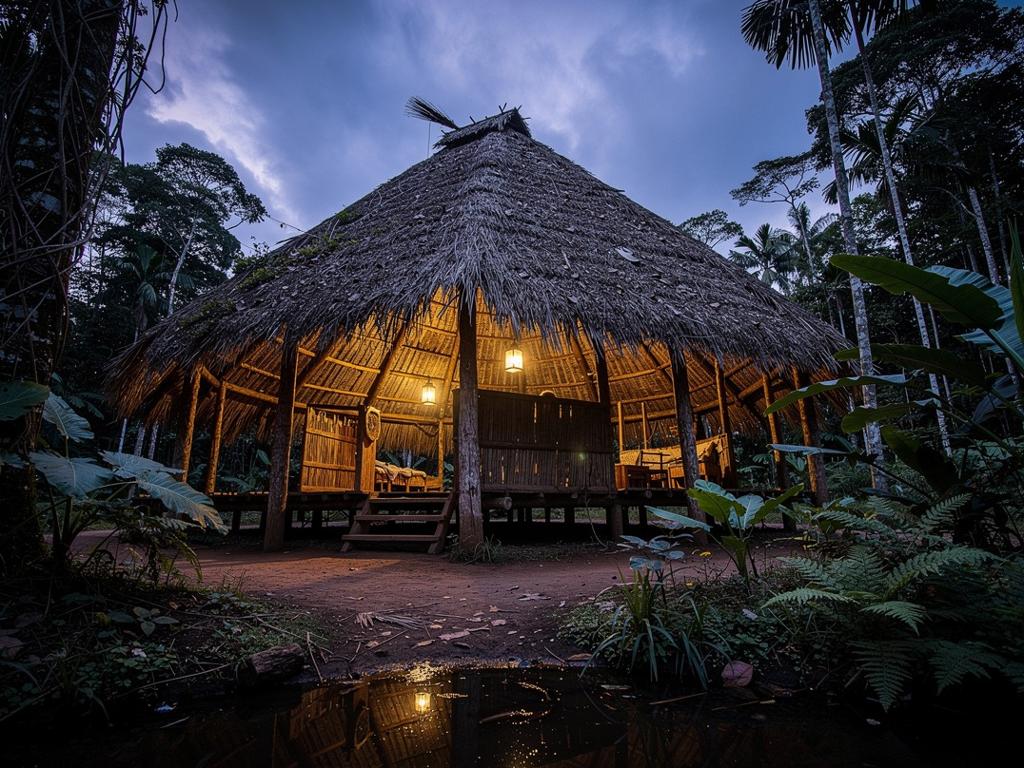
There's a particular kind of tiredness that has nothing to do with real work. You know the one. It's 11pm, the project is finished, nothing important is broken, and yet you're still clicking between the same three tabs like one of them owes you money. Refresh. Reread. Adjust a comma. Refresh again. The numbers haven't moved. You knew they wouldn't. You checked anyway. I want to talk about that loop, because it's one of the quiet reasons people end up sitting in a maloca in the Peruvian jungle at 2am asking a cup of bitter brown liquid what's wrong with them. Compulsive doing looks like ambition from the outside. From the inside, it often feels closer to panic wearing a productivity costume. And it's one of the patterns that plant medicine — ayahuasca in particular — has a strange way of dragging into daylight. A friend of mine, a designer, described her version of this recently. She'd shipped a small update to a client site, closed her laptop, and then reopened it four times in the next hour. Nothing needed doing. She just needed to do something because the outcome was now out of her hands and that felt unbearable. She's not lazy. She's not disorganised. She's actually very good at her job. What she was doing that night wasn't work — it was self-soothing that had learned to disguise itself as diligence. The tell? She couldn't say what specific piece of information she was hoping to find. She was just moving. Motion as anaesthetic. Most of us have a version of this. Refreshing analytics. Re-reading the sent email. Checking the group chat. Googling the same symptom for the fourth time. Scanning ten retreat websites when you already booked one. It feels like research. It's usually not. If you've landed on this article, there's a decent chance you're somewhere in the long, quiet process of deciding whether to sit with ayahuasca, psilocybin, San Pedro, or one of the other master plants. And if that's you, please hear this: the compulsive-doing pattern is not incidental to your search. It's likely part of what's driving it. People arrive at plant medicine for a lot of reasons — depression that won't lift, addiction that keeps winning, grief that won't move, a life that looks fine on paper and feels hollow in the chest. But underneath those specifics there's often the same low hum: I cannot tolerate not knowing, so I keep doing things. More self-help books. More therapists. More biohacks. More retreats. More podcasts about retreats. Ayahuasca will not fix that hum by giving you certainty. What it tends to do — and I've watched this happen to a lot of people, including me — is show you the hum itself. You get to feel, with uncomfortable clarity, how much of your life has been organised around not sitting still with the unknown. Here's the thing nobody quite prepares you for. In a well-run ayahuasca ceremony, you cannot check your phone. You cannot open a new tab. You cannot get up and fold laundry. You cannot email the facilitator asking if what's happening is normal. You drink the brew, you lie down on your mat, and you are stuck with your own interior for the next four to six hours. For a compulsive doer, this is confronting in a very specific way. The medicine removes every escape hatch you've been using. There's nowhere to run except deeper in. And what tends to come up, over and over, is the exact material you've been running from — the grief, the shame, the fear, the pattern, the memory. The plant doesn't invent it. It just refuses to let you refresh the page. People often describe the aftermath in physical terms. Their shoulders drop. Their jaw unclenches. Sleep improves. Not because ayahuasca is a spa treatment, but because the nervous system has finally been allowed to stop scanning for a threat that isn't there. One of the more useful things you can learn — with or without plant medicine — is how to tell the two apart. They look identical from the outside. Both involve you at a desk, or on a laptop, or writing in a notebook. But they feel different in the body, if you're willing to notice. I've started asking myself a small question, borrowed from a friend who trained as a psychotherapist: what do I expect the next action to change? If I can answer specifically, I keep going. If the answer is vague — “I just want to make sure”, “maybe I'll feel better” — I close the laptop. This one question has saved me hundreds of hours. Compulsive doing is a first cousin of addiction. Not the same thing, but same family. Both are strategies for not feeling something. Alcohol, scrolling, work, food, sex, shopping, gambling, exercise, over-researching plant medicine — the substance changes, the underlying move doesn't. Something uncomfortable rises up, and instead of meeting it, you reach for a lever that reliably lowers the volume. This is part of why psychedelics — ibogaine for opioid dependency, psilocybin for alcohol use disorder, ayahuasca for a broader range of dependencies — have generated so much clinical interest in recent years. They don't just interrupt the substance. They interrupt the underlying flinch. A well-supported psychedelic experience can give someone their first sustained encounter with a difficult emotion that doesn't end in a compulsive action. That is, on its own, a small revolution in a nervous system. But — and this matters — the medicine is not the recovery. The medicine cracks something open. The recovery is the year of ordinary evenings afterwards, where you sit with the urge to check, or drink, or scroll, or work, and you don't. Integration is unglamorous. It's mostly this. If you're researching retreats and you notice you've opened your fifteenth browser tab, take that as data. Not as failure — just as information about your nervous system. Slow down. A few honest checks that actually matter: Notice: none of these questions can be answered by refreshing an analytics page or reading one more Reddit thread. They require a phone call, an email, a conversation with a real person. The uncertainty won't fully resolve. It never fully does. But you can move from anxious research into real research, and that shift alone will tell you something. The evening my designer friend finally closed the laptop, she didn't feel enlightened. She felt annoyed and a bit itchy. Her mind kept pulling her back toward the desk. She made tea. She read three pages of a novel. She went to bed still slightly agitated. The next morning, the project was fine. Nothing had needed her supervision. The world had continued without her frantic attention, as it almost always does. This is roughly the shape of the work, whether you're doing it in your kitchen or lying on a mat under a mosquito net in Iquitos. You reach the limit of what effort can do. You notice the urge to keep doing anyway. You feel the discomfort of not-doing. You don't die. You do it again tomorrow. Plant medicine can be an accelerant here. A single ayahuasca ceremony can compress years of that practice into one very long night. But it doesn't replace the practice. It joins it. If you're ready for that, and you've done the honest homework about your own health, motivations, and support system, a curated selection of ayahuasca and plant-medicine retreats can be browsed on our marketplace here. Whatever you decide, try this before you decide it: close the laptop for an hour. See what your mind offers up when it can't be distracted. That first hour is, in a small way, the whole medicine already beginning to work.
How to Accept What You Can't Control: A Plant-Medicine Perspective
There's a specific kind of exhaustion that comes from fighting reality. You know the one. It's the 3 a.m. loop where you replay a conversation you can't unsay, or the tight knot in your chest when you think about a parent's diagnosis, a job that vanished, a relationship that ended without your permission. Most people arrive at a plant-medicine retreat carrying some version of this — a situation they've been shoving against for months or years, hoping force alone will change it. Acceptance is one of those words that gets flattened by overuse. Yoga teachers say it. Therapists say it. The self-help aisle says it in seventy different fonts. But when you actually sit in ceremony with ayahuasca or another master plant, you learn quickly that acceptance isn't a mindset you install. It's something closer to a surrender — and it usually happens after you've tried every other option and run out of moves. The human nervous system is built for problem-solving. That's a feature, not a bug — it kept our ancestors alive. But the same wiring that helps you fix a leaking pipe also tries to fix things that can't be fixed: your mother's dementia, a friend's addiction, the fact that you're 43 and childless when you didn't plan to be. The mind keeps generating strategies. The body keeps bracing. Nothing changes, and you get more tired. In my experience talking with retreat-goers, a huge percentage of the people booking a psychedelic retreat are, at the core, people who have been white-knuckling something for a long time. Addiction. Grief. A trauma they can't outrun by working harder. What they're really looking for isn't insight — they've had plenty of insight. They're looking for the felt experience of letting go, which is completely different from understanding intellectually that they should. This is where plant medicine gets interesting. Ayahuasca doesn't argue with you about whether you should accept your situation. It just, sometimes, dissolves the part of you that was clinging to a different version of reality. People come out of ceremony describing it as though a hand unclenched inside their chest — a hand they didn't know had been clenched for twenty years. Let's clear something up. Acceptance is not approval. Accepting that your father was cruel doesn't mean he was right to be. Accepting that your marriage is over doesn't mean you're glad. Accepting that you have a chronic illness isn't the same as pretending it's a gift. This is where a lot of well-meaning wellness talk goes off the rails — it conflates acceptance with positivity, and then people beat themselves up for not being grateful enough about terrible things. Real acceptance is closer to this: this is what's happening, and I'm going to stop pretending it isn't so I can decide what to actually do next. That's it. It's a clearing of the fog. It doesn't tell you what to do — it just gives you back the energy you were burning trying to argue with reality. The traditional Amazonian view frames it a little differently. The plants — ayahuasca, chacruna, tobacco, San Pedro — are considered teachers, and one of the earliest lessons they tend to offer is that you are not running the show. Not in the way you thought. The ego's insistence that it can bend outcomes through worry is exposed as a kind of exhausting theatre. You're invited to sit down. Watch. Trust that something larger than your planning mind is at work. Here's the mechanism, as best anyone can describe it. The classic psychedelics — DMT (the active molecule in ayahuasca), psilocybin, mescaline in San Pedro — quiet down the default mode network in the brain. That's the network responsible for your sense of self, your rumination, your endless internal monologue about who you are and what should be happening. When that network goes quiet, the walls of the story you've been telling get thin. You can see around them. What people report, over and over, is some version of: I saw the situation from outside myself and it stopped feeling like a threat. The pain doesn't necessarily disappear. But the resistance to the pain does, at least temporarily, and in that gap something shifts. A parent who has been dead for a decade is suddenly forgiven. A version of yourself you've been ashamed of is met with tenderness instead of contempt. The addiction that felt like an identity is revealed as a survival strategy that ran past its usefulness. None of this is guaranteed. Anyone who tells you a single ceremony will fix your relationship with your own life is selling something. But the door does open for a lot of people, and what they walk through changes the way they carry the unresolvable parts of their lives. Honest answer: sometimes yes, sometimes no. If you're dealing with something you can't accept — a loss, an addiction, a stuck depression, a trauma pattern that talk therapy has softened but not shifted — plant medicine can be a serious accelerator. There's a growing body of clinical research on psilocybin for treatment-resistant depression, ibogaine for opioid addiction, MDMA for PTSD. The results aren't miracles, but they're substantial enough that respected institutions are paying attention. That said, here's what you should think about before booking anything: The people I've spoken to who've had the most durable shifts describe something surprisingly ordinary. They didn't come home enlightened. They came home slightly less at war with themselves. The situation they couldn't accept is often still there — the dead parent is still dead, the estranged sibling still won't call — but the quality of their relationship to it changed. They stopped needing it to be different in order to be okay. That's the actual gift, if it comes. Not a fix. Not a reversal. Just enough space around the pain to live a life alongside it. Some describe it as feeling met by something larger. Others describe it more plainly: the constant low-grade fight in the background of consciousness just stopped, and they had energy for other things again. Integration practices matter here more than anyone tells you upfront. Journaling, meditation, therapy, time in nature, community with other people who've done this work — these are the scaffolding that holds insight in place. Without them, the ceremony fades into a good story you tell at dinner parties. Whether or not a retreat is on your horizon, there are practices that soften the reflex to fight everything. None of them are magic. All of them work if you actually do them. Acceptance isn't passivity. It's the ground you have to stand on before any real decision becomes possible. Whether you get there through years of meditation, through therapy, through a night in ceremony with a plant that shows you your own life from an unfamiliar angle, or through the slow attrition of just being alive long enough — the destination is the same. You stop demanding that reality be other than it is, and something in you finally exhales. If you've been carrying something for too long and you're starting to sense that traditional routes aren't going to be enough, a range of curated ayahuasca and plant-medicine retreats can be browsed on our marketplace here. Take your time with the decision. The plants aren't going anywhere, and the readiness to meet them honestly matters more than the timing.
Dreaming of a Psychedelic Retreat?
We have the best deals and offers from thousands of organizers all over the world! Get them into your mailbox every week!
We value your privacy. Your email address will never be shared or published.
