 English
 Deutsch
 Français
 Nederlands
 Español
SHOP AYAHUASCA RETREATS BLOG
OCD and the Inner Voice: Can Plant Medicine Quiet the Noise?
Luca Reeves
September 11, 2026
Your ultimate guide to discover transforming ayahuasca and psychedelic experiences. Dive into serene destinations and elevate your consciousness to unparalled heights.
Discover Ayahuasca & Psychedelic Retreats NowSearch for ayahuasca & psychedelic retreats
Discover retreats, trainings, and holidays from all over the world
Anyone who's lived with OCD knows the inner voice isn't really a voice. It's a loop. A relentless, high-pitched negotiation with yourself about things nobody else would spend two seconds on. Did I lock the door. Am I a bad person. What if that thought means something. What if it means nothing and that's worse.
Lately I've been getting more questions from readers with OCD, intrusive thoughts, and treatment-resistant anxiety who are wondering whether ayahuasca, psilocybin, or another plant medicine might help them turn the volume down. It's a fair question, and the honest answer is complicated. Psychedelics aren't a shortcut around OCD, but there's a growing conversation — and some real research — about what plant medicine can and can't do for people wired this way.
Why OCD makes the psychedelic question harder than usual
OCD isn't just anxiety with extra steps. It's a specific pattern: intrusive thoughts arrive uninvited, the brain reads them as threats, and compulsive behaviors show up to neutralize the discomfort. The relief lasts about ninety seconds. Then the loop restarts. If you've been in it since childhood, as many readers have, the loop feels less like a symptom and more like the shape of your mind.
Here's where things get interesting. Psychedelics — ayahuasca especially, but also psilocybin — tend to loosen the grip of rigid mental patterns. Neuroimaging studies going back over a decade suggest these substances quiet the default mode network, the part of the brain that runs the endless self-referential commentary most of us call thinking. For someone with OCD, that commentary is turned up to eleven. The theory, at least, is that plant medicine can crack the loop open long enough for the person to see it from outside.
The theory is compelling. The practice is messier. A ceremony can just as easily amplify obsessive content as dissolve it. If your intrusive thoughts are about contamination, or harm, or losing control — congratulations, ayahuasca is going to hand you five hours of exactly that material and ask what you want to do with it.
What the research actually shows about psychedelics and OCD
The clinical picture is small but real. A pilot study at the University of Arizona back in 2006 gave psilocybin to nine adults with OCD and reported significant reductions in symptom scores across all participants, sometimes lasting well beyond the session. Since then, larger trials have been slow to arrive, but a handful of ongoing studies at Yale and elsewhere are looking specifically at psilocybin for treatment-resistant OCD. Early signals are cautiously positive.
Ayahuasca research is thinner and mostly focused on depression, addiction, and PTSD rather than OCD specifically. But the anecdotal reports from long-term retreat facilitators are consistent: people with obsessive patterns can experience meaningful shifts, particularly when the medicine surfaces the emotional root underneath the compulsions rather than the compulsions themselves. The vine, as Amazonian curanderos will tell you, tends to show you what you've been avoiding. For people with OCD, what's being avoided is usually not the intrusive thought itself — it's the feeling the thought is protecting them from.
None of this qualifies as a treatment recommendation. It's a live area of study, and if you're on SSRIs (which many OCD patients are), the interaction risks with ayahuasca specifically are serious. More on that in a moment.
Master plants and the OCD mind: what changes, what doesn't
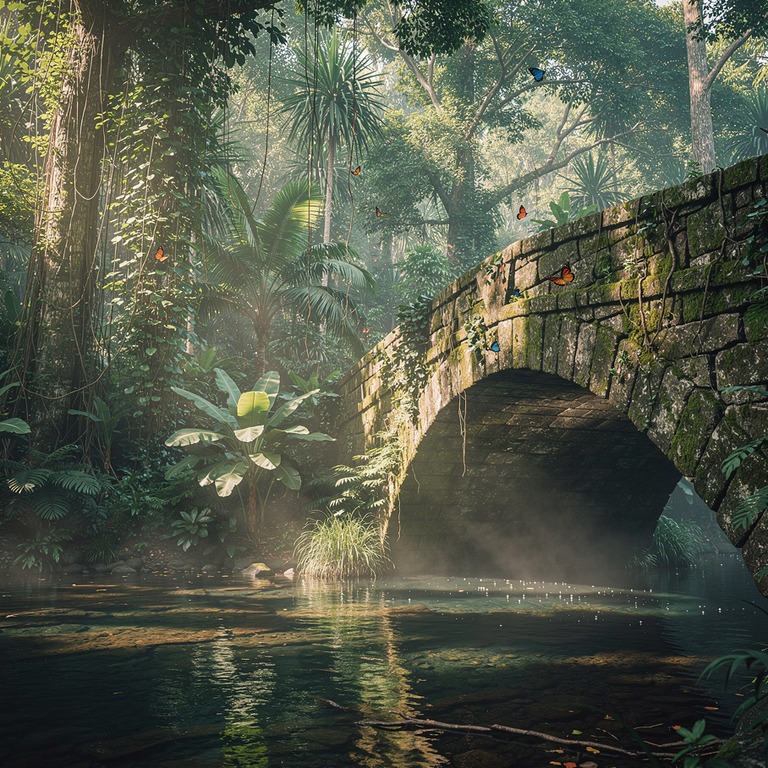
In the Amazonian tradition, ayahuasca is one of many plants considered maestros — teachers. San Pedro, tobacco (used ceremonially, not smoked recreationally), bobinsana, chiric sanango, and others each have their own reputation for what they teach. Facilitators who work with people carrying anxiety and obsessive patterns often lean toward the more heart-opening, grounding plants rather than jumping straight into ayahuasca.
What tends to shift after a good ceremony, based on what participants describe:
- The relationship to the intrusive thought changes before the thought itself does. You start to see it as weather rather than instruction.
- The emotional charge underneath the compulsion loosens — grief, fear, shame that the loop was pointing at without ever landing on.
- Somatic tension held for decades releases, sometimes dramatically, and the nervous system gets a rare taste of what safety actually feels like in the body.
What doesn't tend to shift, at least not from a single retreat:
- The neurological substrate of OCD. The circuitry is still there. The medicine gives you leverage, not a cure.
- The need for ongoing integration work. Without it, most people slide back into the loop within weeks. This is the part nobody selling retreats wants to talk about.
- The relationship with your prescriber. Anyone considering plant medicine needs to have that conversation, ideally months in advance.
The SSRI problem, and other reasons to slow down
If you're taking an SSRI for OCD — sertraline, fluoxetine, escitalopram, and their cousins — ayahuasca is a hard no without a careful, medically supervised taper. The MAOI component in ayahuasca (that's what makes the DMT orally active) combined with SSRIs can trigger serotonin syndrome, which ranges from unpleasant to life-threatening. Reputable retreats will screen for this. Sketchy ones won't. That's your first filter when evaluating any center.
Psilocybin has a lower interaction profile with SSRIs but the antidepressants tend to blunt the psilocybin experience, sometimes to the point of the session doing very little. Some clinicians will support a taper under supervision; others won't. There's no clean rule here, and anyone who tells you there is should not be your guide.
Beyond medication, there's the deeper question of whether an intense psychedelic experience is even the right move when your baseline mental state is already characterized by hypervigilance and fear of losing control. For some people with OCD it's the exact medicine they needed. For others it's five hours of a bad time that reinforces the very patterns they came to break. The people who tend to do well have usually done substantial therapy first, have a stable life circumstance, and approach the ceremony without white-knuckling for a specific outcome.
How to think about choosing a retreat if you have OCD
If, after all the caveats, you still feel drawn to explore plant medicine for your OCD or the addiction patterns that so often ride alongside it, the retreat you choose matters more than almost anything else. A few things worth weighing:
- Screening. A serious retreat will ask about your psychiatric history, current medications, family history of psychosis, and past trauma before they take your deposit. If the intake form is a payment link, walk away.
- Facilitator experience with OCD and anxiety. Not every shaman or facilitator is equipped for the particular flavor of OCD suffering. Ask directly. A good one will tell you honestly whether they've worked with it.
- Integration support. What happens in the two weeks and two months after you fly home is where the actual change either sticks or evaporates. Retreats that offer structured integration calls or refer you to trained integration therapists are worth the premium.
- Pace and setting. For an anxious nervous system, a smaller retreat with fewer ceremonies and more rest time usually beats a marathon of six sessions in ten days.
- The vibe check. If the marketing promises to cure you, cure anything, or uses the word “breakthrough” more than twice on the homepage, that's a tell.
Cost varies wildly — anywhere from around $1,500 for a modest week in Peru to $8,000 or more for boutique centers in Costa Rica or the Netherlands. Price doesn't equal quality, but suspiciously cheap is its own red flag.
The quiet part nobody says out loud
Plant medicine can help. It can also do nothing. It can also make things temporarily worse before it makes them better, and “better” for someone with lifelong OCD usually means a manageable relationship with the loop rather than the disappearance of it. Anyone promising more than that is selling something.
The people I've watched get the most out of ayahuasca or psilocybin for obsessive thinking are the ones who treated the ceremony as one intervention among several — alongside good therapy (ERP is the gold standard for OCD), medication when needed, sleep, movement, and the boring daily work of learning to sit with discomfort instead of solving it. The medicine opens a door. Walking through it is still your job.
If you've been circling this decision for a while, that's probably a good sign — OCD makes everything take longer, and taking your time here is warranted. For readers who want to keep exploring, a range of vetted ayahuasca and psilocybin retreats that screen carefully and offer integration support can be browsed on our marketplace here. Whatever you decide, decide it slowly, with people who know your history, and with your eyes open to what plant medicine actually is — a powerful tool, not a rescue.

Craving More Stories?
Join our ShopAyahuascaRetreats newsletter for the latest updates on thrilling
destinations and inspirational tales, delivered straight to your inbox!
We value your privacy. Your email address will never be shared or published.