 English
 Deutsch
 Français
 Nederlands
 Español


Reset. Heal. Grow.

Walking Grief Home: Six Companions for Living With Deep Loss
The world doesn't end when someone you love dies. But it loses its shape. The kettle boils. The mail arrives. Somehow the coffee shop on the corner keeps being open at the usual hours, which feels almost offensive. And meanwhile you're standing in your kitchen at 3pm wondering why your legs feel like they belong to somebody else. Grief is disorienting in a way that's hard to prepare for. Time turns rubbery. Familiar rooms feel unfamiliar. You reach for the phone to call them before remembering — again — that you can't. In these early weeks and months, what most of us want isn't advice or a five-step plan. We want something steady to walk beside us. Not a fixer. A companion. After years of sitting with grieving people — in clinical rooms, in hospice settings, in the strange in-between spaces where families gather after a death — I've stopped thinking of grief as a problem to solve. It's a relationship. Something you tend, not something you finish. And mindfulness, when it's the real thing rather than the wellness-app version, gives us a way to tend it without abandoning ourselves. Here's the thing most people get wrong about mindfulness: they think it's about becoming calm. It isn't. Calm is sometimes a byproduct, sure, but the actual gift is capacity — the ability to stay close to what's true even when what's true is unbearable. Grief-work in a mindful key isn't about “getting over” anything. It's about learning to walk with what happened. And in that walking, six inner companions tend to show up — not in order, not on schedule, but reliably, if you make room for them. I've come to call them Presence, Grace, Memory, Becoming, Belonging, and Trust. They circle and overlap. Some days one leads. Other days another. Together, they teach you how to inhabit a world that's been reshaped. Presence isn't passive. It's the wholehearted “yes” to whatever's actually here, even when what's here is awful. It asks one thing: allow this moment to be this moment. Grief isn't a single feeling. It's a whole crowd of them — sorrow, rage, numbness, weird bursts of laughter, exhaustion that goes to the bone, longing so sharp it takes your breath. Most of us try to manage all this the way we manage everything: by tightening, organizing, scheduling, controlling. And grief doesn't respond to any of that. It shows up on its own timing, with its own agenda. The first act of presence is permission. Permission to feel every last bit of it — not because feeling will fix anything, but because it's honest. E.L. Doctorow once described writing a novel as driving at night: you can only see as far as the headlights, but you can make the whole trip that way. Grief is like that too. You don't need to see the whole road. You just need to be honestly present for the next few feet of it. If presence is how you show up for life, grace is how life shows up for you. It's quiet. Nobody puts it on a highlight reel. But if you pay attention, you notice it constantly in the middle of grief. You don't manufacture grace. You receive it. A friend who doesn't try to talk you out of your sadness. The unexpected release of a long exhale. A stranger holding the door a beat longer than necessary. The dog leaning her weight against your leg. None of it erases the pain. But it reminds you, over and over, that you're not entirely alone inside it. Grace opens a little breathing room inside the ache. Given time, it helps you weave the loss into the fabric of your life — not as something to conquer but as something that widens you, softens you, makes you more tender toward everyone else who's ever loved and lost. Which, of course, is everyone. Grief moves in waves. Not the neat, predictable waves of a calm shore — the wild, uneven surges of a winter ocean. A song comes on in a grocery store and you have to put down your basket. The particular light of an October afternoon. Their handwriting on an old birthday card. Any of it can knock you flat months, years, decades later. These waves aren't setbacks. They're not proof you're “doing grief wrong.” They're love, still moving, still trying to find its shape in a world that's been rearranged. Memory is also the doorway to what grief researchers call the continuing bond. Love doesn't end when a life ends — it changes form. As presence steadies you and grace softens you, memories begin to shift too. What used to shatter you might, one day, arrive with warmth as well as sorrow. You catch yourself talking to them in the car. You use a phrase they used. You ask, silently, what they would have thought. This isn't denial. It's the way love keeps traveling. At some point — usually so quietly you miss the exact moment — something inside starts to shift. Not because the sorrow has shrunk, but because your heart has begun to expand around it. This is Becoming: the slow integration of the loss into who you are. Becoming doesn't ask you to forget. It asks you to remember differently. To let love have as much room as loss. It's not a stage you graduate from. Some days feel spacious and workable. Other days, the ache is right there, fresh as ever. Both are part of the process. Becoming honors clarity and confusion, forward motion and the days you can't get out of bed. It's not the end of grief. It's the beginning of a different relationship with it. Death shakes your sense of belonging in ways that take a while to name. The world feels foreign. You feel foreign in it. Old rooms don't fit. Old routines feel like costumes. Belonging isn't lost, though — it's changing. Over time you notice that belonging isn't something other people hand you. It's a quiet awareness that you're here, alive, held up by the ground beneath you. It grows out of how you treat yourself and how you engage with the world that's still turning. Sunlight through a window. The first sip of tea in the morning. The smell of pine after rain. The steady presence of hills on the horizon. These small acts of noticing add up to a new sense of place. The continuing bond with the person who died becomes part of that belonging too. Their influence lives on in the way you make decisions, the phrases you use, the values you carry forward. You're still part of a story. It's just a different story than the one you were expecting. Grief eventually asks you to trust something you can't yet see. Trust arrives when you begin to sense — not intellectually, but in your bones — that your heart is bigger than the loss. Not because the loss is small. Because the heart is genuinely vast. It can hold sorrow and love at the same time. It can hold the person who's gone and the person you're becoming. Trust isn't the absence of pain. It's the recognition that pain isn't the only thing in the room. Over months and years, trust reveals a kind of sturdiness you didn't know you had — a Kintsugi of the heart, where the broken places have been repaired and traced with gold. The cracks are still there. They're part of what makes you, you. And they catch the light in ways they never could before. Notice what this isn't: a linear sequence, a set of boxes to check, a five-step method with a certificate at the end. The six companions don't queue up politely. They circle. They overlap. They arrive out of order and sometimes all at once. Walking grief home isn't about arriving somewhere new. It's about learning to live here — in this life, the one that's actually unfolding — with a heart wide enough to hold both love and loss without collapsing under the weight. Try this the next time grief crests over you unexpectedly, which it will: Not because it's easy. Because it's true. Sometimes the six companions, honest as they are, aren't enough on their own. Grief that gets frozen — grief that ossifies into depression, addiction, or a kind of numb, gray flatness that swallows years — sometimes needs more direct intervention. This is where a lot of people I've spoken with have quietly begun exploring plant-medicine work: psilocybin, ayahuasca, or well-facilitated retreat settings designed specifically for bereaved and traumatized people. I mention this carefully, not as a prescription. These paths aren't for everyone, and they carry real considerations around preparation, screening, and integration afterward. But for some, a well-held ceremony can do what years of talking couldn't — soften the armor around a grief that has calcified, and let love flow again in both directions. If any of that resonates with where you are, a range of grief-aware plant-medicine and integration-focused retreats can be browsed on our marketplace here. Whatever path you walk, the invitation is the same. Not to get over your loss. To learn, slowly, how to belong to your own life again — the one that's still unfolding, still quietly asking you to show up for it.

Rewiring Anxiety: How Plant Medicine and Nervous System Work Turn Panic Into Choice
For years I told myself the same tidy story: I have anxiety, I can't do crowds, end of sentence. It felt honest. It felt like a diagnosis I could plant a flag in. But somewhere between a bad panic episode at a Peruvian bus terminal and a night in ceremony where my chest cracked open in a way I still can't quite explain, I realized I hadn't been managing anxiety at all. I'd been feeding it. Every skipped concert, every declined dinner, every rerouted walk — all of it was quietly teaching my nervous system that the fear was correct. This is one of the most common threads I hear from readers who reach out about ayahuasca and other plant medicines. They aren't looking for a party. They're looking for a way out of a loop that talk therapy hasn't quite cracked. And whether the path forward involves psychedelics, master plants, breathwork, or plain stubborn nervous-system rewiring, the underlying insight is the same: the goal isn't to feel less. It's to respond differently. Your nervous system is doing what it was built to do. Racing heart, tunnel vision, the sudden certainty that you need to leave the room right now — that's a survival subroutine written for a world where the threats were actual predators and actual scarcity. The hardware still works beautifully. The code is just running on the wrong century. What makes anxiety so sticky isn't the alarm itself. It's the loop that follows. Alarm goes off, you flee, relief floods in, and the brain files a neat little note: yep, that thing was dangerous, good thing we bailed. Do this a few hundred times and you've built a fortress around a phantom. The crowd wasn't going to hurt you. The dinner party wasn't going to hurt you. But your system doesn't know that, because you never let it find out. This is where plant medicine tends to do its most interesting work — not by erasing the fear, but by loosening the grip of the story you've built around it. In ceremony, people often describe watching their own patterns from a kind of quiet balcony seat. The panic still arrives. It just stops being the whole room. Let's be clear about one thing. Not every alarm bell is a false one. Sometimes your gut is reading a situation correctly and you should absolutely leave. The work isn't to override every instinct — that's how people end up in situations they had no business being in. The work is discernment. Learning which alarms belong to now and which are echoes from something that happened when you were nine. When I walk into a packed room and feel the old surge start climbing my spine, I have two options. I can turn around and reinforce the fear, or I can stay and let my body collect new evidence. Neither is easy. Both are legitimate on any given day. But over time, if I only ever pick the first one, my world shrinks. And the smaller it gets, the louder the alarms become inside what's left. People who go to an ayahuasca retreat looking for anxiety relief sometimes come back frustrated because they expected the fear to vanish. That's not usually what happens. What tends to happen is stranger and more useful: the fear becomes legible. You can see where it started. You can feel where it lives in your body. And in the weeks after, when the old alarm goes off in some random Tuesday-afternoon moment, there's a fraction of a second of new space between the alarm and your response. That fraction of a second is where everything changes. Here's the distinction almost no one taught us to make. Avoidance is when you're running and the thing you're running from is chasing you. It looks like freedom in the moment. It's actually a leash. Conscious choice is something else entirely. It's what happens after you've done enough of the internal work to understand your own wiring — the environments that dysregulate you, the dynamics that shove you into old patterns, the specific stimuli that hijack your nervous system. Once you know that map, you can decide what belongs in your life and what doesn't. Skipping the loud bar isn't cowardice if you've genuinely worked with the underlying charge and decided the noise just isn't your thing anymore. That's discernment, not fear in a trench coat. You don't need to keep flinging yourself at your triggers to prove you've healed. That's just a different flavor of the same overcorrection. Once you've faced the root of what makes something destabilizing — whether that happened in therapy, in ceremony, on a meditation cushion, or all three — you get to choose. And the choosing itself is the point. I used to think the monks I met on a trip through Thailand were peaceful because they'd somehow detached from the whole messy business of being human. That was projection, and it was wrong. Monks feel everything the rest of us do. Frustration, boredom, longing, the occasional urge to strangle a fellow monk who won't stop clearing his throat during meditation. They're not statues. What they've developed is discipline about what they subject themselves to and how they metabolize it when it arrives. They don't abstain out of fear. They abstain because they've spent enough time studying their own minds to know what feeds equilibrium and what corrodes it. Peace isn't passive. It's actively curated. And that curation is impossible without the underlying self-knowledge — which is exactly what serious plant medicine work, done well, tends to produce. Somewhere along the way, the wellness world sold us the fantasy that healing means becoming untriggerable. It doesn't. Anyone who tells you they've reached a state where nothing rattles them is either lying, dissociated, or selling something. Probably all three. Real healing looks more like this: things still land. Old patterns still knock at the door. The difference is you no longer answer automatically. You notice the knock, you clock what's on the other side, and you choose. That's sovereignty. And it's the actual promise of the deep work — whether that work involves ayahuasca, psilocybin, ibogaine for addiction recovery, or years of nervous-system practices without any substance at all. A life of unexamined avoidance is fear wearing a nice outfit. A life of conscious response, built on real self-knowledge, is something else entirely. It's yours. Post-ceremony integration or not, the ground-level work looks pretty ordinary. It's not glamorous. It's not particularly Instagrammable. But here's what tends to change when the reprogramming starts to take: Insight alone won't stop a spiral. Reading a beautifully worded paragraph about the nervous system won't rewire yours. What rewires it is the accumulation of small, real-time moments where you notice the system in motion and stay with yourself anyway. Ceremony can compress that process. Master plants can crack open years of it in a night. But the integration — the actual living of it — happens in traffic, at family dinners, in the checkout line when someone cuts in front of you. People book plant medicine retreats for a lot of reasons, but a huge share of them come down to some version of what we've been talking about here. Depression that won't lift. Anxiety that runs the show. Addiction that's outlasted every other intervention. Trauma that lives in the body even after the mind has done its homework. A retreat isn't a magic bullet — anyone who tells you otherwise is either naive or dishonest — but for the right person, with the right facilitators, in the right frame of mind, it can catalyze exactly the kind of nervous-system reprogramming we've been describing. The honest questions to sit with before you book: Am I running toward something or away from something? Do I have support lined up for the weeks after I get home? Do the facilitators screen participants and take integration seriously, or is it a spiritual buffet? These aren't romantic questions, but they're the ones that separate a genuinely useful experience from an expensive one. If any of this resonates and you're weighing what's actually out there, a curated selection of ayahuasca and plant-medicine retreats can be browsed on our marketplace here. Take your time. The work you're considering deserves the same care you're already bringing to the research.
Ultra-Processed Foods and Your Metabolism: What the Latest Research Reveals
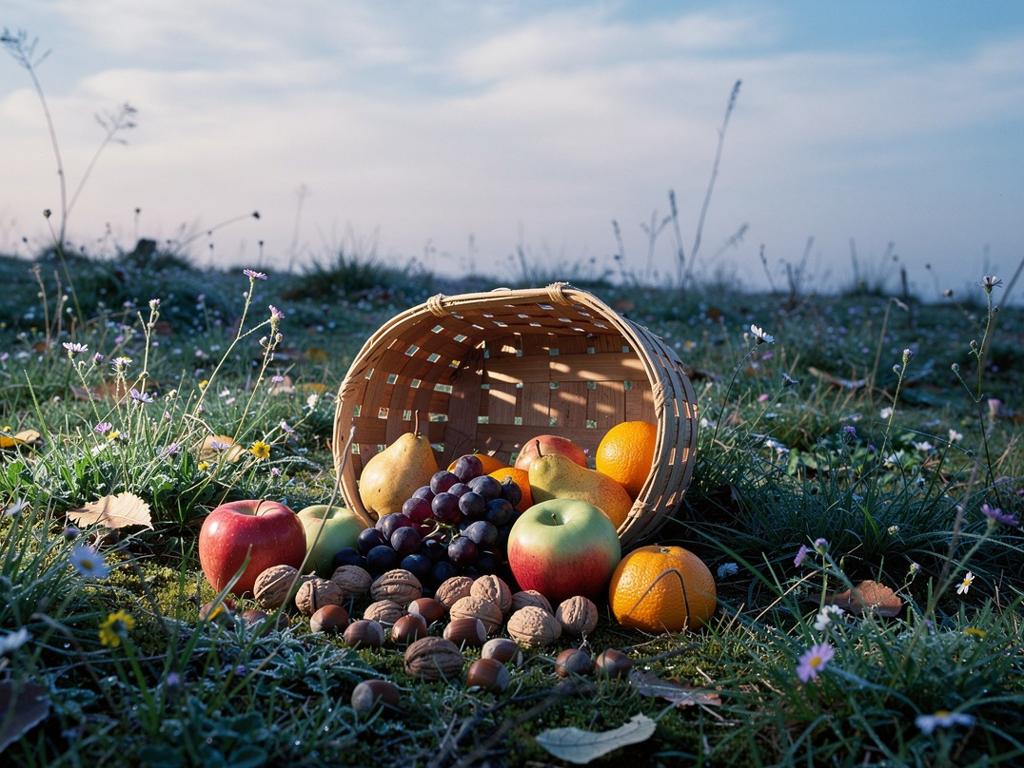
Here's something worth sitting with: every packaged snack, every drive-through meal, every neon-colored energy drink leaves a trace. Not in some hand-wavy “you are what you eat” way — literally, chemically, in your bloodstream. Researchers can now measure it. A sweeping European study pulled apart the blood chemistry of thousands of adults and found that people eating more ultra-processed foods carry a distinct metabolic signature. Not just fewer nutrients. Something more active than that. The additives, the industrial fats, the refined oils — they show up. And they change how your body handles fat, inflammation, and energy. This isn't a fringe finding, and it isn't a scare piece. It's the kind of research that quietly reframes how we should think about food quality, and it deserves a proper look. The data came from the European Prospective Investigation into Cancer and Nutrition — one of the largest, longest-running nutrition cohorts on the planet. Two subsets were analyzed. The first included 6,177 participants and looked at 129 naturally occurring blood metabolites. The second pulled in 9,029 participants and examined 37 different blood fats. Foods were sorted using the Nova classification system, which groups items by how heavily they've been industrially processed. Nova 4 — the ultra-processed tier — covers products loaded with additives you'd never find in a home kitchen: emulsifiers, artificial flavors, non-nutritive sweeteners, colorings, and shelf-stability agents. Participants self-reported their eating patterns for the year before enrollment. After controlling for age, sex, weight, activity level, smoking, drinking, and intake of other food groups, the researchers zeroed in on which blood markers moved with ultra-processed food intake. The answer: 22 circulating compounds and 8 blood fats shifted in a consistent, identifiable pattern. A fingerprint, essentially. One of the loudest signals in the data: an inverse relationship between ultra-processed intake and DHA, the long-chain omega-3 fatty acid found mostly in oily fish. More packaged food, less DHA in circulation. Straightforward math, real consequences. DHA isn't just another nutrient buzzword. It's structural. It's a core building block of the membranes wrapping your brain cells and the tissue in your eyes. It helps calm inflammation, supports cardiovascular function, and keeps neural signaling working the way it should. Your body can only synthesize small amounts on its own, so what you eat genuinely determines what's available. When boxed cereals and takeout replace salmon, sardines, and mackerel, the drop shows up in the blood. Predictable, but still striking to see quantified. Two families of compounds most people have never Googled also dropped in high-UPF eaters: sphingomyelins and phosphatidylcholines. Both are essential to how cell membranes function. Not glamorous. Not on any supplement bottle you've seen. But quietly critical. Sphingomyelins — abundant in dairy, eggs, and meat — help maintain the integrity of cell membranes and are involved in cell signaling and turnover. Phosphatidylcholines are the most common fat in human cell membranes and play a role in insulin signaling, fat metabolism, and energy regulation. They come from whole foods: eggs, fish, whole grains, nuts. The interesting wrinkle? These compounds were lower in ultra-processed food eaters even after adjusting for body weight. In other words, this wasn't a side effect of carrying extra pounds. It was tied to the eating pattern itself. Two people can weigh the same and have very different internal chemistry depending on what's on their plates. On the other side of the ledger, ultra-processed intake was positively linked to elaidic acid — the primary industrial trans fat created when liquid vegetable oils get hydrogenated to make them solid. Think margarine, packaged pastries, non-dairy creamers, deep-fried anything with a long shelf life. Elaidic acid showing up in measurable amounts in blood tells you something uncomfortable: this stuff doesn't just pass through. It circulates. And once it's in circulation, it interferes with how your body handles cholesterol — pushing LDL up, pulling HDL down — and has been tied to insulin resistance and cardiovascular disease. The World Health Organization has been pushing to eliminate industrial trans fats from the global food supply for years, and findings like this are exactly why. While omega-3s dropped, omega-6 derivatives climbed. Three specific ones. Curiously, these aren't eaten directly in huge amounts — the body seems to be manufacturing them internally from all the linoleic acid in refined vegetable oils that saturate the ultra-processed food supply. Why does this matter? Because omega-6 and omega-3 pathways compete for the same enzymes. Tilt the ratio toward omega-6 and the body ends up producing more pro-inflammatory signaling molecules. It's not that omega-6 is villainous on its own — humans have always eaten it — but the ratio matters, and modern processed diets have knocked it wildly out of balance. The study also flagged elevated acylcarnitines in high-UPF eaters. These are markers of cells struggling to convert fat into usable energy efficiently. Which is another way of saying: the metabolic disruption goes deeper than nutrient displacement. Sort of, but not really. The framing that matters here is displacement, not deprivation. Every meal built around industrially formulated products is a meal not built around foods that actively contribute protective compounds. The absence is as important as the presence. And there's a growing body of adjacent research worth mentioning. Short-term studies have shown ultra-processed diets can shift brain function within days. Long-term cohorts have linked heavy consumption to depression risk, cognitive decline, and metabolic disease. No single study proves causation. Taken together, though, the pattern is hard to ignore. The dietary pattern associated with healthier blood chemistry in this study isn't exotic or restrictive. It looks like the way most people ate before shelf-stable convenience took over the middle aisle of the grocery store. For readers thinking about deeper work — trauma recovery, addiction, plant-medicine journeys, meditation retreats — food is part of the terrain, whether you want it to be or not. Traditional dietas around ayahuasca aren't arbitrary. Facilitators ask you to strip out processed food, refined sugar, alcohol, and industrial oils for weeks before ceremony for a reason. The body clears more cleanly. The nervous system settles. Whatever comes up in ceremony has a stabler platform to land on. You don't need to be preparing for a retreat to benefit from that same logic. Cleaning up the daily diet is one of the least dramatic and most durable acts of self-care available. It doesn't have a hashtag. It just works. This research doesn't prove ultra-processed foods directly cause disease. It's cross-sectional, self-reported, and observational — the authors are appropriately careful. What it does show, clearly, is that the standard modern diet writes itself into your blood chemistry in ways that go beyond calories or waistlines. The metabolic signature was present in participants who weren't overweight. Weight is not a reliable proxy for internal health. So the better question isn't whether you're eating too much. It's whether what you're eating is building the internal chemistry that supports the life you want to live — energetic, clear-headed, resilient, ready for whatever growth work you're taking on. If cleaning up the diet is part of preparing for something bigger — a plant-medicine ceremony, a silent retreat, a serious reset — a range of curated plant-medicine and healing retreats can be browsed on our marketplace here. The prep, honestly, starts in the kitchen.

Why Meditation Failed Me and What Actually Brought Me Back
Meditation didn't work for me. Not the way everyone promised it would. I want to say that plainly at the start, because I think a lot of people carry a small private shame about this — the sense that they've somehow failed at the most basic wellness practice on earth. You download the app. You sit down. You close your eyes. And within about ninety seconds, your mind is halfway through tomorrow's to-do list and wondering whether you turned the stove off. Then you feel worse than when you started, because now you've failed at relaxing. This is a story about what I did instead. And why, years later, I think it matters — especially for people who are drawn to plant medicine, contemplative retreats, or any of the deeper healing paths that ask you to be present with yourself. A while back, I moved to a new country with two very small children. On paper it looked romantic — a fresh start, the sea nearby, a slower pace of life. In practice, it was the loneliest stretch I've ever lived through. Not the dramatic, cinematic kind of lonely. The other kind. The low hum you carry through the day, quiet enough that no one else can hear it. My children needed me completely, and I loved them fiercely. But here's something worth saying out loud: gratitude and loneliness can share the same heart. One doesn't cancel the other. I was learning that lesson slowly, and painfully, in the small hours of afternoons at the park where other mothers seemed to know each other and I stood off to the side like a ghost. The big moments weren't the hard part. It was the small ones. Wanting to call a friend and remembering they were all seven time zones away. One of the kids running a fever and there being no one to hand them off to for an hour. The kind of ache that doesn't have a name. Everyone told me to meditate. So I tried. God, I tried. I downloaded the apps with the soothing voices and the little chimes. I sat cross-legged on the floor. I followed my breath, or attempted to, and instead found my brain playing a highlight reel of every single thing I hadn't done yet and every friendship I no longer had. The stillness didn't calm me. It gave my anxiety a stage. I want to be careful here — meditation genuinely helps a lot of people, and I'm not knocking the practice. But for someone in the acute grip of loneliness, with a nervous system already stuck on high alert, being asked to sit motionless and observe the mind can feel like being told to relax by staring directly at what's hurting you. Some of us need a doorway that isn't stillness. We need movement first. Color. Curiosity. Something outside ourselves to rest our attention on before we can rest inside ourselves. This, incidentally, is one of the reasons the psychedelic and plant-medicine world speaks to so many people who've bounced off traditional meditation. Master plants like ayahuasca, psilocybin, and San Pedro don't ask you to sit quietly and empty your mind. They fill your mind — with vision, feeling, movement, memory — and in that filling, something loosens. The presence arrives sideways. One afternoon, deep in that lonely stretch, I picked up my old camera. Not to make anything good. Not to post anything. Just to walk outside and see what I noticed. I started breaking every rule I'd been taught about photography. Composition, lighting, the perfect shot — I abandoned all of it. I pointed the camera at whatever caught my eye. A shadow crawling across a wall. The particular blue of the sea that afternoon. A cracked tile I'd walked past a hundred times without seeing. And something strange happened. My mind went quiet. Not because I forced it. Because I was too absorbed in looking to worry. When you're genuinely paying attention to what's in front of you — deciding how to frame it, noticing the light change, feeling curious — the anxious part of the brain simply doesn't have room to run its usual programs. Play crowds out worry. Curiosity crowds out grief, at least for a little while. I started calling it the happy zone — that state where you forget, briefly, about the loneliness and the exhaustion and, yes, the guilt. Because there was guilt, too. The particular guilt that shows up when small people depend on you completely. The whispered idea that taking fifteen minutes for yourself is somehow a betrayal. It isn't. It never was. But you have to feel that in your body, not just know it in your head. I kept going back to the walks because I came home different every time. Lighter. More patient. More myself. Ready for the next round of ordinary domestic chaos. And slowly — this is the part I didn't expect — the practice of noticing outward beauty taught me to notice my inner state, too. I started asking myself what I actually needed on a given day. And I started giving honest answers. Here's why I'm telling you this on a site about ayahuasca and psychedelic retreats. Because a lot of readers arrive at plant medicine after years of feeling like they've failed at every gentler practice. They couldn't meditate. Therapy plateaued. Yoga made them fidget. Journaling felt performative. And now they're wondering whether a week in the jungle drinking a bitter brew is the extreme intervention that will finally break through. Sometimes it is. Ayahuasca and other master plants can, for the right person in the right context, do work that decades of talk therapy couldn't touch. I've sat with people who came back from a retreat and finally, at fifty-two, cried about their father. That's real. But here's what nobody tells you about a retreat: the ceremony is maybe fifteen percent of the healing. The other eighty-five percent is what you do in the months after. It's called integration, and it's where most of the actual life-change happens or doesn't. And integration requires exactly the skill I'm describing above — the ability to be present with yourself, in an ordinary Tuesday afternoon, without a shaman and without icaros and without the medicine holding your hand. You don't need to be a photographer. You don't need an expensive camera or a scenic backdrop or any technical skill at all. A phone works fine. What you need is fifteen minutes and the willingness to look — really look — at one thing. Let yourself be curious. Let yourself be a little rebellious about it. Forget composition. Forget the perfect shot. Just notice. Because sometimes what brings you back to yourself isn't sitting still with your eyes closed. Sometimes it's looking up and seeing what was there all along — the shadow on the wall, the color of the light at four in the afternoon, the small ordinary beauty that was patiently waiting for you to be present enough to notice. If plant medicine is calling you as part of that same longing — the wish to be more awake in your own life — a range of thoughtfully vetted ayahuasca and psychedelic retreats can be explored on our marketplace here. And whichever door you walk through, remember: presence isn't something you achieve. It's something you keep returning to, one small noticing at a time.

Building Real Resilience: Daily Habits That Actually Hold Up in Hard Times
Resilience gets talked about like it's a superpower reserved for war veterans, ultra-marathoners, and people who wake up at 4 a.m. to journal by candlelight. It isn't. In my experience — from years of sitting with people preparing for and recovering from intense inner work, including plant medicine ceremonies — resilience is almost boringly ordinary. It's built in the small stuff. The walk you took even though you didn't want to. The message you sent when you'd rather have gone quiet. The night you actually slept instead of doomscrolling until 2 a.m. Here's the thing most self-help writing gets wrong: resilient people aren't the ones who feel less. They feel plenty. They just have a slightly better relationship with what they feel, and a handful of practices that keep them upright when the ground shifts. That's it. That's the whole trick. So let's talk about what resilience actually is, what it isn't, and the specific daily habits that build it — the kind you can start today without buying anything, joining anything, or becoming a different person. The American Psychological Association describes resilience as the ability to adapt and recover from stress, adversity, and major life shifts. Fine. But that clinical framing misses something important: resilience isn't the absence of struggle. It's the presence of a specific relationship with struggle. Researchers who study this — Southwick and colleagues have done some of the clearest work here — consistently find that resilient people still hurt. They still get knocked flat. The difference is how they process the hit and what they do in the days and weeks after. They don't skip the grief. They move through it. The other myth worth killing: resilience is not a fixed personality trait you were either born with or you weren't. It fluctuates. It shifts with your sleep, your support system, your workload, your health, the season of your life. Someone who was rock-steady at 30 can crumble at 45 during a bad year, then rebuild at 47. This is normal. It's a process, not a badge. None of what follows is exotic. That's the point. The people I've watched come through genuinely hard chapters — divorces, addiction recovery, post-ceremony integration, grief that seemed bottomless — didn't do it with a single heroic act. They did it with these five things, repeated until the practice became the person. Movement is one of the most-studied buffers against chronic stress, and it doesn't require a gym membership or a sub-three-hour marathon. A twenty-minute walk counts. Stretching on your bedroom floor counts. Gardening counts. What you're doing is teaching your nervous system that it knows how to shift out of a stressed state and back into calm — a skill that gets rusty when you sit still for weeks. Sleep is the invisible foundation under every other habit on this list. When you're sleep-deprived, your emotional regulation tanks, your decision-making narrows, and small annoyances feel like disasters. Anyone who's tried to process a hard experience on four hours of sleep knows this. Protect your bedtime the way you'd protect a doctor's appointment. The instinct to isolate when things get hard is powerful and, unfortunately, backwards. Decades of research on social connection point to the same conclusion: people with strong relationships weather adversity better than people without them. Send the text. Make the call. Show up to the thing even if you leave early. Loneliness is a resilience killer and connection is its most reliable antidote. This one is uncomfortable to hear, appropriately. Every time you have a hard conversation instead of avoiding it, sit with a difficult feeling instead of numbing it, or tolerate uncertainty without demanding immediate resolution, you're training. You're expanding what psychologists call distress tolerance. And a wider tolerance for discomfort is arguably the single most portable resilience skill there is — it travels with you into every hard moment life will ever hand you. There's a running commentary in your head about who you are, what you're capable of, and how the world works. When it turns nasty — I always screw this up, nobody actually likes me, I can't handle this — it erodes you faster than the actual event ever could. Learning to catch these narratives, name them, and gently question them is the core of cognitive work. It gets easier with practice. And it compounds. Building habits is one thing. Using them when your life is on fire is another. If you're in it right now, here's what actually helps. Let yourself feel it. The urge to skip the feeling and get to the fix is understandable and almost always counterproductive. Feelings that get shoved down don't disappear — they wait. Give yourself permission to be exactly as sad, angry, scared, or lost as you actually are, without needing to explain or justify any of it. Shrink the problem. When everything looks impossible, the trick isn't to solve everything. It's to identify the one small next action that keeps you moving. Not the ten-step plan. The next thing. Then the next thing after that. Momentum is a real force, and it starts small. Find what's in your control. Uncertainty is exhausting because our brains keep running scenarios trying to solve it. Ask instead: what part of this can I actually influence? Put your energy there. The rest — much as we hate to admit it — isn't yours to manage. Ask for help earlier than feels comfortable. Most of us wait until we're wrecked to reach out, then apologize for reaching out at all. Ask sooner. It's not weakness. It's pattern recognition. People who ask for help recover faster. That's just what the data shows. Give recovery real time. Bouncing back is a phrase, not a timeline. Setbacks take as long as they take, and expecting yourself to be fine by Monday because it's Monday is a form of self-punishment. Rest, keep your routines, be patient. This part isn't optional. Most people underestimate their own capacity, especially in the middle of a rough patch. If you're not sure whether you have any resilience to draw on, look for these: That's the résumé. It counts. For some people, the small habits are enough. Move, sleep, connect, sit with discomfort, watch the inner voice — repeat for a decade and you'll be a formidable human. For others, especially people carrying trauma or long-running patterns that don't budge, the daily habits are necessary but not sufficient. This is where deeper modalities enter the picture: therapy, somatic work, and — for a growing number of people — carefully held plant medicine or psychedelic experiences. I mention this carefully. Plant medicine isn't a shortcut to resilience, and any retreat that markets it that way is a place to be skeptical of. What ceremony can sometimes do, when the container is good and the integration afterward is real, is soften rigid patterns enough that the daily habits finally take root. The medicine opens a window. The habits are what let you actually live differently once it closes. If you're drawn to that kind of deeper reset — and if you've already got some of the everyday scaffolding in place — a range of curated plant-medicine and psychedelic retreats can be browsed on our marketplace here. Take your time with the decision; the right retreat rewards patience. Resilience isn't something you install in a weekend. It's what you build quietly, in the ordinary hours, on the days nobody's watching. Start with one habit this week. Not five. One. That's already the work.
Craving More Stories?
Join our ShopAyahuascaRetreats newsletter for the latest updates on thrilling
destinations and inspirational tales, delivered straight to your inbox!
We value your privacy. Your email address will never be shared or published.

The History of Mindfulness: From Ancient Roots to Modern Practice
Mindfulness shows up everywhere now. On your phone, in your therapist's office, taped to the wall of your kid's third-grade classroom. It's become such a background hum of modern wellness culture that most people assume it was invented somewhere around 2012 by a Silicon Valley meditation app founder. It wasn't. The practice of paying attention — deliberately, without flinching from what you notice — is thousands of years older than the word we use for it in English. And understanding where it actually comes from matters, especially if you're the kind of person considering deeper contemplative or plant-medicine work and wondering how these pieces fit together. The short version: nobody invented mindfulness. Multiple cultures, on different continents, arrived at similar observations about the human mind and cooked up their own practices to work with it. What they shared was a basic diagnosis — the mind wanders, gets snagged on regret and rumination, and rarely rests in the moment it's actually in. Some of the earliest written references to focused, contemplative awareness show up in the Hindu Upanishads, dated roughly 1500 BCE. A thousand years later, around 600 BCE, Buddhist traditions were formalising practices like samatha (calm-abiding, sustained attention) and vipassana (insight into the nature of experience). Taoist practitioners in China were doing something structurally similar with the breath. Jewish, Christian, and Islamic contemplatives — desert monks, Sufi mystics, Kabbalists — all developed forms of prayer and reflection that would look awfully familiar to anyone who's sat a modern meditation retreat. Even Western philosophy has its threads. Montaigne wrote in the 16th century about the strangeness of being present to one's own life. Heidegger, centuries later, circled the same territory in denser prose. The vocabulary changed. The observation didn't. For most of history, these practices stayed inside their home traditions. That started to shift in the late 1800s. Swami Vivekananda's speech at the 1893 Parliament of Religions in Chicago is often marked as the moment when Hindu philosophy and meditation crossed into Western consciousness in a serious way. Yogananda followed in the 1920s, setting up shop in California and teaching kriya yoga to Americans who'd previously thought of meditation as something monks did in caves. The person most responsible for the shape mindfulness takes today, though, is arguably Thich Nhat Hanh — the Vietnamese Zen monk who spent decades teaching a version of practice that was gentle, secular-friendly, and infused with an ethical steadiness. His little book The Miracle of Mindfulness, published in 1976, put words to something a lot of Westerners had been groping toward: that awareness itself, applied to washing dishes or drinking tea, could be a legitimate practice. Then came 1979. Jon Kabat-Zinn, a molecular biologist trained in Buddhist meditation, launched the Mindfulness-Based Stress Reduction program at the University of Massachusetts Medical School. He did something clever and, in retrospect, historically significant — he stripped out the Buddhist vocabulary, wrote it in the language of clinical medicine, and made it something a hospital could offer without anyone raising an eyebrow. That translation was the hinge. Once mindfulness could be measured, funded, and prescribed, everything else followed. The two decades after MBSR launched saw the research literature explode. By the early 2000s, mindfulness-based cognitive therapy was being used to prevent relapse in recurrent depression. Elements of the same approach were baked into acceptance and commitment therapy and dialectical behaviour therapy. Studies began looking at mindfulness for chronic pain, anxiety, addiction, immune function — you name it, someone probably ran a trial on it. By the 2010s, the practice had jumped the fence entirely. Corporate wellness programs. School curricula. Prison rehabilitation. Military training. Whole app ecosystems built around ten-minute guided sessions before bed. The word "mindful" got glued to yoga pants, cereal boxes, and executive coaching packages. Some of this was genuine. Some of it was branding. What the research does support, when you sift carefully: Not everyone is thrilled with how this played out. There's a fair criticism, gaining volume over the last several years, that mindfulness in its most commercial form has become what critic Ronald Purser dubbed "McMindfulness" — a sanitised, individualised self-help product that quietly asks workers to breathe through the stress of a broken system rather than change the system. That critique lands. Sit through enough corporate mindfulness workshops and you notice a pattern: the source of the stress is never questioned. Not the sixty-hour weeks, not the impossible deadlines, not the manager who emails at midnight. Just your relationship to the stress. Very tidy for the employer. Other honest concerns: Here's the piece that often gets left out of the standard mindfulness history: many of the contemplative traditions that shaped these practices developed alongside — not in opposition to — the ceremonial use of plants and other altered-state technologies. Amazonian ayahuasca lineages, Andean San Pedro traditions, certain tantric branches of Hinduism and Buddhism — these worlds all took for granted that non-ordinary states of consciousness were a legitimate part of the contemplative toolkit. Modern research is starting to circle back to that older wisdom. Studies on psilocybin and ayahuasca consistently find that participants who have a regular mindfulness or meditation practice tend to have more workable experiences and better integration afterward. The two skill sets reinforce each other. A trained attention — the ability to notice what's arising without immediately fusing with it — is exactly what serves you when the terrain gets strange. Anyone considering a psychedelic retreat, especially a first one, benefits from spending some real time with basic mindfulness practice beforehand. Twenty minutes a day for a couple of months is not a luxury. It's preparation. You're training the muscle you'll need when the ceremony puts you somewhere you didn't plan to go. If you're reading this because you're weighing a retreat, or trying to make sense of your own attention getting shredded by modern life, a few practical takeaways: Mindfulness is a skill, not a mood. You don't need to feel calm to be practising well. Some sessions are boring, some are agitated, some feel like nothing. The point isn't the session — it's what you carry into the rest of the day. Pick a lineage or teacher whose voice you trust and stay with them for a while. The tradition matters less than the consistency. Jumping between apps every week is a good way to feel like you're doing something while actually doing very little. Be honest about what you're using it for. Managing generalised stress? Working with grief? Preparing for a plant-medicine journey? Recovering from one? Each of those benefits from a slightly different emphasis, and a good teacher can help you calibrate. And finally — mindfulness is a doorway, not a destination. It opens onto whatever deeper contemplative or healing work you're drawn toward. For readers whose curiosity leans further into plant medicine and integrative retreat work, a range of curated psychedelic and plant-medicine retreats can be browsed on our marketplace here. The practice is old. The research is new. Somewhere between the two, if you're patient, is something genuinely useful.
What a Lifetime of Feeling Different Taught Me About Belonging
I’ve spent most of my life standing just outside the circle. Not always — but whenever I zoom out and look at the arc of things, that’s the thread. The party where everyone else seemed to know the rhythm. The dinner table where I laughed a beat late. The room I could walk into and immediately calculate how long before I could reasonably leave. For a long time, that feeling ran me. I didn’t call it loneliness because loneliness felt like something that happened to other people. I called it drive. I pushed myself in sports, in music, in teaching — chasing the kind of moments where a crowd sees you and, for a second, you feel folded into the group. Those pursuits were honest. I loved them. But underneath the love, quietly, was a hunt for belonging I couldn’t admit to. I was in my early twenties, newly arrived in Philadelphia for graduate school, at a backyard gathering with a friend’s tight-knit circle. Everyone stood around a pool, catching up in that easy shorthand people use when they’ve known each other a while. I tried to slide into one conversation, then another. Nothing took. I was polite. Present. Invisible. After about an hour, I walked to the edge of the pool. And then, without deciding to, I stepped off. Fully clothed. The water was cold enough to hurt. I stayed under for a few long seconds, and when I came up, the party had gone quiet in a way that made everything worse. My friend was mortified. We drove home without speaking, me dripping into the passenger seat. I couldn’t explain it that night, and I couldn’t explain it for the next thirty years. The memory would surface at odd moments and I’d flinch. Underneath the strangeness of what I’d done was something I really didn’t want to look at: how badly I had wanted to be included, and how exposed that wanting had left me. Somewhere in my forties I started reading about the science of exclusion, and it reframed the whole thing. For nearly all of human history, people lived in bands of twenty or thirty or fifty. Your standing in that group wasn’t a lifestyle preference. It decided whether you ate, whether you were protected, whether your kids made it to adulthood. Being cast out wasn’t awkward — it was a death sentence. That wiring is still in us. Neuroscientists have shown that the brain routes the pain of social rejection through some of the same pathways it uses for physical injury. Researchers who study this stuff put the need to belong in the same category as hunger and thirst — a basic requirement, not a personality quirk. So the young man standing dripping wet on a Philadelphia pool deck wasn’t broken. He was responding to something ancient and real, in a clumsy way, without the vocabulary to name it. I think, in that moment, I chose the rejection I could control over the one I couldn’t. Cold water is honest. It doesn’t pretend you belong. If I was going to be on the outside, at least I could be there on my own terms. What I carried for decades wasn’t really shame about the plunge. It was shame about the need behind it. I had come to believe that wanting to be seen was a defect — something a mature, self-sufficient person had gotten over. I was supposed to be complete on my own. Needing other people to reflect me back to myself felt like a leak in the hull. It took a long time — and a lot of quiet, ugly reflection — to see that the need itself was never the problem. It’s the human contract. What hurt me was the story I wrapped around the need: that having it made me weak, that showing it made me pathetic, that hiding it was the price of admission. The hiding is what actually kept me on the outside. A lot of people I talk to now carry a version of this. They’ve done therapy, read the books, meditated, maybe sat in ceremony with a plant medicine, and they’re surprised the ache isn’t gone. They think that means the work failed. It didn’t. The ache is part of the equipment. What changes is your relationship to it. Here’s the shift that took me thirty years to make. The feeling I spent so long trying to escape was pointing me somewhere. Not at a flaw to fix, but at a place I was meant to stand. Because I know what it feels like to be invisible in a crowded room, I can spot it in other people from across that same room. Now, when I walk into a party or a family gathering or a meeting, my attention drifts toward: I know that person. I’ve been that person. Some days I still am. The gift of the wound, if you can call it that, is that it stops you from mistaking someone else’s ache for something else. It keeps you honest about what it means to be human. I used to think if I built the right résumé, played the right notes, said the right things, belonging would arrive as a reward. It doesn’t work that way. You can be admired and still be lonely. You can be applauded and still feel unseen. The performance version of belonging is thin — it gives out the moment you stop performing. What I stumbled into instead is quieter. You show up as who you actually are, including the odd corners, and you let the people who are tuned to your frequency find you. Some won’t. That still stings. But the ones who do are the ones who could have mattered anyway. The proof, in my own life, came at a New Year’s Eve party in my twenties. I thought it would be funny to bring a homemade Key Lime pie into a room full of people trying very hard to look cool. Baked goods at a nightclub, basically. Most people gave me a polite look and moved on. One young woman burst out laughing and sat down at the kitchen table with me for a slice. We talked until the rest of the party dissolved into background noise. She’s been my wife for more than twenty-five years. She told me later she doesn’t even like Key Lime pie. She just wanted to know the guy weird enough to bring it. If you’re reading this while quietly researching a retreat, a therapist, a plant-medicine ceremony, or some other doorway into your own interior, I want to say something plainly. Whatever draws people to that kind of work — depression, addiction, trauma, or just the low, chronic hum of feeling on the outside — a lot of it traces back to belonging. To the wound of not being received. To the parts of yourself you’ve kept hidden because you weren’t sure anyone could love them if they saw. Deep healing work, whether it happens in a therapist’s office or a maloca in the Amazon, doesn’t erase the ache. It gives you a different relationship to it. You stop treating it as evidence you’re defective. You start treating it as information about what you were built to give. If any of this is speaking to something in you, a range of retreats and ceremonies that center on connection, integration, and the slow undoing of that particular loneliness can be browsed on our marketplace here. Consider it a starting point, not a prescription — the right work for you is the one you can actually show up to as yourself. The feeling of not belonging hasn’t left me. It eases. It comes back. I’ve stopped waiting for the day it disappears. What I’ve found is that the pain becomes something you can carry without being crushed by. It becomes a part of you that keeps you honest. The qualities that make you most yourself are visible to the people who know how to look. You have a place in the world right now, as you are, not once you’ve earned it. And when you offer what’s true about you, you give the right people a shot at finding you. The outside is a hard place to learn. But it teaches you to see. And once you can see, you can turn around and be the person who spots the one standing alone by the pool — and instead of leaving them there, you walk over.
When Grief Won't Sit Still: On Walking, Ceremony, and the Body's Own Prayer
There's a scene I keep coming back to from a film I watched years ago. A father, unable to fix what was happening to his daughter, walks out into the wilderness. That's it. That's the whole scene. He doesn't pray in the churchy sense. He doesn't call anyone. He just goes. I remember setting the remote down and not picking it back up. Something in me recognized what he was doing before my mind could name it. I'd been doing a version of the same thing my whole life — walking miles for people I loved, pushing my body past the point of comfort, because the feeling inside me had gotten too big to hold sitting still. I've been thinking about this a lot lately, because it turns out this instinct — move the love through the body until it becomes an offering — is exactly what draws a lot of people toward ceremony, ayahuasca, and the wider world of plant medicine. Not for the visions. For the same reason that man walked into the woods. The first time I remember doing it on purpose, I was in my twenties. I'd just met the woman I would eventually marry. She lived maybe seven miles from me — an easy drive. I had a car sitting in the parking lot. And still, that particular afternoon, something insisted I go on foot. So I walked. Up a long avenue, past strip malls and gas stations, out onto the shoulder of a highway where nobody walks. By the time I reached her door I was drenched and my legs were shot. And I was, in a way that's hard to describe, radiant. I'd made the journey into an offering. I'd handed her something more than my presence — I'd handed her the miles. Somewhere in those hours I picked up a lesson I've never lost: tenderness sometimes has to travel through the body before it can reach another person. Words alone don't always carry the weight. The body has to carry it. Here's where it gets interesting, and where I think a lot of retreat-seekers actually recognize themselves. If you've been researching an ayahuasca retreat, or looking into psilocybin, or wondering whether ibogaine might finally break a pattern that's been running you for years, there's a decent chance you're already doing some version of the long walk. Maybe you journal until 2 a.m. Maybe you swim laps you don't need. Maybe you drive for hours listening to the same song. The instinct behind those behaviors — this feeling is too big, I need to move it — is the same instinct that pulled indigenous cultures toward the master plants in the first place. Ayahuasca, San Pedro, iboga, psilocybin mushrooms: these aren't recreational chemistry. In the traditions where they come from, they're tools for moving things through. Grief. Fear. Old anger. Love that never had anywhere to go. People sometimes ask me what a psychedelic ceremony feels like, and I think the most honest answer is: it feels like a very long walk you couldn't have taken on foot. It compresses years of unspoken feeling into a single night, and it asks you to keep moving through it until you come out the other side. A few years ago my daughter went through a stretch that broke my heart in ways I didn't know a heart could break. My wife and I tried everything. Therapists. Conversations. Prayer, in whatever version of that word applies. And still there was that specific parental helplessness — the one where you would swap bodies with your kid if the universe would let you. One cold morning — cold for South Florida, meaning low forties, meaning I had no business doing what I did — I laced up and walked west. Past the bus stops. Past the plazas. Past the vacant lots where the city gets tired and starts to give up. I kept going until the sidewalks ran out and the land turned into something wilder. I stopped at the fence at the edge of the Everglades. Sawgrass all the way to the horizon. Sky so wide it looked like it was going to swallow the state. I stood there for a long time. I let myself want her to be okay in the most naked way I could manage — no bargaining, no fixing, just the wanting. Then I turned around and walked home. When I got back I climbed into the pool. The water was in the fifties by then. It hit like a wall. I stayed in and thought about her the whole time. It was a small thing. Probably a foolish thing. And also the truest thing I could think of to do. I bring this whole story up because a lot of people arrive at plant medicine already fluent in this language, without realizing it. They just haven't found the container yet. If any of the following sounds familiar, you're probably closer to that container than you think: If that's you, the honest advice is: choose your container carefully. A well-run ayahuasca retreat is not a vacation and it's not a shortcut. It's an intensification of exactly the kind of moving-the-love-through-the-body work I've been describing. The good retreats know that. The sketchy ones sell it as tourism. A few things worth knowing if you're weighing this seriously: I don't know if my long walks ever reached the people I did them for. I'll never know. What I do know is that they changed the person who arrived at the destination. When I got to my wife's door that first time, drenched and grinning, I brought her a version of me that a car ride wouldn't have produced. When I stood at the fence looking out at the sawgrass, something in me softened enough to accept what I couldn't fix. That's what these longer, harder journeys — walked or ceremonial or otherwise — seem to be for. Not for solving. For accepting. For pouring yourself out in the direction of the ones you love until you're spent, and then coming home a little more available to them. For readers who feel the pull of this and want to explore it further, a range of curated ayahuasca and plant-medicine retreats can be browsed on our marketplace here. Take your time with the decision. The best walks aren't the ones you rush into. We don't always have the answers. But we have the love, and we keep finding ways to move it through. I think that might be the most human thing there is.
Feeling Lost in Midlife? How Plant Medicine Can Help You Find Yourself
Something quiet happens in your mid-thirties, or your forties, or sometimes right after a divorce or a promotion you thought you wanted. The life looks right on paper. But you catch yourself staring at the ceiling at 3 a.m. wondering who exactly is living it. That drift — the feeling of being lost without any obvious catastrophe attached — is one of the most common reasons people I meet at ayahuasca retreats end up sitting in ceremony. Not because they're broken. Because the old self-concept has run its course, and they don't yet know what comes next. This isn't a small thing. It's also not the disaster it can feel like at 3 a.m. Feeling lost is often the psyche saying that a version of you is finishing, and another is trying to be born. Psychologists have called the messy middle a “neutral zone” — the disorienting stretch between who you were and who you're becoming. Plant medicines like ayahuasca, psilocybin, and San Pedro didn't invent this territory. Indigenous traditions have been guiding people through it for centuries. What they can do, in the right container, is turn the lights on inside a room you've been fumbling around in for years. Identity isn't a fixed object you inherit and carry around like a passport. It's a story you keep rewriting — sometimes gently, sometimes with a machete. What felt true about you at 22 rarely holds at 42. The job that once defined you starts to feel like a costume. The relationships that anchored you either deepen or drift. Even the values you thought were bedrock reveal themselves as inherited furniture you never actually picked out. When those inner reference points blur, everyday choices get harder. You dither over dinner. You resent the calendar. You go through the motions and feel a widening gap between the person people see and the person humming underneath. None of that is pathology. It's an identity shift asking for attention. Here's the thing most self-help writing gets wrong: the discomfort isn't the problem. The discomfort is the process. Trying to skip it — with a new job, a new partner, a new city, a new diet — usually just relocates the fog. Which is why so many people, after exhausting the usual moves, start looking harder at the tools that don't promise a quick fix but do promise a real look in the mirror. Before booking anything, it helps to know what you're actually dealing with. A genuine identity shift tends to announce itself in a few recognizable ways: None of those are signs to panic. They're signs the ground is soft enough for something new to root. And this is exactly the terrain where plant medicine work — done carefully, in a legitimate container — tends to be most useful. The Amazonian tradition uses the phrase plantas maestras — master plants. Ayahuasca is the most well-known in the West, but the family includes tobacco (mapacho), San Pedro (huachuma), chacruna, bobinsana, ajo sacha, and many others. The idea is that these plants aren't inert compounds. They're teachers. Whether or not you buy the animist framing, something practical happens: a well-guided ceremony hands you a night — or a series of nights — in which the usual mental defenses go quiet and you get to meet yourself without the costumes. For someone in the middle of an identity shift, that can be extraordinary. A single ayahuasca ceremony won't hand you a five-year plan. What it tends to do is show you, with unusual clarity, which parts of your current life are aligned with who you actually are and which parts are running on inertia. People often describe seeing their own patterns from the outside for the first time — the compulsions, the people-pleasing, the low-grade addictions, the stories inherited from a parent — and recognizing, without judgment, that they don't have to keep carrying them. Psychedelic-assisted work is also showing real promise for the conditions that often ride along with feeling lost: depression that won't shift, unresolved trauma, and addiction patterns that quietly organize a whole life around avoidance. Ibogaine in particular has a striking track record with opioid dependence. Psilocybin has been the subject of serious clinical trials for treatment-resistant depression. Ayahuasca has a long anecdotal history — and a growing research base — for helping people metabolize grief, PTSD, and the sort of existential stuckness that doesn't have a diagnostic code. If you're weighing a retreat as part of finding yourself again, a few honest observations from years around this world: A retreat is not a shortcut past the neutral zone. Anyone who tells you it is either hasn't sat with the medicine much or is trying to sell you something. Ayahuasca can accelerate self-knowledge in ways that are genuinely hard to get elsewhere. It cannot make the decisions for you. It cannot leave the marriage, quit the job, forgive the parent, or write the next chapter. That's still your work. It also isn't for everyone. If you're managing bipolar disorder, a psychotic-spectrum condition, or certain cardiac issues, most reputable retreats will — correctly — turn you away. If you're on SSRIs or MAOIs, there are real interaction risks that require careful tapering under medical guidance. And if you're looking for an escape from your life rather than a deeper meeting with it, the medicine has a way of showing you exactly that, often uncomfortably. The best candidates I've seen are people who have already done some psychological work — therapy, honest journaling, a decent meditation practice — and who arrive at plant medicine not as a first resort but as a next step. The soil has to be tilled a bit for the seeds to take. Whether or not a retreat ends up being part of your path, some of the most useful moves for finding yourself again are unglamorous. Reconnect with the things that used to matter to you before you got so busy — the guitar, the long walks, the old friendships you let fade. Rewrite the story you tell about your life; try journaling the same event from three different narrators and notice which one feels most honest. Make small decisions aligned with what you actually value now, not what you valued at 25. Sit with not-knowing longer than feels comfortable. And spend time with the people who knew you before whatever shift is happening — they often hold a version of you that you've forgotten but haven't lost. Plant medicine can shorten some of that work. It cannot replace it. The people who get the most from ayahuasca, psilocybin, or ibogaine are the ones who treat ceremony as a punctuation mark in a longer sentence they're already writing. If you're at the point where reading articles like this one has stopped being enough — where the drift is getting loud and you're ready to sit with something bigger than another book or podcast — the search is worth taking seriously. For readers curious about what a legitimate plant-medicine retreat actually looks like, a curated range of ayahuasca and psychedelic retreats can be browsed on our marketplace here. Whatever you choose, the map to the next version of yourself gets drawn one honest step at a time.
Self-Concept, Self-Image, and Identity: Why the Distinction Matters in Healing Work
Somewhere around the third night of a ceremony — usually the one where things get honest — a lot of people run into the same wall. The story they've been telling about themselves stops holding. Not in a dramatic way. Just quietly, the way a rope frays before it snaps. And they're left staring at a question that suddenly feels bigger than it did on the plane ride down: who am I, actually? It's a question worth taking seriously, because the answer isn't one thing. You're not asking one question — you're asking three, tangled together. Psychologists split them into self-concept, self-image, and identity. Most of us use those words interchangeably. But if you're heading into a psychedelic retreat, or trying to make sense of what came up in the last one, knowing which of the three is actually moving underneath you can be the difference between a real shift and a passing mood. Self-concept is the biggest of the three. Think of it as the running catalogue of everything you believe to be true about yourself — your traits, your quirks, your abilities, your body, your group memberships, your tendencies. Kind. Anxious. Bad at math. Good with dogs. The friend who always shows up. The one who never finishes anything. Researchers describe it as a dynamic mental structure — it doesn't just sit there. It shifts depending on where you are and who's watching. At work you pull up your professional self. Around old friends, a looser, sillier one. Around your mother, whatever she trained into you at seven. Same person, different filters loaded. Here's the part that matters for anyone doing deep inner work: self-concept is a belief system, not a biography. It's not the record of what actually happened. It's what you concluded about what happened. You can nail a presentation and still walk offstage convinced you're a terrible speaker. You can dominate a conversation and still think of yourself as shy. The beliefs run the show whether or not they match reality — which is one reason plant medicine can be so disorienting and so useful. It tends to hold those beliefs up to a light and ask, gently or otherwise, whether they're actually yours. If self-concept is the whole map, self-image is the little dot that says you are here. Carl Rogers described it as how you perceive yourself in a specific moment, in a specific context, at a particular stretch of your life. It's evaluative. It's the running commentary: am I doing okay? Am I living the way I said I would? Am I anywhere near the person I want to be? Self-image tends to sit right next to what Rogers called the ideal self — the version of you that you're quietly measuring yourself against. The gap between where you think you are and where you'd like to be does interesting things. A narrow gap, one you're actually closing through real change, tends to feel like well-being. A wide gap — the kind you can't seem to cross no matter how many self-help books you buy — is where a lot of anxiety and low self-esteem live. Self-image is also jumpier than self-concept. One rough conversation with your partner, one bad glance in a hotel mirror, one review meeting, and it swings. That volatility is a feature, not a bug. It's how we stay responsive. But it also means self-image alone is a shaky place to build any lasting change on. Feeling better about yourself today doesn't necessarily mean anything's shifted underneath. Identity is the deepest of the three, and the slowest to move. It's the through-line — the thing that connects the twelve-year-old you were to the person reading this right now, even though almost every cell and opinion has been swapped out in between. Identity is social. It gets built through relationships, families, cultures, the groups you belong to and the ones you were pushed out of. It rearranges itself at big hinges in life: leaving a marriage, losing a parent, getting sober, changing careers, having a kid, having a ceremony that undoes something you'd been holding for twenty years. It's less a snapshot than a story you keep revising as new chapters come in. Where self-concept catalogues what you are, and self-image evaluates how you're doing, identity asks the harder question: why does any of this matter? Who am I in relation to the people I love, the work I do, the values I claim, the future I want? You can have a very accurate self-concept — you know exactly what you're like — and still feel completely lost about your identity. Those are different problems, and they need different tools. People book ayahuasca retreats and ibogaine treatments and psilocybin ceremonies for a lot of reasons, but underneath most of them is the same wish: I want to be different when I get home. Different around alcohol. Different around my kids. Different at work. Different in my own skin. Here's where the three levels start to earn their keep. Research on behavior change consistently finds that shifts made at the identity level stick harder and longer than shifts made at the level of behavior or self-image alone. Two people trying to quit drinking. One says, I'm trying to drink less. The other says, I'm not really a drinker anymore. The first is white-knuckling against an identity that still includes the bottle. The second has quietly moved the furniture. The behavior follows the story, not the other way around. Plant medicine, done well, tends to work at the identity level — which is part of why it can produce changes that talk therapy alone sometimes can't. A single ceremony can loosen a belief you've been carrying since childhood. A well-held retreat can put a crack in a self-concept that decades of effort couldn't budge. But — and this is the part nobody sells you on — the ceremony itself doesn't do the integration. That's on you, in the weeks and months afterward. One of the more useful things you can do after a ceremony is figure out which layer just moved. It saves you from mistaking a small shift for a big one, and from missing a big one because it didn't look dramatic. A few honest questions: The reason this matters practically: what feels like an identity crisis is often just a wobble in self-image. What feels like a small mood shift is sometimes an identity change trying to establish itself. Naming which is which lets you respond appropriately instead of panicking or coasting. There's a small linguistic move that keeps showing up in the research and in the mouths of people who've made changes stick. Swap I'm trying to be for I am. Not as affirmation-poster nonsense — as a small rewiring exercise. “I'm trying to drink less” keeps you in a fight with an old identity. “I don't really drink anymore” lets the new identity do the regulating. It sounds almost too simple. It isn't magic. But it works because it moves the change from the willpower layer, which is finite and exhausting, to the identity layer, where behaviors follow more or less automatically. This is one of the quiet reasons integration groups after a retreat spend so much time on how you talk about yourself. The words you use are, over time, the person you become. A last thing, because it's honest. Sometimes the ceremony doesn't hand you a shiny new identity. Sometimes it dismantles the old one and leaves you standing in the rubble for a while. Weeks. Occasionally months. That's not a failure of the medicine. That's the medicine doing what it does. Old scaffolding comes down before the new stuff goes up, and the in-between is uncomfortable. If you find yourself there — post-retreat, unable to answer the question who am I now — try to hold it as a good sign rather than a bad one. It usually means self-concept and identity are both up for revision at the same time, which is where the durable stuff happens. Slow down. Journal. Talk to people who've been through it. Don't rush to redecorate. For readers who want to explore this more directly, a range of ayahuasca and plant-medicine retreats that emphasise integration and honest inner work can be browsed on our marketplace here. Whatever you choose — retreat or no retreat — the question is worth living with. Who you think you are today, who you actually are, and who you're becoming aren't the same person. Knowing which one you're talking to changes what you can do next.
Dreaming of a Psychedelic Retreat?
We have the best deals and offers from thousands of organizers all over the world! Get them into your mailbox every week!
We value your privacy. Your email address will never be shared or published.
