 English
 Deutsch
 Français
 Nederlands
 Español



Reset. Heal. Grow.
What a 4-Gram Psilocybin Journey Actually Feels Like
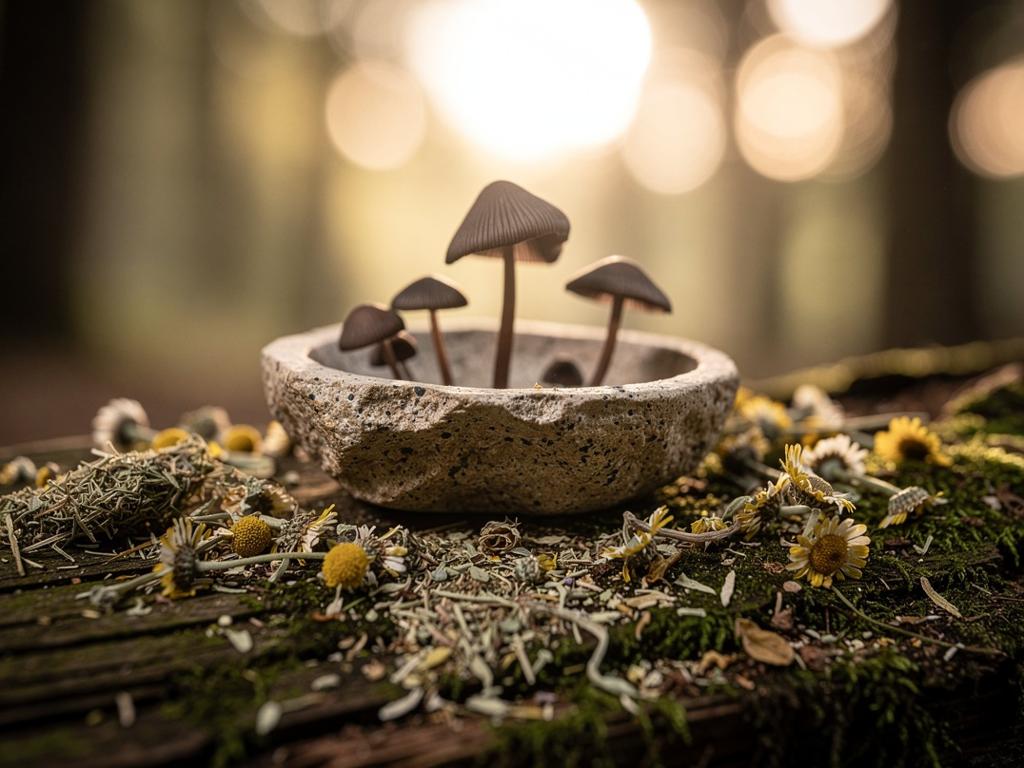
Four grams of dried psilocybin mushrooms sits right at the edge of what most people call a heroic dose. It's not quite the ego-dissolving five-gram territory Terence McKenna made famous, but it's well past the point where you can pretend you're still in control of the ride. If you're researching what a serious psilocybin experience actually feels like — maybe because you're considering a retreat, maybe because you're just curious — this is the terrain worth understanding before you commit. I've spent years around plant medicine ceremonies and psychedelic retreats, and I've watched a lot of people walk into their first high-dose mushroom experience thinking they knew what to expect. Most of them didn't. The dose changes everything. What works as a gentle afternoon at two grams becomes something else entirely once you double it. The come-up on four grams doesn't sneak up on you the way a smaller dose might. Somewhere around the 30-minute mark, the room starts breathing. Colors get a little too interested in themselves. That familiar body buzz shows up, but it's louder — a kind of electric hum that makes you want to sit down, then lie down, then close your eyes. Nausea is common at this dose. Some people throw up. In traditional contexts, purging is treated as part of the medicine — the body letting go of what it's been holding. If you're prepared for it, it's manageable. If you're not, it can feel like the trip is going wrong before it's really started. It isn't. It's just starting honestly. By the 60-minute mark, most people at this dose have stopped trying to describe what's happening. There's a moment — every experienced tripper knows it — where you realize the thing you swallowed an hour ago has fully taken the wheel. That surrender is either the hardest part or the whole point, depending on how you meet it. The peak of a four-gram psilocybin trip lasts roughly two hours, though your subjective sense of time will have very little to do with the clock. People commonly report: The confrontational part deserves its own paragraph. At recreational doses, mushrooms are mostly playful. At four grams, they're not really playful anymore. Whatever you've been avoiding tends to show up. That's why people who use psychedelics for healing — for depression, for addiction, for trauma — often gravitate toward these bigger doses. The medicine gets serious when you get serious with it. This is also why setting matters so much more at this level. A four-gram trip in the wrong environment — noisy, unsafe, with people you don't trust — can become genuinely difficult to navigate. In the right environment, with a sitter or facilitator you trust, the same dose can feel like the most important afternoon of your life. Readers researching psychedelic retreats often ask how high-dose psilocybin stacks up against ayahuasca, San Pedro, or ibogaine. They're not the same experience, though they overlap in useful ways. Ayahuasca tends to feel more directed — like there's an intelligence guiding the session, showing you what needs seeing. The visionary content is often more narrative, more imagistic. Mushrooms feel more elemental, more like being dissolved into something rather than shown something. Neither is better. They're different medicines with different personalities. San Pedro (huachuma) is gentler and longer — a day-long walk through your own psyche rather than a plunge. Ibogaine is in another category entirely: much longer, physically demanding, and used almost exclusively in therapeutic contexts for addiction recovery. If you're weighing options for a retreat, the choice usually comes down to what you're bringing to the work and how much intensity you can hold. The research emerging over the past few years has been remarkably consistent: substantial mystical-type experiences correlate with better therapeutic outcomes for depression, addiction, and end-of-life anxiety. Johns Hopkins, NYU, and Imperial College London have all published work pointing in the same direction. And here's the honest part — you don't reliably get those experiences at low doses. You get them at doses like this. That's the reason retreats offering psilocybin work almost always land in the three-to-five-gram range for a primary ceremony. Below that, the medicine tends to stay decorative. Above it, most people don't remember much and integration becomes harder. Four grams is a working dose for actual psychological movement. None of which means you should book something tomorrow. High-dose psilocybin has real contraindications — a personal or family history of psychotic disorders is a serious flag, and interactions with SSRIs, lithium, and certain other medications matter. A reputable retreat will screen for these things. If they don't, that's your first red flag. The tail end of a four-gram trip is often the most quietly beautiful part. Somewhere around hour four, the intensity releases and you're left in what people call the afterglow — a soft, warm, unusually clear state that can last well into the following day. Emotions run close to the surface. Music sounds better than it has in years. You may cry for no obvious reason and it will feel like relief. The real work, though, starts a few days later. This is what facilitators mean when they talk about integration — the slow process of translating what happened during the trip into changes in how you actually live. Without integration, a big psychedelic experience tends to fade into a story you tell at parties. With it, the experience becomes something that reshapes your life in the months and years afterward. Practical integration looks less mystical than people expect. It's journaling. It's talking to a therapist who understands psychedelics. It's noticing where your old patterns start creeping back and choosing differently. It's boring, in the best possible way. Only you can answer that. But here are the questions worth sitting with before you decide: The people I've watched benefit most from experiences like this are the ones who arrive with humility rather than expectations. They're not looking for enlightenment. They're looking to be honest with themselves. Mushrooms tend to reward that posture. If you've read this far and something about it feels like a call rather than a curiosity, that's worth paying attention to. For readers who want to explore this further in a supported setting, a range of vetted psilocybin retreats can be browsed on our marketplace here. Take your time with the decision. The medicine will still be there when you're ready.
How to Write About a Spiritual Journey Without Sounding Like a Brochure
The first time I tried to keep a real journal was on a long trip through a country where the sound of temple bells and diesel horns competed for the same airspace. I was chasing something — I just didn’t have a name for it yet. That gap, between the experience and the language for it, is where most spiritual travel writing lives or dies. If you’re heading off to a retreat, a ceremony, a monastery, or just a solo trip that you suspect will crack something open, learning to write about it honestly is one of the more useful skills you can pack. This piece is for people who intend to travel toward something meaningful — a plant medicine retreat, a silent sit, a pilgrimage, an ayahuasca ceremony deep in the Amazon — and who want to bring back words that actually hold the weight of what happened. Not Instagram captions. Not sales copy for the version of yourself you’re hoping to become. Something closer to the truth. Because memory is a liar, especially memory that’s been through something big. Within a week of a powerful ceremony, the sharp edges start softening. Within a month, you’re left with the story you’ve told other people, not the thing itself. Writing during and immediately after the experience is the only reliable way to keep the raw material intact. There’s a second reason, more practical. Integration — the slow work of folding a psychedelic or contemplative experience back into your regular life — depends on being able to look at what happened with some distance. A journal gives you that. Six months after an ayahuasca retreat, when you’re wondering whether anything actually changed, your own notes become the evidence. Sometimes reassuring. Sometimes uncomfortable. Always useful. And a third, if you’re inclined to share: good writing about the inner life is genuinely rare. Most of what gets published in this space is either clinical or gushing. There’s a lot of room in the middle for someone who can describe the smell of the mapacho smoke and the specific texture of a difficult thought without collapsing into either extreme. Old journalists have a saying: journalism is the first draft of history. Your travel journal is the rough draft of the first draft. Don’t try to write beautifully in the moment. That comes later, at a desk, with tea, after the dust has settled. What you want in the moment is specificity. The name of the plant. The exact time the ceremony began. What the shaman was wearing. The temperature. Who sat to your left. The song that repeated three times. The sentence a facilitator said that you kept returning to. These fragments feel unimportant while you’re writing them. Two years later they’re gold. Here’s a rough menu of what’s worth capturing while you’re still on the ground: Notice what’s missing from that list: your interpretations. Save those for later. In the moment, be a reporter. Get the facts. The meaning-making is a job you do at home, months out, when you have some perspective and the experience has stopped shouting at you. The biggest trap in writing about a spiritual journey is preaching. You had a huge experience. You want other people to have one too. You start using capital letters. You start saying things like the medicine in a tone that assumes the reader shares your reverence. Suddenly your piece reads less like a journal and more like a pamphlet handed to you at an airport. The fix is old and reliable: show, don’t tell. Instead of writing that a ceremony was profound, describe the moment a woman across the room started laughing quietly and couldn’t stop for twenty minutes. Instead of saying the icaros were beautiful, describe how the melody seemed to move around the maloca like a bird you couldn’t quite see. The reader will decide for themselves whether what you’re describing is profound or beautiful. That’s the whole point. This also cuts down on the tired vocabulary that plagues spiritual writing. Words like amazing, incredible, transformative, and life-changing do almost no work. They tell the reader you were moved without giving them anything to be moved by. A single concrete image will outlast a paragraph of adjectives. Spiritual travel writing lives or dies on point of view. You can’t write about an ayahuasca ceremony from the outside — the whole subject is what happened inside a specific person. So yes, you use “I.” You have to. But there’s a version of “I” that becomes suffocating. The narrator who’s always the hero of their own healing, who never doubts, who reports every insight as capital-T Truth. That narrator is exhausting to read. The better move is to let yourself be a character in your own piece — someone with blind spots, someone who was scared, someone who got the wrong idea and had to correct course. The most useful writers on the inner life tend to hedge in the right places. They’ll say “it seemed to me” or “I think what was happening was” or, most valuably, “I still don’t know what to make of this.” Uncertainty on the page is not weakness. It’s the sound of someone actually trying to tell the truth. Here’s one that works, especially if your writing tends to drift into abstraction. Set a timer for ten minutes. Write as many sentences as you can, each one starting with the words “Here and now I am…” and finishing however you want. The rules are simple. Sensory only — sights, sounds, smells, physical sensations, small emotions. No grand statements. No conclusions. Just a rolling inventory of the present moment. What comes out is usually the opposite of what you’d write if you were trying to be deep. And that’s exactly why it’s useful. It grounds prose that would otherwise float off into vague talk about energy and light and oneness. It gives the reader something to stand on. Try it on a retreat, before or after a ceremony, and see what you notice. Try it on a Tuesday morning at your kitchen table too — the exercise is not location-dependent. Every spiritual travel piece has two stories running in parallel. The outer story: you flew to Iquitos, you took a boat up the river, you stayed in a hut, you met a facilitator named Julia, you drank a bitter brown liquid at 8:37 p.m. The inner story: something in your chest cracked, an old resentment surfaced, you saw your father as a small boy, you cried for an hour, you slept. Beginners tend to write only the inner story, which becomes formless and hard to follow. Journalists tend to write only the outer story, which feels weirdly hollow given the subject matter. The interesting writing braids them together. The reader needs the outer scaffolding to make the inner experience feel real. And the outer scaffolding is only worth building if it holds up something interior. Practically, this means alternating. A paragraph on the room and the smoke and the sound of frogs. Then a paragraph on what moved through you. Then back to the room. This rhythm keeps the reader oriented — grounded in a place they can see, while also being invited into a state they might otherwise never access. The journal you keep on retreat is a raw material warehouse. Most of it will be useless. Some of it will be embarrassing. A small fraction will be extraordinary, and you won’t know which is which until months have passed and the emotional charge has faded. Give it time. Come back to your notes six months out, then a year out. The passages that still hit you are the ones worth building on. The ones that make you cringe are teaching you something about the version of yourself who wrote them — worth noticing, not worth publishing. If you decide to shape the material into something readable — an essay, a blog post, a chapter — expect to write around five drafts before it stops sounding either flat or precious. The first draft is confession. The second is context. The third is cutting. The fourth is finding the actual story you didn’t know you were telling. The fifth is honesty. One of the more grounding pieces of advice I’ve heard about spiritual experiences applies just as well to writing about them: even when you’re basking in bliss, seeing divine light, having conversations with entities you can’t explain to your accountant — don’t forget your social security number. Stay tethered. The best writing about these journeys keeps one foot in the ordinary world while the other roams. That contrast is the whole engine. If you’re gathering the nerve to book something and want to see what’s out there, curated ayahuasca and plant-medicine retreats can be browsed on our marketplace here. Whatever you end up choosing, bring a notebook. Cheap composition book, no pressure. Fill it badly. That’s where the real writing starts.
Stress and Heart Health: Simple Habits That Protect Both
When was the last time you actually paused mid-day and asked yourself what stress feels like in your body? Not in the abstract — literally, right now, in your chest, your jaw, your shoulders. Most of us don’t. We push through, refill the coffee, answer the next email, and wonder later why sleep won’t come. Here’s the thing your heart already knows: it isn’t just a pump. It responds to what’s happening in your head, often before your conscious mind catches on. A tense budget meeting, a rough conversation with your teenager, three nights of thin sleep — your cardiovascular system is tracking all of it in real time. Learning to listen to that feedback loop between mind and heart is one of the quieter skills in wellness. It doesn’t make a good Instagram post. But it does change outcomes. Acute stress is a feature, not a bug. Cortisol rises, norepinephrine spikes, your heart rate lifts, your attention narrows. That cascade is exactly what you want when a car swerves into your lane or you need to say something hard to a colleague. Ramp up, act, come back down. Beautiful system. The problem is that most modern stress doesn’t hand you the “come back down” part. The American Heart Association published a scientific statement a few years ago mapping how sustained stress and anxiety chew away at cardiovascular health through two overlapping pathways. One is behavioral — when you’re fried, you move less, eat worse, drink more, skip medications, and stop sleeping properly. The other is silent and physiological. Stress hormones stay dialed up, the sympathetic nervous system doesn’t stand down, low-grade inflammation creeps in, and arterial walls stiffen over time. The reverse pattern also holds. People who report a sense of purpose, meaning, and cautious optimism tend to have healthier daily habits, lower inflammatory markers, and better long-term cardiovascular outcomes. It isn’t magic — it’s that mood shapes behavior, and behavior shapes biology. Here’s a finding that surprised me the first time I read it. Researchers looked at how accurately people could sense their own physiological arousal — whether what they said they felt matched what their heart rate was actually doing. The people whose inner reports lined up with their bodies had better psychological well-being, fewer depressive symptoms, less anxiety, and lower inflammatory markers linked to heart disease. The people who tuned it out — the champion suppressors, the “I’m fine” crowd — didn’t get that protection. Ignoring the signal doesn’t turn off the biology. It just means you don’t adjust course. This is one of the reasons interoceptive practices — anything that trains you to feel what’s happening inside your body — keep showing up in the well-being literature. Breathwork, meditation, somatic movement, plant-medicine work done in a considered container. They all rebuild the wiring between what your body is doing and what your mind is willing to acknowledge. Stress doesn’t always show up wearing a name tag. Once a certain level of tension becomes familiar, it stops registering as tension. It just feels like Tuesday. Physically, watch for a resting heart rate that runs higher than your usual baseline, a heaviness or tightness in the chest, jaw clenching, tension headaches, and sleep that fractures around three in the morning. Digestive weirdness counts too — the gut is wired into all of this. Psychologically, look for the quieter states: chronic low-grade irritation, cynicism, a flat sense of dissatisfaction, a shortened fuse, a general loss of curiosity about things you used to care about. None of these need to be dramatic to matter. Mild and persistent is often the more damaging pattern. These aren’t two separate checklists, either. Physical symptoms and emotional states are two views of the same underlying process — a nervous system that hasn’t been given permission to downshift. You’re not going to eliminate stress. That framing sets you up to fail, then feel worse about failing. The realistic target is reducing the amount of time you spend in an elevated state and building better exit ramps. A few approaches have decent evidence behind them: The last one gets underweighted constantly. In a recent trial of a mindfulness program for adults living with congenital heart disease, the thing participants kept naming as most valuable wasn’t the breathwork or the meditation. It was feeling less alone. Community isn’t decoration on top of stress management — it’s a load-bearing wall. This is where the conversation gets interesting for anyone reading this while quietly wondering whether a retreat might help. A well-run ayahuasca, psilocybin, or contemplative retreat is essentially a concentrated dose of many of the ingredients above — breath, stillness, community, beauty, and a forced pause from the phone. The psychedelic piece adds something extra. Emerging research on psilocybin and ayahuasca suggests they can temporarily loosen the mental patterns — the rumination, the hypervigilance, the low-grade dread — that keep the sympathetic nervous system idling too high. Participants often report a lasting reduction in that background static months after the ceremony itself. Whether that translates to measurable cardiovascular benefit over years is still being studied, but the mechanism is plausible. A caveat worth stating plainly: ayahuasca in particular puts genuine cardiovascular load on the body during the ceremony — heart rate and blood pressure both climb. If you have existing heart conditions, uncontrolled hypertension, or take certain medications (especially SSRIs and anything with MAOI interactions), you need a proper medical screen before you go anywhere near a ceremony. A reputable retreat will require this and turn people away who shouldn’t drink. If a place doesn’t ask about your medications, that’s your answer about whether to book. Knowing a technique and reaching for it at 4:47pm on a bad Wednesday are two different skills. The follow-up data from that heart-disease mindfulness trial is encouraging on this front — three months later, two-thirds of participants still had lower anxiety, and more than three-quarters still had lower depression and better resilience. Small habits held. The trick is attaching new behavior to existing routine. Slow breathing while the coffee brews. Two minutes of silence before opening email. A short walk without the phone after lunch. Ten minutes of journaling before bed instead of the doom-scroll. Ambitious once-a-week attempts fail. Ordinary daily ones don’t. This is boring advice. It also happens to be true. Stress and heart health are one system, not two. The physical signs and the emotional ones are the same signal wearing different clothes. The single most protective move you can make isn’t adding another supplement to your morning stack — it’s learning to notice, honestly, what your body is telling you, and giving it permission to come back down. For readers exploring whether a longer, deeper reset might help — a plant-medicine ceremony, a silent retreat, or a structured integration program — a range of curated psychedelic and plant-medicine retreats can be browsed on our marketplace here. Choose carefully, screen honestly, and treat your heart like it’s listening. Because it is.

Why Rest Feels Impossible — and Why Your Nervous System Depends On It
Here's a strange thing about rest: most of us don't know how to do it. Not really. We say the word like we mean it, we book the weekend off, we sit down on the couch — and within four minutes we're checking email, folding laundry, or mentally rewriting tomorrow's to-do list. The body wants to stop. The mind won't let it. I've spent years around people preparing for and coming down from intense inner work — ayahuasca retreats, psilocybin ceremonies, ibogaine programs, silent sits — and one pattern shows up again and again. The people who struggle most in integration aren't the ones with the wildest visions. They're the ones who can't rest. They fly home, land in Monday morning, and try to metabolize a soul-level experience on four hours of sleep between meetings. Then they wonder why nothing sticks. If you grew up anywhere in the industrialized West — and especially in the United States — you were programmed from about age five to equate your worth with your output. Nobody sat you down and taught this. You absorbed it. You watched the adults come home with grocery bags in both arms and immediately start dinner. You watched them clean up after dinner, then answer work emails, then fold something, then finally sit down at 9pm with a glass of wine and their phones in their hands. That was the model. Rest was what you did when the work was done, and the work was never done. The vocabulary is telling too. Pay your dues. Put in the work. No rest for the weary. I'll rest when I'm dead — a phrase that always struck me as darkly literal. We reward exhaustion the way other cultures reward hospitality or artistry. Say you spent Saturday reading in bed and people cock their heads sympathetically, wondering if you're okay. Say you spent Saturday running errands, working out, meal-prepping, and answering client emails, and people nod with approval. You get it. You're on top of things. This wiring doesn't just make us tired. It makes us disconnected — from our bodies, from our actual needs, from any signal quieter than a full-blown breakdown. And that disconnection is where a lot of the deeper problems live: the anxiety, the low-grade depression, the addictions we use to take the edge off, the sense that we're sprinting through our own lives without ever quite arriving. Rest is not the same as sleep, though sleep is a big part of it. Rest is anything that lets your nervous system downshift from “on” to “off.” That might look like: Notice what's not on that list: scrolling. Scrolling is not rest. Your brain treats it like foraging — constant micro-decisions, tiny hits of novelty, unresolved emotional threads. You get up from an hour of scrolling more depleted than when you sat down. If you've ever collapsed onto the couch, opened Instagram, looked up two hours later and thought “why do I feel worse,” that's why. Here's where this connects to the world I usually write about. Ayahuasca, psilocybin, ibogaine, San Pedro — the master plants and psychedelic compounds people travel across continents to sit with — do a lot of their real work in the days and weeks after the ceremony ends. That window is called integration, and integration requires a nervous system that can actually rest. If yours is stuck in constant sympathetic activation, you'll take the download and file it somewhere you can't access. The insight fades. The old patterns creep back within a month. Facilitators who've been doing this a long time will tell you the same thing in different words: the medicine shows you the door, but rest is what walks you through it. This is why the best retreat centers build in slow mornings, hammock time, silent stretches, unstructured hours. It looks like padding. It isn't. It's the actual medicine of the container — teaching your system, sometimes for the first time in decades, that it's allowed to stop. The same principle applies to recovery work. People using plant medicine for addiction — whether that's ibogaine for opioid dependence, ayahuasca for alcohol use disorder, or psilocybin protocols for compulsive patterns — often find that the substance interrupts the loop, but rest is what keeps it interrupted. A nervous system that never gets to downregulate is a nervous system that will keep reaching for whatever quiets it. Sometimes that's a drink. Sometimes it's a screen. Sometimes it's another twelve-hour workday. The mechanism is the same. When I first tried to build real rest into my week, I was terrible at it. I'd sit down to watch a movie and within ten minutes I'd be folding laundry with the movie on in the background. I'd take a “walk” that was really a phone call. I'd lie down for a nap and start mentally drafting emails until my heart rate was back up and the nap was cooked. What worked, eventually, was treating rest like a skill I was rebuilding from scratch. A few things that helped: The first few weeks feel weirdly frantic. You may feel bored, then anxious, then irritated, then a bit sad. That's not a sign the rest isn't working — that's the backlog surfacing. Underneath all the busyness, there are usually feelings we've been outrunning. When you stop running, they catch up. Let them. This is the same emotional weather that surfaces in ceremony, actually, just at a lower volume and without the visuals. The counterintuitive part — the part nobody who worships productivity wants to hear — is that resting more makes you get more done. Not in a hustle-bro “optimize your recovery to maximize your output” way. In a real way. You focus better. You make fewer stupid decisions. You stop snapping at people you love. You catch problems earlier because you're actually present enough to notice them. You also start to hear your body again. That vague ache in your shoulder turns out to be information. The 3pm energy crash turns out to have a pattern. The persistent low mood turns out to be connected to something specific. You can only hear those signals when the noise dies down, and the noise only dies down when you stop generating it. For anyone circling the idea of a retreat — plant medicine, silent, whatever the format — I'd offer this: start practicing rest now, before you go. Not because you need to be worthy of the experience, but because the more comfortable your system is with stillness, the more the experience can actually land. You don't want your first taste of real quiet to happen three days into a ceremony week. Give yourself a head start. If exploring this territory further feels right, a range of ayahuasca, psilocybin, and other plant-medicine retreats can be browsed on our marketplace here — including several that build genuine rest and integration time into the structure rather than treating it as afterthought. And in the meantime: put the phone in the other room. Sit down. Stay there. The world will still be there in an hour, and you'll be better equipped to meet it.

Adaptogens Explained: A Practical Guide to Herbs That Balance Stress
Walk into any wellness shop and you'll find a shelf of powders promising to fix your stress, sharpen your focus, and generally make you a better human. Most of them wear the word adaptogen like a badge. But here's the thing — the label gets thrown around loosely, and a lot of what's sold under that banner doesn't actually qualify. If you're someone who's been drawn to plant medicine, maybe considering a psychedelic retreat, or simply trying to build a more resilient nervous system before you sit in ceremony, understanding adaptogens properly is worth the ten minutes it takes to read this. Adaptogens aren't magic. They're not the same as master plants like ayahuasca or San Pedro, though they share a lineage of traditional use going back thousands of years. What they are is a specific, scientifically defined category of herbs that help the body recalibrate under stress. And in a world where chronic stress is the water most of us swim in, that's not nothing. The term got coined in the 1940s by Soviet researchers, which is relatively recent even though the plants themselves have been in the pharmacopoeias of Ayurveda, Traditional Chinese Medicine, and Amazonian herbalism for millennia. To earn the label, a substance has to meet three criteria: it must be nontoxic at therapeutic doses, it must be nonspecific in its action, and it must have a systemically normalizing effect. It also needs to work through the sympathetic nervous system and the hypothalamic-pituitary-adrenal axis — the HPA axis, which is basically your body's command center for handling stress. That word nonspecific is where things get interesting. Most pharmaceuticals do one thing: lower blood pressure, raise serotonin, block histamine. Adaptogens do something stranger. A single herb can raise a hormone in one person and lower it in another, depending on which direction that person is out of balance. Think of them as internal thermostats rather than switches. If your cortisol is running high, they nudge it down. If it's crashed, they help bring it back up. This is also why the classification matters. Plenty of herbs are wonderful without being adaptogens. Chamomile is calming. Turmeric is anti-inflammatory. Neither is an adaptogen, and calling them one muddies the water for people trying to actually understand what they're taking. The HPA axis is a feedback loop between the hypothalamus, the pituitary gland, and the adrenals. When you perceive a threat — a deadline, a hard conversation, a spider — this loop fires off cortisol and adrenaline. Useful in short bursts. Corrosive over months and years. Adaptogens step into that loop and help regulate it, so the body responds proportionally to what's actually happening rather than sounding a five-alarm fire every time your email pings. They've been compared to vaccines, which is a strange but useful analogy. Part of how adaptogens work is by mildly mimicking stress at the cellular level, training the body to cope with the bigger stressors down the line. You're building resilience, not sedating the system. That distinction matters, because a lot of people come to these herbs expecting a xanax-like effect and get frustrated when nothing dramatic happens on day one. Most adaptogens require several weeks of consistent daily use before you'll notice much. This is not a category built for instant gratification. It's more like weight training for your endocrine system — slow, cumulative, and eventually undeniable. Here's where I'll be direct, because I've watched people make this mistake for years. Adaptogens are not a workaround for a broken life. If you're grinding through 70-hour weeks, sleeping four hours a night, and eating dinner at your desk, no amount of ashwagandha is going to save you. Worse, adaptogens can mask the warning signals that would otherwise force you to stop. Use them to support recovery, to smooth out particularly demanding stretches, to help your body come back to baseline after a hard training block or an emotionally heavy season. But pair that with the actual lifestyle work — sleep, boundaries, nutrition, movement, and honest conversations with yourself about why you're so depleted in the first place. This is especially true if you're preparing for or integrating from a plant-medicine experience, where the whole point is to hear what your body and psyche are telling you. There's a small, well-studied group of true adaptogens. Here are the ones you'll encounter most often and what they actually do. The most popular adaptogen in the world, and for good reason. It normalizes cortisol whether yours is too high or too low, calms an overactive stress response, supports muscle tone, improves cardiovascular endurance, and has a well-documented effect on fertility and libido. The catch: most people take too little of it. Effective doses tend to sit around two to three grams daily, taken consistently for weeks or months. A sprinkle in your smoothie once a week isn't going to move the needle. A calming adaptogen despite its reputation as an energy booster. It's a favorite for people recovering from burnout, athletes rebuilding after hard training cycles, and anyone whose engine has been running too hot for too long. It nourishes the endocrine, immune, and nervous systems simultaneously. This berry has a two-fold effect that's uncommon in the plant world — it sharpens mental clarity and reaction time while also easing symptoms of stress. Think of the alert-but-relaxed state you get from L-theanine, except deeper and more restorative. Traditional Chinese medicine treats schisandra as a rejuvenating herb, and modern research broadly agrees. Three of the nine adaptogens are ginsengs: eleuthero (Siberian ginseng), American ginseng, and Panax ginseng, sometimes called Asian ginseng. They span a spectrum from mildly stimulating to fairly intense. Eleuthero is the gentlest and generally safe for most people. Panax is powerful and better suited to older adults or those who need a more assertive lift. All three work partly by modulating serotonin and dopamine and by reducing systemic inflammation. The mountain herb from Siberia and Scandinavia, known for boosting mental and physical endurance and cutting through stress-related fatigue. It supports mitochondrial function and oxygen use at the cellular level, which is why athletes love it. Timing matters: rhodiola is best in the morning or pre-workout. Take it too late and you may find yourself staring at the ceiling at 2 a.m. Anxious types sometimes find it too stimulating — start low. Not technically a plant but a mineral-rich resin that seeps from Himalayan rocks. It's been used in Ayurveda for centuries as a rejuvenator. Modern applications include supporting testosterone, stabilizing blood sugar, addressing chronic fatigue, and boosting cognitive function. It pairs particularly well with ashwagandha for men dealing with hormonal decline. Sourcing matters enormously — cheap shilajit can be contaminated, so buy from reputable suppliers who publish third-party testing. A few practical notes from years of watching people either succeed or spin their wheels with these herbs. If you're preparing for a plant-medicine ceremony, be careful about layering adaptogens close to the experience itself. Most facilitators will ask you to clear supplements from your system in the days leading up to ceremony, and that includes adaptogenic herbs. Talk to whoever's running your retreat. In the integration weeks afterward, though, adaptogens can be genuinely supportive — helping the nervous system settle back into equilibrium after the intensity of the work. Adaptogens sit in an interesting middle ground between everyday wellness and deeper plant medicine. They won't crack you open the way ayahuasca or psilocybin might. They won't confront you with the parts of yourself you've been avoiding. What they will do is help your system hold steady under pressure, recover faster from what wears it down, and generally give you a bit more capacity to show up for your own life. That's meaningful work, but it's foundational rather than transformational. The transformation, if it comes, tends to come from the harder stuff — the honest look at your habits, the therapy, the ceremony, the year you finally stopped drinking, the conversation you kept postponing. Adaptogens are a good companion on that road. They're not the road itself. For readers whose curiosity about plant medicine runs deeper than herbal tea, a range of ceremonies and plant-medicine retreats can be browsed on our marketplace here.
Craving More Stories?
Join our ShopAyahuascaRetreats newsletter for the latest updates on thrilling
destinations and inspirational tales, delivered straight to your inbox!
We value your privacy. Your email address will never be shared or published.

Grounding Tricks That Actually Work Before a Plant Medicine Ceremony
The hour before an ayahuasca ceremony is a strange kind of quiet. You've done the dieta, you've written your intention, you've maybe hugged a stranger who's about to become your ceremony neighbor for the night — and then your nervous system decides it would like to leave the building. Heart racing. Jaw locked. That specific brand of anxious anticipation that no amount of deep breathing seems to touch. This is where the small tricks earn their keep. Not the big spiritual frameworks. Not the philosophy. The little mental and physical hacks that pull you back into your body when your mind starts drafting escape routes. Everyone who spends time around ayahuasca, psilocybin, or other master plants eventually collects a personal toolkit of these — and the honest truth is that most of them are unglamorous. They work anyway. What follows is a rundown of the ones facilitators, integration coaches, and long-time ceremony sitters actually use. Some are for the moments before medicine is served. Some are for the peak of a hard passage. Some are for the raw days afterward, when integration is doing its slow work and daily life feels louder than it used to. Before we get to the toolkit — a quick word on why you need one. When you're preparing for a psychedelic experience, your body reads the situation the way it would read any other high-stakes event. Cortisol climbs. Breathing shortens. The prefrontal cortex, which normally keeps everything neatly organized, starts second-guessing every decision you've ever made about anything. None of this means something is wrong with you. It means your system is doing its job. The tricky part is that going into a ceremony already flooded with anxiety usually means a rougher first hour with the medicine. Ayahuasca in particular has a way of amplifying whatever state you bring to the mat. Come in tight, and the vine will spend a while loosening you. Come in grounded, and you tend to get to the useful material faster. So the goal of these hacks isn't to eliminate nerves — nerves before a psychedelic ceremony are entirely appropriate. The goal is to keep you from spiraling into a state that costs you the first three hours of your journey. Most anxiety is a runaway thought loop that started somewhere in the head and moved into the chest. Physical interventions short-circuit that loop faster than talking yourself down ever will. A few that actually work: The theme across all of these: give the body a bigger, more immediate signal than the anxiety is giving you. Your nervous system can only really pay attention to one thing at a time. Some of the most useful pre-ceremony work happens between the ears. Not through willpower — through small, specific redirections. One that I've watched work for people who otherwise cannot meditate: name five things you can see, four you can hear, three you can touch, two you can smell, one you can taste. The classic 5-4-3-2-1 grounding sequence. It's boring, which is exactly why it works — it occupies just enough of the thinking mind to stop the anxiety spiral without demanding any kind of spiritual composure you don't have. Another: write the worst-case scenario down. Sounds counterintuitive. Isn't. When you actually put on paper the thing you're afraid of — I'll purge and be embarrassed, I'll cry in front of strangers, I'll see something terrible — it stops rattling around your head. Ceremony participants who do this before they arrive tend to walk in noticeably calmer. And a third, which is the one I use myself: set a very small intention. Not a life-changing one. Not “reveal my purpose” or “heal my mother wound.” Something like “notice what my body is doing” or “stay curious.” Master plants respond well to small doorways. Ambitious intentions can turn into performance anxiety fast. Here's where it gets interesting. Most of the hacks that work outside ceremony don't work inside it — the medicine is stronger than your grounding technique, and trying to think your way out of a difficult passage generally makes it worse. But a few small things do help: A specific note for people considering ayahuasca for addiction, depression, or trauma work: the hardest passages are often the most important ones. This doesn't mean you should white-knuckle through terror — it means that a wave of grief, nausea, or memory that feels intolerable in the moment is often exactly the material you came for. The hacks above are for staying present with it, not for escaping it. The days after a psychedelic ceremony are their own animal. You feel raw. Small things — a rude cashier, a text from your ex, the wrong podcast — can knock you sideways in ways that would have barely registered a week earlier. This is normal. It also means integration deserves its own toolkit. A few that consistently help: The people who get the most out of plant medicine, in my experience, aren't the ones who have the most dramatic ceremonies. They're the ones who take integration seriously — who use the small hacks to protect the opening, rather than trying to sprint back into their old life on day three. None of these tricks replace the bigger work. Choosing a reputable retreat, being honest about your medications and mental health history, doing the dieta properly, having an integration plan before you leave — those matter more than any breathing technique. The hacks are the trim, not the frame. But the trim matters. A ceremony where you spent the first three hours grounded because you knew how to work with your own nervous system is a different ceremony than one where you spent those hours in a panic loop. Small tools, real difference. If you're weighing a retreat and starting to build your own toolkit, a curated selection of ayahuasca and plant medicine retreats can be explored on our marketplace here — worth a slow look rather than a quick booking. The right container is what makes the hacks work in the first place.
A Grounding Practice for a Busy Mind: Seeing, Hearing, Sensing
There's a particular kind of mental noise that shows up when you're seriously considering a plant-medicine retreat. Half research, half rumination. You're reading trip reports at 1 a.m., pricing flights to Iquitos, wondering whether ibogaine or ayahuasca might actually shift something you've been dragging around for a decade. And underneath all of that — the busy mind. The one that won't sit still long enough to hear itself think. This piece is about a small, portable grounding practice that helps with exactly that. It's not glamorous. It won't unlock a mystical download. What it will do is give your attention something honest to do when everything else feels loud — including in the weeks before a ceremony and the tender days that follow one. Anyone who's spent time around ayahuasca, psilocybin, or the broader family of master plants will tell you the same thing: the medicine is only half of it. The other half is the nervous system you bring into the room. If you arrive at a retreat with a scattered, over-caffeinated, doom-scrolled mind, you're going to spend a good chunk of your first ceremony just untangling. That's normal. It's also avoidable, at least partially, with a bit of prep work. Grounding practices are the boring backbone of psychedelic healing. Facilitators talk about set and setting, dieta and intention, but underneath all of that lives a more basic skill: being able to return to your body when your mind runs off. That's what this practice trains. And it trains it in a way that doesn't require an app, a cushion, or a spare hour. Here's the honest bit — most people who sign up for a retreat have never really meditated. They've tried, felt bad about it, and quietly stopped. That's fine. This isn't meditation in the intimidating, cross-legged, hour-a-day sense. It's a technique. A way of nudging your attention into three simple lanes and letting it rest there. The whole thing rests on rotating your awareness through three doorways of experience: what you see, what you hear, and what you feel in your body. Each doorway anchors you in the present in a slightly different way, and the movement between them keeps the mind engaged enough that it doesn't wander off into next Tuesday's meeting. Try it now if you have five minutes. If you don't, bookmark it. But five minutes is really all this asks. That's it. No mantras, no visualisations, no chakras to track. The elegance of the practice is that it uses what's already happening. You're always seeing something, hearing something, feeling something. The practice just asks you to notice. A fair question. Why is a piece on a psychedelics site talking about grounding drills? Because integration — the part everyone underestimates until they've done a retreat — depends on this skill. When you come back from ceremony carrying insights that felt luminous in the maloca but slippery on the plane home, the difference between an experience that reshapes your life and one that fades into a nice story is your capacity to return to the present. Grounding is what makes integration possible. Without it, the material dissolves. The same goes for the ceremony itself. Anyone who's sat with ayahuasca knows there are moments — usually around the two-hour mark — when the brew asks you to surrender something. Fear, grief, an old story about yourself. If your only mode of coping is thinking your way out, you'll struggle. But if you've practised dropping into sensory experience, you have another door. You can hear the icaros. You can feel the mat under your back. You can let the visions do what they came to do. Facilitators I trust often say that the people who get the most from a retreat aren't the ones with the most dramatic ceremonies — they're the ones who've built even a modest daily practice beforehand. This is a candidate for that practice. Here's how it plays out in the real arc of a plant-medicine journey. Before. In the weeks leading up to a retreat, most people oscillate between excitement and low-grade panic. You've committed money and time. You've told a few close friends and stayed vague with everyone else. Your mind is running scenarios. Practising seeing-hearing-sensing for even five minutes a day does two things: it starts to build the muscle of returning to now, and it gives your nervous system regular small doses of settling. That matters when you land in the jungle and everything is unfamiliar. During. Between ceremonies at a retreat, there's usually a lot of downtime — hammocks, journaling, the occasional cold shower. This practice is perfect filler. It's also useful during the ceremony itself, in the calmer stretches, as a way to keep an anchor thrown while the deeper currents move. After. The re-entry period is where most integration lives or dies. You've had experiences you can barely articulate, and suddenly you're back in traffic, back at your desk, back to a partner who wasn't in the room with you. The busy mind returns with reinforcements. Seeing, hearing, sensing gives you a way to pause without needing to explain yourself to anyone. This practice won't fix a serious mental health crisis. It won't replace a trained therapist or a proper integration circle. If you're carrying complex trauma, and especially if you're considering plant medicine partly because of that trauma, please put professional support in place alongside whatever you do. Grounding is a supplement, not a substitute. Also: don't judge the practice by how it feels the first time. Most people's first attempts at anything meditative feel like nothing. That's not failure — that's just what the beginning of a new attentional habit feels like. Give it two weeks of five minutes a day before deciding whether it does anything for you. Try it in different environments too. Doing this indoors, with a fridge hum and the click of a heater, produces one flavour. Doing it in a park, or on a porch at dawn, produces something else entirely. Retreat centres in the Amazon or the Andes are dense with sound and light — the practice takes on a very different quality there. Notice the contrast. It's part of the training. Grounding practices like this one are, in a way, a quiet test. If you can carve out five minutes a day to sit with your own attention, you're already doing some of the work a retreat will amplify. If you can't — or you notice fierce resistance to even trying — that's useful information too. It tells you something about what the ceremony will be asking of you. None of this is meant to talk you into or out of anything. Plant medicine is a serious decision and deserves a serious research process. But the readiness question is real, and it's answered in small daily moves more than in dramatic ones. If, after sitting with this for a while, you find yourself genuinely ready to look at what's out there, a curated selection of ayahuasca and plant-medicine retreats can be browsed on our marketplace here. Whatever you decide, come back to seeing, hearing, sensing when the mind gets loud. It's older than any tradition and simpler than any technique. And it's always available — which is more than can be said for most things worth having.
What Positive Mental Health Actually Means for People Considering Plant Medicine
Most people who start looking into an ayahuasca retreat aren't chasing enlightenment. They're tired. Tired of the low-grade depression that never quite lifts, the drinking that started as fun and became a fixture, the trauma that keeps rerouting their lives in small ugly ways. They want to feel better — and they've noticed that “not depressed anymore” isn't quite the same thing as “alive.” That gap — between the absence of illness and the presence of something worth calling flourishing — is what researchers have been trying to pin down for decades. And a recent international consensus finally put some structure around it. If you're considering plant medicine or a psychedelic retreat, this framework is genuinely useful. It gives you a way to think about what you're actually hoping to move toward, not just what you're trying to escape. For most of the 20th century, psychiatry ran on a simple assumption: mental illness and mental health sit at opposite ends of one line. Reduce symptoms, and health improves. It's clean, it's intuitive, and it turns out to be wrong — or at least badly incomplete. Researchers like Corey Keyes reframed the whole thing as two separate continua. One tracks mental illness (present or absent). The other tracks positive mental health, running from languishing to flourishing. The important part: those two lines move independently. You can have zero clinical symptoms and still feel hollow — no purpose, no real connection, no vitality. You can also be actively wrestling with depression and still have deep relationships, meaningful work, and a functioning sense of self. Anyone who has sat across from someone freshly out of a ceremony knows this intuitively. The medicine may have knocked out a symptom cluster — the intrusive thoughts, the cravings, the numbness — but the person still has to build a life worth staying sober for. Symptom reduction is the floor. Flourishing is the actual project. In 2025, a research team ran a structured Delphi process — a rigorous method for building expert consensus — with 122 specialists across 11 disciplines. They built on an earlier review of 155 different measures of well-being, which had originally identified 410 overlapping dimensions and boiled those down to 21 candidate themes. After three rounds of expert rating and refinement, 19 dimensions cleared the 75% agreement threshold. What emerged is not a theory. It's a taxonomy — a classification system with shared language. That distinction matters. Instead of arguing about whether Ryff's model beats Diener's or Deci and Ryan's, researchers and clinicians now have a common vocabulary. And the framework is explicitly multidimensional: you're not supposed to max out every category. People flourish differently depending on values, culture, life stage, and circumstance. Six dimensions cleared the highest bar, above 90% expert agreement: The other 13 dimensions — things like resilience, vitality, self-esteem, sense of safety, engagement, personal growth — landed between 75% and 89% agreement. All of them count. None of them, on their own, is enough. Here's where the taxonomy gets practically interesting. In the final Delphi round, experts were asked whether each dimension functions more as a driver (something that produces flourishing) or an outcome (a result of it). Autonomy and a sense of safety leaned toward the driver side. Happiness and life satisfaction leaned toward the outcome side. That's not a semantic distinction — it changes what you should actually work on. Think about it this way: if you go into an ayahuasca ceremony hoping to “feel happier,” you're chasing an outcome. Outcomes don't respond well to being chased directly. What ayahuasca and other master plants often do — when the container is good and the integration is real — is nudge the drivers. People come out with a clearer sense of what they actually value (autonomy). They report feeling safer in their own bodies for the first time in years (sense of safety). They see their own story differently and can hold it without flinching (self-acceptance). The happiness, when it comes, tends to arrive as a byproduct. This is why the retreats that work bother with things like preparation calls, dieta protocols, one-on-one integration sessions, and follow-up months later. They're not selling you a peak experience. They're trying to shift the drivers so the outcomes have somewhere to grow. Before you book anything, it's worth sitting down honestly and asking which of these 19 dimensions feel thin in your life right now. Not which ones you'd like to brag about — which ones actually feel underfed. This is more useful than the vague “I want to heal” framing that most people arrive with. A few practical prompts: Whatever you find, bring it into your conversation with any retreat you're vetting. A serious facilitator will want to hear it. They'll ask about your history, your medications, your intentions, your support system back home. If they don't — if they're just taking your credit card and telling you the jungle will handle the rest — that's a red flag. The taxonomy is useful here too as a diagnostic: retreats that only talk about “bliss” and “transformation” are pitching an outcome. Retreats that talk about integration, community, values clarification, and long-term work are aimed at drivers. Ayahuasca, psilocybin, ibogaine, San Pedro — these medicines don't manufacture flourishing. What they seem to do, in the best cases, is dissolve some of the obstacles to it. The ruminative loop that kept you stuck. The addictive pattern that had colonized your evenings. The trauma memory you couldn't approach without shutting down. When those obstacles loosen, the underlying drivers — meaning, connection, autonomy — often have room to breathe again. But the medicine doesn't do the building. That part is yours, and it happens in the boring weeks and months after the ceremony ends. This is why people who treat a retreat as a one-shot fix are often disappointed six months later, while people who treat it as the opening move in a longer game tend to see actual change. The taxonomy gives you a map for that longer game. You know what you're trying to grow. You know it's more than one thing. You know some pieces will come first and others will follow. For readers who want to take this further, a range of curated plant-medicine and psychedelic retreats can be browsed on our marketplace here — worth exploring alongside your own honest inventory of which dimensions of flourishing you're actually trying to build.

Eli Lilly Buys AtaiBeckley for $3.8B: What It Means for 5-MeO-DMT and Psychedelic Medicine
Something significant just happened in the psychedelic world, and if you're someone who's been quietly researching plant medicine — maybe eyeing a 5-MeO-DMT retreat, maybe wondering whether the whole field is about to change — you should know about it. Eli Lilly, the largest pharmaceutical company on the planet, has agreed to acquire AtaiBeckley for as much as $3.8 billion. That's not a typo. Big Pharma has officially placed its biggest chip on the psychedelics table. AtaiBeckley's lead compound is an intranasal formulation of 5-MeO-DMT — the same molecule found in the venom of the Sonoran Desert toad and in certain plants used ceremonially across South America. Their candidate, BPL-003, is heading into Phase 3 trials for treatment-resistant depression. The deal also includes VLS-01, a DMT-based candidate. And the price tag makes every previous psychedelic acquisition look modest. Lilly is paying $6.75 per share upfront in cash for all outstanding shares, plus up to $2.50 per share in milestone payments tied to development and regulatory approval. Do the math and you get roughly $2.8 billion in cash on day one, with another billion or so in potential milestone-based payouts depending on how things unfold in the clinic and at the FDA. The milestones are structured like this: a payout when VLS-01 hits Phase 3, another when BPL-003 secures FDA approval and DEA rescheduling, and a third when VLS-01 does the same. Each has a time limit — four, five, and seven years respectively. Miss the window, no bonus. To put the scale in perspective: earlier this year Otsuka acquired Transcend Therapeutics for up to $1.225 billion. Late last year, AbbVie picked up Gilgamesh's bretisilocin program for up to $1.2 billion. The AtaiBeckley deal is roughly three times the size of either. It's the largest psychedelic buyout ever, and it's not close. You might be thinking: cool, big finance news, but I'm trying to decide whether to sit in ceremony in Mexico next spring. What does a pharma deal have to do with me? More than you'd think. When a company like Lilly moves in, a few things start happening in parallel. Clinical trials accelerate. Regulatory conversations get serious. Insurance-covered psychedelic-assisted therapy inches closer to reality in the United States. And — this is the part that matters most for the retreat world — the cultural conversation shifts. Substances that were considered fringe five years ago start showing up in mainstream psychiatric discussions. That has knock-on effects for legality, for public perception, and eventually for how easy or hard it is to legally access these experiences. There's also a quieter effect. As pharma standardises dosing, formulation, and clinical protocols, some seekers will still want the traditional container — the shaman, the maloca, the icaros, the community — that no clinic can replicate. Others will prefer the medicalised route. Both paths are widening. The retreat world isn't going away; it's about to sit alongside a very different offering. Since Lilly's press release conspicuously avoided the word "psychedelic" (which tells you something about how the messaging will be shaped going forward), let's be plain about what this molecule is. 5-MeO-DMT is a naturally occurring tryptamine. It's found in the parotid gland secretions of the Bufo alvarius toad, in the bark of certain Amazonian trees, and in the seeds of Anadenanthera plants used in traditional Yopo snuff. In ceremonial contexts, it's often called "the God molecule" — not because anyone's making a theological claim, but because participants routinely describe experiences of ego dissolution and unity so total that ordinary language fails. The experience is short. Typically five to twenty minutes at peak, compared to ayahuasca's four to six hours. But short doesn't mean easy. 5-MeO-DMT is often described as more intense than any other psychedelic, and it demands rigorous preparation, skilled facilitation, and thoughtful integration afterward. This isn't a substance to approach casually or alone. The response within the psychedelic community has been split, and honestly, that's how it should be. This kind of deal is genuinely double-edged. If you're actively researching a psychedelic retreat, here's the honest read. Nothing about today's news changes what you're weighing this week. 5-MeO-DMT retreats — most of them working with synthetic material rather than toad secretions these days, for ethical and ecological reasons — still operate in the same legal gray zones they always have. Same with ayahuasca, psilocybin, and ibogaine retreats. What might shift over the next three to five years is the broader landscape. Expect more clinical trials recruiting participants. Expect more state-level regulatory experiments (Oregon and Colorado are already there for psilocybin). Expect more mainstream media coverage that alternates between breathless enthusiasm and moral panic — often in the same publication. For the individual decision you're making right now, the fundamentals haven't changed. If you're considering plant medicine for depression, addiction, trauma, or a stuck life pattern, the questions to ask a retreat are the same ones that mattered last year: A pharma acquisition doesn't answer any of these. Only the retreat can. Zoom out for a moment. Twenty years ago, the idea that a compound like 5-MeO-DMT would be entering Phase 3 trials backed by Eli Lilly would have sounded absurd. Ten years ago, MAPS was still fighting for MDMA to be taken seriously. Today, the mainstream psychiatric establishment is quietly rearranging itself around psychedelic-assisted therapy. None of this means the medicalised path is the right one for everyone. Plenty of people find deeper healing in a traditional ceremonial setting than they ever would in a clinical suite with fluorescent lighting and a clipboard. The master plants — ayahuasca, San Pedro, iboga, psilocybin mushrooms, and yes, 5-MeO-DMT when treated with appropriate reverence — have been teaching humans about themselves for thousands of years, and they'll keep doing so regardless of what happens on the Nasdaq. But it's fair to acknowledge that we're living through a genuine turning point. The question isn't whether psychedelic medicine will become part of mainstream mental health care — it's how, on what terms, and who benefits. Deals like this one shape those answers. If you've been sitting with the question of whether a retreat is right for you, this news is neither a green light nor a red one. It's context. Take it in, keep researching, and trust your own timing. For readers who want to explore what's actually available right now, a curated selection of 5-MeO-DMT, ayahuasca, and other plant-medicine retreats can be browsed on our marketplace here.
What Psychedelics Actually Feel Like: An Honest Look Inside the Experience
Ask ten people what a psychedelic trip feels like and you’ll get ten wildly different answers. Some talk about geometric visuals dancing behind their eyelids. Others describe crying for three hours over something their father said in 1997. A few just shrug and say, “I felt like myself, but more.” None of them are lying. That’s the strange thing about psychedelics and ayahuasca — the experience refuses to sit still long enough to be described cleanly. If you’re considering a retreat, you’ve probably already watched the documentaries and read the Reddit threads. And you’ve probably noticed that most of them either oversell the mystical fireworks or underplay how physically strange the whole thing can get. So let’s talk about what actually happens in the body and mind when you drink the brew, eat the mushrooms, or sit down for a San Pedro ceremony. Not the marketing version. The real one. Almost every psychedelic experience begins with a peculiar limbo. You’ve taken the medicine. Nothing’s happening. You start wondering if you got a weak batch, or if you’re somehow immune, or if this is going to be the world’s most expensive nap. Facilitators call this the doubt window, and it’s so common it’s basically a rite of passage. Then, quietly, something shifts. It’s not a curtain being pulled back — it’s more like the room’s volume changing by two clicks. Sounds get a little rounder. Your body feels a bit heavier, or lighter, depending on the medicine. With ayahuasca, most people notice a warmth in the stomach and a metallic taste that just won’t leave. With psilocybin, it’s often a giggly restlessness and a sudden interest in the ceiling. With ibogaine, it’s a low buzzing hum that seems to come from inside your bones. None of this feels dramatic yet. That’s the point. Psychedelics don’t kick down the door — they let themselves in through a window you didn’t know was open. Here’s something people rarely mention: psychedelic experiences are deeply physical. Long before you’re contemplating the nature of the universe, you’re dealing with a body that suddenly feels unfamiliar. With ayahuasca specifically, purging is part of the deal. That means vomiting, sometimes crying, sometimes diarrhea, sometimes shaking. Shamans in the Amazon consider the purge medicinal — the body releasing what the mind has been holding. It’s not pleasant, but participants often report an odd relief afterwards, as if something they didn’t know they were carrying just left the building. If a retreat tells you their ayahuasca doesn’t make anyone purge, be suspicious. That’s not a feature. That’s marketing. Other medicines have their own physical signatures: The physical stuff matters because it’s where the resistance lives. Fighting the body sensations is what turns a difficult trip into a truly bad one. Learning to sink into them — even the uncomfortable ones — is half the work. This is the part that’s hardest to translate. Language was built for the ordinary world, and psychedelic states aren’t ordinary. But a few patterns show up again and again in what people describe after retreats. The first is a loosening of the internal narrator. That constant inner voice — the one running commentary on your day, your worries, your grocery list — gets quieter. Sometimes it goes silent completely. In its place, you notice things you hadn’t noticed in years. The specific texture of a memory. The way a piece of music actually feels rather than just sounds. The fact that you’ve been holding your shoulders up around your ears since roughly 2019. The second is emotional access. Feelings that were locked in a filing cabinet somewhere suddenly walk right into the room. Grief you postponed. Anger you rationalized. Tenderness you thought you’d outgrown. This is why plant medicine work is so often paired with trauma healing and addiction recovery — the medicine doesn’t create these feelings, it just removes the door you’d been holding shut. The third is what people clumsily call “ego dissolution.” At higher doses, the sense of being a distinct self can loosen or, in stronger experiences, vanish. This isn’t as terrifying as it sounds when you’re prepared. Most participants describe it as peaceful, even funny — the realization that the self you’ve been defending so hard your entire life is more of a costume than a fortress. Depends on the medicine and the dose. Ayahuasca visuals are famous for a reason — geometric patterns, jaguars, serpents, city-like structures made of light. But they’re not universal. Plenty of experienced drinkers report mostly emotional or bodily journeys with minimal visual content, especially in earlier ceremonies. Psilocybin tends to produce softer, more organic visuals: breathing walls, faces in wood grain, colors that seem lit from inside. San Pedro is often described as visually gentle but emotionally vast. Ibogaine produces something closer to a waking dream — long, cinematic replays of memory, sometimes decades of your life running in reverse. Here’s the honest bit: if you’re signing up primarily for the visual show, you’ll probably be disappointed. The visuals are wallpaper. The real event is what the visuals are pointing at — a feeling, a memory, a question you’ve been avoiding. A four-to-six-hour ayahuasca ceremony isn’t four to six hours of revelation. There are long stretches where nothing much is happening. You’re lying on a mat. You’re slightly uncomfortable. You’re wondering when the next wave will come, or whether you should get up and go to the bathroom, or whether the person two mats over is okay because they’ve been groaning for a while. These stretches are part of the medicine. They’re where restlessness lives, and restlessness is data. What you fidget about in ceremony is often exactly what you fidget about in life. Facilitators worth their salt won’t rescue you from these moments — they’ll let you sit in them, because sitting is the whole practice. Reading trip reports is fine. Watching documentaries is fine. But nothing prepares you like doing the practical work in the weeks before ceremony. A few things that reliably help: Here’s something the retreat brochures underplay: the trip isn’t the healing. The trip is the diagnostic. The healing happens in the ordinary weeks that follow, when you have to actually apply what you saw. People come back from ayahuasca or psilocybin retreats glowing. Two weeks later, some of them are back to their old patterns because they never did the integration work — journaling, therapy, community, small daily practices. The plant medicine cracked the door open. Walking through it is on you. This is why serious retreats now include integration calls, aftercare groups, and referrals to therapists trained in psychedelic integration. If a retreat you’re looking at doesn’t mention aftercare, that’s worth asking about before you book. The other thing worth saying honestly: not every experience is transformational. Some people have a challenging night and don’t receive obvious insight. Some feel like nothing much happened at all. Both are legitimate outcomes, and both are often followed by unexpected shifts weeks or months later, once the mind has finished digesting whatever it was shown. If any of this resonates and you’re starting to think seriously about a ceremony, a wide range of vetted ayahuasca and plant-medicine retreats can be explored on our marketplace here. Read the descriptions carefully, ask questions before you book, and trust the discomfort of not choosing quickly — that hesitation is part of the preparation too.
Dreaming of a Psychedelic Retreat?
We have the best deals and offers from thousands of organizers all over the world! Get them into your mailbox every week!
We value your privacy. Your email address will never be shared or published.
