 English
 Deutsch
 Français
 Nederlands
 Español


Reset. Heal. Grow.
The Light That's Always Been There: A Buddhist Take on Mental Hygiene
Picture an oil lamp burning on a table. The flame inside the glass chimney is steady, patient, unchanged. But over the years, soot builds up on the inside of the glass — a fine dark film that thickens quietly until the room dims. The flame hasn't weakened. The light hasn't gone anywhere. It's just having a harder time reaching you. That image, borrowed from centuries of Buddhist commentary, is one of the more honest pictures of mental life I've come across. Most of us aren't broken. We're smudged. And the practice — whether that's meditation, chanting, breathwork, a plant medicine retreat, or just ten minutes of quiet in the morning — isn't about installing a brighter bulb. It's about cleaning the glass. There's a stubborn myth that some people are just born with good wiring — calm, steady, resilient — and the rest of us got the factory seconds. It's a myth that keeps a lot of people from ever seeking help, because to seek help is to admit you're one of the broken ones. But that framing collapses the moment you compare it to physical health. Nobody thinks eating well and exercising are only for people who are already fit. We accept that physical health takes upkeep. The body needs sleep, movement, decent food, an occasional check-up. The mind is no different, and yet we treat mental care as a rescue operation rather than a maintenance practice. My own nervous system runs hot under pressure — anxiety wired straight into the circuit board. What I've learned is that a daily practice isn't there to fix me. It's there to keep the glass clean so I can actually see what's in front of me. The tools that work aren't secret and aren't limited to any one tradition. Sitting with the breath. Contemplative reading. Long walks without a podcast. Chanting. Silent retreats. For a growing number of people, ceremonial work with plant medicine — ayahuasca, psilocybin, San Pedro — becomes another kind of scrubbing cloth. Different textures, same job. My high school soccer coach used to say that innate talent was mostly a story people told themselves. What mattered, he insisted, was touches on the ball. Thousands and thousands of them. You didn't get better by reading about footwork. You got better by putting your foot on the ball, over and over, until your body knew what to do without your brain interfering. Contemplative practice works the same way. You can read every book on mindfulness ever published and still be a mess when your boss corners you in the hallway. You can watch a hundred podcasts about ayahuasca and know nothing about what it actually feels like to sit through a five-hour ceremony. At some point you have to get in the water. The doing is the thing. This is worth naming clearly if you're weighing whether to book a retreat. A weekend or a week away from your ordinary life can be a powerful catalyst — a compressed batch of experiences you couldn't manufacture at home. But the retreat itself is not the practice. It's a doorway. The practice is what you do the morning after, and the morning after that, when the drums have gone quiet and the laundry needs doing. You won't always notice the shift as it happens. That's part of what makes it easy to dismiss. It creeps in sideways. You step out of a tense conversation and realise your shoulders have dropped half an inch on their own. You're sitting on your porch with coffee and notice — without knowing quite when it happened — that the low-grade dread you carried through most of last week isn't there anymore. These aren't lucky flukes. They're the glass clearing. The light hasn't changed intensity; you've just given it a cleaner surface to pass through. Over months and years of practice, these small windows widen. They last longer. They stop feeling accidental. You start to trust that clarity is available even when your life circumstances haven't improved on paper. People coming home from an ayahuasca retreat often describe something similar. Not a permanent transformation — anyone who promises you that is selling something — but a kind of temporary transparency. The lamp is unusually clean for a stretch of weeks. What you do with that opening determines whether the soot builds back the same way it did before, or whether you develop the daily habits that keep the glass usable. There's a teaching in the Lotus Sutra called the mutual possession of the ten realms. The ten realms aren't literal cosmic places — they're states of being. Hell. Hunger. Anger. Ordinary humanity. Heaven. Learning. Absorption. Bodhisattva. Buddhahood. And a couple more. The old readings often present them as a ladder you climb. The more useful reading is that each realm contains all the others, without remainder. Which means, and this is the part that lands hard when you actually sit with it, that even in the hell realm — the pit of a panic attack, the middle of an addiction relapse, the worst day of a grief — buddhahood is present. It hasn't been withheld. It hasn't been postponed. It's not something you have to earn your way toward. The light is already there in the fire. You're just not looking through clean glass yet. This matters enormously for anyone approaching plant medicine work with a wound they want fixed. The wound is not disqualifying. The most contracted, ashamed, exhausted version of you is not somehow further from healing than a more polished version would be. If anything, the honest mess is closer to the door than the curated one. Here's the practical case. When our lamps get so caked over that we can't see clearly, we make worse decisions. We snap at people we love. We chase things that don't feed us. We mistake noise for signal. Multiply that by billions of people and you get a lot of the world we currently live in. Life isn't transactional. You don't put a coin in and receive a good day. Most of what happens to you is genuinely outside your control. The one place you have real leverage is in how you register what's happening and how you choose to respond. Through the film of soot — reactive, defensive, afraid. Or through cleaner glass — steady enough to actually see what's in front of you and respond with some measure of care. A few things that a real, sustained practice tends to offer, in no particular order: None of this is exotic. None of it requires you to believe anything supernatural. It just requires touches on the ball. If you're reading this because you're weighing an ayahuasca retreat or a psilocybin container or an ibogaine program for addiction, take the lamp seriously as a metaphor. Retreats can be extraordinary tools — sometimes they scrub the glass more thoroughly in a week than years of ordinary life ever managed. That's real, and I've watched it in people I love. But a retreat is not a replacement for daily practice. It's a concentrated push, not a permanent solution. The people I've seen benefit most from plant medicine work are the ones who already had some kind of daily discipline before they went, and who came back and folded the experience into that discipline afterward. Integration isn't a buzzword. It's the equivalent of cleaning your lamp every morning after the big scrub. Skip it, and the soot returns. Choose carefully. Ask hard questions of any facilitator you're considering — about their training, their safety protocols, their medical screening, their support after the ceremony ends. Trust your gut when something feels off, and trust it when something feels right. For readers who want to explore this further, a range of carefully vetted plant medicine and ayahuasca retreats can be browsed on our marketplace here. The Buddha's first teaching, right after his awakening, was the Four Noble Truths. Suffering is real. Suffering has a cause. Suffering can end. There's a path. He called himself the great physician — this was the diagnosis and the prescription in one breath. His final teaching, spoken as he was dying, was quieter and more honest. All conditioned things are impermanent. Strive on with diligence. The work is never finished. That's not a failure. That's the nature of being alive in a body, in a mind, in a world that keeps moving. Every sit is a soft cloth over the glass. Every honest breath during a hard conversation. Every moment you notice the contracted state without fully collapsing into it. These aren't previews of something better coming. They're the relief itself, showing up in small doses. The light has been there the whole time. It doesn't need to be summoned or earned or unlocked. It just needs a surface clean enough to pass through. This morning, this breath, this cup of coffee, this pause before you reply to the email — this is the practice. Not somewhere else. Here.
Two Years After Ayahuasca: The Real Work of Integration
Nobody warns you about the quiet part. The retreat ends, you fly home, and for a few weeks you're radiant — friends notice, your sleep improves, you cry at songs you used to skip past. Then, somewhere around month three, the shimmer wears off and the actual work begins. Two years in, most people I talk to say the same thing: the ayahuasca ceremony was the easy part. Integration is where the plant medicine either takes root or evaporates. I want to talk honestly about that middle distance — not the week after, not the decade after, but the messy stretch that runs from about six months to two years post-ceremony. If you're researching ayahuasca or a psychedelic retreat right now, this is the terrain no glossy brochure will map for you. Understanding it before you book might be the single most useful thing you do. Integration is one of those words that gets thrown around at retreat centers until it loses shape. It doesn't mean journaling for a week. It doesn't mean joining an integration circle on Zoom and calling it done. Real integration is the slow, unsexy process of translating what the medicine showed you into how you actually live — the job you take, the relationships you keep, the food you eat, the way you speak to your partner when you're tired. Ayahuasca tends to show you the truth in high-definition. That's the gift and the problem. You come home knowing things you didn't want to know — about your marriage, your drinking, the career you built to please someone who died a decade ago. The medicine doesn't fix any of it. It just removes the option of pretending you didn't see it. What you do next is entirely on you. People often expect a psychedelic retreat to work like surgery — go in broken, come out mended. In practice, it's closer to being handed a very accurate map of a country you now have to walk across on foot. The insights are real. The walking is still hard. Something predictable happens around the half-year mark. The glow fades. Old patterns start whispering again — the drink after work, the doomscroll at midnight, the argument with your mother that always ends the same way. And you panic a little, because you were sure ayahuasca had shown you a way out of all this. Here's the thing nobody tells you: the return of the old patterns doesn't mean the medicine failed. It means you're now in the real classroom. Master plants — ayahuasca, San Pedro, iboga, psilocybin — don't overwrite your operating system. They show you the code. Whether you rewrite it is a separate project, one that involves therapy, community, discipline, and often a fair amount of grief. People struggling with addiction feel this most acutely. A ceremony can strip the compulsion clean for weeks, sometimes months. But the underlying wound — the reason you started drinking or using in the first place — is still there, tender and unaddressed. If you don't build scaffolding around your recovery in that honeymoon window, the compulsion tends to return with sharp teeth. After two years of watching people move through this process, I've noticed a rough pattern. The people who integrate well tend to share a few things: The people who fall apart usually did the opposite. They flew home, told nobody, went back to the same job and the same partner and the same Tuesday-night beers, and expected the ceremony to hold on its own. It rarely does. The medicine is powerful. It's not magic. A common two-year phenomenon: the urge to burn everything down. You come back from Peru convinced you need to quit your marriage, leave your career, and open a permaculture farm in Portugal. Sometimes that impulse is genuine and worth following. Sometimes it's the medicine's clarity mistaken for a life plan. The old teachers in the Amazon have a phrase for this — they call it the ayahuasca hangover, and they'll tell you not to make any major decisions for at least three months after a heavy ceremony cycle. That advice is worth taking seriously. What feels like divine instruction at week two often looks like avoidance at month six. The changes that stick tend to be smaller and more boring than the fantasy — a new morning routine, a real conversation you'd been putting off, an appointment with a therapist who actually specializes in psychedelic integration. Starting over doesn't have to mean tearing your life apart. Sometimes it means staying exactly where you are and becoming a different person inside the same address. That version is less Instagram-friendly, but it's the one that usually works. One of the cruelest parts of the return is coming back to a home that hasn't changed. The retreat happened in a jungle lodge with candles and icaros and people who understood what you were doing. Home has fluorescent lights, unopened mail, and a partner who wants to know why the dishwasher isn't loaded. This gap is where a lot of integration dies. The medicine opened something in you, but your daily environment is calibrated for the old version. Small changes to your physical space matter more than people think. An altar in the corner of a bedroom. A morning hour that belongs only to you. A no-phone rule at meals. These sound trivial, and they aren't — they're how you protect the new nervous system you built in ceremony from being overwritten by the same stimuli that shaped the old one. If you live with people, integration also becomes a relational project. Your partner didn't go to Peru. They love the old you and are wary of whoever you're becoming. Give them time. Don't preach. Don't try to convert anyone. Just live it, quietly, and let them see what changes. By the two-year mark, most people are asking themselves whether to return to ceremony. There's no universal answer, but a few honest questions help: Ayahuasca isn't a maintenance drug. Sitting too often can dull the signal, and some traditions warn openly against it. Iboga and psilocybin have their own rhythms. If you're genuinely considering another psychedelic retreat, do it with someone who'll be honest with you about whether you're ready — not just someone selling seats. Two years in, the people I know who did this well don't talk about ayahuasca much anymore. It's not their identity. It became a hinge point — a before and an after — but the after is now just their life, and the life is different in ways that would be invisible to someone who didn't know them before. They drink less. They listen better. They stopped chasing something they can no longer name because they finally caught it. The ones who struggle are usually still in the retelling. Still posting about their journey. Still shopping for the next ceremony. And I don't say that with judgment — I've been in both camps at different points. But if you notice yourself performing the transformation more than living it, that's usually a sign to close the laptop and go do the actual work. If you're weighing your first plant medicine retreat, or considering a return sit after a long pause, spend as much time thinking about the year after as the week of. That's where the medicine really lives. For readers who want to take this further, a range of vetted ayahuasca and plant-medicine retreats can be browsed on our marketplace here — with facilitators who take integration as seriously as the ceremony itself.
How to Actually Follow Psychedelic News Without Losing Your Mind
Here's a strange thing about the current moment in psychedelics. There has never been more information published about ayahuasca, psilocybin, ibogaine, and MDMA — and there has never been more noise. Twitter threads. Clinical trial press releases. State ballot initiatives. FDA guidance documents. Podcast episodes from every angle. If you're someone who's quietly considering a retreat and trying to figure out whether plant medicine might actually help with your depression, your addiction, or the stuck pattern you can't seem to shake, all that information can feel less like clarity and more like a wall. So let's talk about how to filter it. Because for anyone weighing a real decision — booking a ceremony, choosing between ibogaine and ayahuasca, understanding what's legal where — the news cycle matters more than most people realize. Policy changes affect access. Clinical trial results shape safety conversations. New research reframes what these medicines can and can't do. And a fresh crop of podcasts and newsletters is trying to make that landscape legible. Ten years ago, following psychedelic news meant reading a handful of academic papers and maybe a MAPS bulletin. The audience was small, mostly researchers and a few journalists. That's changed completely. Ayahuasca retreats now operate legally in several countries and openly (if not always legally) in many more. Oregon has a regulated psilocybin services program. Colorado has decriminalized natural medicines. Australia lets psychiatrists prescribe MDMA and psilocybin. Ibogaine is being seriously studied in Texas and at the federal level in the U.S. for opioid dependence. What that means for the ordinary person considering plant medicine is straightforward. The rules that govern whether you can access these substances — and under what conditions, and with what protections — are moving in real time. A retreat that seemed like your only option two years ago might not be your only option next spring. A treatment that felt like fringe territory might be sitting in front of an FDA advisory committee by the time you finish reading this article. Following the news isn't just an intellectual hobby. It's how you avoid getting stuck with outdated information when you're making a real decision with your body and your bank account. There's a difference between wellness content about psychedelics and journalism about psychedelics. Both have their place, but they answer different questions. Wellness content tells you what a ceremony might feel like. Journalism tells you which companies are cutting corners, which retreats have safety incidents on record, which trials failed and why, and which policy fights are shaping your options. If you're serious about this, your feed probably needs a mix of a few things: You don't need to consume all of it. But knowing that these categories exist helps you notice when your feed is heavily tilted toward one and starving on the others. Podcasts have exploded as a way to follow this space. A new one just launched — an audio companion to a well-known psychedelics news outlet, dropping episodes every couple of weeks with a rundown of the previous fortnight's developments in drug development, policy, and access. That kind of format is useful because it forces someone to actually curate. Instead of scrolling through a hundred half-baked posts, you get a person telling you what mattered and why. The trick with any podcast or newsletter in this space is figuring out who's paying for it and what they want from you. Some are funded by biotech companies and will subtly favor whatever molecule their sponsor is developing. Some are funded by retreat operators and will avoid criticizing the retreat model. Some are genuinely independent, funded by subscriptions or grants, and will tell you when a study is weak or a company is misleading investors. A few honest tests you can run on any psychedelics media source: If a source fails most of these, treat it as marketing rather than journalism. That doesn't make it worthless, but you'll want to calibrate accordingly. Let's get concrete. If you're weighing a ceremony this year, here are the news threads that could genuinely change what you decide. FDA guidance on psychedelic clinical trials. The framework the agency uses to evaluate psilocybin and MDMA therapies keeps evolving. That affects which legal, above-ground options might exist for you in a few years, and it shapes how underground and retreat-based practitioners talk about safety. If you're on the fence between waiting for a legal MDMA-assisted therapy program versus flying to Peru for ayahuasca now, this is the news that matters. Ibogaine research and regulation. Ibogaine is the medicine most seriously being investigated for opioid and stimulant addiction. It also carries genuine cardiac risk and requires medical screening most retreats don't offer. If addiction is your reason for looking, following what ARPA-H, Texas, and various academic centers are doing with ibogaine is more useful than any glossy retreat brochure. Country-specific rulings. Ayahuasca's legal status varies wildly. Brazil and Peru have traditional protections. The Netherlands has periodic crackdowns. Costa Rica sits in an ambiguous gray zone that retreat operators exploit successfully but not permanently. Spain, Portugal, Mexico — each has its own quirks. News stories about arrests, court rulings, or new licensing programs directly affect where you can safely and legally sit in ceremony. Safety incidents. This is the ugliest part of the beat and the one retreat marketing will never touch. Deaths do happen. Sexual misconduct by facilitators happens. Retreats that ignore contraindications like SSRIs or heart conditions happen. Independent journalism is often the only source flagging these patterns before they show up in glowing testimonials. Once you've been following this space for a while, you start to notice patterns. A biotech company announces “breakthrough results.” You read the actual paper and find the trial had 40 participants, no placebo control, and a self-reported outcome measure. A retreat center advertises a “traditional Shipibo lineage.” You look into it and find one facilitator who trained for six months. A new decriminalization bill passes. You read the fine print and find it only protects personal possession under a gram. None of this means the underlying thing is fake. It means the story is more complicated than the headline. Getting comfortable with that ambiguity is genuinely useful preparation for plant medicine itself, which is also more complicated than the headline. Nobody comes out of a strong ceremony saying “that was exactly what the Instagram post promised.” The medicine is honest in a way marketing rarely is. So build the habit early. Read the actual studies when you can. Look for critical voices, not just enthusiastic ones. Notice which outlets keep getting things right and which keep hyping the same three companies. Notice which podcasts have the humility to say “we don't know yet.” Following the news is useful. It is not, by itself, preparation for a ceremony. No amount of podcast listening replaces the actual work of sitting with why you want to do this, what you're hoping will shift, and what you'll do if the experience is difficult in ways you didn't anticipate. Plant medicine tends to be uninterested in your intellectual framework. It shows up with its own agenda. What good journalism can give you is a clearer sense of the terrain. You'll know which questions to ask a retreat before you send a deposit. You'll know what a reasonable price range looks like (spoiler: anything under a thousand dollars for a week-long ayahuasca retreat should raise questions, and anything above ten thousand should raise different questions). You'll know which medical conditions genuinely rule you out and which ones a good facilitator can work around. You'll know what integration is and why skipping it is one of the most common mistakes people make. For readers who want to take the next step, a range of curated ayahuasca and plant medicine retreats can be browsed on our marketplace here. Read widely first, sit with what you find, and let the decision take the time it needs.
Rebuilding in the Middle of Chaos: What Actually Changes You
For a long time I told myself a quiet lie. When work eases up, I'll finally do the work. When the family is okay. When I sleep better. When the grief is smaller. Then I'll change. Life never signed that contract. I've spent years around people trying to rebuild themselves — in ceremony spaces, in recovery rooms, in the messy weeks that follow a psychedelic retreat. Almost none of them got the clean runway they were waiting for. And most of the ones who eventually changed did it the same way: from inside the mess, not after it. There's a picture a lot of us carry around of what transformation is supposed to look like. Meal-prep containers in the fridge. A tidy morning routine. Enough emotional bandwidth to actually reflect on things. A life quiet enough to hear yourself think. Almost no one has that life. The people I've interviewed who came home from an ayahuasca retreat and genuinely rebuilt something — a marriage, a relationship with alcohol, a way of parenting — didn't get there because their circumstances cleared up. They got there because they stopped treating chaotic circumstances as a valid excuse to abandon themselves for another year. The clean-runway story is seductive because it protects you. As long as the conditions aren't right, you don't have to try and possibly fail. You get to stay the person who would change if only. That's a comfortable identity. It's also a cage. People who've lost someone they love know something the wellness industry doesn't want to admit: you don't complete grief. There's no graduation. No one hands you a certificate saying you processed it correctly. You just learn how to carry the love once the person is no longer where they should be. Some days that carrying looks like something meaningful — a conversation, a decision made in their honour, a moment where you feel them close. Some days it looks like getting through breakfast without falling apart. Both count. That's the part self-improvement culture keeps missing. Psychedelic work bumps into the same truth, hard. In ceremony, people often expect a single big night to erase what happened to them. Sometimes there's a moment of grace that reshapes how they see the pain. But the pain itself doesn't get removed like a file from a hard drive. It gets metabolised. Slowly. In your ordinary life. On days when you don't feel especially spiritual. At the heaviest point of my own body — and I know people who've been much heavier and much lighter, this isn't a competition — the question that finally moved something wasn't How do I overhaul my life? It was much smaller. What can I still do when the day is bad? That's it. Not the perfect version. Not the plan I'd follow if I had eight hours of sleep and no responsibilities. The one thing I could still do on the worst kind of Tuesday. Turns out I could still move a little. I could still make one better food decision even if the last one was terrible. I could stop turning a single bad meal into a three-day write-off. I could quit treating Monday like a fictional country where a wiser version of me supposedly lived. Small things. Insultingly small, sometimes. But they were things I could actually do on a bad day, and bad days were what I mostly had. The biggest shift wasn't a number on a scale or a new routine. It was my relationship with interruption. Before, if I missed a workout or ate badly or had a rough week, the whole attempt felt ruined. Starting over — with a big speech, a new identity, a fresh Monday — felt easier than continuing imperfectly from where I actually was. So I'd restart, glow for a week, and quit again. Now I understand that continuing imperfectly is the work. It's not the boring middle between real efforts. It's the actual thing. This is the same lesson every honest facilitator tries to give people leaving a plant-medicine retreat: integration is not a highlight reel. It's what you do on the ordinary Wednesday three months after the ceremony, when the insights have faded and life has resumed its normal weight. Those distinctions sound obvious written down. Living inside them is different. A lot of people come to ayahuasca, ibogaine, psilocybin, or one of the other master plants hoping the medicine will do something they haven't been able to do for themselves. Break an addiction. Lift a depression that's outlasted every antidepressant. Loosen a trauma that talk therapy hasn't reached. Sometimes it works — remarkably well, in ways that surprise even the researchers studying it. But here's what the honest facilitators will tell you, and what I've heard from people years down the road from their first ceremony: the medicine opens a door. It does not walk you through the door. That part is on you, and it happens in your ordinary life, in the middle of your ordinary chaos, on days when you feel nothing like the person you glimpsed in ceremony. If your current relationship with change is I'll do the work once conditions are right, a retreat will probably not fix that. You'll come home glowing, ride the afterglow for a few weeks, and then quietly wait for the next clean runway that never comes. The people who actually rebuild are the ones who bring their imperfect, interrupted, small-decision practice into the integration — and who keep making one useful choice, then another, when the insights start to fade. One of the most useful things I ever did was remove the drama from restarting. No speech to myself. No new identity. No this time everything changes. No punishment for the day I missed. Just the next reasonable move from wherever I actually was. That sounds unimpressive because it is. Small is why it works. Anything grand enough to be inspiring is usually also fragile enough to collapse the first time life gets loud. And life gets loud constantly — through work pressure, family loss, health scares, the ordinary friction of being a person with responsibilities. If your practice can't survive that, it isn't really a practice. It's a mood. I still fall out of routines. I still have weeks where the version of me I want to be feels a country away. But I don't treat that distance as evidence that I can't get there. I've already walked through several versions of my life I once believed would destroy me. So have most people, if they stop to count. You don't have to wait until your life becomes quiet. You don't have to be less sad, less busy, less embarrassed, more motivated, more certain, or more healed to begin. You can make one decision from the life you actually have right now. Then another. If tomorrow is bad, you can make another one from there. That's not the dramatic version of transformation the retreat brochures like to promise. It's the version that quietly, unglamorously, works. Plant medicine can be part of it — a powerful part, for some people. It's not a substitute for the small imperfect decisions that come afterward. For readers who feel drawn to explore that path, a curated range of ayahuasca and plant-medicine retreats can be browsed on our marketplace here. Whatever you choose next, choose it from where you actually are. Not from the tidier life you're waiting for. That life isn't coming. This one already did.
Why Mindfulness Doesn't Fix You (And Why That's the Point)
Here's a confession from someone who has spent years around plant-medicine circles, integration groups, and meditation halls: the most useful thing I ever learned about mindfulness is that it doesn't work the way people think it works. It doesn't stop the panic. It doesn't erase the shame spiral at 3 a.m. It doesn't make you a serene person who floats through airport security while everyone else loses their mind over liquid restrictions. What it does is quieter than that. And more radical, if you actually let it in. I want to talk about why so many people — especially those coming out of ayahuasca ceremonies, psilocybin retreats, or long stretches of therapy — pick up a mindfulness practice, feel worse for a while, and then quietly conclude they've failed at it. They haven't. They've just met the practice honestly for the first time. A lot of people arrive at meditation the way I did — expecting it to function like an emotional off-switch. You sit down, you breathe, the storm passes. That's the marketing, more or less. Apps sell it that way. Wellness Instagram sells it that way. Even some retreat brochures sell it that way, promising a version of you who no longer flinches at difficulty. Then you sit down and pay attention, and here's what you actually notice: the fear is louder. The grief you'd been outrunning shows up in your chest. The old script — you're a fraud, you're going to blow this, nobody actually likes you — plays on repeat, in high definition, with surround sound. This is not a malfunction. This is the practice doing exactly what it's supposed to do. Awareness, it turns out, is not comfort. Awareness is the light going on in a room you'd been navigating in the dark. What was already there becomes visible. That's not a bug in mindfulness. That's the entire feature. If you've sat in an ayahuasca ceremony — or you're researching whether to — this dynamic will sound familiar. Plant medicines don't gift you a new personality. They tend to show you, in unmissable technicolor, the parts of yourself you've been managing around. The rage. The unmourned losses. The stories you tell yourself about why you're stuck. Anyone who has spent a night with the vine knows the medicine can be many things, but polite is rarely one of them. Mindfulness is the same medicine at a lower dose, spread across your ordinary life. It's the practice that lets you keep meeting what the ceremony surfaced, once the maloca is behind you and you're back to answering work emails. Facilitators worth their salt will tell you this outright: integration is where the actual healing happens, and integration requires the muscle of being able to stay present with uncomfortable material without running. That muscle is what a daily practice builds. Not the ability to feel good. The ability to stay. Cognitive-behavioral folks have a nickname for the reflexive, catastrophic thoughts that swarm the mind under stress: automatic negative thoughts, or ANTs. They're the mental equivalent of picnic ants — small, relentless, always the same species, always showing up when you're trying to enjoy yourself. Common examples: I'm going to embarrass myself. They're going to see through me. I'm broken. This is going to end badly. I always ruin things. Yours probably has a specific flavor. Most of us have been running the same three or four scripts since we were about eleven years old. What mindfulness gives you is not the ability to squash the ANTs. It gives you the pause between the thought and your belief in the thought. That gap — sometimes half a second, sometimes longer on a good day — is where every meaningful choice actually lives. You notice the script. You recognize it as a script. You don't have to argue with it or defeat it. You just don't have to move in with it either. Practically, this looks like: That's it. That's the whole technology. Sounds unimpressive. Works better than almost anything else I've tried in twenty-plus years around this material. Every week I talk to someone weighing an ayahuasca or psilocybin retreat as a way through addiction, depression, a stuck marriage, a decade of unprocessed loss. The question I always ask them is: what's your practice going to be when you get home? Because here's the honest truth about retreats. A week in the jungle with skilled facilitators can crack something open that years of talk therapy couldn't reach. That part is real. But the crack is not the healing. What you do in the weeks and months afterward — how you meet the discomfort that keeps surfacing, how you sit with the memories that got dislodged, how you resist the urge to numb out again — that's what determines whether the ceremony becomes a turning point or just a very expensive weekend. A mindfulness practice is one of the most reliable tools for that work. Not the only one. Therapy helps. Somatic work helps. Community helps. But being able to sit down, notice what's true right now, and not run from it — that skill is the through-line of every successful integration story I've heard. If you're evaluating retreat centers, ask them what their integration support looks like. Ask whether they teach a sitting practice. Ask what happens on day three, day thirty, day ninety after you go home. Any place that treats the ceremony as the whole answer is missing about eighty percent of the work. This one comes out of Mindfulness-Based Cognitive Therapy, and it's the practice I recommend most often to people in the messy middle of integration — or anyone else, really. It fits inside a bathroom break. You can do it in the car before you walk into a hard conversation. You can do it in the twenty minutes before a ceremony begins, if your knees are shaking. Three minutes. That's the whole thing. Do it once a day for a month and you'll start to notice something shift — not the disappearance of difficulty, but a growing sense that you can meet difficulty without immediately reaching for a way out. I think the deepest lie the wellness industry tells is that a healthy inner life feels good most of the time. It doesn't, in my experience, and it doesn't for most of the honest teachers I know either. What a healthy inner life feels like is the capacity to be present with what's actually happening — the joy, the tedium, the grief, the hilarity of your own recurring nonsense — without needing to edit it first. Plant medicines can point you at that capacity. A sitting practice builds it. Neither one turns you into a person who has transcended being human, because that person doesn't exist and, honestly, would probably be terrible at parties. If any of this resonates and you're wondering whether a structured retreat might be the next step, a range of ayahuasca and plant-medicine retreats with strong integration support can be browsed on our marketplace here. Whatever you choose, keep the practice small and daily. That's where the real work quietly happens.
Craving More Stories?
Join our ShopAyahuascaRetreats newsletter for the latest updates on thrilling
destinations and inspirational tales, delivered straight to your inbox!
We value your privacy. Your email address will never be shared or published.
Psychedelics in Washington: FDA Signals, Ibogaine Momentum, and MDMA's Global March
Something shifted in Washington this month. Three separate meetings — an FDA public hearing, an ibogaine workshop hosted by ARPA-H, and a congressional briefing — landed inside the same week, and suddenly the regulatory conversation around psychedelics stopped feeling theoretical. It felt like a policy weather front moving in. If you're reading this because you're weighing whether to sit in a plant medicine ceremony, or you're curious about the wider psychedelic recovery landscape, the machinery behind the scenes matters more than you might think. It shapes what's legal, what's affordable, what's safe, and what will still be underground in five years. So let's walk through the headlines that actually matter — and what they signal for the average person trying to make sense of this world. Three meetings in a handful of days. That's a lot of official attention for a category of substances that, not long ago, most agencies wouldn't touch with a ten-foot pole. The FDA held a public hearing on psychedelics — a rare, on-the-record moment where the agency listened rather than just regulated. ARPA-H, the government's newer high-risk-high-reward biomedical outfit, ran a workshop specifically on ibogaine. And Congress got briefed on where the science actually stands. None of these events approved anything. But the signal is what counts. Federal agencies are no longer treating plant medicine and psychedelics as a fringe curiosity. They're trying to figure out how to bring these compounds into a framework that has, until recently, been built for pharmaceuticals with predictable pharmacokinetics and no visionary component. That's a much harder puzzle than it sounds. Ayahuasca doesn't behave like Prozac. Psilocybin doesn't fit neatly into a fifteen-minute prescriber appointment. The regulators seem to know this now, which is more than we could say a few years ago. Because the difference between an underground ceremony and a sanctioned one — with medical screening, integration support, and legal protection — is largely being drawn right now. The rules being sketched in D.C. today will determine what a ceremony room looks like in 2030. Top FDA staff published a commentary laying out a proposed model for how psychedelic drugs should move through development. This is a big deal, and here's why: it's the first time senior agency voices have publicly acknowledged that these compounds need their own playbook. A psychedelic trial can't blind participants easily — people generally know when they've taken a heroic dose of psilocybin. The therapeutic effect often depends on the presence and skill of a facilitator, not just the molecule. And the outcomes people care about — meaning, connection, a loosened grip on addiction — don't always map onto standard depression scales. The framework acknowledges all of this. It doesn't solve any of it. But it opens the door to a more honest conversation about what evidence actually looks like for medicines that work through experience rather than through pure receptor binding. If you've been following the ayahuasca and psilocybin research space, you'll know this is what advocates have been asking for since roughly forever. The practical read-through: expect more clinical trials to be designed in ways that respect the unusual nature of these medicines. Expect approvals to come with strict requirements around who can administer them and where. And expect the gap between clinical psychedelics and traditional plant medicine ceremonies to remain — legally, at least — quite wide for some time. Two psychiatrists in New Zealand have been formally approved to prescribe MDMA for PTSD. Not in a trial. Actual prescribing, in the real world, for actual patients. This matters because New Zealand joins Australia in becoming one of the very few jurisdictions where MDMA-assisted therapy exists outside of a research protocol. It's small — two prescribers is not exactly a public health rollout — but it's a live proof of concept. If you're someone who has been reading about MDMA's promise for trauma and wondering if you'll ever see it available legally in your lifetime, this is the kind of headline to file away. It suggests the answer, in some countries, is sooner than you think. For people considering a retreat specifically for trauma or PTSD, this development is worth understanding. Prescribed MDMA therapy and a plant medicine retreat are not interchangeable experiences. One is a clinical intervention with a physician holding legal responsibility. The other is often a ceremonial container, usually with ayahuasca or psilocybin, run by facilitators whose training varies enormously. Different tools, different risks, different rooms. ARPA-H's ibogaine workshop was one of the more surprising events on the calendar. Ibogaine — the alkaloid from the iboga shrub, long used by ibogaine clinics in Mexico and elsewhere to interrupt opioid dependence — has been in a strange purgatory for years. Wildly effective for some, dangerous for others (it can affect the heart in ways that require serious medical screening), and completely illegal in the U.S. Yet here it was, being discussed inside a federal biomedical initiative. Then, in a separate but related development, RFK Jr. hosted addiction reform advocate Bryan Hubbard on his podcast to talk specifically about ibogaine for addiction. Whatever you think of the messenger, the fact that ibogaine is being discussed in mainstream political spaces at all is a shift. Kentucky and Texas have both flirted with public funding for ibogaine research. Veterans' groups have been quietly and loudly advocating for access. The pressure is building. For people wrestling with opioid addiction, alcohol dependence, or other substance-use struggles — and there are more of you reading this than most retreat sites like to admit — the practical situation today is roughly: A few other headlines from the same two-week window paint the commercial picture. Compass Pathways released more follow-up data from its psilocybin program for treatment-resistant depression. Definium Therapeutics posted results from a Phase 3 trial of LSD for generalized anxiety. Xylo's neuroplastogen entered clinical testing. Eli Lilly closed its acquisition of AtaiBeckley, meaning Big Pharma now has a serious foothold in the psychedelic space. And Usona Institute filed a trademark on a possible brand name for its psilocybin candidate. Translation: the psychedelic pharmaceutical industry is consolidating and maturing at the same time. Some readers find this reassuring — real money and real regulatory scrutiny will produce safer, more accessible treatments. Others find it concerning — the medicalization of experiences that have been held ceremonially for centuries risks flattening what makes them meaningful in the first place. Both readings are, in my view, correct. Here's the honest version. The clinical pathway is real, and it's coming, but it's slow and it's narrow. The traditional and ceremonial pathway is available now, in dozens of countries, at wildly different levels of quality and safety. Most people reading this article aren't going to wait five years for FDA-approved psilocybin therapy. They're weighing a decision now. A few things worth holding onto as you research: The policy developments out of D.C. and Wellington this month are, in a real sense, a slow-motion validation of what people who've sat with these medicines have been saying for decades. That doesn't make every retreat a good retreat. It just means the conversation is finally happening in daylight. If any of this leaves you curious enough to look at what's actually out there, a curated selection of ayahuasca, ibogaine, and psilocybin retreats can be browsed on our marketplace here. Take your time. This isn't a decision to rush.
Neurodiversity and Plant Medicine: A Wider Lens on Healing
A few months ago, an autistic reader emailed me with a question I hadn't heard phrased quite that way before. She'd been researching ayahuasca for close to a year — reading trip reports, watching interviews, joining online forums — and kept running into the same wall. Almost every retreat testimonial she read came from someone who described their pre-ceremony life in terms she couldn't map onto her own. Would the medicine, she wondered, actually work for a brain like hers? Or was she signing up for something built for a very different kind of nervous system? It's a fair question. And it points at something the plant-medicine world hasn't fully reckoned with yet: the people showing up to sit with ayahuasca, psilocybin, ibogaine, and other master plants are not a uniform group. Their minds run on different operating systems. Some are autistic. Some have ADHD. Some are dyslexic, twice-exceptional, highly sensitive, or carrying a diagnosis they've never quite trusted. If we're going to talk seriously about psychedelic healing — especially for addiction, depression, and trauma — we probably need to talk about neurodiversity too. The word gets thrown around loosely, so it's worth pinning down. Neurodiversity refers to the natural variation in how human brains work — the fact that people learn, focus, feel, perceive, and process the world in genuinely different ways. It's a characteristic of our species, not a label attached to a subset of us. Everyone is part of human neurodiversity, in the same way everyone is part of human biodiversity. The related terms get muddled all the time. Neurodivergent describes an individual whose cognitive wiring diverges noticeably from what a given society treats as standard. Neurotypical describes someone whose wiring aligns more closely with those norms. A single person isn't “neurodiverse” — a group is. And the line between typical and divergent isn't a bright fence; it shifts with culture, context, and what any given community happens to reward. The concept grew out of autism self-advocacy in the 1990s, associated most often with sociologist Judy Singer, though recent scholarship credits a broader collective of autistic thinkers. From there it expanded — into a paradigm, and then into a movement pushing for accommodation, acceptance, and rights. Three related but distinct things: the reality of neurological variation, a framework for thinking about it, and an organized push to change how the world treats it. Traditional psychiatry locates the problem inside the individual. Symptoms, deficits, impairments. The goal of intervention is usually to reduce those symptoms and pull the person closer to a functional norm. That model has done real good — it's how a lot of people get access to treatment and support in the first place. But it's not the only useful lens. The neurodiversity paradigm widens the view. It asks a different set of questions. How does this person's mind actually work? What are they good at? What environments let them thrive? Where does the difficulty come from — the brain itself, or the friction between that brain and a world designed for someone else? This is close to the social model of disability, which points out that a wheelchair user isn't disabled by their legs so much as by the absence of a ramp. Plant medicine sits in an interesting spot here. Ayahuasca ceremonies, psilocybin retreats, ibogaine programs — these experiences don't tend to “fix” anyone in the conventional sense. What they seem to do, when they work, is loosen the grip of old patterns and give the person a chance to see their own mind more clearly. That's a different project from making a divergent brain more typical. It's closer to helping the brain that's already there work with itself more honestly. There's no single agreed-upon list. Neurodivergence is an umbrella term, not a formal diagnosis, and its edges are genuinely fuzzy. The most commonly discussed forms include: These aren't mutually exclusive — plenty of people carry more than one. Recent research is moving toward trans-diagnostic models that look at overlapping dimensions rather than rigid boxes. Two people with the same diagnosis can have wildly different strengths, struggles, and support needs. Which matters a lot when we talk about retreats, because a good facilitator has to meet the actual person in front of them, not a checklist. Here's where the conversation gets practical. Say you're neurodivergent — diagnosed, self-identified, or just suspecting — and you're weighing whether a psychedelic retreat is right for you. What should you actually think about? Start with sensory environment. Ceremonial spaces vary enormously. Some retreats run icaros and mapacho smoke through the night in a shared maloca with twenty other participants. Others offer private rooms, quieter ceremonies, smaller cohorts. If you know that overwhelming sensory input dysregulates you, the difference between those two settings isn't cosmetic — it's the difference between a workable experience and one that pushes you past your limits before the medicine even lands. Then there's communication style. Traditional plant-medicine settings often rely on nonverbal cues, group energy, and unspoken understanding between shaman and participant. Some neurodivergent people find this frustrating or alienating; others find it liberating precisely because it strips away the small-talk performance neurotypical culture demands. Ask retreat centers how they handle sharing circles, whether one-on-one time with facilitators is available, and whether they've worked with autistic or ADHD participants before. The answers will tell you a lot. Consider medication interactions carefully. Many neurodivergent adults take stimulants, SSRIs, mood stabilizers, or other prescriptions that don't mix well with ayahuasca (which contains MAO inhibitors) or with psilocybin. This is not a soft warning. Serotonin syndrome is real. A serious retreat will require a thorough medical intake and insist on proper tapering timelines. If a place waves off medication questions, that's a red flag. A significant chunk of people seeking out plant medicine are looking for help with addiction. And there's a well-documented overlap between neurodivergence and substance use — particularly ADHD, where the rates of alcohol and drug misuse run substantially higher than in the general population. The reasons are layered: self-medication for restlessness and emotional dysregulation, dopamine-seeking wiring, years of masking exhaustion, undiagnosed struggles finally finding relief in the wrong place. This is one reason ibogaine and ayahuasca have drawn so much interest from the addiction-recovery world. Ibogaine, in particular, has a striking reputation for interrupting opioid dependence — participants often describe a kind of extended life-review state that reframes their relationship to the substance from the inside. Ayahuasca work tends to be slower, more cumulative, often woven over multiple ceremonies and years of integration. Neither is a cure. Both can be part of a larger recovery arc. What the neurodiversity lens adds is this: recovery for a neurodivergent person isn't necessarily about becoming someone who no longer needs stimulation, novelty, or altered states. It's about finding a relationship with your own mind that doesn't require self-destruction. Plant medicine can help clarify that difference. It can also, handled poorly, deepen the confusion. The setting matters. The people running the ceremony matter. Your own preparation matters most of all. The most useful thing the neurodiversity paradigm offers, in my view, is a shift in the questions you bring into ceremony. Instead of sitting down asking the medicine to fix what's broken, you might sit down asking what your particular brain is trying to tell you. What patterns have been protective? Which ones outlived their usefulness? Where does your sensitivity, your intensity, your unusual pattern-recognition actually serve you — and where has it been running you into walls? This isn't about romanticizing neurodivergence or pretending struggle is a superpower. Real difficulty is real. What it does mean is that healing doesn't have to look like conformity. A successful ayahuasca journey for a highly sensitive person might not produce the same outcomes as it does for a neurotypical corporate burnout case — and that's fine. Both can be genuine. If any of this resonates and you want to look further, a range of ayahuasca, ibogaine, and psilocybin retreats — including several with facilitators experienced in working with neurodivergent participants — can be browsed on our marketplace here. Take your time with the decision. The right retreat, for the mind you actually have, is worth waiting for.
Datura: Why This Plant Isn't the Psychedelic You Think It Is
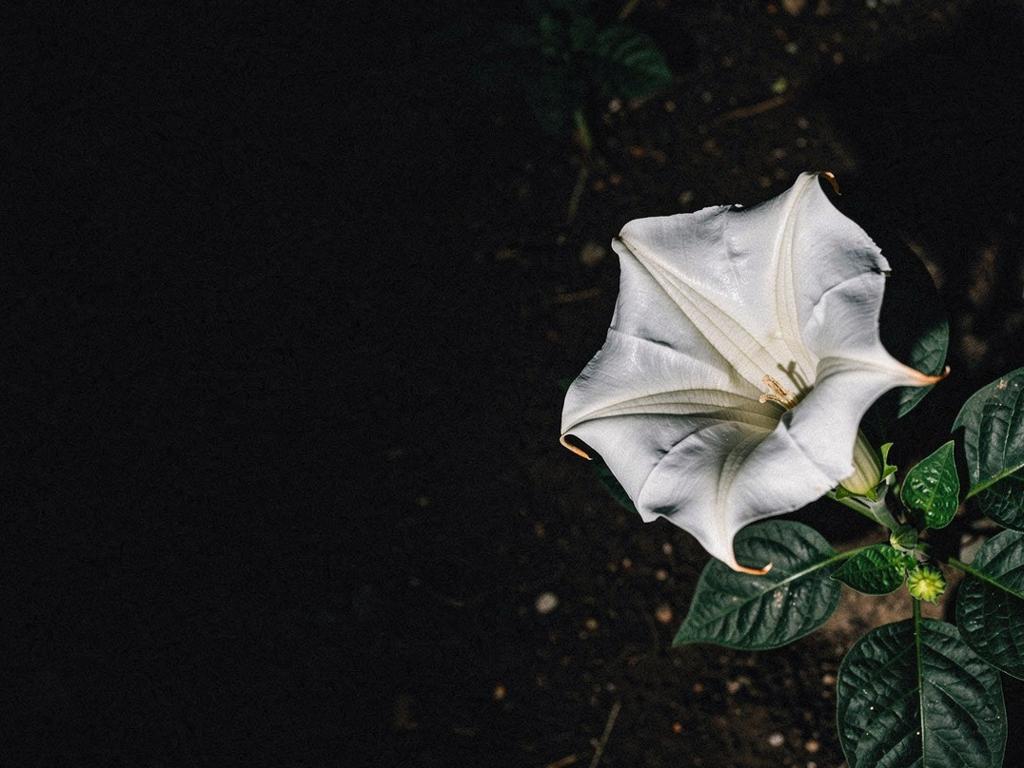
Every few months, someone shows up in a psychedelic forum asking a version of the same question: I have access to a lot of datura growing wild near my house. Should I try it? The answers, from anyone who actually knows the plant, tend to arrive fast and unanimous. Don't. And if you're still curious after reading this, probably still don't. Datura sits in a strange corner of the plant medicine world. It's technically a psychoactive plant with a long history of shamanic use, which makes people file it mentally next to ayahuasca or San Pedro. That's a mistake. Datura is not really a psychedelic in the way most seekers use the word. It's a deliriant, and the difference matters more than almost anything else you'll read about it. Datura is a genus of flowering plants in the nightshade family — cousins to belladonna, mandrake, and henbane. The trumpet-shaped flowers are genuinely beautiful, which is part of the problem. They look inviting. They grow in ditches, backyards, and vacant lots across most of the world. In some regions the plant is so common that people treat it as a weed. The active compounds are tropane alkaloids — mainly scopolamine, atropine, and hyoscyamine. These are the same chemicals that, in tiny medical doses, are used for motion sickness patches and pre-surgical dry-mouth medications. In the doses required to produce a visionary experience, they cross into a completely different territory. This isn't serotonergic psychedelia like psilocybin or DMT. It's anticholinergic delirium, and the phenomenology is closer to a high fever with hallucinations than to a mushroom trip. People who've taken datura and lived to describe it coherently — which, notably, is not everyone who tries it — rarely describe insight or beauty. They describe convincingly real hallucinations of people who aren't there, entire conversations with phantoms, complete loss of the ability to distinguish thought from reality, and days of physical wreckage afterward. Talk to almost any curandero, ayahuascero, or seasoned Western facilitator about datura and you'll get some version of a wince. In parts of the Amazon and the American Southwest, datura and its relatives (toé, brugmansia, jimsonweed) are known and occasionally used — but almost always in tiny, calibrated doses, often blended into other preparations by people with decades of training. It's treated as one of the most dangerous plant teachers in the pharmacopoeia. Not the deepest. Not the wisest. The most dangerous. The reasons are practical and specific: This distinction gets lost constantly, so it's worth spelling out. Classical psychedelics — psilocybin, LSD, DMT, mescaline — work primarily on serotonin receptors. You know you've taken something. You can usually navigate. The visions feel meaningful, sometimes overwhelming, but there's a persistent thread of self that observes. Deliriants work by blocking acetylcholine, a neurotransmitter involved in memory, attention, and the basic distinction between what's happening in the room and what's happening in your head. Under a deliriant, that distinction dissolves. You don't hallucinate a shimmering pattern on the wall. You hallucinate your dead grandmother sitting on the couch, and she's completely real, and you have a full conversation with her, and later you'll insist it happened. That's a categorically different kind of experience — and it's why people who work with plant medicines for healing don't reach for datura. The plant does have a place in traditional practice, but usually as a plant to be studied, respected, and largely avoided rather than ingested. Some Indigenous teachers describe it as a jealous or trickster spirit — a plant that can teach, but which extracts a heavy price and doesn't much care about the wellbeing of the person who approaches it carelessly. Here's the specific pattern that shows up in those online questions. Someone finds datura growing near their house. It's free. It's legal in most places (because nobody wants to eat it). They've read that it's psychoactive. They start thinking, why not? Availability isn't a signal. Poison hemlock is also free and grows wild. The fact that a plant is easy to obtain tells you nothing about whether it belongs in your body. The plants that humans have gathered around ceremonially — the ones with real healing potential — are usually the ones with a long apprenticeship attached. You don't work with ayahuasca alone in your kitchen because you found some vine. You don't work with iboga because you ordered root bark online. The same principle applies here, with more urgency, because datura will hurt you faster and less predictably than either. If you're drawn to plant medicine because you're stuck — depressed, addicted, traumatized, feeling like your life has flattened out — datura is the wrong door. It won't give you what you're looking for, and there's a real chance it takes something from you instead. The impulse behind the search is legitimate. The plant isn't the answer. If you've been reading about plant medicine and something in you keeps returning to the idea that a psychedelic experience might help, there are more established paths worth researching first. Ayahuasca ceremonies in Peru, Costa Rica, or increasingly Europe. Psilocybin retreats in Jamaica, the Netherlands, and legal-therapeutic settings in Oregon and Colorado. Ibogaine programs in Mexico for people specifically working on addiction. San Pedro (huachuma) circles in the Andes for something gentler and more heart-centered. Each of those has real risks and real screening requirements — cardiac issues, medication interactions, mental-health histories all matter. But they're worked with in structured settings by people who've done it thousands of times, who know how to hold a difficult experience, and who don't leave you alone in the middle of the night wondering what's real. That kind of container is the actual medicine, arguably more than the plant itself. A few practical questions worth asking before you commit to any retreat: If any of those questions get vague answers, keep looking. The good operators expect the questions. They're the ones you want. Datura will still be growing in the ditch when you get back. It'll keep growing there. That's fine. Some plants are worth admiring from a distance, and this is one of them. For those interested in exploring plant medicine through paths with better safety records and genuine therapeutic depth, a curated selection of ayahuasca, psilocybin, and other plant-medicine retreats can be browsed on our marketplace here.
Low Testosterone in Your 50s? Why Age Isn't Always the Culprit
You're 52. You're tired in a way sleep doesn't quite fix. Your jeans fit differently around the middle, your sex drive has quietly slipped down the priority list, and somewhere in the back of your mind a voice keeps whispering it's just what happens now. Maybe. But probably not the whole story. Testosterone gets treated like a straightforward decline curve — you age, it drops, end of discussion. The research says something more interesting. In older men, low testosterone is often less about the calendar and more about what's happening metabolically, and that distinction changes what you should actually do about it. A recent review looking at male hypogonadism — the clinical term for consistently low testosterone — dug into how much of the midlife dip is genuinely age-driven versus driven by conditions that happen to become more common as men get older. Obesity, type 2 diabetes, metabolic syndrome, chronic illness, and even certain medications all showed up as significant players. The takeaway isn't that aging doesn't matter. It does, especially past about 65 or 70, when the testes themselves start producing less efficiently. But for men in their 40s, 50s, and early 60s, the more common pattern is what researchers call functional hypogonadism — testosterone is low because something else in the body is off, not because the biological clock has run out. That's a big deal, because functional hypogonadism is often reversible. Body fat, particularly around the waist, kept coming up. In one study cited in the review, 44% of men with a waist circumference of 43 inches or more had biochemically low testosterone. That's not a small correlation — that's nearly half. What makes this tricky is the loop it creates. Low testosterone makes it harder to hold onto muscle and easier to store fat. Extra fat — especially visceral fat around the organs — actively suppresses testosterone production. Once you're in the cycle, it self-reinforces. Which is exactly why chasing the number in isolation, without addressing the metabolic picture underneath, tends to disappoint. Here's where a lot of men go wrong. They read a list of symptoms, recognize themselves in most of them, and decide the case is closed. The problem is that fatigue, low mood, brain fog, and even weight gain overlap with a dozen other things — sleep apnea, depression, thyroid issues, chronic stress, poor sleep hygiene, plain old burnout. The symptoms most tightly linked to genuinely low testosterone are sexual: reduced libido, fewer spontaneous morning erections, and erectile changes. Those are the ones clinicians take most seriously as signals. Fatigue and mood are relevant but noisier. Testing matters just as much as symptoms — and it matters how you test. Testosterone fluctuates dramatically across the day, peaking in the morning. Guidelines suggest a fasting blood draw between 7 and 11 a.m., followed by a second confirmatory test on a different day. A single low reading proves almost nothing. Treatment decisions made off one number are how men end up on lifelong hormone therapy they didn't need. Say you've done the testing properly and the results are consistently low. The temptation, especially with the rise of men's health clinics advertising testosterone therapy on billboards, is to jump straight to a prescription. Slow down. The review outlines a smarter sequence. The way testosterone gets talked about in the wellness corners of the internet — as a single dial you can crank up to reclaim youth, energy, and virility — misses the point. Hormones are downstream of a lot of other things. Sleep. Body composition. Stress load. Alcohol. Underlying illness. Emotional state. Whether you've been sitting for eleven hours a day for the last decade. Men who quietly go on testosterone without addressing any of that often feel better for a while and then plateau, because the underlying terrain hasn't changed. The ones who see the biggest, most durable improvements tend to be the ones who used the low number as a prompt to look at the whole system — and, sometimes, at the parts of their lives they'd been avoiding. This is where things get more interesting than a hormone panel. A lot of the men who arrive at midlife with flatlined energy, low libido, and a nagging sense that something's off aren't just metabolically stuck — they're psychologically stuck. Unresolved stress, buried grief, chronic overwork, a marriage on autopilot, a career they stopped believing in years ago. The body keeps score, and eventually the labs reflect it. Some men explore that terrain through therapy or somatic work. Others through meditation retreats, breathwork, or plant-medicine ceremonies — ayahuasca, psilocybin, and ibogaine have all drawn men in this age bracket looking to interrupt patterns they can't seem to change on their own. None of that is a testosterone treatment. It's not meant to be. But addressing the deeper why behind the stuckness sometimes shifts things that no supplement stack ever touched. If you're in your 40s or 50s and suspect your testosterone is low, here's a reasonable sequence before you commit to hormone therapy: Midlife is a fair time to take your body seriously. It's also a fair time to notice that the tiredness and the flatness and the loss of spark might be pointing at more than a hormone. For readers who feel that pull toward deeper inner work as part of the picture, a curated range of psychedelic and plant-medicine retreats can be browsed on our marketplace here. Whatever route you take, get the number, get the context, and treat the whole man — not just the lab result.

Meditation Is Wrecking My Sleep: What's Actually Going On
Here's a question that comes up more than you'd think in retreat circles, integration calls, and quiet corners of online forums: why is meditation making my sleep worse? You started sitting because you wanted to feel calmer, clearer, maybe less wired at bedtime. Instead you're staring at the ceiling at 3 a.m., mind unusually alert, body somehow both tired and buzzing. That's not the brochure version. It's a real thing. And it doesn't mean you're doing meditation wrong, or that your nervous system is broken, or that you should quit. It usually means something specific is happening — often several things at once — and once you understand what, you can adjust. This matters especially for anyone preparing for or integrating a psychedelic retreat, where sleep is already going to get shaken up and a steady contemplative practice is one of your best allies. Meditation is often sold as a relaxation tool. It can be. But that's not really what it is. At its core, meditation trains awareness — you're learning to notice what's happening in your mind and body without automatically reacting. And awareness, especially in the beginning, is not always cozy. When you sit and stop distracting yourself, a lot of stuff surfaces. Suppressed emotions, half-processed memories, background anxieties you've been outrunning with work and scrolling. The nervous system starts unwinding material it had filed under "deal with later." Later, apparently, is now — and often at 2 a.m. when your defenses are lowest. This is genuinely similar to what people experience after a plant-medicine ceremony. Ayahuasca, psilocybin, and other master plants tend to loosen up psychological material that then keeps processing for days or weeks afterward. Meditation, done consistently, does a milder version of the same thing. Which is part of why the two practices pair so well — and also why both can mess with your sleep in the short term. Not every case is the same, but the patterns are recognizable. If your sleep has gone sideways since you started (or intensified) a practice, one of these is probably in play. If any of these sound familiar, welcome to a very ordinary experience. It's rarely permanent. It almost always responds to some pretty simple adjustments. The instinct when something isn't working is to either double down or quit entirely. Neither is usually the move. Try these first. Most sleep disruption from meditation is a passing thing. But there's a category of experience — sometimes called meditation-related adverse effects, or in the older Buddhist literature, "the dark night" — that warrants more than a lifestyle tweak. If you're experiencing prolonged insomnia, panic that won't settle, dissociation, or trauma memories flooding back with an intensity you can't hold on your own, please talk to someone qualified. That could be a trauma-informed therapist, a meditation teacher with real training in navigating difficult experiences (not every teacher has this — ask), or a psychiatrist if the sleep loss is severe. There's no medal for white-knuckling through it. The best contemplative teachers I know are the first to say: sometimes you need more than a cushion. This applies double if you're integrating a psychedelic experience. Post-ceremony sleep can already be strange — vivid dreams, early waking, energy running through the body at odd hours. If meditation is adding to the churn rather than helping you land, ease off the intensity and get some human support. People sometimes ask whether they should meditate before an ayahuasca retreat, and whether it'll help or hurt. The honest answer: a steady, moderate practice before you go is one of the best preparations available. It teaches you to stay with intense experience without flinching, which is exactly the skill a ceremony asks of you. Afterwards, meditation becomes an integration tool — a way to keep listening to what the medicine surfaced, without having to keep drinking it. But this is precisely when sleep can get weird. You've been cracked open by the plant, your nervous system is recalibrating, and sitting quietly gives all of that room to keep moving. Expect some rough nights. Sleep tends to normalize over the following weeks as things settle. The move is to hold your practice loosely. Meditate in the mornings. Keep sessions shorter than you think you need. Prioritize walks, food, and time in nature over long formal sits. If you're at a well-run retreat, the facilitators will usually build this rhythm into the integration days for you. If you're doing it on your own afterwards, be your own kind facilitator. Meditation isn't supposed to feel good all the time. Neither is any real inner work. If your sleep has gone haywire, it doesn't necessarily mean the practice is failing — it might mean it's working, and something needs your attention. The task is to figure out what, and to respond with intelligence rather than either abandonment or grim persistence. For readers weighing whether to combine contemplative practice with a plant-medicine journey — or looking to explore ayahuasca and psilocybin retreats that take integration seriously — a range of curated options can be browsed on our marketplace here. Pick one that talks openly about preparation, aftercare, and yes, sleep. The good ones do. In the meantime: shorter sits, earlier in the day, gentler technique. See what shifts in a fortnight. Most of the time, that's the whole prescription.
Dreaming of a Psychedelic Retreat?
We have the best deals and offers from thousands of organizers all over the world! Get them into your mailbox every week!
We value your privacy. Your email address will never be shared or published.
