 English
 Deutsch
 Français
 Nederlands
 Español
SHOP AYAHUASCA RETREATS BLOG
Why Executives and Creatives Are Sitting in Ayahuasca Ceremonies

Stella Vance
June 7, 2026
Your ultimate guide to discover transforming ayahuasca and psychedelic experiences. Dive into serene destinations and elevate your consciousness to unparalled heights.
Discover Ayahuasca & Psychedelic Retreats NowSearch for ayahuasca & psychedelic retreats
Discover retreats, trainings, and holidays from all over the world
A few years ago, if you mentioned ayahuasca at a founder dinner in San Francisco or London, you'd get a nervous laugh and a subject change. Now? Somebody at the table has already been. Maybe two people. The conversation has shifted from “you did what?” to “who did you sit with, and would you recommend them?”
Plant medicine has crossed a line in the professional world. Not into the mainstream, exactly — your accountant probably isn't booking a dieta in the Sacred Valley — but into a quieter, more curious middle ground. Senior people in tech, finance, design, and the creative industries are showing up at ayahuasca retreats and psilocybin retreats with a specific set of questions: am I burned out beyond repair? Why do I keep building the same problem? What am I avoiding? And, sometimes, the more practical: can this help me think again?
This piece is for the reader who's noticed the trend and is wondering whether there's anything real underneath it — or whether it's just the next thing the productivity crowd is using to bypass their own feelings.
What's Actually Pulling Them In
The cliché answer is creativity. People say they want their edge back, they want to think laterally again, they want to break out of the spreadsheet brain that two decades of decision-making has welded into place. That's part of it. But spend any time with people who've actually done the work and you hear a different story underneath.
What most of them are really chasing is relief. Relief from the low-grade depression that high performers learn to hide. Relief from the relationship patterns they keep re-enacting. Relief from a drinking habit that started as networking and turned into a problem. Relief from the dread of getting on another flight, another stage, another all-hands. Creativity is the socially acceptable wrapper. Healing is what's inside.
And then there's the addiction question, which is where things get genuinely interesting. A growing number of professionals — and I mean the kind who run companies, not the kind who star in recovery memoirs — are looking at ayahuasca and ibogaine for issues with alcohol, cocaine, prescription benzos, and the more contemporary plague of compulsive screen and stimulant use. Plant medicine for addiction isn't a new idea in the Amazon. It's just newly visible to people who used to think recovery happened in church basements.
What the Research Actually Says (And Doesn't)
The science is real, but it's also younger than the headlines suggest. Here's the honest version.
- Neuroplasticity: Psilocybin and DMT (the active alkaloid in ayahuasca) both appear to temporarily increase the brain's capacity to form new connections. In practical terms, that's a window — maybe a few weeks long — where habits, beliefs, and emotional patterns are unusually movable.
- Depression and anxiety: Trials at Johns Hopkins, Imperial College London, and elsewhere have shown durable reductions in depressive symptoms after a small number of guided psilocybin sessions. Ayahuasca has shown similar signals in smaller studies, particularly for treatment-resistant depression.
- Addiction: Early-stage trials on psilocybin for alcohol and tobacco dependence have produced results that are, frankly, hard to ignore. Ibogaine has a longer underground track record with opioid dependence, with real risks attached.
- Default Mode Network: Both substances quiet the brain network associated with self-referential thought — the part that runs the loop of I, me, my problems, my story. People often describe the resulting state as the first quiet they've had in years.
What the research does not say: that any of this is a cure, that one ceremony will fix anything permanently, or that it's safe for everyone. Plenty of people have profound experiences and then slowly slide back into the same life they had before. The window closes. Whether anything changes long-term depends almost entirely on what happens in the months after.
Master Plants and the Older Frame
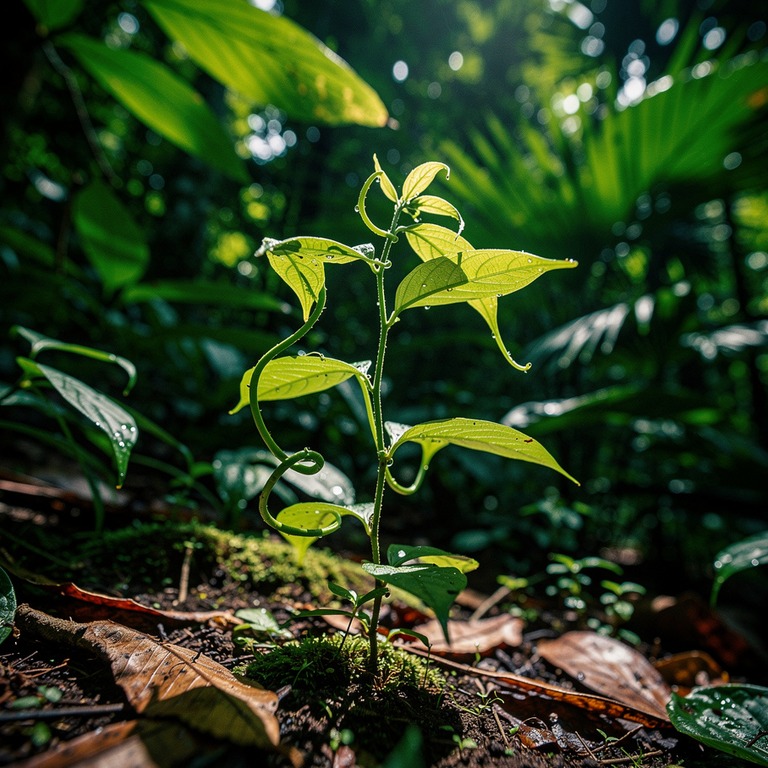
If you only know plant medicine through the Silicon Valley framing, it's worth pausing on what the traditions themselves call this work. In the upper Amazon, the brew is one of a wider family of master plants — tobacco (mapacho), bobinsana, ajo sacha, chuchuhuasi, chiric sanango, and others — each understood to teach something specific. Curanderos don't talk about neuroplasticity. They talk about cleaning, about diet, about the plants showing you what you need to see.
You don't have to buy the cosmology to take it seriously. The point is that ayahuasca didn't arrive in the world as a productivity hack. It arrived as a discipline, with rules, with preparation, with sacrifices. The professionals I've seen get the most from ceremony are the ones who can hold both frames at once — the neuroscience and the older language — without collapsing one into the other.
The ones who get the least, in my experience, treat the medicine like a software update. They show up, dose, expect output. The medicine, as the saying goes, has other ideas.
What a Retreat Actually Looks Like
If you're weighing whether to book an ayahuasca retreat, here's roughly what to expect from a serious one. (A non-serious one is something different and we'll get to that.)
- Application and screening. A real retreat asks about medications (SSRIs and MAOIs are a serious issue with ayahuasca), mental health history, cardiovascular health, and intention. If they don't screen you, walk away.
- Preparation diet. Usually two to four weeks of no alcohol, no recreational drugs, reduced sugar, reduced salt, no pork, no fermented foods, no sexual activity for some traditions. It's not arbitrary. It changes how the medicine moves through you.
- Ceremony nights. Typically three to six over the course of a week or ten days. Ceremonies run from sunset to roughly 2 or 3 a.m., in near-darkness, led by curanderos who sing icaros — medicine songs — throughout.
- Integration days. Between ceremonies and after the retreat ends. Talking circles, one-on-ones, journaling, rest. This is where the actual change either takes root or doesn't.
- Aftercare. The best retreats stay in touch for weeks or months afterward. The worst hand you a kombucha and a goodbye hug.
Costs vary widely. A reputable week-long ayahuasca retreat in Peru or Costa Rica generally runs somewhere between $1,500 and $4,500, depending on facilities, lineage of the curanderos, and group size. Cheaper than that, ask hard questions. More expensive than that, ask different hard questions.
The Honest Risks Nobody Brings Up at Dinner
I'd be doing you a disservice to write a piece like this without naming what can go wrong.
Psychiatric risk is real. People with personal or family histories of psychosis, schizophrenia, or bipolar I should not be doing this work, full stop. Ayahuasca can also surface unprocessed trauma in a way that's overwhelming if there's no integration support. Some retreats are excellent at holding that. Some are not.
Medication interactions are real. Ayahuasca contains MAO inhibitors, which can interact dangerously with SSRIs, SNRIs, stimulants, and a long list of other substances. A proper retreat requires a medication washout period under medical supervision. A sketchy one waves it off.
Facilitator quality varies enormously. The plant medicine space has its share of self-appointed shamans, charismatic frauds, and outright predators. Sexual abuse in ceremony settings has been documented and is more common than the industry likes to admit. Vet thoroughly. Ask for references from past participants. Look for transparent lineage and long-running operations rather than someone who learned to pour medicine on a six-month course.
And then there's the most underrated risk: the post-retreat crash. You come home glowing, convinced everything is different, and then the inbox is still the inbox, the marriage is still the marriage, and three months later you can't quite remember what you saw. Without integration, the insights evaporate. Plan for that part before you book.
Does It Actually Help You Build Anything?
The honest answer is: sometimes, and not the way you'd expect.
People come back with fewer breakthrough product ideas than they expected and more clarity about which projects they should never have started. They get less of a creative high and more of a willingness to have the conversation they've been avoiding. They report finishing things they'd been stuck on for years, less because they had a stroke of genius and more because they finally stopped flinching from the work.
The founders I've spoken to who got real value from ceremony almost all say the same thing: it didn't make them better at their job. It made them a different person, and that person did the job differently. Sometimes that person quit the job entirely. Sometimes they stayed and finally led the team like a human being. Either way, it's not really a productivity tool. It's a mirror.
If you're considering this for yourself, take your time. Read more than one perspective. Talk to people who've sat in ceremony with the facilitators you're considering. Treat your preparation as seriously as you'd treat any other significant decision in your life — because that's what it is. For readers who want to take this further, a curated range of ayahuasca and plant medicine retreats can be browsed on our marketplace here.
The trend isn't really about executives chasing the next biohack. It's about a generation of people who built impressive lives and then quietly realised that none of it touched the thing underneath. The medicine doesn't promise to fix that. It just, occasionally, helps you finally look at it.

Craving More Stories?
Join our ShopAyahuascaRetreats newsletter for the latest updates on thrilling
destinations and inspirational tales, delivered straight to your inbox!
We value your privacy. Your email address will never be shared or published.