 English
 Deutsch
 Français
 Nederlands
 Español
SHOP AYAHUASCA RETREATS BLOG
When Life Is Too Much: Finding Refuge in Buddhist Practice

Cleo Adler
October 6, 2026
Your ultimate guide to discover transforming ayahuasca and psychedelic experiences. Dive into serene destinations and elevate your consciousness to unparalled heights.
Discover Ayahuasca & Psychedelic Retreats NowSearch for ayahuasca & psychedelic retreats
Discover retreats, trainings, and holidays from all over the world
There's a particular kind of exhaustion that arrives in your forties and refuses to leave. You're caring for a parent whose body is failing. You're parenting a teenager whose world is cracking open. You're holding down work, a partnership, friendships, a house that keeps producing small emergencies — and somewhere underneath all of it, a self that hasn't been checked on in months. Sociologists call this the sandwich generation. The Buddhist tradition would call it something older and more honest: dukkha. The wobbly wheel on the oxcart. The friction that makes every rotation a little harder than it should be.
I want to talk about what happens when the overwhelm stops being episodic and becomes the water you're swimming in. And more specifically, I want to talk about an old Buddhist practice — taking refuge — that turned out to be the most useful thing I'd forgotten.
The Splinter Problem
One afternoon last spring, between back-to-back video calls, I was hacking down bamboo stalks in the garden. Bad idea in a hurry. I came back inside with dozens of microscopic splinters embedded across my palms — too small to tweeze out individually, too many to ignore. Every time I reached for the laptop, I felt them. Every time I typed. Every time I picked up a coffee cup.
That's what the overwhelm had become. Not one catastrophic thing. Not a crisis you could point at and say, there, that's the problem. A hundred tiny snags embedded in the ordinary motions of a day. A missed dentist appointment. A text from a sibling I hadn't answered. A medical form that needed reviewing. The nagging sense I'd forgotten something — because I almost always had.
I was waking at 3 a.m. with my nervous system doing a full fire-drill over something I couldn't quite name. And I kept thinking about the Buddha under the Bodhi tree, besieged by Mara — not one demon but an army of them, each with its own weapon. The siege was the point. The onslaught was the test.
What “Taking Refuge” Actually Means
The Pali word for mindfulness, sati, is often translated as remembering. Not remembering facts — remembering yourself. Gathering the scattered pieces back. And one of the things I'd scattered and forgotten was the practice of taking refuge.
Refuge gets misread as escape. It isn't. A wildlife refuge isn't a place where animals pretend predators don't exist; it's a place where what's vulnerable gets the conditions it needs to heal. Buddhist refuge works the same way. You're not opting out of reality. You're building a place inside yourself steady enough to meet reality without shattering.
Traditionally there are three refuges, called the Triple Gem: Buddha, dharma, sangha. Teacher, teaching, community. They sound abstract until you try them during a week when your mother's cardiologist calls twice and your kid is failing calculus and your partner wants to know what's for dinner. Then they become almost embarrassingly practical.
Refuge in the Buddha
When I'm underwater, I feel like the weight of everything is mine alone to carry. Some of that is personal. Some of it, I've come to understand, is ancestral — exhaustion gets passed down through generations and cultures and nervous systems, and so does resilience. The load I'm carrying has been accumulating for a very long time, and no planner app is going to fix that.
Taking refuge in the Buddha, for me, isn't about worshipping a man who lived 2,500 years ago. It's about remembering that the same quality of unshakeable presence he embodied under that tree is a human capacity — which means it's available to me too. I'll sometimes close my eyes and picture that steadiness, then move it inside my own chest. Not out there to be reached for. Already here. Underneath the panic, there's a part of me that is genuinely not overwhelmed. When I remember that, the weight doesn't vanish, but I can hold it differently. Sometimes I can even put some of it down.

What the Dharma Keeps Trying to Tell Us
Dharma — the teaching — shows up on the meditation cushion, sure. But mostly it shows up in the washing machine, the inbox, the hospice conversation. One of the Buddha's clearest insights was that suffering intensifies the moment we resist what's actually happening. We don't just hurt; we hurt about hurting.
Looking honestly at my own overwhelm, I realized a big chunk of it came from a stubborn belief that I should be able to manage all of it. Hustle culture had told me so. If I just woke earlier, batched my tasks better, found the right app, drank less wine, meditated more — surely I could cover it. The dharma pointed me somewhere more honest. There are seasons when there is simply too much. No productivity system changes that math. During those seasons, the work isn't optimization. The work is grief, and then triage.
Here's what shifted when I stopped arguing with reality:
- Some tasks could wait. Nothing bad happened.
- I could ask for help, which turned out to be a muscle I'd let atrophy.
- I could say no — flatly, without a paragraph of explanation.
- I could accept that caring well for several people meant always disappointing somebody a little.
Discernment, it turns out, is the real practice. Not productivity. And the dharma also asks us to see the bigger picture — the structural conditions producing all this exhaustion. The uneven distribution of caregiving labor, mostly onto women. The expectation that everyone be reachable at all hours. The disappearance of the extended village that used to carry the load collectively. Buddhist practice isn't about becoming calmer inside conditions that are, frankly, broken. It's about seeing clearly enough to respond — to the suffering in you and the suffering around you.
Why Isolation Is the Real Danger
Overwhelm thrives in isolation. It whispers that everyone else has figured out some trick you've missed. That your inability to keep up is a character flaw rather than a reasonable response to unreasonable conditions. I know this voice intimately — the one that says I am capable, so why can't I handle this?, as though capability were infinite.
Every time I've named the overwhelm out loud to another human — a friend, a colleague, my sister — I've been met with the same two words: me too. Followed, often, by: how can I help? That relief is immense. Not because the circumstances change but because the loneliness lifts. We're not failing. We're human beings navigating genuinely difficult terrain without the support systems our ancestors took for granted.
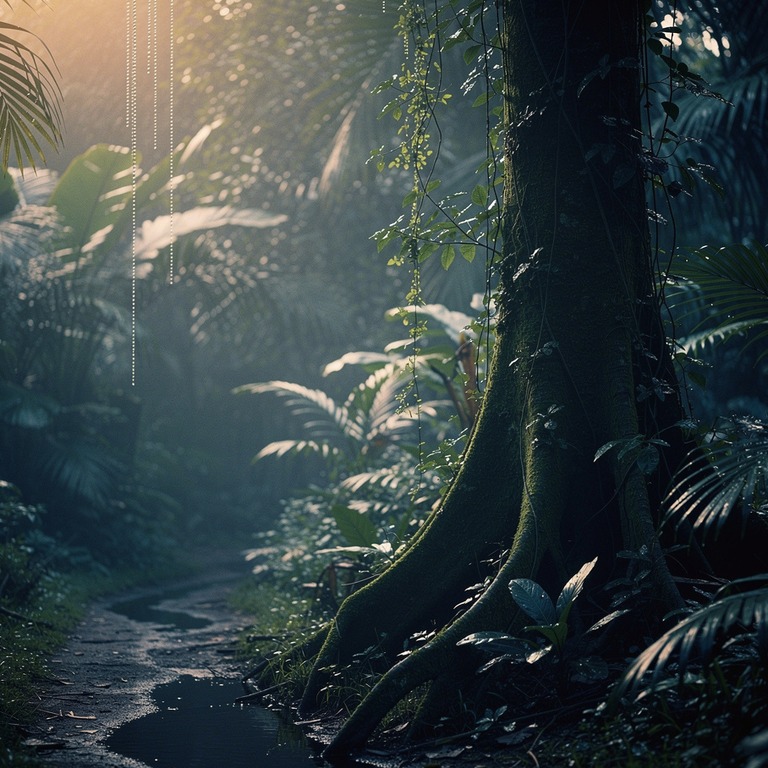
Sangha is wider than you might think. It's the friend who listens without rushing to fix. It's the dharma talk that lands at exactly the right moment. It's catching the eye of another adult child in a doctor's waiting room and silently acknowledging that you're both doing something hard. For me it's also the garden — the trees, the breeze, even the bamboo that stabbed me. The natural world is a community of care if you let it be.
A Practice for the Weeks When It's Too Much
Next time the wave hits, try this before you try to solve anything. Feel your feet on the floor. Notice what you're actually carrying right now, in this literal minute, versus what your brain is pre-carrying for the next six months. Then turn toward each refuge in turn.
- Buddha. What's actually present in the body right now? Tightness, racing thoughts, a knot in the chest? Remember that the capacity for clarity and courage lives in you, not just in some robed figure from antiquity. Ask: what would wisdom do in the next hour? What would compassion do?
- Dharma. Can you admit that there might simply be too much? Can you release the belief that doing all of it was ever possible? Which of these burdens are genuinely yours, and which have you quietly inherited from someone else's expectations? What is actually impermanent here, including this hard season?
- Sangha. Who could carry a piece of this with you? Is there one thing — just one — you could hand to someone else today? Can you receive the help that's already being offered and that you keep politely declining?
You don't have to arrive at tidy answers. Just notice what shifts when you stop trying to white-knuckle it alone.
A Note on Plant Medicine and the Same Problem
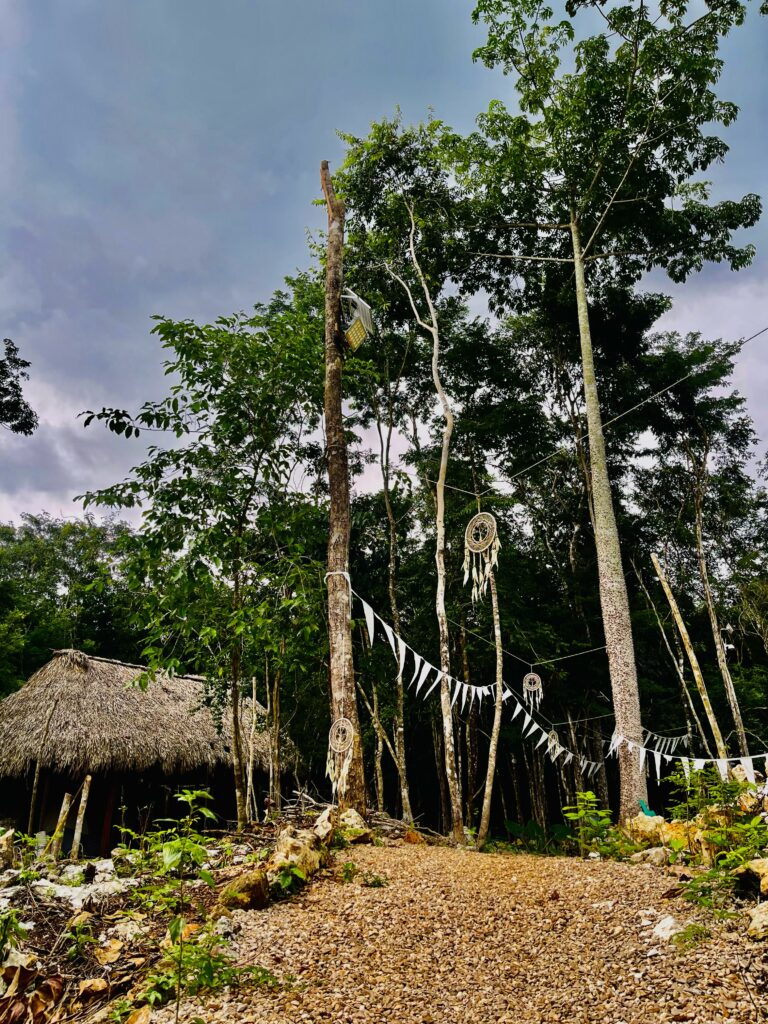
I'll admit a bias of my own: much of what I've described above — the splinter overwhelm, the sense of being besieged, the ancestral weight — is also what sends people toward ayahuasca ceremonies, psilocybin retreats, and other plant-medicine work. The underlying ache is the same. People arrive at a maloca in Peru carrying exactly these loads: aging parents, failing marriages, addictions they can't out-manage, trauma their nervous systems have been metabolizing for decades.
Plant medicine can be a profound catalyst. But I'd gently say this: the three refuges still apply, both before and after. A ceremony without preparation is a bonfire without a hearth. A powerful experience without sangha to help you integrate it tends to dissipate within weeks. Whatever path you're drawn to — contemplative, psychedelic, somatic, therapeutic — the question is the same. What are you taking refuge in once the acute experience ends? Who sees you? What teaching is holding the shape of your days?
For readers who are weighing a plant-medicine retreat as part of their own work with overwhelm, trauma, or stuck patterns, a range of thoughtfully curated ceremonies and healing retreats can be browsed on our marketplace here. Go slowly. Ask hard questions. Choose the facilitators who talk as much about integration as they do about the medicine itself.
My oxcart still wobbles. Some nights I still wake up at 3 a.m. with that pounding sense of something undone. But more often now, I remember to turn toward the refuges instead of away from them — and the ride, bumpy as it is, starts to feel like one I'm actually taking rather than one I'm merely enduring.

Craving More Stories?
Join our ShopAyahuascaRetreats newsletter for the latest updates on thrilling
destinations and inspirational tales, delivered straight to your inbox!
We value your privacy. Your email address will never be shared or published.