 English
 Deutsch
 Français
 Nederlands
 Español
SHOP AYAHUASCA RETREATS BLOG
What Does Mother Ayahuasca Look Like? Firsthand Visions Explained
Ivy Chan
September 13, 2026
Your ultimate guide to discover transforming ayahuasca and psychedelic experiences. Dive into serene destinations and elevate your consciousness to unparalled heights.
Discover Ayahuasca & Psychedelic Retreats NowSearch for ayahuasca & psychedelic retreats
Discover retreats, trainings, and holidays from all over the world
Ask ten people who've drunk ayahuasca what Mother Ayahuasca looked like, and you'll get eleven answers. A woman made of vines. A jaguar with human eyes. A vast green presence with no shape at all. Someone's dead grandmother. A snake the size of a river. And — this is the one nobody warns you about — sometimes nothing visual at all, just a knowing so thick you can barely breathe through it.
If you're researching an ayahuasca retreat and you keep bumping into references to this so-called Mother, you're probably wondering what she actually is. A goddess? A hallucination? A projection of your own psyche wearing costume jewellery? The honest answer is that it depends on who you ask, and even more on what happens when the brew hits. What follows is a plain-English look at the imagery people report, the traditions behind the name, and what any of it might mean for someone weighing whether to sit in ceremony.
Who — or What — Is Mother Ayahuasca?
The word ayahuasca comes from Quechua and is usually translated as “vine of the soul” or “vine of the dead.” The brew itself is made from the Banisteriopsis caapi vine combined with a DMT-containing plant, most often chacruna. In the Amazonian traditions where ayahuasca has been used for centuries, the vine isn't treated as a chemical. It's treated as a being. A teacher. A grandmother. And in many lineages, specifically a mother.
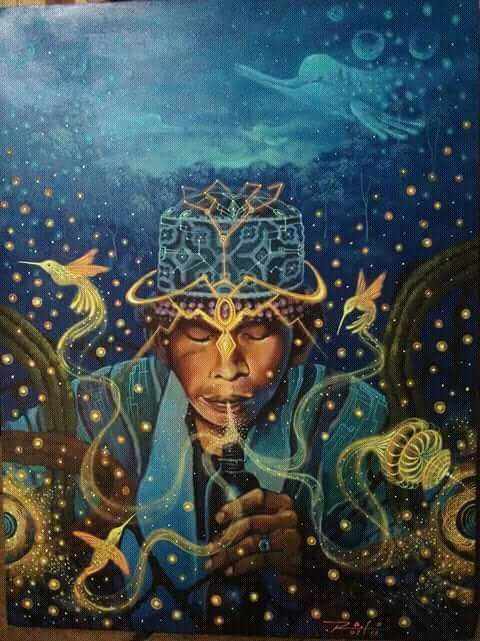
Shipibo curanderos, Shuar shamans, the Santo Daime church, the União do Vegetal — each tradition has its own relationship with this presence. Some describe her as the spirit of the caapi vine itself. Others say she's a broader intelligence that speaks through the plant. In psychedelic-curious circles online, people just call her Mother, or Madre, or occasionally Aya, as if she were a slightly intimidating aunt.
You don't have to buy any of that cosmology to take the phenomenon seriously. Even neuroscientists studying ayahuasca have noted how consistently participants report encountering a personified intelligence during the experience — a presence that seems to communicate, teach, or push back. Whether that's a real entity, a very sophisticated brain state, or something in between is a question nobody has settled. What's clear is that people meet something, and they usually can't stop talking about her afterward.
The Most Common Visions People Report
Here's the thing about asking what Mother Ayahuasca looks like: the answers cluster into a handful of archetypes, but each one is intensely personal. Trip reports from ceremonies across Peru, Brazil, Costa Rica, and the growing circuit of legal European retreats keep returning to a small set of images.
- The serpent. Anacondas, boa constrictors, cosmic snakes wound around galaxies. This is probably the single most reported form. Shipibo iconography is full of geometric snake patterns for a reason.
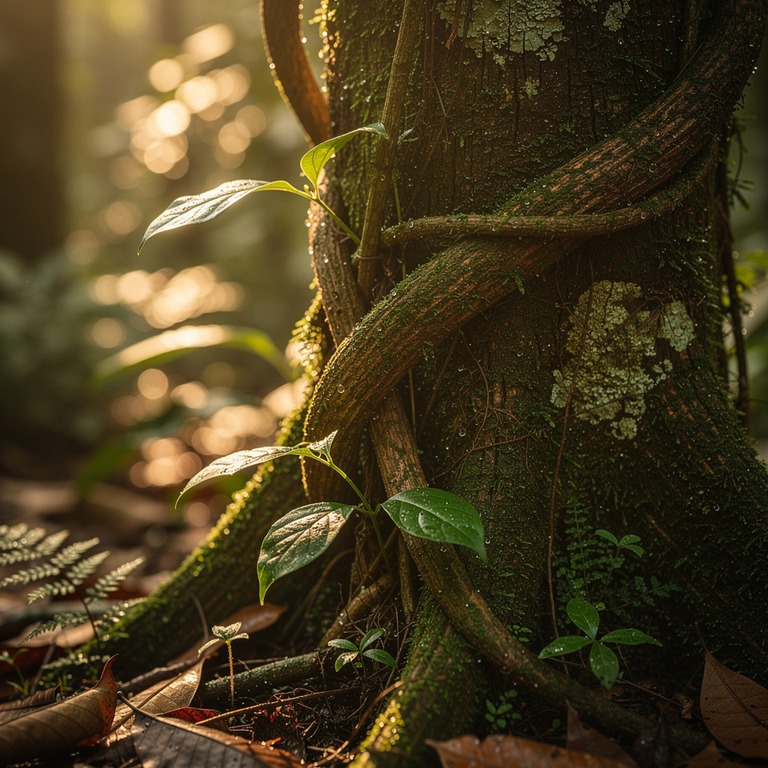
- The vine-woman. A feminine figure literally braided from leaves, roots, and tendrils. Sometimes ancient. Sometimes young. Almost always green.
- The grandmother. An old woman, often indigenous, sometimes wearing a white dress, sometimes seated by a fire. Warm but not soft. She tends to give instructions.
- The jaguar or feline presence. Less common than the snake but a recurring theme, especially in ceremonies rooted in Shuar and Achuar traditions.
- Pure geometry. No body, no face — just impossibly intricate patterns that seem to be watching you back.
- A voice with no image. Some people never see anything and instead receive information, memory, or blunt commentary. This is still Her, according to most experienced drinkers.
What's striking is how many first-timers who've never heard these descriptions report them anyway. That doesn't prove anything metaphysical — brains are pattern-hungry organs and archetypes are baked deep — but it's worth noting when you're trying to make sense of the phenomenon.
Why She Doesn't Always Show Up the Way You Expect
People book their first ayahuasca retreat with a mental picture already loaded. They've watched documentaries, read Reddit threads, maybe browsed a few YouTube trip reports. Mother Ayahuasca, in their imagination, is going to be a beautiful glowing woman who tells them they're loved and shows them the meaning of their life.
Sometimes that happens. More often, She's something else entirely. She might arrive as a slightly annoyed teacher who spends four hours making you look at exactly the thing you've been avoiding for a decade. She might not arrive at all on your first ceremony. She might present as your own mother, or your ex-partner, or a stranger you've never met, and only on the third night do you realise these were all Her wearing masks.
Facilitators who've held ceremony for years tend to say the same thing when asked: She meets you where you need to be met, not where you want to be met. That's less romantic than the marketing copy, and considerably more accurate. If you go in with fixed expectations, the brew has a way of dismantling them within the first hour.
Is This a Real Being or a Trick of the Brain?
Here's where I have to be honest: I don't know. Nobody does, not really. What I can offer is the range of positions serious people take.
The traditional Amazonian view is that Mother Ayahuasca is a genuine spirit — an intelligence residing in the vine, older than any human lineage, capable of teaching those who approach with humility. Curanderos train for years to build a working relationship with Her, and they don't consider Her a metaphor.
The neuroscience view is that DMT and harmala alkaloids disrupt the default mode network — the part of the brain that maintains your sense of being a bounded self — and this disruption allows unconscious material to surface in personified form. From this angle, Mother Ayahuasca is your own psyche, dressed up in symbolic clothing so you can actually receive its message.
The pragmatic middle position, which most experienced drinkers I've spoken to hold, is roughly: does it matter? Whatever She is, She works. People confront trauma, break addictive patterns, and reorganise their lives after these encounters. The mechanism can stay mysterious.
What This Means If You're Considering a Retreat
If you're actively researching ayahuasca — for depression, addiction recovery, unresolved trauma, or a stuck feeling you can't name — the imagery of Mother Ayahuasca can be either helpful or a distraction, depending on how you hold it.
Helpful: it primes you to treat the medicine with respect. This isn't a party drug and never has been. Approaching the brew as if you're about to meet someone significant — even if you're not sure who — tends to produce better outcomes than approaching it as an experience to be consumed.
Distraction: if you go in chasing a specific vision, you'll miss what's actually happening. I've watched people spend an entire ceremony frustrated that they weren't seeing snakes, only to realise on the drive home that the medicine had been quietly rearranging their relationship with their father the whole time. The show isn't always where you're looking.
A few practical things worth knowing before you book:
- Preparation matters more than most retreats admit. The dieta — dietary restrictions before ceremony — isn't superstition. It genuinely affects how the medicine moves through you.
- Facilitator lineage matters. Ask where they trained, who they trained with, and how long they've been sitting people. Vague answers are a red flag.
- Integration is where the healing actually happens. The ceremony is the doorway. What you do in the weeks after is the work.
- Manage expectations about Mother Ayahuasca specifically. She doesn't perform on demand. She sometimes stays silent. That's not failure.
A Final Word on Her Many Faces
The reason people keep asking what Mother Ayahuasca looks like is because language keeps failing them afterward. You can't quite describe a presence that felt more real than the room you're currently sitting in. So we reach for images — serpents, grandmothers, vines, jaguars — and none of them are wrong, but none of them are the whole thing either.
If you're on the fence about sitting with the medicine, don't let the mythology intimidate you and don't let it seduce you either. Approach the decision the way you'd approach any significant undertaking: research the tradition, vet the facilitator, understand the physical and psychological risks, and be honest with yourself about what you're hoping for. For readers who want to take this further, a range of vetted ayahuasca retreats can be browsed on our marketplace here.
Whatever face She wears when you meet Her — if you meet Her — will probably be exactly the face you needed. That's the pattern people describe, over and over, in language they can't quite make work.
Craving More Stories?
Join our ShopAyahuascaRetreats newsletter for the latest updates on thrilling
destinations and inspirational tales, delivered straight to your inbox!
We value your privacy. Your email address will never be shared or published.