 English
 Deutsch
 Français
 Nederlands
 Español
SHOP AYAHUASCA RETREATS BLOG
What Burning Eyes Taught Me About Attention, Rest, and the Narrowing of Modern Life

Lila Novak
September 30, 2026
Your ultimate guide to discover transforming ayahuasca and psychedelic experiences. Dive into serene destinations and elevate your consciousness to unparalled heights.
Discover Ayahuasca & Psychedelic Retreats NowSearch for ayahuasca & psychedelic retreats
Discover retreats, trainings, and holidays from all over the world
In my second year of Ayurvedic medical school, my eyes started to burn every night around nine. Not dramatically. Just enough to notice, to rub them, to blink hard a few times, and to keep going. Exams were coming. My lecture slides lived on a laptop, my reference books had all become PDFs, and the practice questions were on my phone. My entire education had quietly migrated onto glass, and I was reading it for twelve or thirteen hours a day.
The irony is almost too neat. By day I was memorising Shalakya Tantra — the branch of Ayurveda concerned with the eyes and the head. I could recite, from the old texts, exactly what aggravates the eyes: too much close focus, too little rest, dryness, grief, staying up late. By night I was doing nearly all of it, with the textbook open in front of me spelling out what I was doing to myself.
I treated my eyes as equipment. They were the tools that moved data from a screen into my memory, and when they hurt, I filed the pain under friction. Something to push through. If you had asked me at the time, I would have said I was paying more attention than I ever had in my life. Twelve hours a day. Total focus. But I wasn't paying attention. I was narrowing it.
The night the lights went out
One evening that winter the power flickered. I looked up from the laptop into the sudden dark, and when the light came back a second later, I couldn't quite focus on the far wall of my room. Anything past arm's length stayed soft, the way a photograph looks when the shutter has moved. It sharpened again within a few seconds. Medically, nothing dramatic happened. Still, those few seconds shook me, and the shake wasn't really about my eyesight.
It was the realisation that I could not remember the last time I had looked at anything far away.
My desk sits beside a window. Beyond it there's a neem tree, a water tank, and a long view over rooftops that turns pink for about ten minutes every evening. I hadn't seen that view in weeks. The sunset had been happening at the edge of my vision, six feet from my chair, while I stared at a rectangle forty centimetres from my face. Nothing had blocked the window. I had simply stopped being a person who looked out of it.
Attention is not taken from you
That's the part that stayed with me. Nobody takes your attention away from you. You hand it over in small amounts, without ceremony, until looking at one small bright thing feels like the only kind of looking there is.
And the narrowing hadn't stopped at study. I was eating at my desk without really tasting the food. Friends' messages got skimmed and half-answered. My mother would call, and some part of me would keep scrolling while she talked. The eyes were only the place where the constriction finally became painful enough to break through.
I think a lot of people I know are living in some version of this — not necessarily as students, but as knowledge workers, freelancers, parents managing three tabs of school portals, anyone whose day flows through a screen. The pain shows up somewhere. Tight jaw. Headaches. Shoulders migrating toward the ears. A sense of being simultaneously exhausted and unable to stop. We call this focus, and then wonder why we feel so unfocused.

Small, undramatic practices for tired eyes
I started with my eyes because they were what hurt. Ayurveda has a handful of quiet practices for the eyes, and I tried the ones my professors had described. I'll list them here, because they're simple and they cost nothing, but I want to be careful about how I frame them.
- Palming. Rub your palms together until they're warm, cup them lightly over closed eyes, and sit inside the dark of your own palms for a minute.
- Distance gazing. Lift your gaze from close work and let it rest on the farthest thing available. Don't hurry it. A tree, a rooftop, the horizon.
- Cool water splashes. Splash the eyes with plain cool water in the morning.
- Full blinks. Close them fully, several times an hour, instead of the shallow half-blinks a screen trains into you.
Honesty is the habit my training is supposed to build, so I'll say this plainly: I can't tell you these are proven therapies. Some have barely been studied. What I can tell you is what happened when I did them, and it had less to do with my eyes than I expected.
What the darkness under your palms actually reveals
Palming turned out to be the first time in months I had been in darkness while fully awake. A minute is long when there is nothing to look at. I could feel my pulse in my palms and, underneath it, how fast I had been moving all day. My jaw was clenched. My shoulders were up near my ears. My breath had gone shallow in the way it does when the body has quietly decided the whole day is an emergency.
None of that was new information. All of it had been happening while I studied. I just hadn't been present for it, because every part of me had been pressed up against a screen. The eye practice, it turned out, was a stealth meditation. It got past the part of me that would have refused to sit and do nothing on purpose.
Distance gazing did something stranger. When my eyes settled on the far rooftops, my thinking loosened. Thoughts became slower and less insistent — the way conversation quietens when you step out of a loud room into the street. I don't think this is mystical. The eyes and the mind seem to hold the same posture: fixed, close, gripping. Offer one of them a horizon, and the other seems to accept it too.
The message inside the strain
Slowly I understood that my tired eyes had never been an obstacle to attention. They were a message about it. The strain wasn't coming from seeing too much. It came from looking at one thing, too close, for too long, and calling that focus.
Whatever attention actually is, it seems to need what the eyes need. Distance as well as closeness. Darkness as well as light. The regular admission that a world continues past the edge of the current task. This isn't a new insight — contemplative traditions from every corner of the world have been pointing at it forever — but there's a difference between reading about it and having your own body deliver the memo.
My eyes still get tired. I'm still a student, the screens aren't going anywhere, and honestly I wouldn't want them to. What changed is smaller than a cure and more durable. When the burning starts now, I don't push through it, and I don't resent it either. I close my eyes for a while, or I go find the neem tree, and I take the interruption as what it is: one of the more honest parts of me, reporting where my attention has been.
I used to think rest was what attention cost. Now I think rest is what attention is made of.
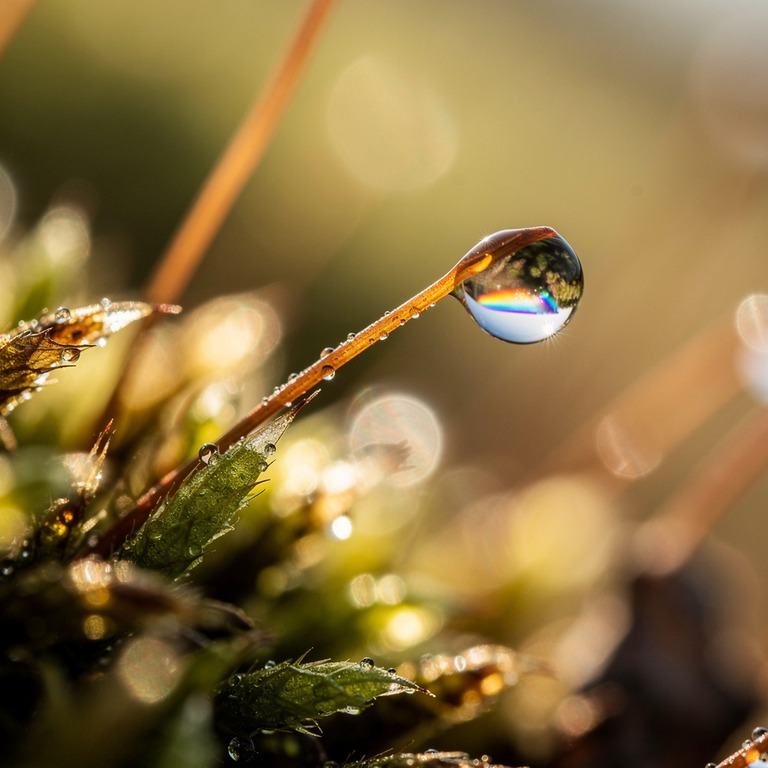
If you're looking for a bigger reset
Some people reading this will recognise the pattern and think, yes, that's me, I'll try palming tonight. Others will recognise it and know they need something larger — a real interruption to the rhythm that put them here. A silent retreat. A week of meditation somewhere the wifi is bad. For some, a plant-medicine retreat, where attention gets stripped down to something almost primal and then handed back to you, changed. These aren't the same paths, and none of them is required. But for the reader whose narrowing has gone beyond what a few eye exercises can address, a longer, deliberate pause is worth considering seriously — and a range of meditation and plant-medicine retreats can be browsed on our marketplace here.
The pink light over the rooftops still lasts only about ten minutes. Most evenings now, I'm at the window for it.

Craving More Stories?
Join our ShopAyahuascaRetreats newsletter for the latest updates on thrilling
destinations and inspirational tales, delivered straight to your inbox!
We value your privacy. Your email address will never be shared or published.