 English
 Deutsch
 Français
 Nederlands
 Español
SHOP AYAHUASCA RETREATS BLOG
Vipassana Retreats vs Plant Medicine: Which Path Fits You?

Cleo Adler
November 10, 2026
Your ultimate guide to discover transforming ayahuasca and psychedelic experiences. Dive into serene destinations and elevate your consciousness to unparalled heights.
Discover Ayahuasca & Psychedelic Retreats NowSearch for ayahuasca & psychedelic retreats
Discover retreats, trainings, and holidays from all over the world
Somewhere around day four of a Vipassana retreat, people start crying. Not all of them, but enough that the teachers warn you about it. No drugs. No music. No one touching you. Just a cushion, a wall, and your own breath doing laps around your nostrils for ten hours a day. And then — the tears show up, uninvited, from a basement you forgot you had.
I bring this up because I keep getting the same question from readers who are circling an ayahuasca or psilocybin retreat: should I try Vipassana first? Or the inverse: I did Vipassana and it cracked something open — am I ready for plant medicine now? These are good questions. They deserve better answers than the usual “follow your heart” nonsense you’ll find in most wellness blogs.
So let’s actually talk about it. What a Vipassana retreat is, what a psychedelic retreat is, where they overlap, where they very much don’t, and how to think about the decision if you’re weighing them against each other for healing, addiction recovery, or just untangling the knot you’ve been carrying around for a decade.
What Vipassana Actually Is (and Isn’t)
Vipassana in its modern, widely-practiced form comes through the lineage of S.N. Goenka — a Burmese-Indian teacher who systematized a ten-day silent course that’s now offered, free of charge, at centers all over the world. The technique itself is old. The marketing is minimal. The rules are strict.
You arrive, hand over your phone and books, agree to Noble Silence (no talking, no eye contact, no gestures), and then sit. The first three days you watch your breath. The remaining days you scan your body, sensation by sensation, cultivating equanimity toward whatever shows up. You get two vegetarian meals, a 4:00 AM wake-up bell, and roughly ten hours of formal meditation a day. There’s a nightly video discourse from Goenka explaining the theory.
What it isn’t: a spa, a yoga retreat, a dharma talk series, or a particularly “gentle” introduction to meditation. Several people quit every course. Your knees will hurt. Your mind will throw a tantrum worthy of a toddler who missed nap time. And nobody at the center will coddle you about it — which is, honestly, part of the point.
What a Psychedelic or Ayahuasca Retreat Actually Is
Now compare that to a plant medicine retreat. You fly to Peru, Costa Rica, Mexico, the Netherlands, Portugal — wherever the ceremony you’re drawn to is legally or traditionally held. You’re in a smaller group, usually six to twenty people. There’s a facilitator or shaman holding space. There’s a dieta beforehand (no alcohol, no pork, no sex, often no caffeine). And then, on ceremony nights, you drink or ingest something that rearranges your perception for anywhere from four to eight hours.
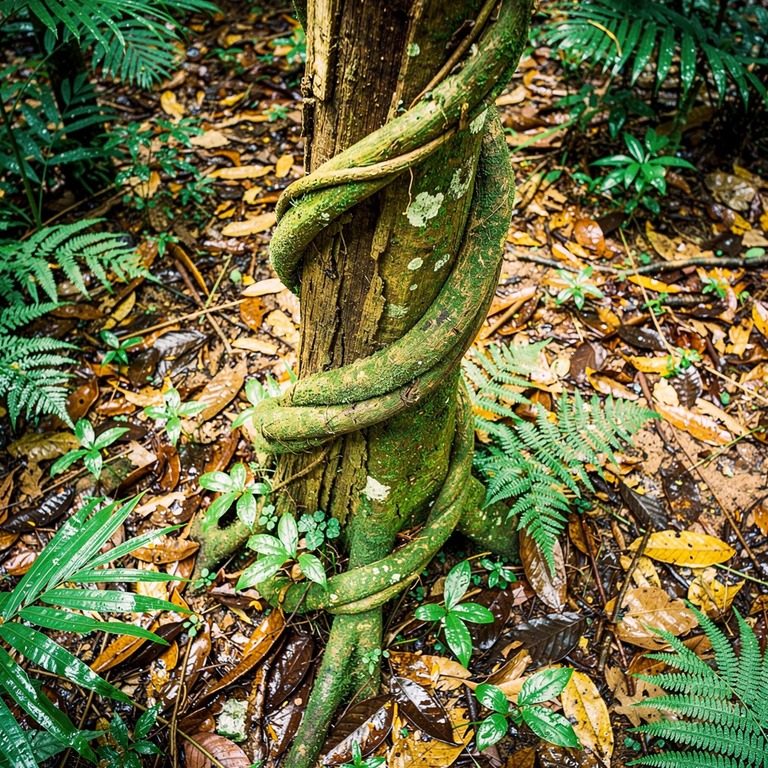
Ayahuasca is the best known of these — a brew of Banisteriopsis caapi vine and chacruna leaves, drunk in ceremony under the guidance of Amazonian-trained facilitators. But the broader category of master plants is wider: San Pedro (huachuma) in the Andes, psilocybin mushrooms in the Netherlands and Jamaica, iboga or ibogaine for addiction interruption, kambo for somatic reset, bufo (5-MeO-DMT) for the short, nuclear experiences people either love or deeply regret.
A retreat of this kind is not silent. There’s singing (icaros in the ayahuasca tradition), sometimes music, sometimes a facilitator sitting with you while you process something enormous. The container is relational and chemically assisted. The content tends to arrive fast.
How the Two Experiences Actually Differ
Here’s where it gets interesting. Both practices are aimed, broadly, at the same thing: seeing through the stories you tell about yourself clearly enough that they lose their grip. But the route is wildly different.
- Pace. Vipassana is slow. Painfully slow. You sit for days before anything “happens,” and when it does, it tends to be subtle — a softening, a sudden memory, a wave of grief that passes through and leaves. Ayahuasca is fast. By the second hour of your first ceremony, you may be face to face with something you’ve avoided for twenty years.
- Agency. In Vipassana, nothing is “done to you.” You’re the one generating the attention. In a psychedelic ceremony, the medicine is doing much of the driving — you’re holding on, letting go, surrendering.
- Integration difficulty. Vipassana insights tend to be quiet and portable. You walk out knowing something you didn’t know before, and life slowly rearranges around it. Psychedelic insights are often louder and harder to integrate — you got the download, now what do you do with it on a Tuesday morning at your desk?
- Risk profile. Vipassana has real psychological risks — people with untreated trauma or psychotic vulnerability have had serious crises on long retreats. Plant medicines carry those risks plus physical ones (drug interactions, cardiac considerations, the small but real possibility of a very hard night).
- Accessibility. Vipassana courses are donation-based. A ten-day course costs you airfare and time. A legitimate psychedelic retreat runs $1,500 to $8,000 depending on length, location, and lineage.
Can One Prepare You for the Other?
Short answer: yes, and in both directions, though the benefits are asymmetric.
If you’ve done Vipassana and are considering ayahuasca, you’re bringing a genuinely useful skill — the capacity to observe intense sensation without flinching away from it or grabbing onto it. That’s most of the work during a hard ceremony. Facilitators consistently say meditators tend to have an easier time staying with difficult material instead of fighting it. Not easier journeys, necessarily. Just better equipped.
Going the other way is trickier. A powerful ayahuasca or psilocybin experience can leave you convinced you’ve “seen” something that silent practice would take years to reveal. Sometimes that’s true. Sometimes you’re just lit up on neurochemistry and a good shaman. Vipassana after a big psychedelic experience can be humbling — you discover that noticing the breath for an hour without drifting off is still hard, download or no download.
The honest take: they’re complementary, not interchangeable. Psychedelics can crack the door open. Contemplative practice is how you learn to walk through it on your own.
Which One Fits Which Kind of Seeker?
Nobody can tell you this for sure, but here are the patterns I’ve seen after years of talking to people on both sides:
- If you’re dealing with addiction — particularly opioid or alcohol dependence — ibogaine and ayahuasca have a track record that Vipassana, for most people, doesn’t match. The interruption that ibogaine provides to opioid withdrawal is well-documented. That said, long-term sobriety almost always involves ongoing contemplative or therapeutic work. The medicine is a reset, not a cure.
- If you’re working through PTSD or complex trauma, proceed slowly in both directions. Vipassana without a trauma-informed teacher can reactivate things you can’t process in silence. Psychedelics without an experienced facilitator can do the same, faster. Research the lineage. Ask about mental health screening. If a retreat doesn’t screen you carefully, that itself is a red flag.
- If you’re depressed and stuck, both can help, and the research on psilocybin for treatment-resistant depression is genuinely promising. Vipassana tends to require more baseline energy to tolerate — ten days of sitting when you can barely get out of bed is a tall order.
- If you’re spiritually curious but not in crisis, Vipassana is the safer, cheaper, more sustainable starting point. You can always try plant medicine later if silent practice leaves you wanting a different angle.
Questions to Ask Before You Commit to Either
Whichever direction you’re leaning, the questions worth sitting with are similar:
- What am I actually hoping this will resolve? Can I name it in one sentence?
- Have I spoken with a therapist or doctor about my current mental and physical health?
- Do I have ten clear days (Vipassana) or two to three weeks (psychedelic retreat plus integration) where I can genuinely unplug?
- What’s my support system when I come back? Who can I call at 2 AM if something surfaces?
- Am I running toward something, or running away from something?
That last one is worth sitting with longer than the others. Both paths have a way of catching you up to whatever you’re avoiding, eventually. It’s cheaper to notice it now than at hour three of a ceremony or day six of a retreat.
A Final Note
The seekers I respect most tend to combine both practices over time. They’ll do a Vipassana course, then a ceremony a year later, then more silent practice, then integration therapy, then maybe another ceremony five years on. The plant medicine opens territory. The meditation teaches you how to live there.
If plant medicine is the direction you’re currently drawn toward, a curated range of ayahuasca and psychedelic retreats can be browsed on our marketplace here. Whatever you choose, choose slowly. Both of these are doors that open in only one direction — once you’ve walked through, you’re not the same person who knocked.
Craving More Stories?
Get your free guide on how to choose a psychedelic retreat, plus upcoming retreats and new reading every two weeks.
We value your privacy. Your email address will never be shared or published.