 English
 Deutsch
 Français
 Nederlands
 Español
SHOP AYAHUASCA RETREATS BLOG
Phones on Mushrooms: Why Screens and Psilocybin Are a Bad Mix

Ezra Caldwell
September 27, 2026
Your ultimate guide to discover transforming ayahuasca and psychedelic experiences. Dive into serene destinations and elevate your consciousness to unparalled heights.
Discover Ayahuasca & Psychedelic Retreats NowSearch for ayahuasca & psychedelic retreats
Discover retreats, trainings, and holidays from all over the world
There's a moment about ninety minutes into a mushroom trip when your brain, still adjusting to the fact that the ceiling is now breathing, decides it wants to check something. Anything. A message. The time. A song. And your hand drifts, almost without permission, toward the small glowing rectangle on the nightstand.
Don't.
Or at least — pause long enough to read this first. Because using your phone on psilocybin is one of those decisions that seems perfectly reasonable in the moment and then, an hour later, becomes the thing you cannot stop thinking about. Psychedelics amplify whatever you feed them, and phones are engineered to feed you a lot.
What Actually Happens When You Look at a Screen on Mushrooms
Psilocybin loosens the filters your brain normally uses to prioritise information. Colours saturate. Patterns emerge in wood grain and bathroom tiles. Emotional weight attaches to things that would normally slide past unnoticed. This is the whole point — it's why people describe the experience as revelatory, or terrifying, or both in the same ten minutes.
Now hand that unfiltered brain a device designed by teams of behavioural scientists to hijack attention. Notifications flash. Colours pulse. A dozen small psychological hooks fire at once. What feels like a mild dopamine tickle when sober can feel enormous, invasive, almost violent when you're four grams deep. People describe it as being yanked out of a warm bath into fluorescent lighting.
Some report the opposite — the screen becomes hypnotic, fractals crawling across the icons, hours vanishing into a rabbit hole of YouTube autoplay that they cannot remember choosing. Neither outcome is what most people signed up for when they chose to take a psychedelic.
The Social Media Trap
Instagram on mushrooms is a special kind of hell. Every filtered face, every performative caption, every carefully composed brunch photo lands with a strange emotional thud. You start noticing the artifice. Then you start noticing your own posts. Then you're spiralling into a strange, half-lucid audit of your entire online presence at 2 a.m.
Twitter, or whatever we're calling it now, is worse. Rage-bait and hot takes hit differently when your emotional processing is turned up to eleven. Users have described sober-seeming political posts triggering full-blown existential crises during a trip — not because the posts were unusually powerful, but because psilocybin stripped away the usual armour we wear when we scroll.
And then there's the message you shouldn't send. Every experienced tripper has one — the ex, the estranged parent, the friend they haven't spoken to in years — sitting in the contacts list, suddenly feeling like the most urgent conversation of your life. The morning after tends to reveal that it wasn't.
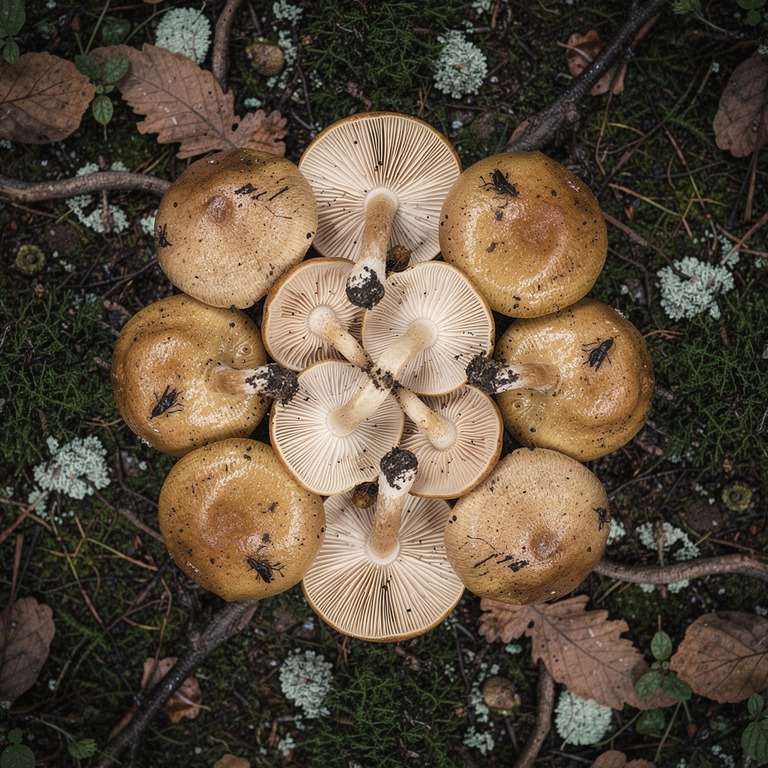
Why the Impulse to Reach for the Phone Is So Strong
Here's the uncomfortable part. Most of us pick up our phones dozens of times a day out of pure reflex — a small anxious tic that fills any gap in stimulation. That reflex doesn't disappear when you take mushrooms. If anything, it becomes more visible, more frequent, and more absurd.
Psychedelics have a way of putting your habits under a microscope. If you spend the first hour of your trip fighting the urge to check your phone, congratulations — you've just learned something uncomfortable about your daily life. Many people describe this as one of the more useful insights of the whole experience, and it doesn't require actually giving in to the impulse.
The trick is preparation. If the phone is in the room, the impulse wins some of the time. If the phone is in another room, in a drawer, or better yet handed to a sober friend, the impulse just becomes information — something to notice and let pass.
When a Phone Might Actually Be Useful
Fine — full honesty. There are a few narrow cases where a phone earns its place during a psychedelic session:
- Music. A curated playlist queued up before the trip, on airplane mode, screen face-down. Music is genuinely central to the psychedelic experience and most retreats build entire ceremonies around sound.
- A voice memo. Some insights are worth capturing. A single unlocked screen to hit record and then face-down again is a reasonable compromise.
- Emergencies. Having a phone reachable in case something goes sideways — medical, safety, or a bad-trip check-in with a trusted person — is basic harm reduction.
What all three have in common: the phone is being used as a specific tool for a specific purpose, then set down. It is not open. It is not connected. It is not waiting to feed you notifications.
How to Set Up Your Space Before You Dose
If you're planning a session at home — and plenty of people do, though a proper retreat setting has real advantages — the phone question is worth solving before the mushrooms hit. A few practical suggestions from people who've learned the hard way:
- Turn off every notification. Not just sound — banners, badges, the lot. Airplane mode is your friend.
- Queue your music before you dose. Playlists like the ones used in Johns Hopkins psilocybin trials are freely available and specifically designed for this.
- Put the phone somewhere inconvenient. Another room. A high shelf. Inside a bag inside a drawer. Friction is the goal.
- Delete or log out of social media apps for the day. If you have to reinstall Instagram to open it, you probably won't.
- Tell one trusted person you're taking mushrooms and when you expect to be lucid again. They become your emergency line — you don't need the whole internet.
None of this is complicated. It's just easier to do sober than to figure out at hour two when your executive function has taken a vacation.

The Case for Being Somewhere Without a Choice
This is where retreats start making sense to a lot of people. When you sit in ceremony at a legitimate psilocybin or ayahuasca centre, phones are typically collected before the session and returned the next morning. That single logistical decision removes an entire category of bad ideas from the table.
You're left with the actual experience — your breath, the music, the facilitator's presence, whatever the medicine is showing you. No pings. No temptation to text. No half-formed thought that gets externalised into a post you'll regret. Just the trip, the way it was meant to be met.
Plenty of people who have tripped both ways describe the retreat container as fundamentally different — not because the mushrooms were stronger, but because there was nothing pulling their attention sideways. If you're weighing whether to do this on your own or in a held setting, that alone is worth factoring in.
Integration Starts With What You Let In
Whatever insights come up during a trip need somewhere quiet to land afterwards. This is the part people underestimate. The hours and days after a session are when the material gets metabolised — journaled, walked with, slept on, talked through with someone who understands. Doomscrolling immediately after a ceremony is a bit like eating a fast-food meal right after a fast. Technically possible. Probably not what your system was hoping for.
Most experienced facilitators recommend a screen-light window on either side of a psychedelic experience — a day before, and ideally two or three days after. It doesn't have to be monastic. Just enough space for your own thoughts to be louder than the algorithm's.
The broader pattern is worth noticing on its own: if a single Instagram scroll can derail a mushroom trip, what is it doing to a regular Tuesday afternoon? That's the kind of question psychedelics tend to ask, whether you were expecting them to or not.
If any of this is making you curious about doing a session in a proper container rather than on your bedroom floor, a range of psilocybin and plant-medicine retreats can be browsed on our marketplace here. Whatever you decide, the phone belongs in the other room.

Craving More Stories?
Join our ShopAyahuascaRetreats newsletter for the latest updates on thrilling
destinations and inspirational tales, delivered straight to your inbox!
We value your privacy. Your email address will never be shared or published.