 English
 Deutsch
 Français
 Nederlands
 Español
SHOP AYAHUASCA RETREATS BLOG
Microdosing Psychedelics: What the Science Actually Says So Far

Ezra Caldwell
May 22, 2026
Your ultimate guide to discover transforming ayahuasca and psychedelic experiences. Dive into serene destinations and elevate your consciousness to unparalled heights.
Discover Ayahuasca & Psychedelic Retreats NowSearch for ayahuasca & psychedelic retreats
Discover retreats, trainings, and holidays from all over the world
Walk into any co-working space in Berlin, Austin, or Lisbon and you’ll probably bump into someone quietly convinced that a sliver of psilocybin every third morning is the reason they finally stopped doomscrolling and started writing again. Microdosing has crossed from Silicon Valley curiosity into something your accountant might mention over brunch. But underneath the chatter — the books, the podcasts, the carefully labeled tincture bottles — sits a stubborn question: does it actually work, or are people just feeling good about feeling like they’re doing something?
The honest answer, after a decade of renewed psychedelic research, is somewhere between “maybe” and “we genuinely don’t know yet.” If you’re researching microdosing as a possible path through depression, addiction, creative stagnation, or the general flatness of modern life, you deserve a real look at the evidence — not the breathless version, and not the dismissive one.
What Microdosing Actually Means
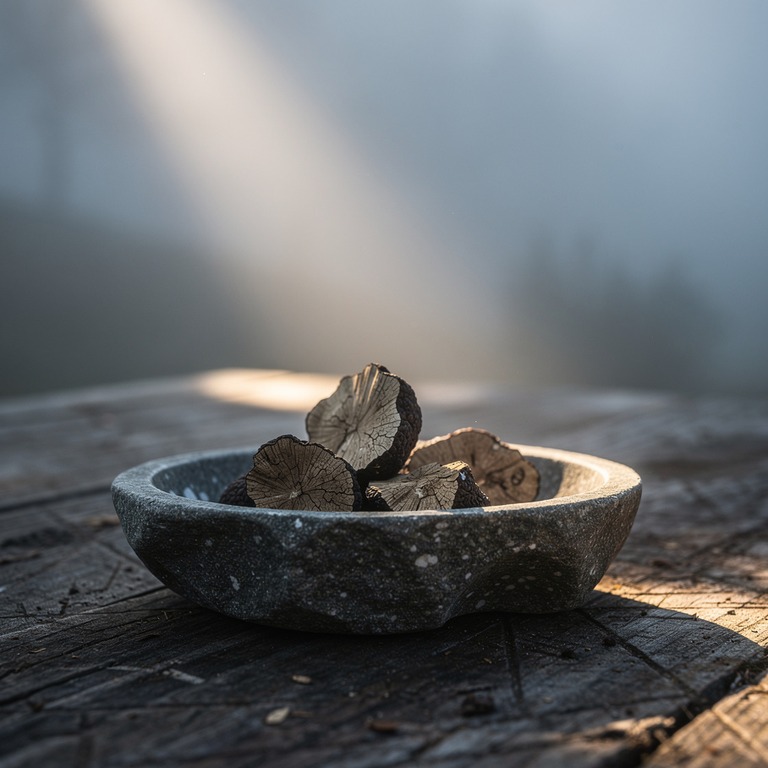
A microdose is a fraction of a recreational dose — roughly one-tenth to one-twentieth of what someone would take to have a full psychedelic experience. With psilocybin mushrooms, that usually lands around 0.1 to 0.3 grams of dried fruiting body, compared with the 2 to 3 grams that produce a proper journey. With LSD, the territory is somewhere between 8 and 15 micrograms versus a recreational 100 micrograms or more. The point is that you don’t feel the substance in any classic psychedelic sense. No visuals. No ego dissolution. No couch-melting.
That subperceptual quality is the whole pitch. Practitioners report a subtle lift in mood, sharper focus, more empathy with the people around them, occasionally a kind of background creative hum. The protocols vary — James Fadiman’s famous one-day-on, two-days-off schedule is probably the most cited — and most people cycle for four to eight weeks, then pause.
Here’s the problem with all of that, scientifically speaking: there is no single agreed definition of a microdose, mushroom potency varies wildly from flush to flush, and LSD is a tasteless, invisible compound whose dose you can only trust if your source is impeccable. Researchers studying this stuff are essentially trying to measure something that hasn’t been standardized yet.
Does Microdosing Actually Work, Or Is It Just Placebo?
The studies pull in two directions, and that’s worth sitting with rather than glossing over.
On the optimistic side, a number of large observational studies — including one that tracked roughly 950 psilocybin microdosers against a non-dosing control group over thirty days — have found small-to-medium improvements in mood, anxiety, and general mental health, fairly consistent across age, gender, and whether or not someone walked in with a mental-health diagnosis. That sounds promising, and it lines up with the thousands of anecdotal reports floating around the internet from people who swear it pulled them out of a funk.
On the skeptical side, the moment you tighten the methodology, the effect tends to shrink or vanish. In one randomized controlled trial, researchers gave half the participants real psilocybin and half a placebo. Subjectively, the dosing group reported feeling happier and more creative. Some even showed measurable changes on EEG. But on objective measures of creativity, cognition, and well-being? No meaningful difference from placebo.
That gap — between how people feel and what tests can actually detect — is the central puzzle. There are two reasonable interpretations:
- The benefits are largely an expectancy effect. You take something every few days that you believe will make you better, and your brain quietly delivers.
- The benefits are real but subtle, and our blunt research instruments aren’t sensitive enough to catch them yet.
Both can be partly true. Placebo is not nothing — it’s one of the most powerful forces in medicine. But “you’re just imagining it” is a thinner explanation than it sounds when thousands of people are reporting similar shifts.
Is Microdosing Safe?
Short-term, low-dose psilocybin appears to be physiologically gentle. Indigenous communities have worked with these mushrooms for centuries. There’s no evidence of organ toxicity at these doses, no addictive pull in the way alcohol or opioids grab people, and the acute risks of a microdose are minimal because you’re not actually having a psychedelic experience.
That said, the safety picture isn’t clean, for a few specific reasons:
- Source uncertainty. Psilocybin is produced by close to 200 species of fungi, and several look-alike mushrooms are genuinely dangerous — some attack the liver in ways that don’t announce themselves until it’s too late. Foraging without expertise is a bad idea, full stop.
- Dosage uncertainty. Without regulation, you don’t really know what you have. A “microdose” from one batch might be twice the potency of another. LSD is even harder to verify by eye.
- Long-term unknowns. Nobody has good data on what daily-ish microdosing does to a brain over five or ten years. There are theoretical concerns about heart-valve issues with chronic serotonergic stimulation, drawn from research on other compounds. Whether this matters at microdose levels is genuinely unknown.
- Mental-health considerations. People with personal or family histories of schizophrenia, bipolar disorder, or other psychotic-spectrum conditions are generally excluded from psychedelic studies for good reason. If that’s you, this is a conversation for a clinician, not a Reddit thread.
And then there’s the legal layer. In most of the United States and Europe, psilocybin and LSD remain controlled substances. Oregon and a handful of cities have shifted ground, and Colorado is moving in a similar direction, but possession charges are still very real. That alone is a reason a lot of people who would otherwise experiment instead choose to travel — to a legal jurisdiction, to a supervised setting, to a place where the substance is the medicine, not the legal liability.
Microdosing Versus the Full Psychedelic Experience
Here’s the part that doesn’t get said enough: most of the impressive clinical results we’ve seen for psychedelics in the last decade — for treatment-resistant depression, PTSD, end-of-life anxiety, alcohol use disorder, tobacco cessation — came from full doses, not microdoses. Big, immersive, sometimes difficult sessions, usually with trained facilitators present. That’s where the headline numbers live.
Microdosing is, in a sense, a much more modest proposition. It’s the daily multivitamin to ceremony’s open-heart surgery. If you’re looking for genuine, structural shifts in addiction patterns or deeply rooted depression, the evidence so far points toward higher-dose, supported experiences rather than a sprinkle every Monday and Thursday.
That doesn’t mean microdosing is worthless. It may genuinely help some people maintain or extend the benefits of a full experience. It may be useful for milder mood concerns. It may simply be a low-stakes way for someone to introduce psychedelics into their life. But conflating the two — assuming microdosing offers what a ceremonial dose offers, just slower — is a misread of the science.
If You’re Thinking About Trying It
A few practical points, said plainly:
- Talk to a doctor you trust, especially if you’re on SSRIs, lithium, MAOIs, or anything that interacts with the serotonin system. Some of those combinations are fine; some aren’t. You want to know which is which.
- Be honest about your mental-health history. Microdosing is not a place for self-experimentation if you have a serious psychiatric diagnosis.
- Know your source, or don’t do it. Mystery mushrooms from an acquaintance’s friend is not a plan.
- Keep a log. Mood, sleep, work output, social interactions. Without notes, you’ll remember the good days and forget the flat ones, which is exactly how expectancy effects survive.
- Cycle, don’t hammer. Tolerance builds quickly with these compounds, and continuous dosing tends to bring diminishing returns.
- Consider whether a structured retreat experience might actually be a better fit for what you’re trying to address. A lot of people start researching microdosing and eventually realize they’re looking for something deeper.
On that last point — if what you’re really chasing is meaningful change rather than a productivity tweak, a properly held ceremony with experienced facilitators tends to be where the real work happens. For readers who want to take that further, a range of curated psilocybin and plant-medicine retreats can be browsed on our marketplace here.
The science of microdosing will sharpen over the next few years, and the legal landscape is shifting faster than most people realize. For now, somewhere between the evangelists and the debunkers sits the most useful posture: curious, careful, and genuinely willing to admit that we don’t yet know what we think we know.
Craving More Stories?
Join our ShopAyahuascaRetreats newsletter for the latest updates on thrilling
destinations and inspirational tales, delivered straight to your inbox!
We value your privacy. Your email address will never be shared or published.