 English
 Deutsch
 Français
 Nederlands
 Español
SHOP AYAHUASCA RETREATS BLOG
Kambo Explained: What the Amazonian Frog Medicine Actually Does to You

Ezra Caldwell
June 11, 2026
Your ultimate guide to discover transforming ayahuasca and psychedelic experiences. Dive into serene destinations and elevate your consciousness to unparalled heights.
Discover Ayahuasca & Psychedelic Retreats NowSearch for ayahuasca & psychedelic retreats
Discover retreats, trainings, and holidays from all over the world
The first time someone described kambo to me, I assumed they were either pulling my leg or had spent too long in the sun. Burn small holes into your shoulder. Smear frog secretion on the burns. Vomit into a bucket for half an hour. Walk away feeling, supposedly, better than you have in years.
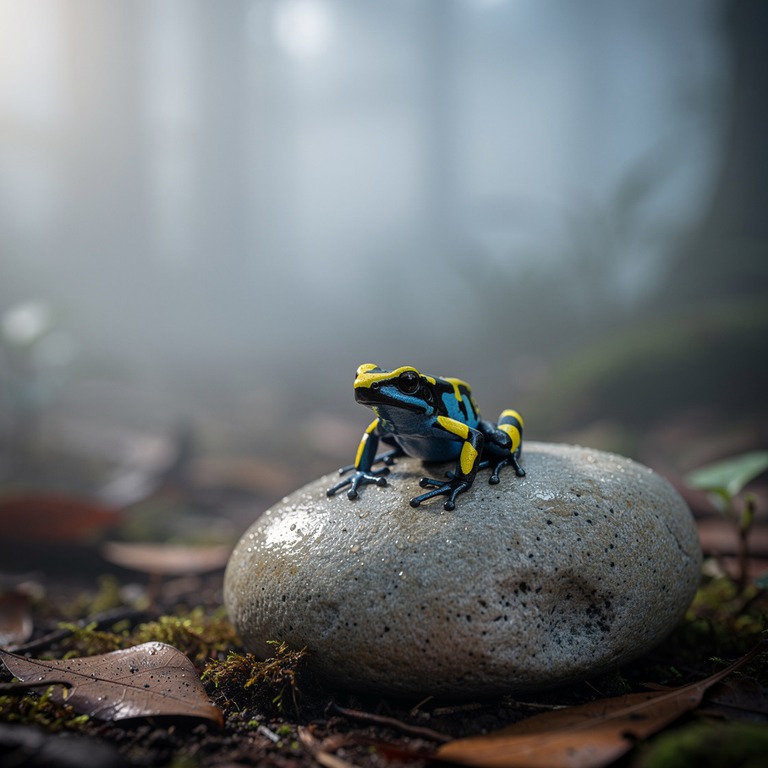
And yet here we are. Kambo — the venomous secretion of Phyllomedusa bicolor, a tree frog the size of your palm that lives in the upper canopy of the Amazon — has quietly become one of the most talked-about plant-and-animal medicines on the global healing circuit. It sits oddly inside the broader conversation about ayahuasca, psilocybin, and master plants. It isn't psychedelic. It doesn't unlock cosmic visions. It just kicks your body sideways for half an hour and, for many people, leaves something noticeably different in its wake.
If you're researching kambo because you've heard it might help with depression, chronic pain, addiction, or whatever stuck pattern brought you to this page, here's a clear-eyed walkthrough of what it actually is and what to weigh before you sign up for a ceremony.
What Is Kambo, Really?
Kambo is the waxy secretion produced by the giant monkey frog, an arboreal amphibian that lives high in the Amazon rainforest across Peru, Brazil, Colombia, and the Bolivian basin. In traditional practice, tribes including the Matsés, Katukina, Yawanawá, and Kaxinawá have used it for centuries — sometimes longer — as a hunting aid, a strength booster, and a way to clear what's often translated as panema: bad luck, fog, the heaviness that sits on a person who's been off-track too long.
The secretion itself is a chemistry lab in miniature. It contains dozens of bioactive peptides — dermorphin, deltorphin, phyllomedusin, phyllocaerulein, and others — that act on opioid receptors, vascular tissue, the gut, and the immune system. Pharmaceutical researchers have spent decades studying these compounds, hoping to isolate the bits that show promise for pain management, infection resistance, and inflammation. Interestingly, the frogs won't produce the secretion in captivity outside the rainforest. Something about their ecosystem is non-negotiable, which is part of why traditional, in-jungle harvesting still matters.
Worth noting: kambo is not a psychedelic. There is nothing in it that alters perception, opens up visions, or sends you traveling through the dimensions of your psyche. People sometimes lump it in with ayahuasca because of its Amazonian provenance, but the experience is closer to a brutally efficient detox than a journey. Different category entirely.
What Actually Happens in a Kambo Ceremony
Here's the part most articles dance around. A standard kambo treatment is short — usually 20 to 40 minutes of active discomfort — but it's a vivid 20 to 40 minutes.
You arrive having fasted, usually for 8 to 12 hours. The practitioner has you drink about a liter or two of water beforehand, which is essential — it gives your body something to purge. Small dots are burned into the skin, typically on the upper arm or shoulder, using a thin stick or piece of vine. The burns are shallow — they remove only the top layer of skin and don't draw blood. The dried kambo paste is rehydrated and applied as small dots on each burn.
Within thirty seconds or so, things start happening. Your heart rate climbs sharply. Your face flushes hot and swells — the so-called frog face. You feel a heavy pressure rise from your stomach, your blood pressure shifts, and your limbs may tingle or feel oddly disconnected. Then comes the purge: vomiting, sometimes diarrhea, sometimes both at once (which is exactly as undignified as it sounds). For most people, this is the part where they think, briefly and sincerely, why did I agree to this.
After the secretion is wiped off — usually after one or two rounds of purging — the worst of it passes within minutes. The swelling subsides. The heart rate normalizes. And then, for many people, something shifts. A quietness. A clarity. A kind of mental floor-sweeping that's hard to put into words but unmistakable when it happens. Reports of that calm lasting days, weeks, or longer are common, though not universal.
Who Uses Kambo, and What For?
The list of conditions people seek out kambo for has grown long enough to be slightly suspicious — any time a healing modality claims to address everything from migraines to infertility, your skeptic radar should ping. That said, the patterns that come up most often, and most credibly, are:
- Depression and chronic low mood, particularly the foggy, immovable kind
- Chronic pain and inflammatory conditions like arthritis or Lyme
- Addiction and substance dependence — kambo is sometimes used as a reset between psychedelic work or as part of recovery
- Anxiety and PTSD, especially the somatic, body-locked variety
- Autoimmune flare-ups and chronic infections
- Spiritual stuckness — that vague sense of being weighed down and not knowing why
Within the broader plant-medicine world, kambo often shows up alongside ayahuasca ceremonies, ibogaine treatments, or psilocybin retreats — not as a replacement, but as a companion. Many practitioners use it to prepare the body and clear gunk before deeper psychedelic work, or as integration support afterward. It's also frequently paired with two other Amazonian allies: rapé (a tobacco-based snuff) and sananga (eye drops made from a rainforest root).
Where kambo fits into addiction recovery is particularly interesting. Because it isn't psychoactive, it doesn't carry the same regulatory or psychological complications as psychedelic therapies. It works on the body — the nervous system, the lymph, the gut — and many people report it interrupts cravings and clears the post-use fog in a way that gives them traction they didn't have before.
Is Kambo Safe? The Honest Answer
Kambo is legal in essentially every country in the world. It's also not a toy.
Done by a competent practitioner on someone without contraindications, kambo is generally considered safe — the body's reaction is intense but short, and most people walk away tired but fine. That said, there have been deaths associated with kambo use, almost all of them tied to one of two things: untrained practitioners, or participants who had a serious contraindication that wasn't screened for.
The contraindications are real and non-negotiable. Don't take kambo if you:
- Have serious heart conditions, recent cardiac surgery, or arterial aneurysms
- Have had a stroke or brain hemorrhage
- Are pregnant or breastfeeding
- Have epilepsy or a seizure disorder
- Have Addison's disease, severe low blood pressure, or are on certain immunosuppressants
- Have psychotic disorders that aren't well-managed
- Are recovering from major surgery or chemotherapy within the past 4–6 weeks
A trained practitioner will run you through a full medical intake before agreeing to work with you. If someone doesn't ask about your medications, your blood pressure history, your heart, and what you ate yesterday — walk away. That's a red flag the size of the rainforest itself.
The other major risk is hyponatremia: drinking too much water before or during the ceremony, diluting your sodium dangerously. A good practitioner manages your water intake carefully. Again — if they don't, leave.
How to Choose a Kambo Practitioner
Because kambo sits in this odd legal-but-unregulated space, the quality of practitioners varies wildly. Some are deeply trained, hold certifications from organizations like the IAKP (International Association of Kambo Practitioners), and have apprenticed with indigenous lineage holders. Others watched a few videos and bought a stick online. You want the first kind.
Questions worth asking before you book:
- What's your training lineage, and how long have you been practicing?
- Do you do a full medical screening before the session?
- How do you handle emergencies — do you have first-aid training and the right equipment?
- Where do you source your kambo, and do the funds support the frog's native communities?
- How many points do you typically start a first-timer with? (For a newcomer, three to five is normal. Twenty is reckless.)
- What's your aftercare protocol?
The sourcing question matters more than people realize. Ethical kambo is collected without harming the frogs — they're gently held, the secretion is scraped off, and they're released. Practitioners working with reputable suppliers know exactly where their medicine comes from. The frog is also under increasing biopiracy pressure as Western interest grows, so supporting practitioners tied to indigenous-led harvesting actually matters.
What to Do Before and After
Preparation is simple but worth taking seriously. The day before, eat lightly and avoid alcohol, heavy meats, and processed food. Stop eating around 8–10 hours before the ceremony. Some practitioners ask you to abstain from sex, caffeine, and intense exercise for 24 hours beforehand. Follow whatever they tell you.
After, expect to feel tired. Many people sleep deeply that night and wake up feeling oddly clear. The first 24 hours are a good window to keep things gentle — light food, water, time outside, no screens if you can swing it. Some people experience an emotional release in the day or two following, particularly if there was old grief or anger sitting in the body. That's normal. Let it move.
If you're combining kambo with other plant-medicine work — ayahuasca, San Pedro, psilocybin — talk to your practitioner about spacing. A common pattern is kambo a few days before a ceremony to prep the body, then again a few weeks after to support integration.
Is Kambo Right for You?
Honestly, only you can answer that. Kambo isn't for everyone. If the idea of vomiting into a bucket while your face puffs up sounds like a nightmare you'd pay good money to avoid, your instinct is probably worth listening to. It's not the only path. Plenty of other Amazonian medicines work more gently.
But for the right person — someone who's tried other approaches, who feels physically and emotionally stuck, who isn't afraid of a short, sharp shock to the system — kambo can be genuinely remarkable. It strips you down to something simple, and for some people that simplicity is the most useful thing they've encountered in years.
If kambo or related Amazonian healing work feels like something you want to take further, a range of curated plant-medicine retreats — including programs that incorporate kambo alongside ayahuasca and other master plants — can be browsed on our marketplace here. Take your time, ask hard questions, and trust the call when it comes.
Craving More Stories?
Join our ShopAyahuascaRetreats newsletter for the latest updates on thrilling
destinations and inspirational tales, delivered straight to your inbox!
We value your privacy. Your email address will never be shared or published.