 English
 Deutsch
 Français
 Nederlands
 Español
SHOP AYAHUASCA RETREATS BLOG
Kambo Ceremony, Round Two: Sitting With Fear and the Frog

Lila Novak
May 20, 2026
Your ultimate guide to discover transforming ayahuasca and psychedelic experiences. Dive into serene destinations and elevate your consciousness to unparalled heights.
Discover Ayahuasca & Psychedelic Retreats NowSearch for ayahuasca & psychedelic retreats
Discover retreats, trainings, and holidays from all over the world
The second time around, I thought I knew what I was walking into. I didn't. That's the thing about kambo — and most plant medicine, really. You show up with one set of expectations and the medicine quietly hands you a different agenda. My first kambo journey had been intense but luminous. I left it feeling scrubbed clean from the inside, hyper-aware of what my body wanted to eat, drowning in something close to self-love. So when two old friends — both deep in shamanic ceremony for years — invited me over for an afternoon sit, I said yes almost reflexively. Sunday afternoon. Bike ride away. Empty calendar. Why not?
Be careful what you wish for.
Walking In Already Half-Afraid
My friend opened the door and I felt the fear arrive before I'd even taken off my shoes. Bodies remember. Mine remembered the bottles of water lined up like soldiers, the bucket waiting nearby, the heat that climbs up the arm and settles inside the skull. For a second I genuinely thought about turning around. Going home. Saying I forgot something. But I was there. The soup was on the stove. My friends were smiling. And honestly — last time had been beautiful. Hard, yes. But beautiful. How much worse could a second round be?
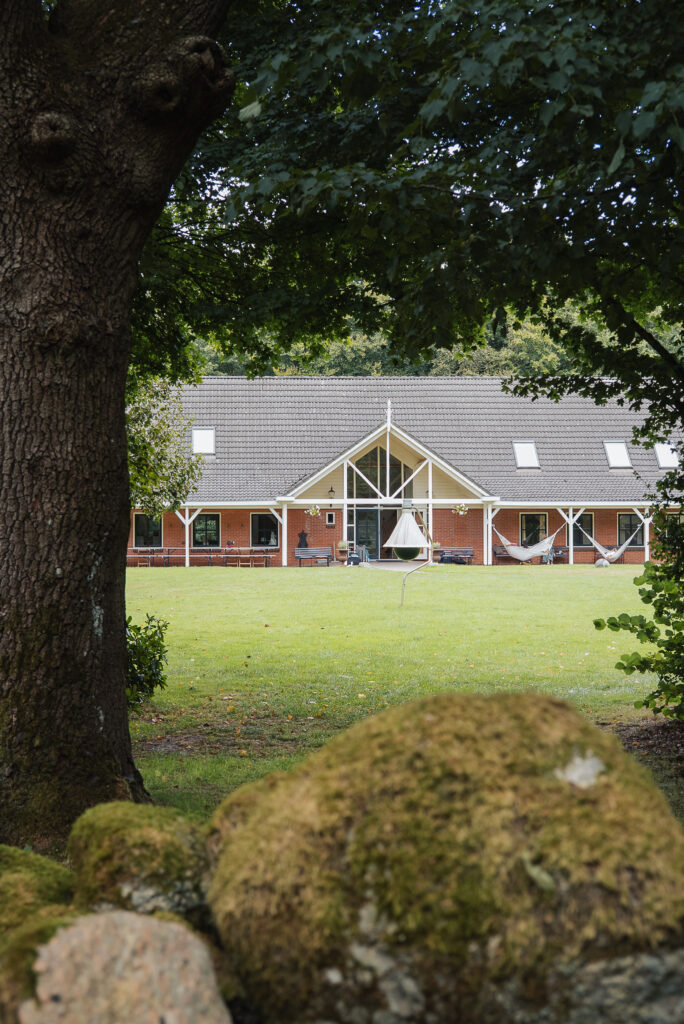
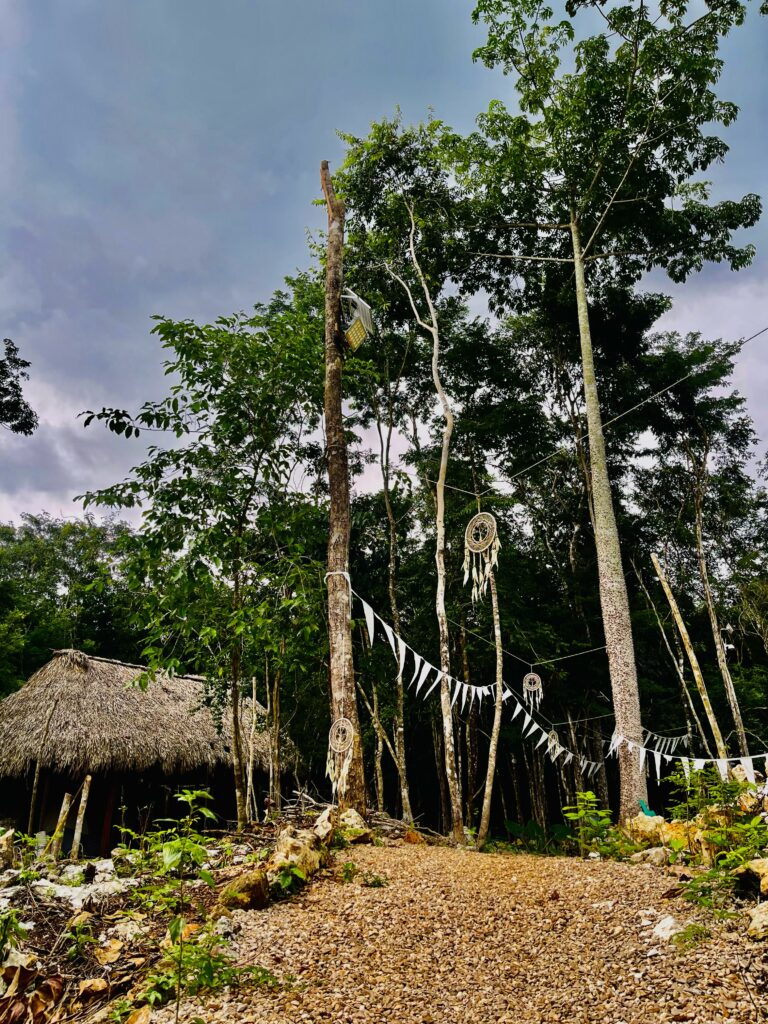
The four of us sat in a circle inside what used to be a classroom, now part of an artist commune. Feathers on the walls, dream catchers, the smell of old wood. A friend handed me a small carved frog made of green stone — jade or something similar. Whoever held the frog got to speak. The others listened. It's a simple device but it does something to a room.
“What's your intention?” he asked.
Usually I arrive with a clear one. I'd journaled, I'd thought it through, I knew exactly what I wanted to look at. This time I had nothing. I closed my eyes and waited. The answer surfaced almost on its own: I want to learn how to sit with fear. Not push it away, not perform around it, not make anyone else responsible for it. Just sit with it. I passed the frog along and we smiled at each other across the circle. There's a particular kind of intimacy in admitting your fear out loud to people who aren't going to flinch.
What Rapé Actually Feels Like
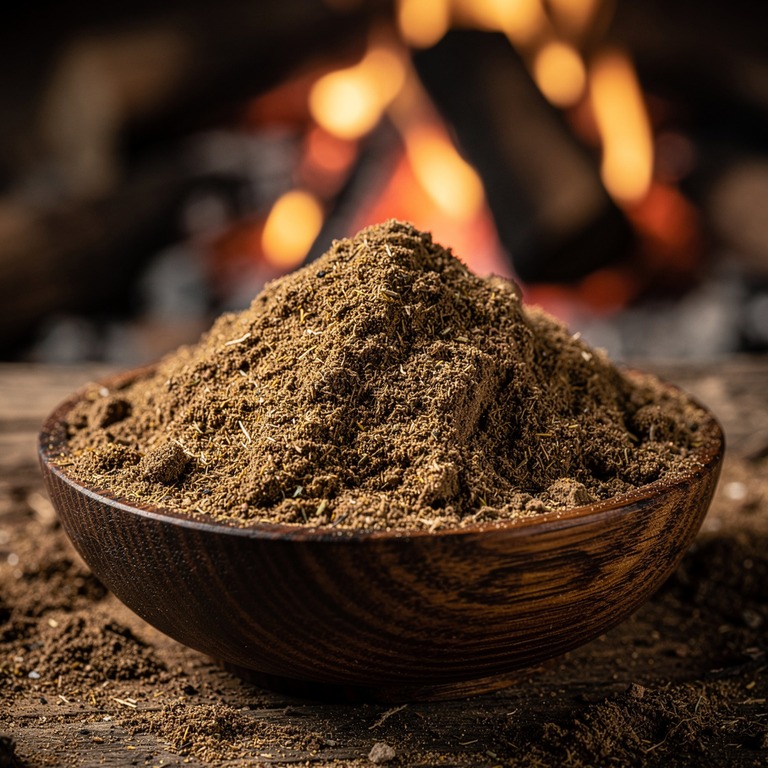
Before we got to the kambo, my friend offered rapé. I'd only heard about it a few weeks earlier, which felt like one of those convenient synchronicities the universe occasionally throws your way. For anyone who hasn't come across it: rapé (pronounced ha-PAY) is a finely ground powder made from tobacco mixed with the ashes of certain sacred trees. It's blown into your nostrils through a V-shaped wooden pipe by another person — you can't really self-administer it properly. The active compounds absorb through the nasal tissue and reach the brain almost immediately.
She knelt in front of me, knees touching mine, and tipped a small mound of green powder into the pipe. Deep breath in. The pipe against my left nostril. A short, sharp exhale from her end — and the powder hit. The sting climbed straight into my skull. My left eye watered immediately. We did the right nostril next. Then I sat there, mouth open, drooling into the bucket like a baby, while a hot wave rolled up through my torso and into my head.
What I didn't expect was the sense of power. Not arrogance — more like a clean, undeniable awareness that there was a serious reservoir of strength inside me. I wanted to bottle it for the days I feel small. The rush peaked, then softened, then left me with this quiet, slightly nauseous clarity. The colors in the room had brightened. The inner critic that usually narrates everything had simply gone quiet. Beautiful, actually. Worth mentioning if you've never tried it: the experience varies wildly depending on the blend, the moment, and who's blowing it. Some people get a clean grounding; others end up vomiting. It's not a party drug.
Choosing the Burns
“How many dots, and where?” my friend asked. Traditionally men get them on the upper left arm, women on the lower left leg. He left it open. I noticed my left hand was already gripping my right shoulder, almost without my deciding. So — four dots, right shoulder. He nodded; he'd been thinking the same number.
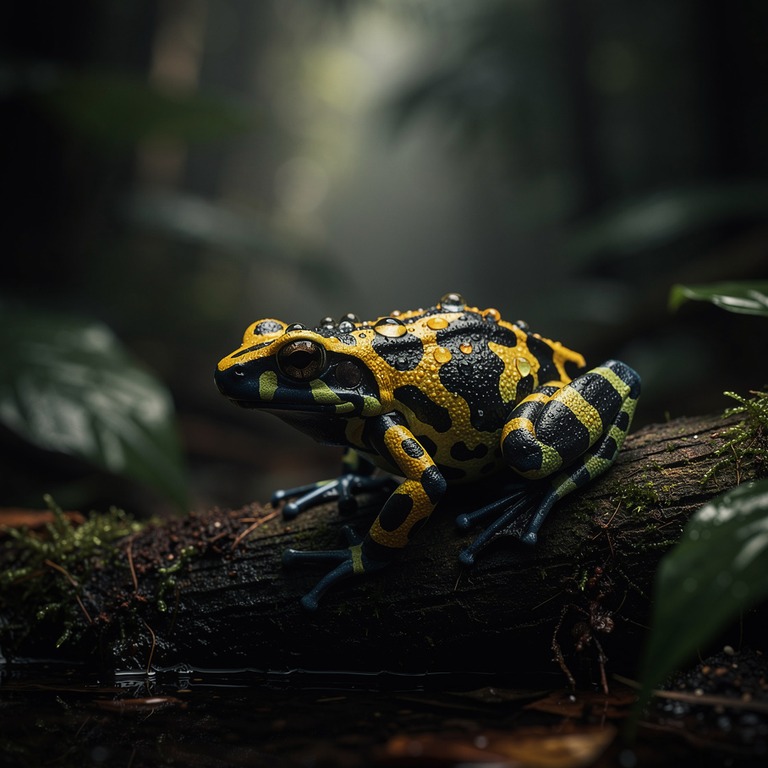
The kambo process itself is straightforward and strange. You drink a lot of water — at least a liter, ideally more — to give the body something to purge. The points are made by lightly burning the top layer of skin with the tip of a smoldering stick. Then a small amount of the frog secretion is placed on each burn. The medicine enters through the lymphatic system, not the bloodstream, which is part of what makes it so fast.
I started purging before he'd even finished the burns. The fear I'd named as my intention was already climbing my throat. I made the bucket just in time. My friend laughed gently and told me to keep drinking. So I did. Another liter or so, until any more would have come straight back up.
Inside the Wave
The first dot of medicine touched my skin and the heat went everywhere at once. Down my arm. Up my neck. My face felt like it was inflating. The inside of my mouth swelled — I was briefly relieved I could still breathe through it. My head dropped onto my knee and the fear flooded back in full strength. And here's the part I want to be honest about, because it's the part nobody really markets:
I noticed, in that moment, how badly I wanted someone to rescue me. To hold my hand. To say something soothing. To take the feeling away. My friends had offered all of it — they were sitting right there. But I had a choice. Reach for relief, or stay. I stayed. Not heroically. Just stubbornly. I knew the wave would pass. I knew there was no story that needed solving, no version of me that needed saving. I just had to hold my own knees and breathe.
After what was probably twenty minutes but felt longer, I crawled to a couch a few meters away. Could not find a comfortable position to save my life. Tried every side, gave up, ended up cross-legged with sun on my closed eyelids. The intensity slowly drained out. My head still felt enormous, but the fear had loosened its grip.
The Frog Face Is Real
When I finally touched my lips, they were not my lips. Kambo sometimes leaves you with what facilitators call frog face — puffy lips, swollen eyelids, the works. It fades within a day or so. I looked in the mirror and laughed. I was grateful I didn't have plans. The whole afternoon had compressed into maybe ninety minutes of actual ceremony, and now we were drifting back into the sharing circle, this time with a huge stuffed frog as the talking object. I looked at the three people in the room and felt like I could actually see them — past the small talk, past the personality, into whatever quiet thing was underneath. That part doesn't translate to writing very well. You either know the feeling or you don't yet.
The Week After Was Worse Than the Ceremony
Here's what I wasn't expecting. After my first kambo round, the afterglow had been delicious — clean senses, intuitive eating, a steady hum of self-love. This time, the medicine handed me my intention with both hands. Every fear I had agreed to look at came marching through, one after another, for an entire week.
- Fear of being manipulated.
- Fear of not being good enough.
- Fear of not giving enough.
- Fear of not earning enough.
- Fear of being abandoned.
I'm used to emotional weather. This was a storm. But each time a fear surfaced, I remembered the imprint from the ceremony — that I didn't need to leak it onto anyone. I didn't need to find someone to blame, or someone to soothe it for me. I could ask: is this thought actually true? Am I currently making someone else responsible for my own discomfort? It's a useful little knife to carry around.
None of which means I sat there silently swallowing everything. Boundaries matter. Desires matter. Expressing them matters. But what happens after you express them isn't yours to control. When you make yourself vulnerable, you're also making yourself reachable — and reachable means occasionally hurt. The medicine didn't make that easier. It just made it more obviously worth it.
If You're Considering Kambo
A few honest notes, because I get asked. Kambo isn't psychedelic — there's no visionary component, no altered headspace in the way ayahuasca or psilocybin produces. It's somatic. Physical. Brutally physical for about thirty minutes. The work happens in the body and in whatever you're forced to confront while your body is busy.
It also isn't risk-free. There are real contraindications — heart conditions, low blood pressure, pregnancy, certain medications, recent surgery — and a responsible facilitator will ask about all of them before you sit. If they don't ask, don't sit with them. Hydration matters. Fasting beforehand matters. Sitting with experienced people matters. This is one of those medicines where the difference between a good practitioner and a careless one is significant.
And the afterglow, as I learned, isn't guaranteed to be pleasant. Sometimes the medicine clears space; sometimes it surfaces everything that was sitting in that space. Both are useful. Neither is comfortable.
If something in this resonates and you want to take a closer look, a range of curated kambo and plant-medicine ceremonies can be explored on our marketplace here. Whatever you choose, choose slowly. The frog will wait.
Craving More Stories?
Join our ShopAyahuascaRetreats newsletter for the latest updates on thrilling
destinations and inspirational tales, delivered straight to your inbox!
We value your privacy. Your email address will never be shared or published.