 English
 Deutsch
 Français
 Nederlands
 Español
SHOP AYAHUASCA RETREATS BLOG
Ayahuasca in a Pill: What the Push to Standardize the Brew Really Means

Fiona Holloway
May 20, 2026
Your ultimate guide to discover transforming ayahuasca and psychedelic experiences. Dive into serene destinations and elevate your consciousness to unparalled heights.
Discover Ayahuasca & Psychedelic Retreats NowSearch for ayahuasca & psychedelic retreats
Discover retreats, trainings, and holidays from all over the world
A pill version of ayahuasca. Read that again. The brew that Amazonian peoples have prepared in clay pots for centuries — the one that takes hours to cook, smells like wet earth and burnt molasses, and tastes like something your worst enemy might serve you — is now being engineered into a standardized capsule by a Canadian biotech firm.
If you've been following the psychedelics space, you saw this coming. The race to medicalize plant medicine has been gathering speed for a few years now, and ayahuasca was always going to land in someone's lab. The question isn't really whether it would happen. It's what happens next — to the science, to the ceremony, and to the Indigenous communities whose knowledge made the medicine possible in the first place.
What's Actually Being Proposed
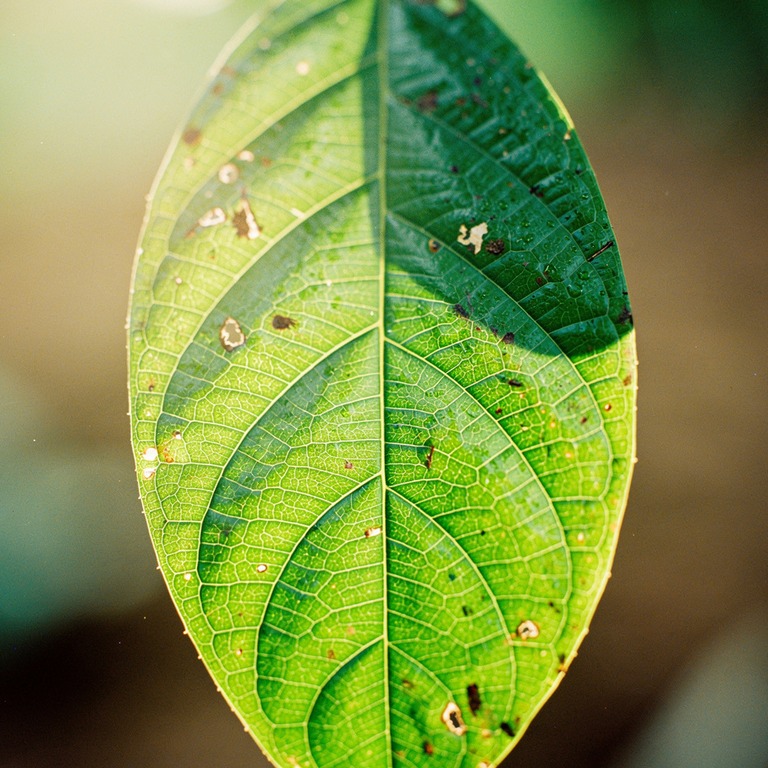
Filament Health, a Canadian company working in the natural-products end of the psychedelic industry, announced it's developing a standardized extract drawn from the two plants traditionally used to brew ayahuasca: the chacruna shrub (Psychotria viridis) and the vine known across the Amazon as cipó-mariri or yagé (Banisteriopsis caapi). The chacruna leaf provides DMT, the molecule largely responsible for ayahuasca's famous visions. The vine contains MAO inhibitors — the chemical key that allows DMT, normally broken down in the gut, to reach the brain when taken orally.
Without one, the other doesn't work. That pharmacological partnership is part of why ayahuasca has fascinated researchers and Indigenous peoples alike: it's a piece of biochemical sophistication that was figured out in the rainforest long before anyone could spell tryptamine.
Filament's pitch is that their extract preserves the full chemical fingerprint of both plants — the alkaloids, the beta-carbolines, the supporting compounds — rather than just synthesizing DMT and harmine separately. They're banking on something the cannabis world calls the entourage effect: the idea that the whole plant matrix does something more nuanced than its isolated parts. And unlike a traditional brew, where potency swings wildly from one batch and one curandero to the next, a pill can be dosed to the milligram.
Why Standardization Matters for Research
For clinical research, this is a real argument. A 2018 trial at Brazil's Federal University of Rio Grande do Norte showed ayahuasca producing rapid and lasting improvements in patients with treatment-resistant depression — the kind of result that turns heads at psychiatric conferences. But that study used brew sourced from a Barquinha church, and the next study elsewhere would use a different brew with a different chemical profile. Reproducing results across labs becomes a guessing game.
A standardized capsule sidesteps that. Phase I and Phase II trials need known doses. The FDA needs known doses. Insurance companies, eventually, will need known doses. If ayahuasca is going to enter mainstream addiction recovery and mental-health care — and there are credible reasons to think it could help with depression, PTSD, and substance dependence — somebody, at some point, has to put it in a form regulators can stamp.
Filament has partnered with the University of California San Francisco's translational psychedelic research group on this work. Their psilocybin extract program is further along (Phase II); the ayahuasca side is still early.
The Problem No Lab Can Solve
Here's where it gets uncomfortable.
Ayahuasca is not an invention. It is, by every honest account, a gift of Indigenous Amazonian knowledge — refined across hundreds of generations by Shipibo, Asháninka, Shuar, Cofán, and dozens of other peoples who don't get cited in patent filings. The Nagoya Protocol, an international biodiversity treaty most countries have signed, requires that any commercial use of traditional biological knowledge involve prior informed consent from the source communities and a real benefit-sharing arrangement. Not a press release. Not a vague promise. An actual agreement.
When asked which Indigenous groups had consented to Filament's project, the company's CEO said they'd consulted with communities in Peru but declined to name them or share details, citing the early stage of research. That answer hasn't satisfied anyone who's been watching this space. The 4th Indigenous Ayahuasca Conference — which gathered representatives from 35 traditional groups — issued a clear public statement against the patenting and commercialization of ayahuasca. They didn't leave room for interpretation.
Beatriz Labate, the anthropologist who runs the Chacruna Institute and has spent her career inside this conversation, asked the questions a lot of us are asking:
Has there been any previous and informed consent from Indigenous organizations? Is there a project for reciprocity and benefit sharing? How much money has been set aside for natural species conservation, cultural appropriation, justice, equity, extractivism, biopiracy? Where do the plants used in research come from? How to reconcile commercialization and medicalization with the plants' sacred status?
These aren't rhetorical jabs. They're the actual ethical hinges this whole industry will swing on.
Can You Patent a Plant That Predates Patents?
Short answer: not really. Ayahuasca itself isn't patentable in any honest legal sense — there's no novel invention in something humans have been brewing since before writing existed. A U.S. patent issued in 1986 on a strain of Banisteriopsis caapi was eventually overturned after years of Indigenous-led legal pressure, and that case set an important precedent.
What companies can patent are extraction methods, stabilization processes, specific formulations. Filament could plausibly hold IP on how it pulls the alkaloids out, how it preserves them, how it dose-standardizes the capsule. That's where the legal architecture sits — and where the ethical fight will keep happening.
Some companies are trying to get ahead of this. Journey Colab, which is developing a synthetic mescaline therapy for alcohol use disorder, published what they call a patent pledge: a public commitment not to enforce their patents against traditional and ceremonial uses of peyote and San Pedro. They've also set aside 10% of founding equity in a Reciprocity Trust benefiting Indigenous communities and equitable-access programs. Filament has said it's looking at something similar, and notes that 10% of its own founding shares went to a separate Filament Foundation focused on the broader natural-psychedelic space.
Whether these pledges become real, enforceable structures or marketing language is something we'll only know in five or ten years. The track record of pharma making good on benefit-sharing promises is, let's say, mixed.
What This Means If You're Considering an Ayahuasca Retreat
If you're reading this because you're weighing a ceremony, the pill conversation might feel abstract. It's not. Here's how it touches the decision you're actually making:
- The medicine is becoming two things at once. A pharmaceutical product moving through clinical trials, and a traditional sacrament still served in malocas across Peru, Brazil, Ecuador, and Colombia. They aren't the same experience, and they aren't trying to be.
- The ceremony brings things a pill can't replicate. The icaros sung by a curandero, the dieta beforehand, the integration the morning after, the simple fact of being held by a community that's done this thousands of times — none of it shows up in a capsule. People who've sat in both kinds of containers (research setting and traditional ceremony) usually describe them as different medicines wearing the same chemistry.
- Sourcing is becoming a real ethical question. Where does the retreat get its plants? Who grew the chacruna? Is the vine wild-harvested in a way that's depleting it? Reputable centers can answer these questions. The ones who can't, won't.
- Standardization is coming either way. Whether or not Filament's particular project succeeds, the broader trend toward measured doses and clinical settings is gaining momentum. If you're drawn to the traditional form, the window to experience it as Indigenous communities have practiced it is wide open — but the landscape is shifting.

The Bigger Question
Plant medicines are walking a path that cannabis, kratom, and dozens of other botanicals walked before them: from sacred or folk use, through research, into pharmaceuticals, and eventually onto a shelf. Each transition extracts something — usually the molecules — and leaves something behind. The leaving-behind is what Indigenous leaders keep trying to name.
None of this means clinical ayahuasca research is wrong. Treatment-resistant depression is brutal, and so is the addiction epidemic that's killing people in numbers we've stopped being able to process. If a standardized extract can reach patients who'd never make it to Peru, that's not nothing. But the path matters. How it gets to those patients — whose knowledge it was built on, who shares in the benefit, whether the forest and the people who tend it are protected — those questions don't disappear because the science is promising.
If you're curious about experiencing the traditional form before the conversation tips further toward pharmaceuticals, a range of vetted ayahuasca and plant-medicine retreats can be browsed on our marketplace here. Whatever you decide, ask the hard questions — of the company selling the pill, of the retreat selling the ceremony, and honestly, of yourself about why you're drawn to either one.

Craving More Stories?
Join our ShopAyahuascaRetreats newsletter for the latest updates on thrilling
destinations and inspirational tales, delivered straight to your inbox!
We value your privacy. Your email address will never be shared or published.